Bhagalpur Riots Timeline: Justice, Commissions, Compensation and Impact
Bhagalpur riots timeline: the 1989 violence, N.N. Singh Commission, convictions, Rs 3.5 lakh relief and 2026 court orders on pending compensation.
Latest Story
The 1989 Bhagalpur riots began on 24 October 1989 and spread through the city and surrounding villages for weeks, killing around 1,000 people by most counts, most of them Muslims, and displacing tens of thousands. This timeline runs newest first and keeps commission findings, criminal verdicts and compensation apart, because a commission’s recommendation is not a conviction and one compensation order does not settle every claim.
💡 Short Answer
Communal violence began in Bhagalpur on 24 October 1989 and lasted until about 6 December, killing around 1,000 people, per the Indian Express and Scroll. A commission set up in 1989 produced divided reports in 1994–95; Justice N.N. Singh’s commission, set up after 2005, reported in 2015 and recommended action against 125 officials. Courts convicted people in some cases, including 14 for the Logain killings in 2007, and the Centre announced Rs 3.5 lakh for each of 844 deaths. Two cases were still reported pending in January 2026, and the High Court was still dealing with a compensation claim in August 2026.
Bhagalpur Riots: Key Questions
The Riots and Their Aftermath in Ten Points
- Start: 24 October 1989, in Bhagalpur city and nearby villages.
- Toll: 982 dead and missing per a 1990 Bihar enquiry; about 1,000 in later reports; some say 2,000+.
- First commission: set up by December 1989; two divided reports by 1995.
- 2003: the Supreme Court dismissed Bihar’s appeal over remarks about L.K. Advani.
- Reopened cases: 27 reopened in 2006, leading to the 2007 Logain convictions.
- Relief: Rs 3.5 lakh per death and Rs 1.25 lakh minus State payments for 22 injuries (MHA); Rs 29.81 crore reported released.
- 2015 report: 125 officials, 85 distress sales, tabled 7 August.
- 2017: High Court acquitted Kameshwar Yadav; the Supreme Court admitted Bihar’s appeal.
- 2026: two trial cases pending (January); High Court payment direction (14 August).
- Caution: no outcome for the 125 officials, no exact submission day and no traced source for the 1,070 and 1,852 tolls were found.
Bhagalpur Riots Timeline, Latest First
Each entry is tagged by theme and ends with why it matters. Use the filter to isolate a theme.
Courts, commissions or the violence and relief? Filter the Bhagalpur riots timeline by theme.
–
Status check: what is still open Courts & verdicts
The most recent records found were the Patna High Court’s 14 August 2026 compensation order and a Dainik Jagran report of 14 January 2026 on two cases still in the Bhagalpur sessions court. No later hearing in either criminal case was found. The Supreme Court’s admission of Bihar’s appeal against Kameshwar Yadav’s 2017 acquittal was reported in October 2017, but no later order was located, and Yadav was reported to have died on 3 January 2024. Whether the Centre has since sanctioned the funds in the Bibi Zulekha matter was not found. “Not located” does not mean no hearing happened, so check the court records.
2026
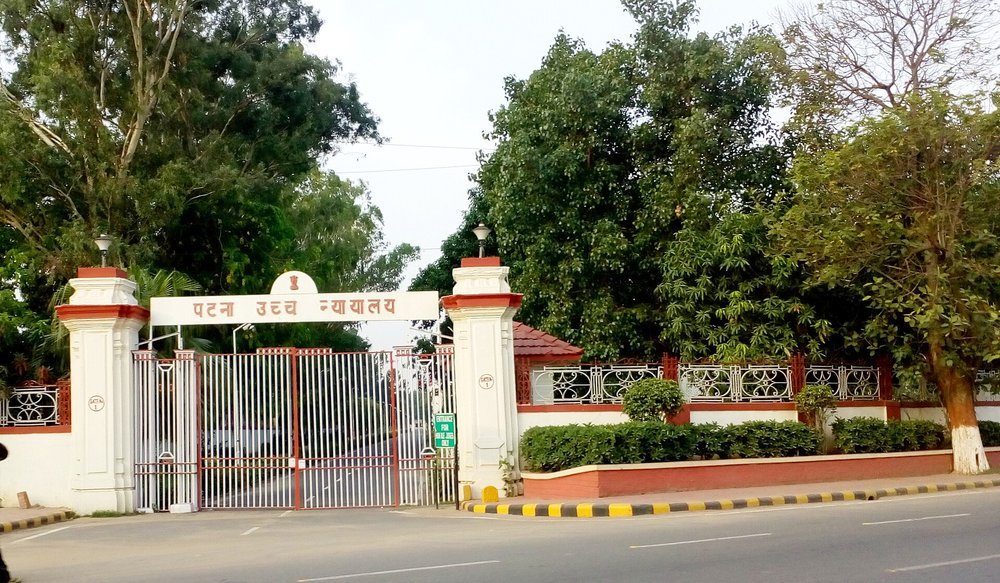
Patna High Court asks Bihar and the Centre to ensure payment in the Bibi Zulekha case Courts & verdicts
Bibi Zulekha asked the court to direct payment of Rs 3.60 lakh each, Rs 10.80 lakh in all, for the deaths of two brothers-in-law and a sister-in-law in the 1989–90 riots, saying only Rs 1 lakh each (Rs 3 lakh) had been paid under a 12 May 2016 order in CWJC 13123 of 2013, while four other relatives got Rs 4.50 lakh each. The Bhagalpur District Magistrate’s counter-affidavit said discrepancies in the list had stopped the proposal going to the Union Home Ministry; a revised list of 49 cases, with her three relatives at serial numbers 45 to 47, was sent on 10 May 2025. The court disposed of the petition “for present” and directed the State and the Union of India to ensure payment after sanction and allotment by the Home Ministry. No one appeared for the Union.
2026
Report: two riot cases still pending after 37 years Courts & verdicts
Dainik Jagran reported that two Bhagalpur riot cases were stalled because police had not completed steps. Case 10 of 2012, reopened on a commission’s recommendation, concerns the killing of Dilip Yadav in a bombing at Tamtam Padav, Nathnagar, on 25 October 1989; four accused were charge-sheeted, two died, one (Md. Saleem) is absconding and one (Md. Mitthu) attends hearings, and prosecution evidence is complete. The second, a record linked to the Logain case, awaits the original file after a High Court appeal hearing that ended on 15 October 2015; an accused who fled during the 2007 sentencing has not been traced. Verify the status against court records.
2025
A survivor still awaiting compensation and pension despite a High Court order Violence & relief
Zee Salaam reported that Bibi Akila, who lost her husband, father-in-law and wider family in 1989, was still seeking the compensation and pension the government had announced, 36 years later, despite a Patna High Court order. Only the report’s summary could be read for this page, so the order, amounts and dates are not stated.
2024
High Court dismisses an injury-compensation petition as not pressed Courts & verdicts
Md. Kausar challenged a 15 June 2013 order of the Bhagalpur District Magistrate rejecting ex-gratia for a bullet injury in the 1989 riots because a medical board could not assess it at that stage, and sought compensation with interest and costs. On 21 August 2024 his counsel sought to withdraw the petition without objection from the State, and it was dismissed as not pressed. That is a procedural outcome, not a finding on his claim.
2017
Supreme Court admits Bihar’s appeal against Kameshwar Yadav’s acquittal Courts & verdicts
PTI reported that the Supreme Court admitted the Bihar government’s appeal and directed an expeditious hearing, with the State arguing the High Court had “erroneously” set aside the conviction because of delay in lodging the FIR. No later order was located. Wikipedia, citing Dainik Bhaskar and Dainik Jagran, says Kameshwar Yadav died on 3 January 2024, so the status of the appeal should be checked with the Supreme Court.
2017
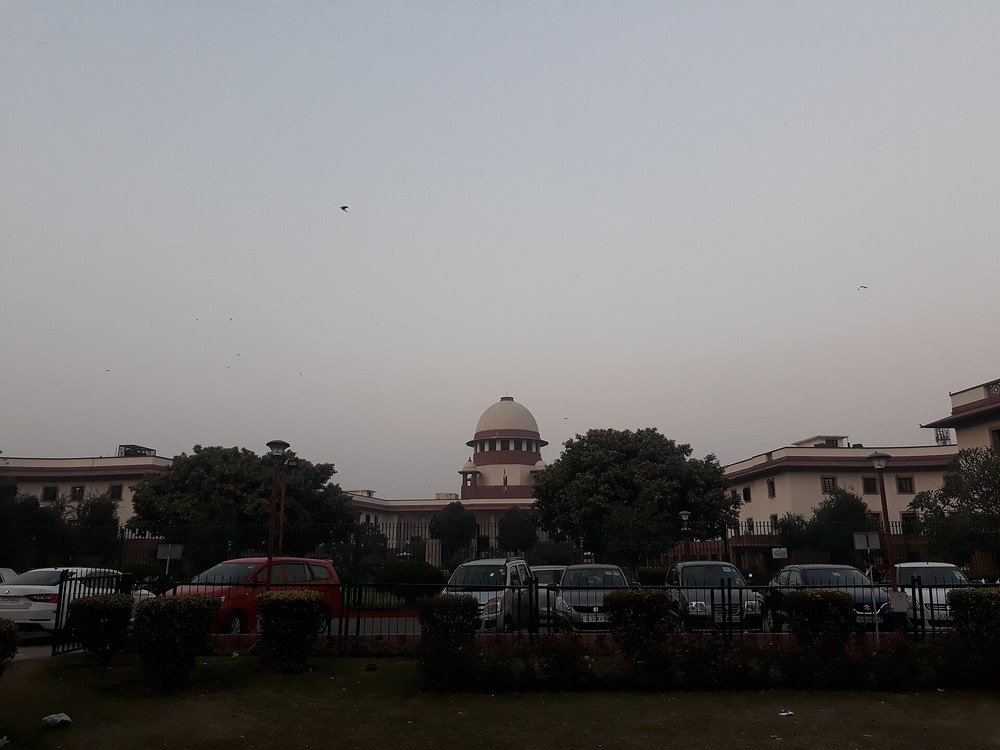
Supreme Court dismisses a petition for a common compensation policy Courts & verdicts
LiveLaw reported that the Supreme Court dismissed a special leave petition challenging the Patna High Court’s refusal to direct the Centre to frame a common policy on compensation to riot victims, saying “no ground for interference is made out”. Only the headline and opening lines of the report were readable, and the High Court order was not located, so the petitioners and the High Court’s reasoning are not stated here.
2017
Patna High Court acquits Kameshwar Yadav after nearly ten years in jail Courts & verdicts
A High Court division bench had split on 3 September 2015, with Justice Dharnidhar Jha allowing Yadav’s appeal and Justice Ahsanuddin Amanullah dismissing it. The matter went to a third bench, which on 29 June 2017 set aside his life sentence for lack of concrete evidence and ordered his release. The Hindustan Times noted he was named an accused on 7 February 1990, months after the October 1989 killing, and that the case was one of 27 reopened by the Nitish Kumar government in 2006. Reports differ on the sequence of his convictions (HT mentions November 2007, PTI and Scroll 2009) and on the victim’s name in one passage, so the acquittal should be read as covering that case only.
2015
N.N. Singh Commission report tabled in the Bihar Assembly; DGP told to act on 125 officials Commissions & probes
The Nitish Kumar government tabled the roughly 1,000-page report on the last day of the session, amid uproar. The Indian Express reported that it identified 85 cases of houses or land sold under “distress or duress”, asked the government to restore them to original owners, and recommended action against 125 officials, including IAS, IPS and state-service officers, some of them on central deputation, in the Jharkhand cadre or retired. IANS reported that it blamed the then Congress government, the administration and the police. The Milli Gazette added that the government accepted the recommendations, instructed the DGP to take “necessary action” against the 125 officers, wrote to the Centre and Jharkhand, and set up a five-member committee (the DGP and the principal secretaries of home, law, finance and land reforms) on distress sales. Only that outlet reports these steps, no separate action-taken report was located, and Sushil Kumar Modi had asked why the report and an action-taken report were delayed. A recommendation is not a conviction, and no outcome for any official was found.
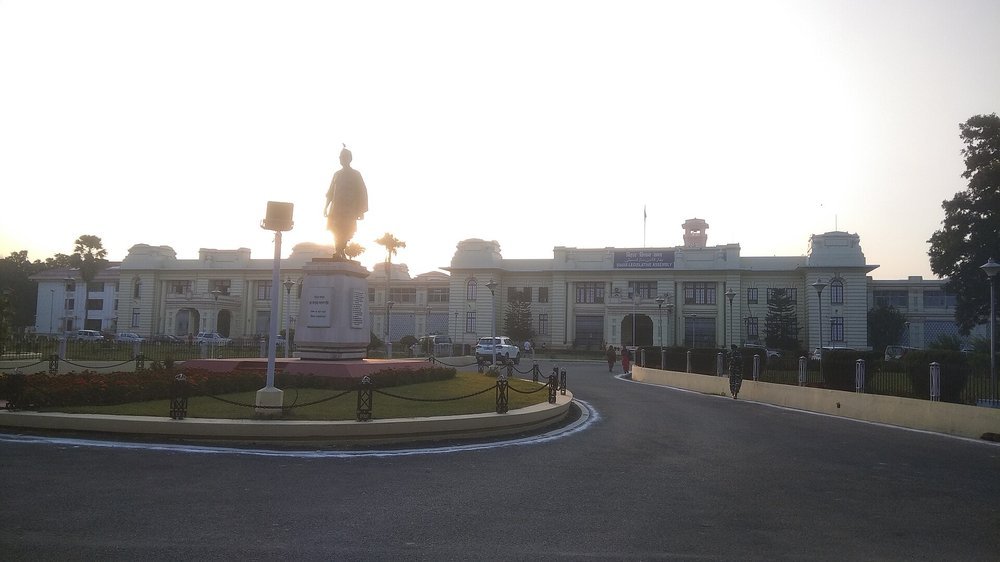
Commission submits its final report to the Chief Minister Commissions & probes
IANS reported on 7 August 2015 that the commission submitted its report to Chief Minister Nitish Kumar “in February this year”, and Sushil Kumar Modi said the government had received it in February. CPI(ML) Liberation says the commission, set up in February 2006 with a six-month deadline, gave an interim report on 28 August 2007 and the full report only in February 2015. The brief’s date of 28 February could not be confirmed: the Hindustan Times page it cited now returns “page not found”, and the “28” may be confused with the interim report’s date. Only the month is stated here. The tabling date is separate and is shown above.
2013
State pensions and monthly payments to riot-affected families Violence & relief
The Tribune said Chief Minister Nitish Kumar granted a monthly Rs 2,000 to kin of riot victims from September 2007; the Deccan Herald reported a life-long pension of Rs 2,500 a month for the widows of those killed; and Scroll said that in 2013 he doubled the pension for 384 riot-affected families. The three reports describe different groups and amounts, and the notifications were not located, so none of the figures should be treated as a single settled scheme.
2009
Kameshwar Yadav convicted in a Bhagalpur riots case Courts & verdicts
A Bhagalpur court convicted Kameshwar Yadav, a local figure once honoured by police for “communal harmony”, of murder after the Nitish Kumar government reopened riot cases in 2006. Scroll described the victim as a 15-year-old Muslim boy. The conviction was set aside by the High Court in 2017.
2009
Centre releases funds for Rs 3.5 lakh per death; reports of the total differ Violence & relief
The Deccan Herald reported that the Centre released Rs 29.81 crore and that the State would pay the families of the 844 people killed; Bihar had identified 861 families and the Centre cleared 844. The Ministry of Home Affairs annual report for 2009-10 says the Cabinet approved in 2008 ex-gratia on the pattern of the 1984 package: Rs 3.5 lakh for each of 844 deaths, in addition to the State’s payment, and Rs 1.25 lakh minus the State’s payment for 22 injury cases. It says Rs 29.81 crore was released to Bihar in two instalments, “Rs 10 crore and Rs 9.81 crore” in the year ending March 2009, which add up to Rs 19.81 crore, so the stated total or an instalment is inconsistent. The report adds that the State was asked to furnish the status of disbursement, so payment to every family is not established.
2008
Union Cabinet decision to give Rs 3.5 lakh for each of 844 deaths Violence & relief
A Tribune editorial of 14 June 2008 said the Union Cabinet had decided to give Rs 3.5 lakh to the kin of each of the 844 people killed, bringing parity with the 1984 anti-Sikh riot relief. The Ministry of Home Affairs annual report for 2009-10 also records a 2008 Cabinet approval on the 1984 pattern, covering 844 deaths and 22 injury cases. The editorial added that very few people had been punished and that about 600 riot cases were yet to be finally decided.
2007
Fourteen sentenced to life for the Logain killings Courts & verdicts
Dainik Jagran reported that a court sentenced 14 accused to life imprisonment, among them the then Jagdishpur police-station head, Ramchandra Singh, who had been dismissed before the sentence and died in jail. The report says an accused, Jai Prakash Mandal, fled during sentencing and has not been traced, and that the State later released the surviving convicts after 14 years. Wikipedia and Scroll also describe the 2007 convictions; Wikipedia puts the dead at 116 and says the bodies were buried and cauliflower planted over them.
06
Bihar sets up a new commission under Justice N.N. Singh and reopens 27 cases Commissions & probes
Scroll and Wikipedia say Nitish Kumar set up a new commission of inquiry under Justice N.N. Singh soon after becoming Chief Minister in 2005. IANS says it was appointed in February 2006, after the State Cabinet decided to re-investigate 27 cases, and Liberation says it had six months to report and gave an interim report on 28 August 2007 that recommended higher compensation and a monthly pension. Its terms covered the conduct of investigating and prosecuting agencies.
2005
Ten sentenced to life for five murders in Kamarganj Courts & verdicts
Wikipedia, citing India Today, says a Bhagalpur court sentenced 10 people to life on 12 May 2005 for the murder of five Muslims in Kamarganj village during the riots. Scroll says it took 16 years for ten accused to be sentenced to life. The judgment itself was not located.
2003
Supreme Court upholds a High Court ruling on remarks about L.K. Advani in the commission report Courts & verdicts
Bihar appealed against a Patna High Court ruling that parts of the report by two members of the inquiry commission, which criticised L.K. Advani, were inoperative because he had not been heard as Section 8B of the Commissions of Inquiry Act requires. The Supreme Court dismissed the appeal, holding that one cannot be condemned unheard and that Advani did not have to wait for government action. It did not decide who was responsible for the violence.
95
Two divided commission reports; the State accepts the chairman’s Commissions & probes
Scroll reported that after five years the commission produced two reports. The members’ report, by Justices R.C.P. Sinha and S. Shamsul Hasan, blamed communal organisations, rumour-spreading sections of the media and administrative incompetence, and found the Superintendent of Police “wholly responsible”; the chairman’s report, by Justice R.N. Prasad, found the administration blameless. Scroll says neither tried to count the dead, though CPI(ML) Liberation says the 1995 report’s figures were about 900 Muslims and 100 Hindus, so that point is disputed. Scroll says the Lalu Prasad government accepted the chairman’s report in 1995. NewsGram dates the members’ report to 15 February 1995.
1993
Commission expanded to three members Commissions & probes
The Supreme Court’s 2003 judgment records that the commission began as a single-member inquiry under Justice Ram Nandan Prasad and that on 20 September 1993 two retired High Court judges were also notified as members. Its terms covered the causes of the disturbances, whether they were pre-planned, whether the administration’s measures were timely and adequate, and recommendations to prevent recurrence.
1990
Parliament told of 982 dead and missing and Rs 1 lakh ex-gratia in 329 cases Violence & relief
Asked whether the toll was almost double the earlier official figure, the Home Minister replied that a Bihar district-administration enquiry put deaths and missing persons at 982. He said Rs 1 lakh ex-gratia to next of kin of those killed or missing had been sanctioned in 329 of 478 cases received till 15 July 1990, with 123 pending and 26 rejected, plus Rs 10,000 each from the Prime Minister’s Relief Fund. He added that Rs 2.67 crore had been distributed, 74 relief camps had held about 45,000 people, and a Textiles Ministry package of Rs 1.55 crore for weavers had been drawn up. On 29 May 1990 a member told the Rajya Sabha that confidence between the communities had not been restored and that returning minority farmers faced obstruction.
Inquiry commission set up under Justice Ram Nandan Prasad Commissions & probes
Scroll says the Bhagalpur Riots Inquiry Commission was set up by December 1989 to examine the causes, apportion responsibility and investigate administrative lapses. According to Wikipedia, Chief Minister Satyendra Narayan Sinha was replaced by Jagannath Mishra after the riots, and Sinha later claimed in his memoir that Rajiv Gandhi overruled his decision to transfer the Superintendent of Police; that claim is Sinha’s and is not verified here.
6 Dec 1989
Violence spreads across the city and villages; the death toll is disputed Violence & relief
Dainik Jagran says the violence lasted until 6 December. The only government figure found in a primary record is a Rajya Sabha written answer of 8 August 1990, in which the Home Minister said a Bihar district-administration enquiry estimated deaths and missing persons at 982. Asghar Ali Engineer, as summarised by Sciences Po, counted 896 Muslims and 50 Hindus dead and 106 missing, a plausible 1,052; the same source also cites 396 “official records”, without a basis. The Indian Express and IANS say around 1,000 or over 1,000; Liberation says it is popularly believed that more than 2,000 died. Wikipedia reports 50,000 displaced, 250 villages and, via PUDR, 93% Muslim dead; Scroll says at least 195 villages. Dainik Jagran’s figures of 1,070 as the official toll and 1,852 from the commissions could not be traced to any record and are not used.
1989
Communal violence erupts in Bhagalpur Violence & relief
Scroll and Wikipedia say the violence began on 24 October 1989 when a Ramshila procession reached the Muslim locality of Tatarpur, where bombs and brickbats were thrown; Scroll notes that several aspects of that account are contested, including whether the route was sanctioned. Wikipedia reports a curfew that afternoon, police firing that killed two, and the Army being called in on 26 October. The later commissions examined whether the administration prevented and handled the attacks adequately.
Where the Riot Cases Went
How Long Accountability Took
The Case at a Glance
Dates and figures as reported; commission findings, verdicts and relief are separate.
| Date | Event | Detail |
|---|---|---|
| 24 Oct 1989 | Violence begins | Ramshila procession, Tatarpur; continues to 6 Dec per Jagran |
| Dec 1989 | Commission set up | Single member, Justice Ram Nandan Prasad |
| 20 Sep 1993 | Commission expanded | Justices R.C.P. Sinha and S. Shamsul Hasan added |
| 1994-95 | Two reports | Members and chairman disagree; State accepts the chairman’s |
| 16 Sep 2003 | Supreme Court | State of Bihar v. L.K. Advani; appeal dismissed |
| 12 May 2005 | Kamarganj | Ten sentenced to life, per Wikipedia |
| 2005-06 | New commission | N.N. Singh; 27 cases reopened in Feb 2006 |
| 7 Jul 2007 | Logain | Fourteen sentenced to life |
| 14 Jun 2008 | Cabinet decision | Rs 3.5 lakh each for 844 deaths |
| 26 Aug 2009 | Funds released | Rs 29.81 crore reported; 844 of 861 families cleared; MHA also lists 22 injury cases |
| 8 Aug 1990 | Rajya Sabha answer | 982 dead and missing; Rs 1 lakh ex-gratia in 329 of 478 cases |
| 6 Nov 2009 | Kameshwar Yadav | Convicted by a Bhagalpur court |
| 7 Aug 2015 | N.N. Singh report | 125 officials; 85 distress-sale cases |
| 29 Jun 2017 | High Court | Kameshwar Yadav acquitted |
| 4 Jul / 16 Oct 2017 | Supreme Court | Policy plea dismissed; Bihar appeal admitted |
| 21 Aug 2024 | High Court | Kausar injury petition dismissed as not pressed |
| 14 Jan 2026 | Report | Two trial-court cases pending |
| 14 Aug 2026 | High Court | Bibi Zulekha: ensure payment after sanction |
Reading the Legal Terms
| Term | Meaning | Why it matters here |
|---|---|---|
| Commission of inquiry | A body that investigates and recommends, with no power to convict | Prasad, Sinha-Hasan and N.N. Singh reports |
| Section 8B | Persons whose reputation may be harmed must be heard by the commission | Basis of the 2003 Advani judgment |
| Ex-gratia | A payment made without admitting legal liability | Rs 1 lakh State and Rs 3.5 lakh Centre payments |
| Charge-sheet | Police report setting out evidence against the accused | Not a finding of guilt; 329 filed, per Jagran |
| Final report | Police close a case, e.g. for lack of evidence | 557 cases, per Jagran |
| Third bench | A third judge decides after a split verdict | Used in Kameshwar Yadav’s appeal |
| Not pressed | The petitioner withdraws; no ruling on the merits | Md. Kausar, 2024 |
| Special leave petition | Appeal to the Supreme Court under Article 136 | Dismissed on 4 Jul 2017 |
Compensation: What the Record Shows
Federal relief. The Ministry of Home Affairs annual report for 2009-10 (paras 6.20 and 6.21) says the Cabinet approved in 2008, on the pattern of the 1984 package, Rs 3.5 lakh for each of 844 deaths in addition to the State’s payment and Rs 1.25 lakh minus the State’s payment for 22 injury cases, and that Rs 29.81 crore was released to Bihar in two instalments of Rs 10 crore and Rs 9.81 crore, which add to Rs 19.81 crore. The Tribune reported the Cabinet decision on 14 June 2008, and the Deccan Herald reported on 26 August 2009 that Bihar had identified 861 families and the Centre cleared 844. The report only says Bihar was asked to report on disbursement, so payment to every family is not shown.
First relief. On 8 August 1990 the Home Minister told the Rajya Sabha that Rs 1 lakh ex-gratia had been sanctioned in 329 of 478 cases received till 15 July 1990 (123 pending, 26 rejected), plus Rs 10,000 each from the Prime Minister’s Relief Fund.
State payments. The Bibi Zulekha petition says Rs 1 lakh each, Rs 3 lakh in all, was paid for three deaths under a 12 May 2016 order, in addition to which the Centre’s Rs 3.5 lakh scheme is described above. State monthly payments and pensions were reported at different amounts in 2008, 2009 and 2013.
Still contested. On 14 August 2026 the Patna High Court disposed of Bibi Zulekha’s petition for Rs 3.60 lakh each for three deaths by directing payment after sanction; it did not record that payment was made. A 2024 injury claim was withdrawn, and in 2017 the Supreme Court declined to interfere with a refusal to order a common national compensation policy. Not every family is shown to have received the full amount.
Who Is Who in the Record
Roles examined in the case, not final findings of guilt.
Justice Ram Nandan Prasad
Chaired the first inquiry from 1989; his report was the one the State accepted in 1995.
Justices R.C.P. Sinha and S. Shamsul Hasan
Added on 20 Sep 1993; their report blamed the administration and the Superintendent of Police.
Justice N.N. Singh
Appointed after 2005; report tabled on 7 Aug 2015 with 125 officials named.
Supreme Court and Patna High Court
Heard the Advani appeal (2003), compensation petitions (2016-2026) and Kameshwar Yadav’s acquittal (2017).
Logain accused, including a former police officer
Fourteen sentenced to life on 7 Jul 2007.
Kameshwar Yadav
Acquitted by a High Court third bench on 29 Jun 2017; reported to have died on 3 Jan 2024.
Bibi Zulekha, Md. Kausar
Survivors’ relatives who went to the High Court for compensation in 2024 and 2026.
Bihar and Union Home Departments
Responsible for sanction and payment of ex-gratia relief.
The Lasting Impact
Human loss and displacement. Families lost relatives, homes, land and livelihoods; the N.N. Singh Commission identified 85 cases of sales under distress and asked for properties to be restored.
Institutional accountability. The first commission’s members found the Superintendent of Police wholly responsible while its chairman found the administration blameless, and the 125 officials named in 2015 were recommended for action, not convicted.
Criminal justice. Some cases ended in convictions, such as Logain in 2007, others in closure or acquittal, and two were reported pending in January 2026.
Compensation. Relief came in stages and was still before the High Court in 2024 and 2026. Justice involves trials, administrative accountability, restoration of property and compensation, and each needs credible evidence and working institutions.
The Popular Story vs the Record
Short versions of the story blur several details.
| Popular version | What the record shows |
|---|---|
| About 1,000 died, full stop | A Bihar enquiry gave 982 dead and missing in 1990; later reports say about 1,000 and some more than 2,000; the 1,070 and 1,852 figures in Jagran are untraced |
| The N.N. Singh report punished 125 officials | It recommended action against 125; no source shows what followed, and only courts can convict |
| Everyone received Rs 3.5 lakh | The Centre cleared 844 of 861 families; the Zulekha order shows cases still awaiting sanction in 2026 |
| Kameshwar Yadav was cleared of the riots | The High Court acquitted him in one case in 2017; the State appealed and the outcome was not located |
| The Supreme Court judged the riots | The 2003 Advani case was about hearing a person before a commission criticises them |
| Withdrawn means rejected | A petition dismissed as not pressed says nothing about the injury claim |
The Case in Numbers
| Measure | Figure | Source and caveat |
|---|---|---|
| Deaths and missing | 982 | Bihar enquiry, Rajya Sabha answer, 8 Aug 1990 |
| Deaths, later reports | About 1,000 | Indian Express, IANS; some sources say 2,000+ |
| Injury cases for ex-gratia | 22 | MHA Annual Report 2009-10, para 6.20 |
| Displaced | 50,000+ | Wikipedia |
| Cases registered | 886 | Dainik Jagran; Wikipedia cites 864 |
| Charge-sheeted | 329 | Dainik Jagran |
| Closed with final report | 557 | Dainik Jagran |
| Accused sentenced | 346 | Dainik Jagran; not checked |
| Deaths compensated | 844 of 861 | Deccan Herald, 26 Aug 2009 |
| Central payment per death | Rs 3.5 lakh | Tribune 2008; Deccan Herald 2009 |
| Funds released | Rs 29.81 crore | DH and MHA report; MHA instalments add to Rs 19.81 crore |
| Officials recommended for action | 125 | Indian Express, 9 Aug 2015 |
| Distress-sale cases | 85 | Indian Express, 9 Aug 2015 |
Explore More Timelines
People Also Ask
Frequently Asked Questions
Related AiTimeline Stories
⚠️ Editorial Note
This page separates commission findings, recommendations, convictions, acquittals, procedural orders and relief announcements, and states case status as of 21 October 2026 from the cited records. A second verification pass that day opened the Ministry of Home Affairs annual report for 2009-10 (from a full archived copy, chapter VI, paras 6.20 to 6.21, printed page 66), the Rajya Sabha written answer of 8 August 1990, the Milli Gazette of 5 September 2015, Liberation, NewsGram and IANS reports, Sciences Po’s riot chronology and the Dainik Jagran article. Findings: the Rs 3.5 lakh for 844 deaths and Rs 1.25 lakh minus State payments for 22 injury cases are confirmed in the MHA report, which also says Rs 29.81 crore was released in instalments of Rs 10 crore and Rs 9.81 crore that sum to Rs 19.81 crore, so the total is qualified; the instruction to the DGP to act on the 125 officers and a five-member committee are reported only by the Milli Gazette and no action-taken report was located; the report’s submission is dated only to February 2015 because the cited Hindustan Times page no longer exists and no source gives a day, and 28 August 2007 was the interim report; the only primary death figure is 982 dead and missing in a 1990 Rajya Sabha answer, and Dainik Jagran’s 1,070 and 1,852 could not be traced and are not used. Earlier changes: the 2003 Supreme Court case concerns remarks about L.K. Advani and the appeal was dismissed; Kameshwar Yadav’s acquittal, the Supreme Court appeal and his reported death in 2024 are added; the vague 1990s entry was replaced with Dainik Jagran’s case counts, flagged as unchecked. Court orders were read on Indian Kanoon, and the LiveLaw report of 2017 and the Zee Salaam article could be read only in part.
Sources & further reading
Every dated entry above was checked against these references. Last reviewed 21 October 2026.
- Bihar: 1989 Bhagalpur riots probe report tabled in House (9 August 2015)
- State of Bihar v. Lal Krishna Advani and Others, Supreme Court judgment of 16 September 2003
- Bibi Zulekha v. State of Bihar, CWJC 4658 of 2025, order of 14 August 2026
- Md. Kausar v. State of Bihar, CWJC 11395 of 2015, order of 21 August 2024
- After 10 years in jail, 1989 Bhagalpur riots convict acquitted by HC for lack of evidence (30 June 2017)
- 1989 Bhagalpur riots: SC to hear plea on acquittal of accused (16 October 2017)
- SC Rejects Plea For Parity In Compensation To Riot Victims (4 July 2017)
- Bhagalpur riot victims get justice, Abhay Kumar (26 August 2009)
- Speed up trial of Bhagalpur riot cases (editorial, 14 June 2008)
- The forgotten riot: How Bhagalpur 1989 left a memory trace in Bihar politics (12 August 2015)
- भागलपुर दंगा: दो मामले 37 साल बाद भी लंबित (14 January 2026)
- Bhagalpur riot victim Bibi Akila still awaits compensation and pension (27 May 2025)
- 1989 Bhagalpur violence
- Annual Report 2009-10, Ministry of Home Affairs, Chapter VI, paras 6.20-6.21 (archived full copy)
- Rajya Sabha written answer, Bhagalpur riots, Q. 31 (8 August 1990)
- Justice N.N. Commission report on 1989 Bhagalpur Riots (5 September 2015)
- Bhagalpur Riots: Probe panel blames then Congress government (7 August 2015)
- Bhagalpur Riots Revisited: A Quarter Century of Deception and Injustice (2015)
- Remembering Bhagalpur: The riot that killed over 1000 people in Bihar (20 August 2015)
- Hindu-Muslim Communal Riots in India II (1986-2011)