Ukraine War Anniversary: Front-Line Changes & Impact Since 2022
Ukraine war timeline from the 2022 invasion to October 2026: every major front-line change, from Kyiv and Kherson to Pokrovsk, plus the civilian toll.
Latest Story
Russia’s full-scale invasion on 24 February 2022 was meant to topple Ukraine’s government in days. Instead, the Ukraine war has become Europe’s largest conflict since 1945, now in its fifth year. The front line moved fast only in 2022, when Russian troops retreated from Kyiv and Ukraine retook Kharkiv region and Kherson. Since then it has shifted slowly, village by village, through the battles for Bakhmut, Avdiivka and Pokrovsk, a Ukrainian incursion into Russia, and a drone war reaching deep into both countries. This timeline follows each major front-line change from 2022 to October 2026, what it cost civilians, and why reports of gains and losses need checking.
💡 Short Answer
Russia invaded Ukraine on 24 February 2022 and failed to take Kyiv. Ukraine won back large areas in the north-east and south in 2022, but since 2023 the front line has moved slowly, mostly in Russia’s favour in Donetsk region. As of October 2026 Russia occupies about a fifth of Ukraine, there is no ceasefire, and the UN has verified more than 16,400 civilian deaths.
Ukraine War Front Line: Key Questions
The Ukraine War in Ten Points
- Failed blitz: Russia’s push on Kyiv collapsed within five weeks, and its troops left the north by 2 April 2022.
- 2022 reversals: Ukraine’s Kharkiv offensive in September and the recapture of Kherson in November were the largest changes of the war.
- Annexation: Russia claimed four regions on 30 September 2022 without fully controlling any of them; the UN rejected it.
- Stalemate: in 2023 Bakhmut fell and Ukraine’s counteroffensive stalled against deep minefields.
- Grinding advance: Russia took Avdiivka in 2024 and Pokrovsk by early 2026, slowly and at very high cost.
- Kursk: Ukraine held part of Russia from August 2024 until spring 2025.
- Drone war: FPV drones rule the front; long-range drones hit refineries, air bases and cities.
- 2026 shift: Russian gains slowed, and Ukraine cut the Lyman salient in September.
- Civilians: 2026 is on course to be the deadliest year for civilians since 2022.
- Diplomacy: truces, summits and sanctions laws have not produced a ceasefire.
The Six Phases of the Front Line
The war divides into a fast first year and a slow, grinding war since.
| Phase | Dates | Who advanced | Main places | Outcome |
|---|---|---|---|---|
| Invasion and retreat | Feb–Apr 2022 | Russia, then Ukraine | Kyiv, Chernihiv, Sumy, Kharkiv | Russia leaves northern Ukraine |
| Battle for the Donbas | Apr–Jul 2022 | Russia | Mariupol, Sievierodonetsk, Lysychansk | Land corridor to Crimea; Luhansk region almost all taken |
| Ukrainian counteroffensives | Aug–Nov 2022 | Ukraine | Izium, Kupiansk, Lyman, Kherson | Largest territorial reversal of the war |
| Attrition | 2023 | Neither | Bakhmut, Robotyne, Zaporizhzhia front | Front almost static; heavy losses |
| Russian grinding advance | 2024–2025 | Russia | Avdiivka, Vuhledar, Kurakhove, Pokrovsk | Slow gains in Donetsk region; Kursk incursion reversed |
| Drone-era stalemate | 2026 | Contested | Huliaipole, Kostiantynivka, Lyman, Dobropillia | Smaller Russian gains; Ukrainian local counterattacks |
The Timeline: Every Major Front-Line Change, 2022 to 2026
Newest first. Tags mark a Russian advance, a Ukrainian gain, diplomacy, a long-range strike, the civilian toll and disputed claims.
2026
Russia claims 92 settlements; Ukraine calls it an illusion Disputed claim
Russia’s chief of the General Staff, Valery Gerasimov, told Vladimir Putin on 16 October that Russian forces had taken 92 settlements and more than 1,800 square km since the start of September, naming the town of Dobropillia among them. The next day Ukraine’s General Staff spokesman Andrii Kovalov called the figures deliberate disinformation, saying Dobropillia, Orikhiv, Novopavlivka and other named places remained under Ukrainian control and that fighting continued in Kostiantynivka. Reuters said it could not verify either side’s account.
2026
UN: September was the deadliest September of the war Civilian toll
The UN Human Rights Monitoring Mission reported civilian casualties in 22 regions and the city of Kyiv, which had 32 killed and 340 injured, followed by Kherson, Sumy and Zaporizhzhia. Long-range missiles and drones caused 53% of the casualties and short-range drones 23%. From January to September 2026 the mission verified 2,570 civilians killed and 15,211 injured, 59% more than in the same months of 2025.
2026
An ‘energy ceasefire’ that lasted three days Diplomacy
Trump said both countries had agreed to stop attacking each other’s energy facilities. Volodymyr Zelensky said the announcement was news to him but that Ukraine would stop if Russia did, and Ukraine paused its drone campaign against Russian refineries. On 15 October it struck the Rosneft refinery in Ryazan region, a main supplier of fuel to Moscow. Zelensky said Russia had kept hitting Ukraine’s power system and killed about 100 civilians in a week; the Kremlin said Ukraine’s strikes had never stopped.
2026
A diesel deal undercuts new US sanctions Diplomacy
After a call with Putin, Trump announced that Russia would supply diesel to world markets, starting with 300,000 tonnes. The Treasury issued a licence permitting transactions in Russian-origin diesel, three weeks after Trump had signed a law expanding sanctions on Russia’s energy sector. Zelensky criticised the move sharply, and planned trilateral talks did not take place.
2026
Guided bombs hit two buses in Kramatorsk Civilian toll
The strike on two passenger buses was one of the deadliest single attacks on civilians of the year. Kramatorsk and Sloviansk, the largest cities Ukraine still holds in Donetsk region, are within reach of Russian glide bombs and drones, and both suspended public transport afterwards. Two days later a guided-bomb strike on a five-storey apartment block in Zaporizhzhia killed 23 people, including four children.
Ukraine cuts the Lyman salient Ukrainian gain
A Russian bulge north of Lyman had threatened the northern approaches to Sloviansk. Counterattacks that began on 22 May cut it off by early September, and Ukrainian forces retook villages including Serednie, Shandryholove and Derylove later in the month. It was Ukraine’s largest local success of the year and reduced the pressure on the Sloviansk-Kramatorsk belt.
2026
The Sanctioning Russia and Iran Act becomes law Diplomacy
Named after Senator Lindsey Graham, the law broadens US sanctions on Russian banks and energy and gives the president power to impose tariffs on countries that buy Russian oil or help evade sanctions. India and China, the largest buyers of Russian crude, were the obvious targets. How hard it will be enforced became uncertain within weeks.
2026
US envoys meet Putin in the Kremlin Diplomacy
Both sides briefly halted strikes on each other’s capitals for the envoys’ visits to Moscow and Kyiv. The Americans spoke of ‘substantive plans for next steps’; Putin’s aide Yuri Ushakov said Russia had stressed the ‘root causes’ of the conflict, its standard reference to Ukraine’s Western alignment. No ceasefire followed, and Kyiv’s allies began planning for the war to continue into 2027.
2026
Russia claims Kostiantynivka and all of Luhansk Disputed claim
Russia’s defence ministry said its forces had taken Kostiantynivka, a town south of Kramatorsk, and the last parts of Luhansk region. Ukraine rejected the claims. Three months later the Ukrainian General Staff still described active fighting in Kostiantynivka, an example of how an announced capture can run months ahead of what is visible on the ground.
The deadliest month for civilians since April 2022 Civilian toll
The UN said the rise was driven by missile and drone attacks on cities, especially Kyiv and Dnipro, and by short-range drones near the front, which reached a record 89 killed and 588 injured that month. A resident evacuated from Zaporizhzhia region told monitors: ‘They are shooting and striking day and night.’ The cumulative verified toll since the invasion reached 16,431 killed and 48,613 injured.
2026
A three-day truce and a 1,000-for-1,000 prisoner swap Diplomacy
Putin had announced his own truce for Victory Day on 8 and 9 May, and Zelensky one for 5 and 6 May. Trump then announced that both had agreed to a joint pause from 9 to 11 May and a large exchange of prisoners of war. Fighting slowed but did not stop. By mid-May analysts were describing Russia’s spring offensive as unsuccessful, with Ukraine regaining more ground than it lost.
2026
An Easter ceasefire, violated thousands of times Diplomacy
The two sides agreed a pause for Orthodox Easter, the first mutual truce of the war. Ukrainian officials said Russian forces broke it thousands of times, killing four people and injuring 35; Russia accused Ukraine of breaches too. It showed that a ceasefire without monitoring could not hold even for a weekend.
Huliaipole falls as Ukraine strikes back Russian advance
Russia completed the capture of Myrnohrad next to Pokrovsk and of Huliaipole in Zaporizhzhia region. Days later Ukraine made its biggest gains in more than two years outside the Kursk operation, helped by disruption to Russian communications after SpaceX blocked unauthorised Starlink terminals on 1 February. Even so, Russia gained net territory over the month.
2025
Russia claims Pokrovsk Russian advance
Pokrovsk had been Russia’s main target in Donetsk region for more than a year. Russian troops fought inside the city from late October 2025, and the claim of capture came while Ukrainian soldiers still held the north. In the same month Zelensky visited Kupiansk in Kharkiv region, which Russia had claimed, to show it remained in Ukrainian hands.
The 28-point peace plan Diplomacy
The plan proposed that Ukraine give up the parts of Donetsk region it still held, cap the size of its army and renounce NATO membership, in return for security guarantees. Ukraine and its European allies worked with US officials on revised drafts. Russia rejected the changes, and the war continued through the winter.
2025
Trump and Putin meet in Alaska Diplomacy
The first US-Russian summit since the full-scale invasion produced warm words and no deal. Putin did not accept the ceasefire that Ukraine had agreed to in principle since March, and Russia continued its summer offensive in Donetsk and in Sumy and Kharkiv regions, which analysts later judged to have achieved only modest gains at a heavy cost.
2025
Operation Spider Web Long-range strike
Ukraine’s security service had spent about 18 months smuggling small drones into Russia, hidden in wooden cabins loaded on lorries parked near air bases. On the same morning they opened and released the drones at strategic bombers and other aircraft. Independent estimates of the aircraft destroyed were lower than Ukraine’s, but the operation showed how cheap systems could reach targets thousands of kilometres from the front.
2025
Russia declares Kursk recaptured Russian advance
Russia had retaken Sudzha in March 2025. In April Gerasimov said the whole Kursk region was back under Russian control, and Moscow and Pyongyang acknowledged for the first time that North Korean soldiers had fought there. Ukraine said fighting continued, but by the summer its forces had largely been pushed back across the border.
Ukraine accepts a 30-day ceasefire; Russia does not Diplomacy
After a public clash in the Oval Office at the end of February, Ukrainian officials met a US delegation in Saudi Arabia and agreed to a US proposal for a 30-day ceasefire on all fronts. Russia set conditions, and the proposal was never implemented. Ukraine has said since then that it is ready for an unconditional ceasefire.
2024
Ukraine crosses into Russia’s Kursk region Ukrainian gain
The surprise offensive took Russian border defences by surprise and forced Moscow to move troops from Ukraine. It also gave Kyiv a possible bargaining chip. But Russia did not halt its advance in Donetsk region, and holding the salient tied up some of Ukraine’s best units.
2024
A new Russian offensive in Kharkiv region Russian advance
Russian troops crossed the border north of Kharkiv, taking about a dozen villages and fighting in Vovchansk. Ukraine moved reserves to stop the advance within weeks, and the US eased limits on using its weapons against targets just inside Russia. The offensive showed that Russia could stretch Ukrainian forces along a longer front.
2024
Ukraine withdraws from Avdiivka Russian advance
The fortified town just north of Russian-held Donetsk city had been under attack since October 2023. Ukraine pulled out to avoid encirclement at a time when US military aid was held up in Congress and its artillery was short of shells. Russian forces then pushed west towards Ocheretyne and, from July, Pokrovsk.
2023
Ukraine’s counteroffensive stalls Ukrainian gain
Western-trained brigades with new tanks and armoured vehicles attacked towards Melitopol and the Sea of Azov but ran into dense minefields and layered defences known as the Surovikin line. The destruction of the Kakhovka dam flooded the lower Dnipro. By November Ukraine’s commander-in-chief Valerii Zaluzhnyi described the war as a stalemate.
2023
Bakhmut falls after a ten-month battle Russian advance
Bakhmut had limited strategic value but became a symbol for both sides. Wagner’s units, many of them recruited from prisons, took heavy losses in months of street fighting. A month after the capture, Prigozhin marched his forces towards Moscow before calling off the mutiny; he died in a plane crash in August 2023.
2022
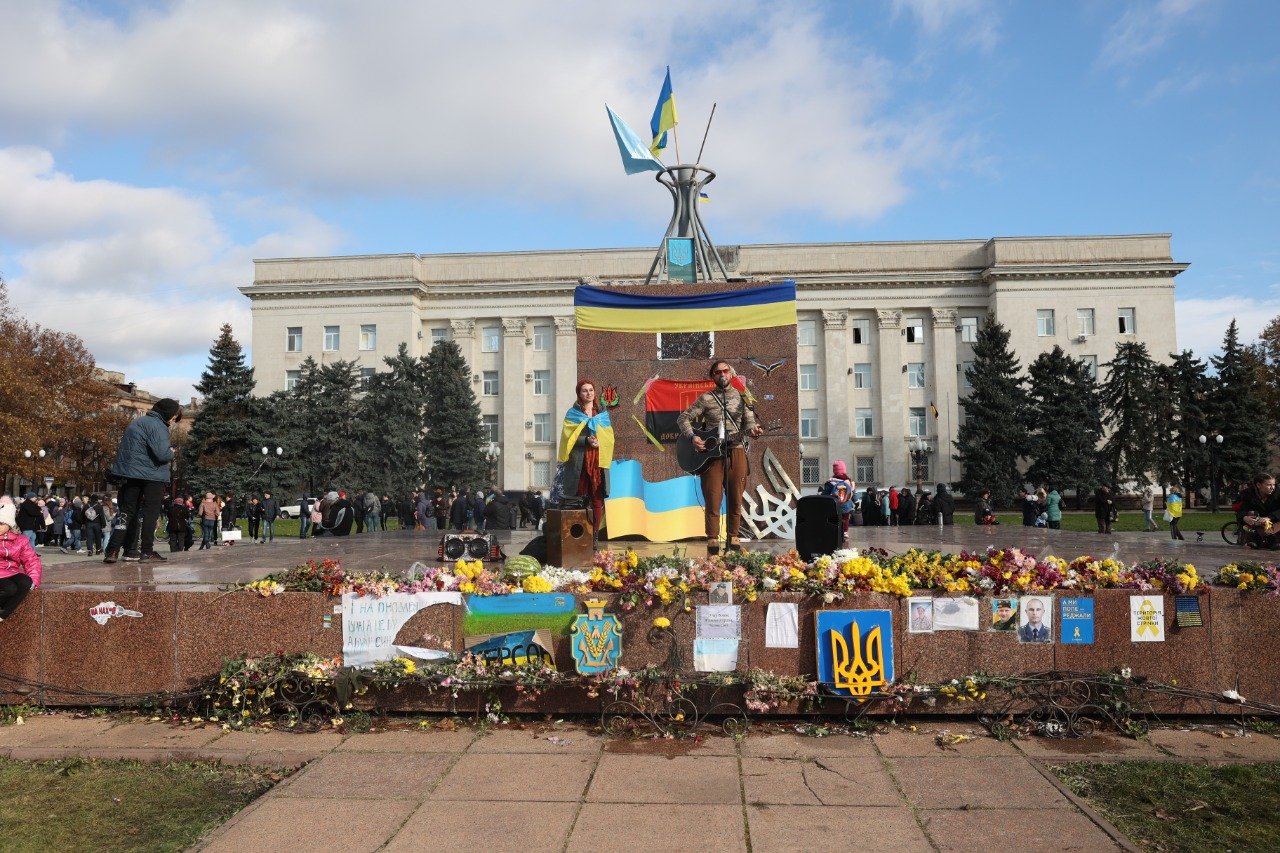
Ukraine recaptures Kherson city Ukrainian gain
A methodical campaign from late August cut Russian supply lines across the Dnipro, and Russia withdrew about 30,000 troops to the eastern bank. Residents greeted Ukrainian soldiers in the city’s main square. The river has divided the southern front ever since, and Kherson has been under constant fire from across it.
2022
Mobilisation and annexation Russian advance
Facing defeat in Kharkiv region, Putin ordered the call-up of about 300,000 reservists and staged referendums in Donetsk, Luhansk, Zaporizhzhia and Kherson regions, none of which Russia fully controlled. On 12 October the UN General Assembly declared the annexation invalid, with 35 abstentions.
2022
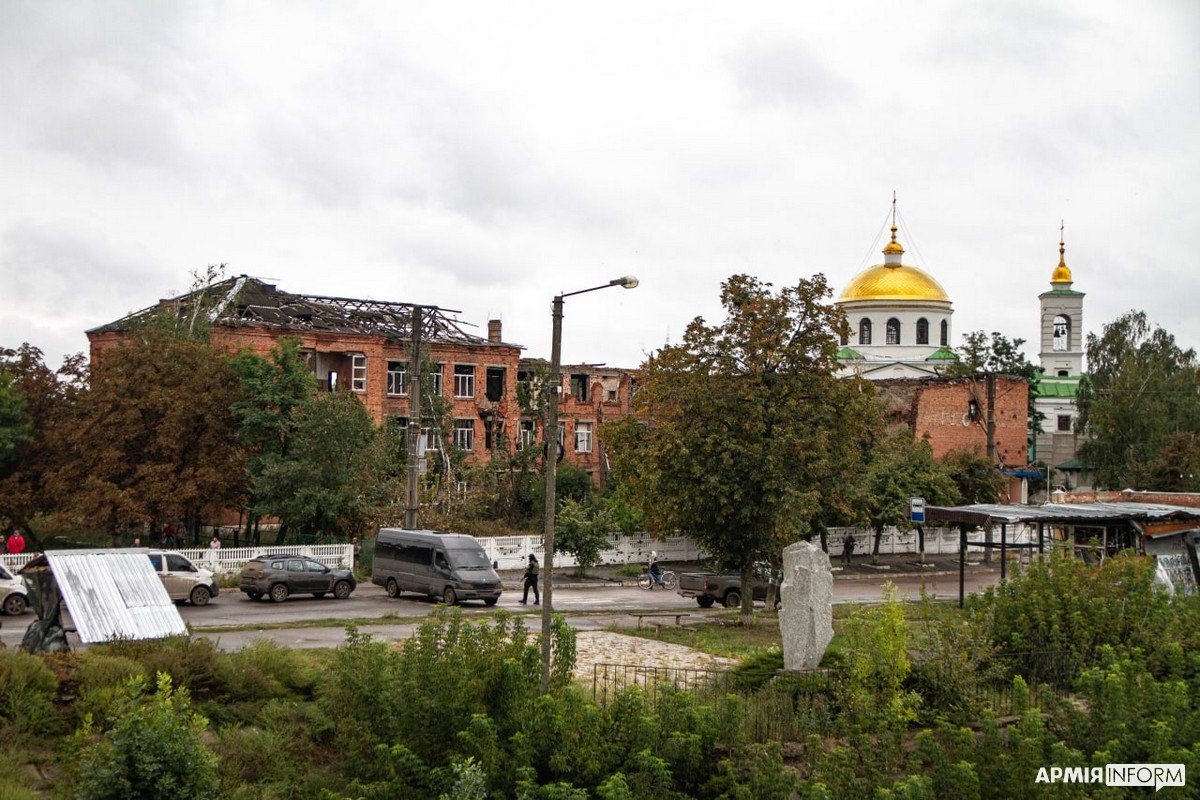
The Kharkiv counteroffensive Ukrainian gain
Ukraine attacked where Russia had thinned its lines to reinforce the south. Russian defences collapsed, and troops abandoned equipment as they fled east. It was the fastest change in the front since the retreat from Kyiv, and showed that Russia’s gains could be reversed.
2022
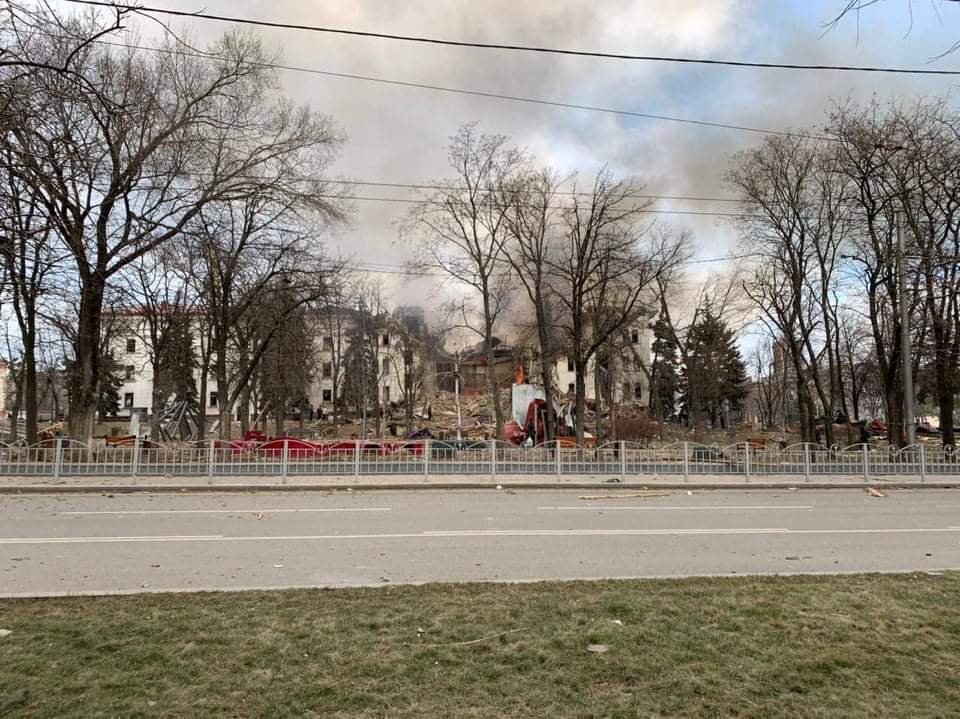
The siege of Mariupol Russian advance
The siege cut off food, water, heat and medical care for hundreds of thousands of people. Ukrainian officials estimated that at least 25,000 civilians died; the true number is unknown. When the last defenders left the Azovstal steelworks, Russia’s defence ministry said 2,439 had surrendered. Mariupol gave Russia a continuous land corridor to Crimea.
2022
Russia retreats from Kyiv Ukrainian gain
Russia presented the withdrawal from the Kyiv, Chernihiv and Sumy regions as a goodwill gesture during talks in Istanbul; in reality its northern offensive had stalled. When Ukrainian troops returned to Bucha, Irpin and other towns they found the bodies of civilians in streets and yards, and the killings became the subject of war-crimes investigations.
2022
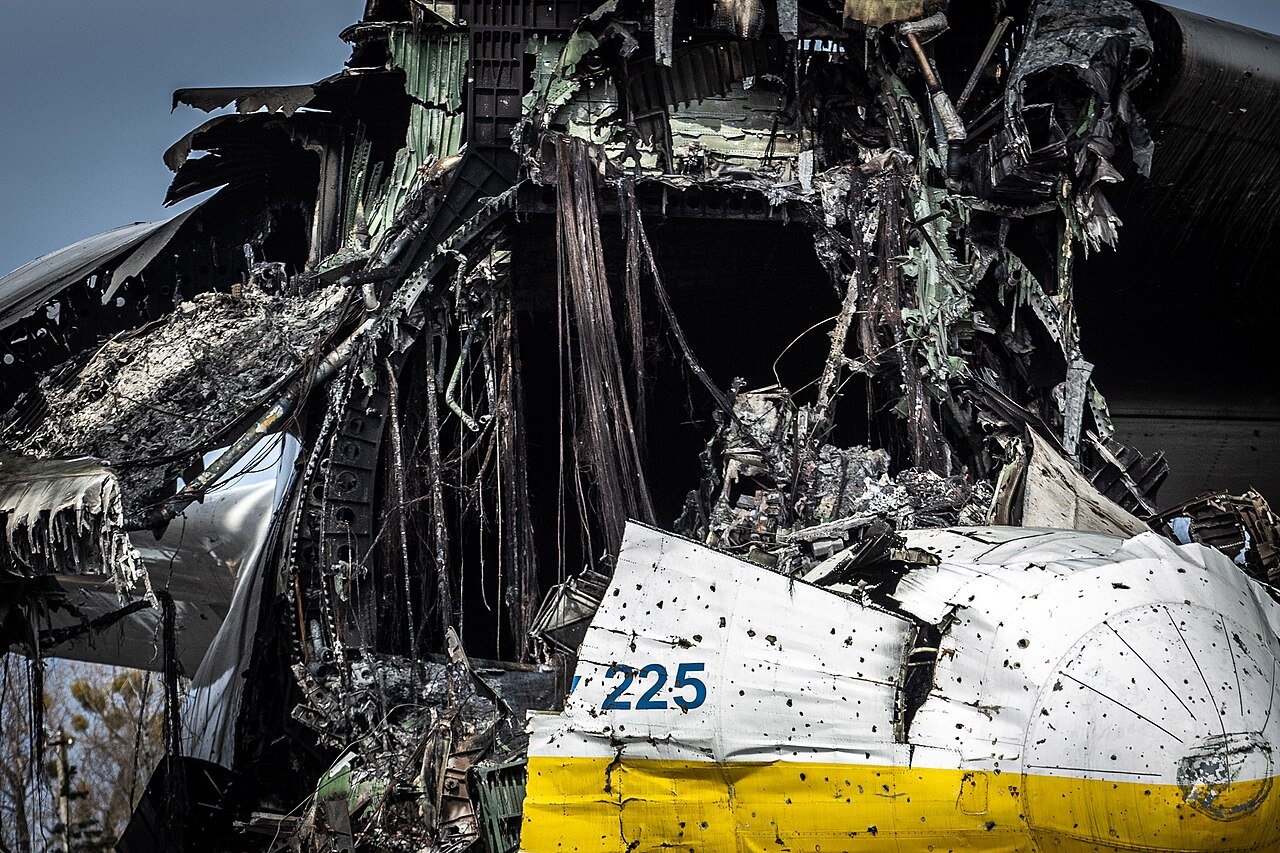
Russia launches its full-scale invasion Russian advance
Putin announced a ‘special military operation’ before dawn. Missiles struck military targets across Ukraine, and columns advanced on Kyiv from the north, on Kharkiv from the north-east and out of Crimea in the south. Russian paratroopers landed at Hostomel airport outside Kyiv, but Ukrainian forces stopped them from using it to fly in reinforcements. Zelensky stayed in the capital.
Pick a year to see which side gained ground, where, and what that year taught both armies.
A summary judgement based on the timeline above and on open-source mapping. Territory is only one measure of a war.
Who Holds What: The Key Towns and Cities
When places changed hands, and where they stand as of 18 October 2026.
| Place | What happened | Date | Status, October 2026 |
|---|---|---|---|
| Kyiv region | Russian forces withdraw | 2 Apr 2022 | Ukraine |
| Mariupol | Captured after siege | 20 May 2022 | Russian-occupied |
| Sievierodonetsk / Lysychansk | Captured | 25 Jun / 3 Jul 2022 | Russian-occupied |
| Izium | Recaptured by Ukraine | 10 Sep 2022 | Ukraine |
| Lyman | Recaptured by Ukraine | 1 Oct 2022 | Ukraine; threatened, salient cut in Sep 2026 |
| Kherson city | Recaptured by Ukraine | 11 Nov 2022 | Ukraine, under fire from across the Dnipro |
| Bakhmut | Captured | 20 May 2023 | Russian-occupied |
| Avdiivka | Captured | 17–18 Feb 2024 | Russian-occupied |
| Vuhledar | Captured | 1 Oct 2024 | Russian-occupied |
| Sudzha (Russia) | Taken by Ukraine, then retaken | Aug 2024 / Mar 2025 | Russian control |
| Pokrovsk / Myrnohrad | Captured | Dec 2025–Feb 2026 | Russian-occupied |
| Huliaipole | Captured | 6 Feb 2026 | Russian-occupied |
| Kostiantynivka | Claimed by Russia | 3 Jul 2026 | Disputed; fighting continues |
| Dobropillia | Claimed by Russia | 16 Oct 2026 | Ukraine says it holds the town |
The list shows the pattern of the war. Every large Ukrainian gain came in the second half of 2022. Every Russian gain since then has been a town or small city taken after months of fighting that left it in ruins: Bakhmut had about 70,000 people before the war, Avdiivka about 30,000, Pokrovsk about 60,000. Ukraine’s biggest remaining cities in Donetsk region, Kramatorsk and Sloviansk, are now within range of glide bombs and drones, which is why much of their population has left.
The Human Cost
UN-verified figures. All are minimums.
| Measure | Figure | Period |
|---|---|---|
| Civilians killed (UN verified) | At least 16,431 | 24 Feb 2022 to 30 Jun 2026 |
| Civilians injured (UN verified) | At least 48,613 | 24 Feb 2022 to 30 Jun 2026 |
| Killed and injured, 2026 | 2,570 killed; 15,211 injured | Jan to Sep 2026 (+59% on 2025) |
| Deadliest month since April 2022 | 293 killed; 1,990 injured | June 2026 |
| September 2026 | 328 killed; 2,105 injured | Highest September of the war |
| Refugees recorded abroad | About 5.7 to 5.8 million | UNHCR, 2025 |
| Internally displaced | About 3.86 million | IOM, March 2026 |
The UN monitoring mission counts only deaths and injuries it can verify individually, so its figures are a floor. Its count for Russian-occupied areas, including Mariupol, is far below the real toll. Even so, the trend in 2026 is clear: more civilians are being killed and injured than at any time since the first months of the invasion, because Russia launches hundreds of drones a night at cities and because short-range drones now hunt people near the front.
The war has also emptied whole regions. More than 8 million people had fled abroad at the peak in 2022; UNHCR still recorded about 5.7 million Ukrainian refugees abroad in 2025, mostly in Europe, and the IOM estimated about 3.86 million people displaced inside the country in March 2026. Repeated strikes on power plants and substations bring rolling blackouts each winter, and the October 2026 attacks on the grid came weeks before the heating season.
How Drones Changed the Front Line
FPV drones
Cheap first-person-view drones, flown through goggles, now cause much of the damage at the front. Moving a vehicle within roughly 10 to 20 km of the line is dangerous, so both armies attack with small infantry groups.
Electronic warfare
Jamming and spoofing cut drones off from their pilots, so both sides now use fibre-optic cables, autonomy and frequency-hopping radios. The Starlink restrictions of February and October 2026 showed how much depends on satellite links.
Long-range drones
Ukraine hits Russian refineries, ammunition and chemical plants, and air bases hundreds or thousands of kilometres away. Russia launches Shahed-type and jet-powered Geran drones at Ukrainian cities and power stations almost every night.
Cheap counters
Ukraine uses interceptor drones, machine-gun teams and, in 2026, automated turrets to down attack drones that cost far less than a missile. Its air force said it was stopping up to 85% of Russia’s jet-powered drones in October 2026.
The result is a battlefield where both sides can see almost everything near the front and hit much of it. That favours defenders and explains why the front has moved so little since 2023. It also explains why the war is felt far from the front: Operation Spider Web in June 2025 and Moscow’s airport closures in October 2026, as well as the nightly attacks on Kyiv, are part of the same shift.
Talks, Truces and Sanctions, 2025–2026
The diplomatic track since the change of US administration.
| Date | Event | Result |
|---|---|---|
| 11 Mar 2025 | US-Ukraine talks in Jeddah | Ukraine accepts 30-day ceasefire; Russia does not |
| 15 Aug 2025 | Trump-Putin summit in Alaska | No ceasefire |
| Nov 2025 | 28-point US peace plan | Revised with Ukraine and Europe; Russia rejects revisions |
| 11–12 Apr 2026 | Orthodox Easter truce | Thousands of violations reported |
| 9–11 May 2026 | Three-day truce, 1,000-for-1,000 POW swap | Prisoners exchanged; fighting resumes |
| 5 Sep 2026 | Witkoff and Kushner meet Putin | ‘Next steps’ promised; no deal |
| 18 Sep 2026 | US Sanctioning Russia and Iran Act | Wider sanctions and tariff powers |
| 9 Oct 2026 | Trump-Putin diesel deal | Licence for Russian diesel until April 2027; talks stall |
| 11–15 Oct 2026 | ‘Energy ceasefire’ | Ukrainian pause of three days; strikes resume |
Both sides have stated the same basic positions since 2024. Ukraine wants a ceasefire along the current line, security guarantees and no recognition of Russian annexation. Russia wants all of Donetsk region including the parts Ukraine still holds, a Ukraine outside NATO with a limited army, and sanctions lifted. US policy has alternated between pressure on Moscow, such as the September 2026 sanctions law, and concessions, such as the diesel licence three weeks later.
Choose a type of battlefield report to see what it is, how reliable it tends to be, and what to check before believing a map.
In October 2026 Russia claimed 92 settlements in six weeks and Ukraine called it an illusion. This is how analysts sort one kind of report from another.
What the Front Line Tells Us
- Speed ended in 2022: no offensive since has moved the line more than a few dozen kilometres.
- Cities are the price: every Russian gain since 2023 has been a town destroyed in the taking.
- Technology favours defence: drones and sensors make massed attacks costly for both sides.
- Claims are weapons: announced captures often run ahead of reality, especially before talks.
- The war is everywhere: civilians in Kyiv face as much risk from long-range strikes as front-line towns.
- Industry decides: shells, drones and air-defence interceptors matter as much as manpower.
Explore More Timelines
People Also Ask
Frequently Asked Questions
Conclusion: A Front That Barely Moves, a War That Reaches Everywhere
More than four and a half years after the invasion, the map of Ukraine looks much as it did at the end of 2022, with a slow Russian advance in Donetsk region the main change. What has changed is how the war is fought and who it reaches: drones over every trench, refineries burning deep inside Russia, and more civilians killed in Ukrainian cities in 2026 than in any year since the first months of the war.
As the fifth anniversary approaches in February 2027, the test of any settlement will be whether it can stop both the fighting at the front and the attacks far behind it, and allow millions of displaced Ukrainians to return home.
Related AiTimeline Stories
⚠️ Editorial Note
This timeline draws on the UK House of Commons Library’s Ukraine conflict timeline, the UN Human Rights Monitoring Mission in Ukraine’s monthly reports (including the September 2026 update published on 15 October 2026), UNHCR and IOM displacement data, the Institute for the Study of War’s assessments and reporting by Reuters, AP, PBS and other outlets. Statements by the Russian and Ukrainian militaries are reported as claims unless independently confirmed. Casualty figures are verified minimums. The situation is changing quickly and some details may be overtaken by events.
Sources & further reading
Every dated entry above was checked against these references. Last reviewed 18 October 2026.
- Conflict in Ukraine: A timeline (2022-present)
- Protection of Civilians in Armed Conflict - September 2026
- June 2026 deadliest month for Ukrainian civilians since 2022
- A timeline of territorial shifts during Russia's war on Ukraine
- Ukraine says Russia's claimed territorial advances are 'an illusion' (Reuters)
- Ukraine refutes Russian claims of seizing 1,800 sq km since fall
- Russia's strike on Kramatorsk killed 33 people aboard two passenger buses
- Ukraine resumes refinery strikes as Zelenskyy's anger at Trump mounts (AP)
- President signs bipartisan Russia and Iran sanctions bill into law
- US lifts sanctions on Russian diesel for six months after Trump-Putin call
- Ukraine retook 240 square km north of Lyman