Domestic Tourism in India & Hotel Industry Timeline: How Indian Travelers Reshaped Hospitality
Domestic tourism in India and hotel industry timeline: how Indian travellers reshaped hospitality, from heritage stays to budget chains and apps.
Latest Story
India’s travel story is increasingly written by Indians themselves. With an estimated 2.5 billion domestic tourist visits in 2023, domestic tourism — not foreign arrivals — now powers the country’s hotel and hospitality industry. This Domestic Tourism India & Hotel Industry Timeline traces how Indian travelers reshaped hospitality, from the state tourism boards of the 1960s and the post-1991 liberalization boom to budget aggregators like OYO, the COVID-19 reset and today’s religious and luxury travel surge. Read newest first.
🧠 AI Overview Summary
Domestic tourism in India refers to travel by Indian residents within the country. It is the backbone of India’s hospitality sector, accounting for the vast majority of hotel demand. India recorded an estimated 2.5 billion domestic tourist visits in 2023, with religious, heritage and luxury travel driving growth. Tourism contributes roughly 5–6% of India’s GDP and supports tens of millions of jobs, with hotels expanding rapidly into Tier-2 and Tier-3 cities.
India Tourism & Hospitality: Key Questions
What This Timeline Reveals
- Domestic tourism, not foreign arrivals, is the foundation of India’s hotel industry.
- India recorded an estimated 2.5 billion domestic tourist visits in 2023 — a record.
- Religious and spiritual tourism is the fastest-growing segment, led by Ayodhya and Char Dham.
- The 1991 economic liberalization modernised India’s hospitality sector.
- Low-cost airlines from 2003 democratised domestic travel for millions.
- OYO (founded 2013) transformed budget hospitality and online booking.
- COVID-19 reset the industry, popularising staycations, road trips and work-from-hotel.
- Hotels are now expanding fastest in Tier-2 and Tier-3 cities and pilgrimage towns.
📊 India’s Tourism Growth in Numbers
Domestic tourist visits: roughly 2.3 billion (2019) → about 610 million (2020, COVID) → an estimated 2.5 billion (2023, record). Travel & tourism contributes around 5–6% of GDP and supports tens of millions of direct and indirect jobs. Figures are approximate and drawn from Ministry of Tourism data and industry estimates; methodology and revisions can vary.
Top Forces Shaping Indian Tourism & Hotels
The milestones and trends that built today’s hospitality industry, newest first.
Spiritual boom
Post-COVID peak
Hotel-tech
Turning point
Democratised
Marketing
Reform era
Foundations
India Domestic Tourism & Hotel Industry Timeline
From the AI-driven, premium-travel present back to the early tourism infrastructure of the 1950s.
26
AI Travel Planning, Premium Tourism & Tier-2/3 Hotel Expansion
Tourism impact: Experiential and premium domestic travel is booming, with travelers spending more on curated, high-quality experiences and AI tools personalising trip planning.
Hotel industry impact: Branded hotel chains are expanding aggressively into Tier-2 and Tier-3 cities and pilgrimage towns, chasing rising demand beyond the metros.
Economic significance: Tourism continues to be a major employment and GDP driver, with hospitality investment flowing into smaller urban centres.
24
Record Recovery, Religious Tourism Surge & Luxury Growth
Tourism impact: India recorded an estimated 2.5 billion domestic tourist visits in 2023, a record, while the January 2024 opening of Ayodhya’s Ram Mandir triggered a religious-tourism surge.
Hotel industry impact: Hotels enjoyed high occupancy and record room rates, and a wave of new openings targeted pilgrimage and leisure destinations.
Economic significance: Strong domestic demand made India one of the world’s fastest-recovering travel markets after the pandemic.
22
COVID-19 Disruption & the Domestic Travel Reset
Tourism impact: COVID-19 devastated travel in 2020, with domestic tourist visits collapsing to around 610 million. Recovery began with road trips, staycations and nearby getaways.
Hotel industry impact: Hotels pivoted to “work-from-hotel” packages, hygiene-focused stays and drive-to leisure destinations, while many smaller properties struggled to survive.
Economic significance: The crisis accelerated the shift toward domestic tourism as the industry’s most reliable foundation.
19
The Online Travel Revolution & Budget Hotel Boom
Tourism impact: Smartphones and online travel agencies like MakeMyTrip put booking flights, trains and hotels into every traveler’s pocket, fuelling a domestic travel surge.
Hotel industry impact: OYO (2013) and other aggregators standardised and branded India’s huge budget-hotel market, while air connectivity expanded through schemes like UDAN (2016).
Economic significance: Digital platforms widened access to travel and brought millions of unbranded rooms into organised hospitality.
09
Low-Cost Airlines & the Democratization of Travel
Tourism impact: The launch of Air Deccan in 2003, followed by IndiGo and SpiceJet, made flying affordable for India’s middle class and opened up new domestic destinations.
Hotel industry impact: Modern hotel chains expanded as new air routes created demand in previously hard-to-reach cities, while the Incredible India campaign (2002) boosted the sector’s profile.
Economic significance: Affordable air travel transformed tourism from an elite pursuit into a mainstream activity.
99
Economic Liberalization & Hospitality Modernization
Tourism impact: The 1991 economic liberalization opened India’s economy, growing the middle class and its appetite for travel and leisure.
Hotel industry impact: International hotel brands entered or expanded, and domestic chains modernised, raising service standards across the country.
Economic significance: Reform laid the groundwork for tourism to become a significant, organised contributor to the economy.
89
The Rise of Organized Tourism & State Tourism Boards
Tourism impact: States set up tourism development corporations, promoting circuits, guesthouses and package tours that made domestic travel more accessible.
Hotel industry impact: Government-run lodges and the private sector together expanded India’s accommodation base beyond a handful of grand hotels.
Economic significance: Organised tourism began linking travel to local economies, crafts and employment across regions.
69
Early Tourism Infrastructure Development
Tourism impact: After independence, India built its first organised tourism infrastructure, with railways the backbone of pilgrimage and leisure travel.
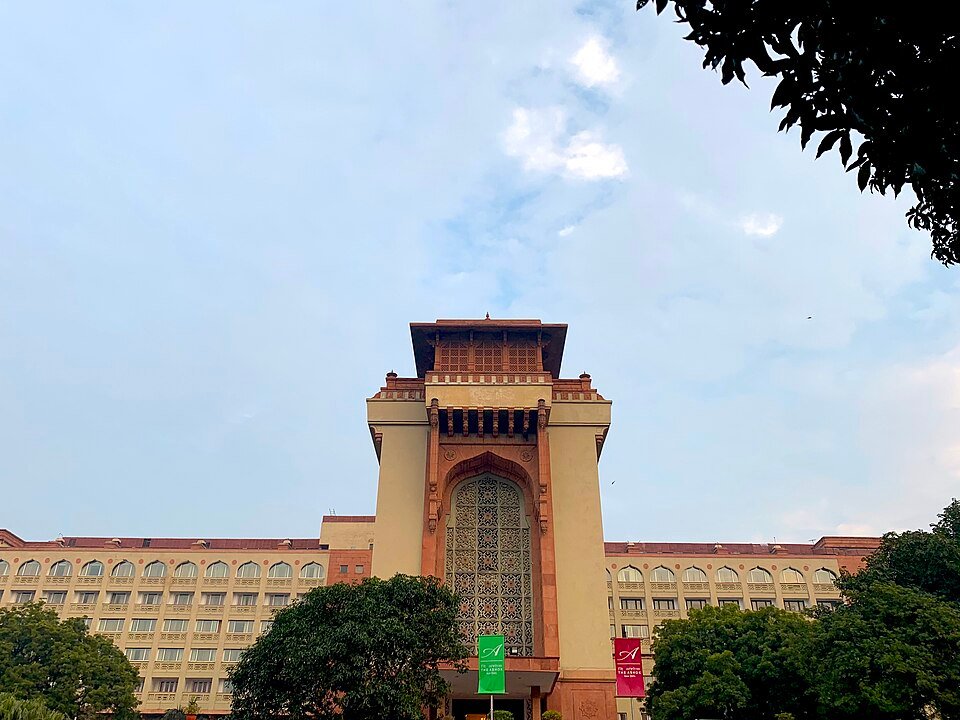
Hotel industry impact: The India Tourism Development Corporation (ITDC), founded in 1966, created the Ashok Group of hotels to provide quality accommodation for travelers.
Economic significance: These foundations established tourism as a recognised sector worthy of public investment.
Domestic Tourism vs International Tourism in India
Two Very Different Scales
India’s Tourism Segments
Religious Tourism fastest-growing
India’s largest and fastest-growing segment. Tirupati, Vaishno Devi, Varanasi, Shirdi, the Golden Temple, Char Dham and now Ayodhya draw enormous crowds, driving steady, year-round hotel demand in temple towns.
Heritage Tourism history
The Taj Mahal, Rajasthan’s forts and palaces, and historic cities like Jaipur and Hampi anchor cultural travel, supporting heritage hotels and palace-stay experiences.
Adventure Tourism outdoors
The Himalayas, Ladakh, the Northeast and Goa’s water sports fuel trekking, rafting and biking, boosting demand for camps, homestays and adventure lodges.
Eco-Tourism nature
Kerala’s backwaters, the Western Ghats and forest reserves attract responsible travelers, growing eco-resorts and community-based stays.
Medical Tourism healthcare
India is a leading global medical-tourism hub, drawing patients for affordable, high-quality treatment and supporting hospitality near major hospitals.
Luxury Tourism premium
Palace hotels, luxury trains like the Maharajas’ Express and high-end resorts cater to affluent Indians and foreigners seeking premium experiences.
Beach Tourism coast
Goa, Kerala, the Andamans and emerging coastal spots remain leisure favourites, sustaining resorts, shacks and boutique stays.
Wildlife Tourism safaris
Tiger reserves like Ranthambore, Jim Corbett and Kaziranga draw wildlife lovers, supporting jungle lodges and safari tourism.
Key Institutions & Hotel Brands
Ministry of Tourism
India’s central tourism authority, responsible for policy, promotion and the Incredible India campaign. It publishes the official domestic and foreign tourist statistics used across the industry.
India Tourism Development Corporation (ITDC)
Founded in 1966, ITDC built early tourism infrastructure and the Ashok Group of hotels, helping establish organised hospitality across the country.
FHRAI
The Federation of Hotel and Restaurant Associations of India represents the hospitality industry, advocating for hotels and restaurants on policy, taxation and growth.
Indian Hotels Company Limited (IHCL)
India’s flagship hospitality company and operator of the iconic Taj brand. A Tata group company, IHCL is among the country’s largest and most prestigious hotel operators.
OYO
Founded in 2013 by Ritesh Agarwal, OYO transformed India’s fragmented budget-hotel market into a branded, app-bookable network, becoming a global hospitality name.
Marriott & Radisson
International groups like Marriott International and Radisson Hotel Group operate large India portfolios, expanding rapidly across business hubs and increasingly into smaller cities.
Case Studies
Case Study 1 — Post-COVID Domestic Tourism Recovery
Background: The pandemic crushed travel in 2020. Timeline: visits fell to ~610 million, then rebounded to a record ~2.5 billion by 2023. Hotel impact: occupancy and room rates hit multi-year highs. Lesson: domestic demand is the industry’s most resilient foundation.
Case Study 2 — The Ayodhya Tourism Boom
Background: Ayodhya’s Ram Mandir opened in January 2024. Timeline: rapid infrastructure build-out, including a new airport. Hotel impact: a surge of hotel investment and openings. Lesson: a single landmark event can create a major new hospitality market.
Case Study 3 — Char Dham Tourism Growth
Background: The Char Dham pilgrimage in Uttarakhand draws millions yearly. Timeline: improved roads and connectivity boosted footfall to record levels. Hotel impact: demand for guesthouses and lodges along the route. Lesson: connectivity directly multiplies pilgrimage tourism.
Case Study 4 — The Rise of OYO & Budget Hospitality
Background: India’s budget-hotel market was vast but unorganised. Timeline: OYO scaled from one hotel (2013) to a global brand. Hotel impact: standardised, app-bookable budget stays. Lesson: technology can organise a fragmented market at huge scale.
Case Study 5 — Goa Beyond International Tourism
Background: Goa long relied on foreign charter tourists. Timeline: domestic travelers increasingly dominate, especially post-COVID. Hotel impact: a shift toward domestic-focused resorts and weekend travel. Lesson: destinations thrive by adapting to the domestic market.
Data Tables
Figures are approximate, drawn from Ministry of Tourism data and industry estimates, and may be revised.
| Year | Domestic Tourist Visits (approx.) | Context |
|---|---|---|
| 2017 | ~1.65 billion | Steady growth |
| 2019 | ~2.3 billion | Pre-pandemic peak |
| 2020 | ~610 million | COVID-19 collapse |
| 2021 | ~677 million | Partial recovery |
| 2022 | ~1.73 billion | Strong rebound |
| 2023 | ~2.5 billion | Record high |
| Most Visited States (Domestic) | Key Draws |
|---|---|
| Uttar Pradesh | Varanasi, Ayodhya, Agra, Mathura |
| Tamil Nadu | Temples, Chennai, hill stations |
| Karnataka | Bengaluru, Mysuru, Hampi |
| Andhra Pradesh | Tirupati pilgrimage |
| Maharashtra | Mumbai, Shirdi, Ajanta-Ellora |
| Era | Hotel Industry Shift |
|---|---|
| 1950s–60s | State-led hotels (ITDC, Ashok Group) |
| 1990s | Liberalization; global brands enter |
| 2000s | Business hotels & modern chains scale |
| 2010s | OYO & online booking transform budget stays |
| 2020s | Recovery, premiumisation, Tier-2/3 expansion |
| Top Pilgrimage Destination | State | Significance |
|---|---|---|
| Tirupati (Tirumala) | Andhra Pradesh | Among the most-visited temples on Earth |
| Vaishno Devi | Jammu & Kashmir | Major Himalayan pilgrimage |
| Ayodhya | Uttar Pradesh | Ram Mandir, surging since 2024 |
| Varanasi | Uttar Pradesh | Ancient spiritual centre |
| Golden Temple | Punjab | Holiest Sikh shrine, Amritsar |
| Shirdi | Maharashtra | Sai Baba pilgrimage |
| Hotel Occupancy Trend | Period | Pattern |
|---|---|---|
| Pre-pandemic | 2018–19 | Healthy, metro-led occupancy |
| Pandemic low | 2020 | Sharp collapse in occupancy |
| Recovery | 2021–22 | Leisure & drive-to demand rises |
| Boom | 2023–24 | Multi-year-high occupancy & rates |
Trends, Records & Transformations
What’s Driving India’s Travel Boom
- Record year: 2023’s estimated 2.5 billion domestic visits marked an all-time high for Indian tourism.
- Spiritual surge: Ayodhya’s 2024 temple opening created one of India’s fastest-growing tourism markets almost overnight.
- Budget revolution: OYO turned millions of small, unbranded rooms into a single app-bookable network.
- Drive-to travel: the pandemic permanently boosted road trips and weekend getaways from cities.
- Tier-2/3 rise: hotel growth is now fastest outside the big metros, in smaller cities and temple towns.
- Premiumisation: Indian travelers are spending more on luxury stays, experiences and wellness.
Explore More Timelines
People Also Ask
Frequently Asked Questions
Explore More Timelines
⚠️ Sources & E-E-A-T Note
This article separates government tourism statistics (Ministry of Tourism, India Tourism Statistics), industry reports and hotel-company information from analyst commentary and future projections. All figures are approximate, may be revised, and reflect publicly available data at the time of writing. Statistics on tourist visits, GDP contribution and occupancy come from official and industry estimates and can vary by methodology. This is editorial information, not investment or travel advice.
Sources & further reading
Every dated entry above was checked against these references. Last reviewed 15 September 2026.