Jharkhand Student Protest 2026: Why Talks Over the JPSC Exam Row Keep Failing
Jharkhand students and govt held 5 failed rounds of talks over alleged JPSC exam irregularities since 25 July 2026. Sourced timeline and latest status.
Latest Story
By Monday, the Jharkhand government and the students camped outside Ranchi’s Jaipal Singh Munda Stadium had been through six rounds of talks, a cancelled exam and three resigned commission members — and still no full resolution. On 9 August the government agreed to scrap the 14th JPSC prelim and two backlog exams, but refused the students’ central demand for a CBI probe. On 10 August, students marched on the Jharkhand Assembly anyway; police met them with tear gas, water cannons and baton charges after barricades were breached, and hunger-striking leader Devendra Nath Mahto, nine days into his fast, joined the march by ambulance. This Jharkhand student protest timeline tracks what is actually happening — a dispute over alleged irregularities in a state recruitment exam, not the older domicile-policy fight the name sometimes gets confused with — using only what has been reported and confirmed by named sources.
🧠 The Short Answer
Students in Ranchi have been protesting since 25 July 2026, alleging irregularities — including a leaked or tampered OMR answer sheet — in the 14th JPSC Combined Civil Services preliminary exam held 19 April 2026. On 9 August, after a sixth round of talks, the government agreed to cancel the 14th JPSC exam and two backlog exams, and all three sitting JPSC members resigned — but it rejected students’ central demand for a CBI probe, offering a CID/ED investigation with retired-judge oversight instead. Students called this roughly 98% of their demands met but said the CBI issue was non-negotiable, and on 10 August marched on the Jharkhand Assembly, where police used tear gas, water cannons and baton charges, injuring at least five protesters; hunger-striking leader Devendra Nath Mahto, nine days into his fast, joined the march by ambulance, and the CID separately arrested former JPSC chairman L. Khiangte. On 15 August, thousands of students marched a peaceful Tiranga Yatra through Ranchi on Independence Day, hospitalised hunger striker Devendra Nath Mahto was forcibly stopped by police from joining it, and Chief Minister Hemant Soren pledged “transparent examinations.” On 15–16 August, the JPSC-JSSC Reforms Manch escalated further — giving the government an ultimatum until 18 August, announcing effigy-burnings of Soren and Congress leader Rahul Gandhi across all 24 districts, and threatening to gherao the Chief Minister’s residence on 20 August while demanding his resignation — as hunger-striking protester Prem Nayak, 13 days into his fast, said he did not think he would survive much longer. On 17 August, protesters burnt effigies of Soren, Rahul Gandhi and RJD leader Tejashwi Yadav at Albert Ekka Chowk in Ranchi after a torchlight procession from the stadium, and the government held a seventh round of talks that afternoon with the JPSC-JSSC Reforms Manch at the State Guest House. Later that evening, a Cabinet meeting chaired by Soren agreed to cancel the JSSC-CGL exam and every recruitment exam conducted since 2014 by outsourced agency TSR Data Processing Pvt Ltd (TDPL), ordered a CID probe into TDPL’s role and a wider inquiry into 2014-onward recruitment exams, and set up an exam-reforms committee headed by senior IAS officer Amitabh Kaushal. Hunger-striking leaders Devendra Nath Mahto, Umme Habiba and Rahul Kranti ended their 16-day fast at Sadar Hospital after ministers Dipika Pandey Singh and Irfan Ansari offered them juice. Reforms Manch leader Ravindra Paswan said, “Our demand regarding the cancellation of the exams has been fulfilled, but the CBI investigation has not been done yet. Until that demand is met, we will not move from here.” On 19 August, after 26 days, the JPSC-JSSC Reforms Manch vacated its sit-in at Jaipal Singh Munda Stadium, students singing the national anthem as tents were removed, and gave the government a 60-day ultimatum to fully meet its demands. On 20 August, the Jharkhand High Court — a bench of Justice Deepak Roshan — stayed the government’s order cancelling appointments made through the JPSC’s 11th–13th exam and the Food Safety Officer exam, on petitions from already-appointed candidates, and sought responses from the state government and the JPSC; a day later, on 21 August, the court issued a second stay covering JSSC-CGL and CDPO recruitment appointments. Reacting to the stays, the Reforms Manch organised effigy-burnings of Chief Minister Hemant Soren across all 24 districts, leading to a police lathi-charge that dispersed a crowd at Gandhi Maidan in Ranchi, with further clashes reported in Hazaribagh and Giridih, and Devendra Nath Mahto announced a fresh “Bharti Vyavastha Sudhar Yatra” to begin 24 August. On 22 August, former Chief Minister and BJP leader Champai Soren demanded the government recommend a CBI probe. On 23–24 August, Devendra Nath Mahto launched a “Bharti Vyavastha Sudhar Yatra” from Nemra, touring all 24 districts to press for recruitment reform. The CBI-probe demand remains unresolved as of 24 August. On 25 August, police filed fresh FIRs over the 21 August effigy-burning clashes: at Korra police station in Hazaribag, 18 named protesters and roughly 700 unidentified people were booked, with police citing assault on eight personnel (including four sub-inspectors) and obstruction of officials; in Giridih, two more FIRs named 21 protesters — including JMM district president Sanjay Singh — and around 220 unidentified people, on similar charges. A protest leader questioned how some individuals could be named in both the Ranchi and Hazaribag FIRs simultaneously. On 26 August, Devendra Nath Mahto joined the second leg of the “Bharti Vyavastha Sudhar Yatra” as it reached Hazaribagh, telling the gathered crowd, “This is the ‘hunkaar’ [roar] of the youth across all 24 districts. Students now want concrete decisions, not assurances,” and said Jharkhand’s recruitment system had been “plagued” by corruption for 26 years, with jobs “sold” across 45 exams — a reference to the 45 recruitment exams the government has now cancelled or ordered probed since 9 August. The CBI-probe demand and the High Court’s stays on exam-cancellation orders remain unresolved as of 26 August. On 27 August, the reform yatra passed through Chatra and Giridih — with JLKM workers warning of a road blockade — on its way to Jamtara, as the Jharkhand High Court set 7 September for the state government and the JPSC to file replies ahead of a 15 September hearing on the cancelled-exam appointments.
Jharkhand Student Protest: Key Questions
The Protest at a Glance
- The trigger: a photocopied OMR answer sheet went viral, appearing to show a qualified candidate answered fewer than half the questions in Paper 1 yet cleared the cutoff for the 14th JPSC prelim.
- The response so far: Jharkhand’s CID has filed FIRs and made 20 arrests as of 10 August, including a JPSC Deputy Controller and, on 10 August, former JPSC chairman L. Khiangte, who had earlier resigned amid the raids.
- Fragmented negotiations: at least five separate rounds of government talks were held on 7–8 August with different student factions; all ended without agreement.
- The sixth round, on 9 August, produced the first real breakthrough: the government cancelled the 14th JPSC prelim plus the 2023 and 2025 backlog exams, and all three sitting JPSC members resigned.
- A health emergency inside the protest: hunger-striking JLKM leader Devendra Nath Mahto’s blood glucose was recorded at 53 before dawn on 9 August; he joined the 10 August Assembly march by ambulance regardless.
- The core disagreement, unresolved: students want a CBI or outside-judges probe; the government has offered only a state CID probe (plus a recommended ED probe) under retired-judge oversight.
- 10 August escalation: students marched on the Jharkhand Assembly over the unmet CBI demand; police met them with tear gas, water cannons and baton charges, injuring at least five, and detained BJP Leader of Opposition Babulal Marandi and BJP leader Aditya Sahu outside the Chief Minister’s residence, while the CID separately arrested former JPSC chairman L. Khiangte.
- The fallout, 11–12 August: BJP called a statewide bandh over the police action, the Assembly’s Monsoon Session was adjourned sine die a day early amid ruling-opposition clashes, and Mahto was hospitalised in critical condition, his fast reaching an 11th day; the sit-in itself entered its 19th consecutive day with student leaders warning of a broader “mass movement.”
- 13 August: Jharkhand Police filed an FIR over the 10 August Assembly march against roughly 600 people — about 100 named, the rest unidentified — citing stone-pelting and damage to public property; Mahto, still hospitalised, formally applied to the Civil Surgeon for discharge to rejoin the protest, writing that being away from fellow students was “a matter of mental agony… much more than the physical pain.”
- 14 August: Still hospitalised, Mahto sent a video appeal saying “power may come and go in a democracy but don’t blindly follow orders”; fellow hunger-striker Khush Mahto, ten days into his own fast, was hospitalised on its sixth day; and student leaders announced a “Tiranga Yatra” for Independence Day, 15 August, with participants expected from all 24 districts of Jharkhand. The sit-in reached its 21st consecutive day.
- 15 August: Thousands of students held a peaceful “Tiranga Yatra” from Jaipal Singh Munda Stadium on Independence Day, with two hunger-striking students taking part in wheelchairs; police forcibly stopped hospitalised hunger striker Devendra Nath Mahto from leaving to join the march after he had signed an undertaking accepting responsibility for his own health, and he said he suffered a chest injury in the scuffle. Chief Minister Hemant Soren said the government would ensure “transparent examinations” and was working on recruitment-system reforms. The sit-in reached its 22nd consecutive day.
- 16 August: The JPSC-JSSC Reforms Manch gave the government an ultimatum until 18 August, announced effigy-burnings of CM Hemant Soren and Rahul Gandhi in all 24 districts, and said it would gherao the Chief Minister’s residence on 20 August while demanding his resignation. Hunger-striking protester Prem Nayak, 13 days into his fast, said his health was critical and he did not expect to survive much longer. The sit-in reached its 23rd consecutive day.
- 17 August: Protesters burnt effigies of Soren, Rahul Gandhi and RJD leader Tejashwi Yadav at Albert Ekka Chowk after a torchlight procession from the stadium, accusing the JMM-Congress alliance of inaction; the same afternoon, the government held a seventh round of talks with the Reforms Manch at the State Guest House, its first since 9 August, with the Manch reaffirming its two core demands: a CBI probe and cancellation of the JSSC-CGL exam. The sit-in reached its 24th consecutive day.
- 17–18 August, the breakthrough: that evening, a Cabinet meeting chaired by Soren cancelled the JSSC-CGL exam and every exam conducted since 2014 by outsourced agency TDPL, ordered a CID probe into TDPL and a wider 2014-onward inquiry, and formed an exam-reforms committee under IAS officer Amitabh Kaushal; hunger-striking leaders Devendra Nath Mahto, Umme Habiba and Rahul Kranti then ended their 16-day fast. The CBI-probe demand remained unmet, and the sit-in reached its 25th consecutive day.
- 19 August, stir suspended: a day after the government notified cancellation of 22 recruitment exams and probes into 23 more, the JPSC-JSSC Reforms Manch vacated its 26-day sit-in at Jaipal Singh Munda Stadium, singing the national anthem as tents came down, and marched to Albert Ekka Chowk in a thanksgiving procession; leader Ravindra Paswan gave the government a 60-day ultimatum to fully meet its demands, including the still-unresolved CBI probe.
- 20 August, a legal setback: the Jharkhand High Court, a bench of Justice Deepak Roshan, stayed the government’s 17 August order cancelling appointments from the JPSC 11th–13th exam and the Food Safety Officer exam, on petitions from already-appointed candidates; the court sought responses from the state government and JPSC, a day after the sit-in itself had been suspended.
- 21 August, fallout: the High Court issued a second stay, covering JSSC-CGL and CDPO recruitment appointments; Reforms Manch leader Ravindra Paswan accused the government of reneging on its commitments after the first stay, saying its lawyer “did not even say a word” in court; students gathered at Gandhi Maidan in Ranchi and burnt effigies of CM Hemant Soren across all 24 districts, with further clashes reported in Hazaribagh and Giridih, and police lathi-charged and dispersed the Gandhi Maidan crowd after a scuffle over the seized effigy. Leader Piyush Kumar said protesters would act on a previously-issued 60-day ultimatum if the government failed to respond, and Devendra Nath Mahto announced a fresh “Bharti Vyavastha Sudhar Yatra” to begin 24 August. The CBI-probe demand remained unresolved.
- 22 August: Former Jharkhand Chief Minister and BJP leader Champai Soren accused the state government of cheating job aspirants and using police force against those seeking a fair probe, and demanded the government recommend a CBI probe into the alleged exam irregularities, on Day 29 since the protest began, with the stadium sit-in still suspended under the Manch’s 60-day ultimatum.
- 23–24 August, a new campaign: Devendra Nath Mahto confirmed his “Bharti Vyavastha Sudhar Yatra” would launch 24 August from Lukaiya Tand in Nemra under the banner “24 Districts, 24 Resolutions, One Voice,” opening with traditional rituals before touring all 24 districts to press for recruitment-system transparency — a shift from stadium occupation to a statewide awareness drive, run alongside the still-unmet 60-day ultimatum and CBI-probe demand.
- 25–26 August, legal fallout and the yatra continues: police filed fresh FIRs over the 21 August clashes — 18 named and roughly 700 unidentified in Hazaribag, plus 21 named (including a JMM district president) and around 220 unidentified across two Giridih FIRs, citing assault on eight police personnel in Hazaribag; a protest leader questioned overlapping names between the Ranchi and Hazaribag cases. On 26 August, Devendra Nath Mahto joined the Reform Yatra’s Hazaribagh leg, saying the recruitment system had been “plagued” by corruption for 26 years and that students wanted “concrete decisions, not assurances.”
- 30 August, the yatra reaches Sahibganj: Devendra Nath Mahto, who said the tour had by then passed through Ramgarh, Hazaribag, Chatra, Koderma, Giridih, Jamtara, Dumka and Pakur, addressed a public meeting at the Adivasi Welfare Hostel in Sahibganj, crediting the protest movement with pushing government action on 45 disputed exams — 22 cancelled, 17 under investigation and six postponed — and saying government jobs should rest on merit, “not connections or money.”
- 1–2 September, two legal-political tracks: on 1 September the Supreme Court, invoking Article 142, closed FIRs nationwide over student protests held 20–25 July 2026 — but since Jharkhand’s JPSC-JSSC agitation began after that window, its own FIRs (covering 950+ people from the 10 and 21 August incidents) were not automatically quashed; on 2 September, the Jharkhand BJP gave the state government a 48-hour ultimatum demanding FIR withdrawal, a CBI probe and action against JPSC/JSSC officials.
- 4 September, the ultimatum lapses: with the government giving no response, the Jharkhand BJP announced a four-day, 24-district agitation from 8–11 September, blockading DC and SP offices in six districts each day; state BJP president Aditya Sahu said the party would not let students’ voices be silenced “with legal cases,” while student leaders maintained the movement remains independent of any political party.
- 6–7 September, AJSU joins in: the AJSU Party carried out its own announced effigy-burning campaign against CM Hemant Soren over the alleged lathi-charge on JPSC-JSSC aspirants, with events at Seraikela, Chatra and Dhanbad district headquarters, a workers-police clash in Palamu, and a Chief Secretary memorandum on 7 September, running alongside the BJP’s separate 8–11 September, 24-district agitation.
- 8–9 September, the BJP agitation begins: the Jharkhand BJP launched its four-day, 24-district campaign on 8 September, covering Ranchi, Dumka, Hazaribag, Jamshedpur, Garhwa and Giridih on day one and Koderma, Sahibganj, Bokaro, Palamu, Simdega and Chaibasa on day two, gheraoing DC and SP offices at each headquarters to press for FIR withdrawal and a CBI probe, with twelve districts still to come on 10–11 September.
- A Supreme Court PIL seeks cancellation of the 19 April prelim and court-supervised safeguards for the recruitment process.
- Not the khatiyan protest: this dispute is organisationally linked to, but factually distinct from, Jharkhand’s older 1932-khatiyan/domicile-policy movement.
- An unusual alignment: both the BJP-led opposition and the ruling JMM’s own student wing, the Jharkhand Chhatra Morcha, have criticised the exam process.
Why Are Jharkhand Students Protesting?
The dispute traces back to one state recruitment exam, held four months before the protest began.
The Jharkhand Public Service Commission (JPSC) held the preliminary exam for its 14th Combined Civil Services recruitment on 19 April 2026. More than 36,000 candidates competed for 103 Group-A and Group-B posts — Deputy Collector, Deputy Superintendent of Police and similar administrative roles. Results were declared on 2 July 2026, qualifying 2,204 candidates for the Mains exam.
Roughly a month later, a photocopy of one qualified candidate’s OMR (bubble-sheet) answer key began circulating on social media. It appeared to show the candidate had marked answers for only 48 of 100 questions in Paper 1 — yet had still cleared the category cutoff. Without a published official answer key to check against, candidates who had prepared for months said they had no way to verify their own results either, and the single image became the spark for a broader allegation: that the exam’s scanning, coding or result-generation process had been tampered with.
Jharkhand’s Criminal Investigation Department (CID) registered a case around 21–22 July 2026. JPSC Chairman L. Khiangte resigned as CID raids proceeded, and has since been questioned multiple times. Students began a sit-in at Jaipal Singh Munda Stadium in Ranchi on 25 July 2026, and the protest has continued since, alongside an indefinite hunger strike.
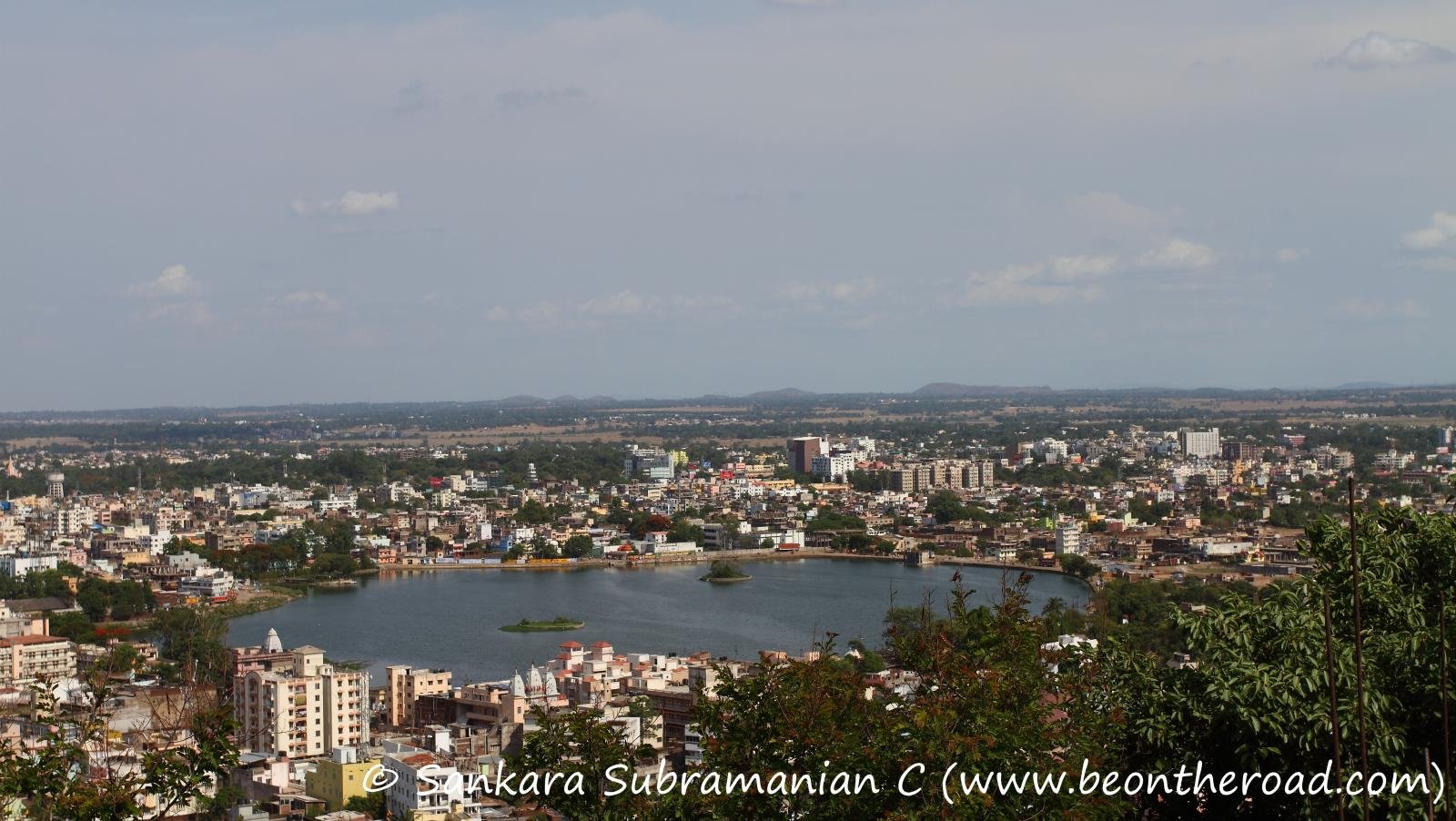
Ranchi, Jharkhand’s capital, where the protest, the hunger strike and every round of government talks have taken place. (Image: Sankara Subramanian, via Wikimedia Commons, CC BY 2.0)
What students want
The one demand every protesting group shares is cancellation of the 14th JPSC exam and a fresh, independent investigation — specifically by the CBI or a panel of retired High Court judges from outside Jharkhand, not the state’s own CID, which students say cannot investigate a state government body impartially. Beyond that shared core, individual groups have added their own demands (see the table below) — a distinction worth keeping clear, since not every protesting student wants exactly the same outcome.
Who has authority over this
The JPSC itself conducts and can in principle re-conduct the exam; the state Personnel/General Administration Department oversees recruitment rules; the CID (state police) and, if ordered, the CBI (federal) have investigative authority; and the courts — the Jharkhand High Court and the Supreme Court, where a public-interest petition is pending — can order safeguards, audits or a stay. No single actor can unilaterally satisfy every demand, which is part of why the dispute has proven hard to resolve in one meeting.
The Main Demands
Demands differ by student group. Treating them as one unified list misrepresents the protest.
| Demand | Raised by | Government position | Status |
|---|---|---|---|
| Cancel the 14th JPSC Combined Civil Services exam entirely | Shared across nearly all protesting groups | Accepted 9 Aug 2026, along with the 2023 and 2025 backlog exams | Accepted |
| Independent probe by the CBI, or a panel of retired High Court judges from outside Jharkhand | Shared central demand | Refused; government offered a CID probe, a recommended ED probe, and retired-judge oversight instead | Main point of disagreement, unresolved |
| Cancel a wider list of exams (14th JPSC 2023/2025 batches, JSSC-CGL, Forest Range Officer, Assistant Conservator of Forest, Assistant Public Prosecutor, JET 2026) | Broader demand circulating by 9 Aug 2026 | 14th JPSC + 2023/2025 backlogs cancelled 9 Aug; JSSC-CGL and every exam conducted since 2014 by TDPL cancelled 17 Aug, following a Cabinet meeting | Accepted |
| Create a Jharkhand Testing Agency (JTA), modelled on the National Testing Agency | NSUI | No government commitment found in available reporting | Proposal, not yet accepted |
| Include tribal and regional languages as qualifying exam papers | Adivasi Chhatra Sangh (ACS) | No confirmed response found in available reporting | Unresolved |
| Chief Minister Hemant Soren’s resignation and an Enforcement Directorate probe into alleged money laundering | Raised by one faction from 2 Aug 2026; echoed by JPSC-JSSC Reforms Manch leader Ravindra Paswan on 16 Aug 2026, alongside an announced 20 Aug gherao of the CM’s residence | Not accepted; CM has continued to lead the government’s response and hold talks | Rejected in practice; pressure escalating |
| Revoke the suspension and withdraw all cases against whistleblower and finance department officer Santosh Kumar Mastana | JPSC-JSSC Reforms Manch, raised alongside the 16 Aug 2026 ultimatum | No confirmed response found in available reporting | Unresolved |
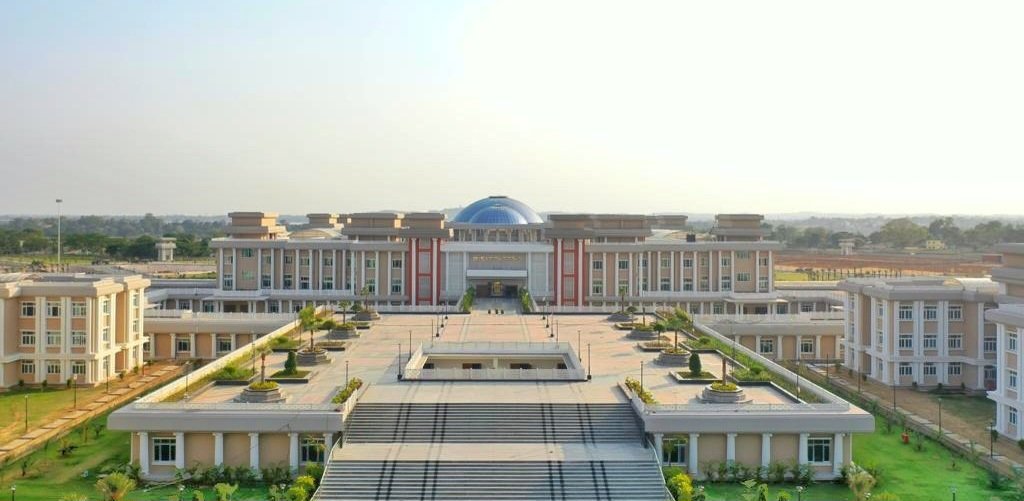
The Jharkhand High Court in Ranchi. A separate Supreme Court public-interest petition seeks cancellation of the 14th JPSC prelim and court-supervised safeguards for the recruitment process. (Image: Jharkhand High Court, via Wikimedia Commons, CC0)
What Happened in the Talks?
Not one meeting, but at least five — each with a different student delegation.
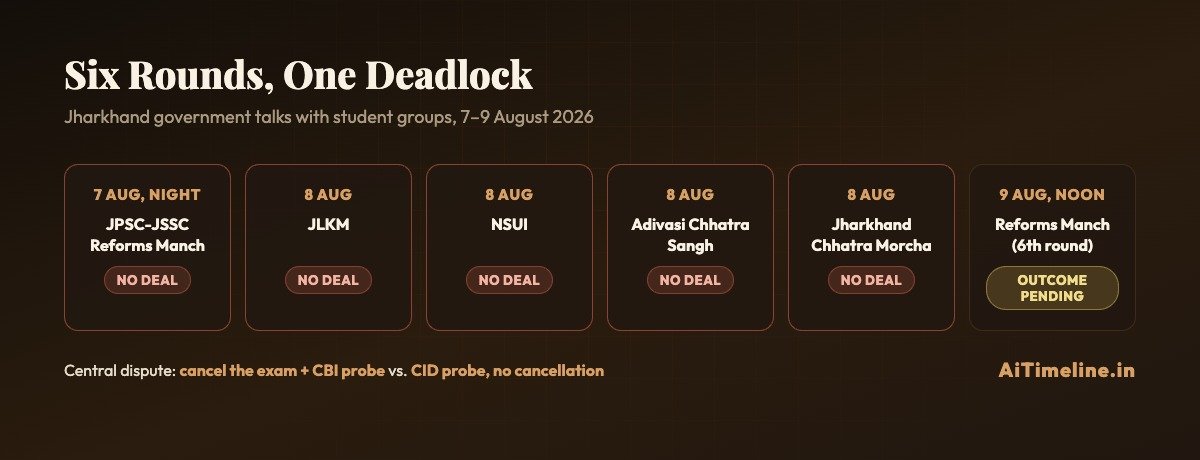
Five rounds of talks with five different student groups on 7–8 August 2026 ended without agreement; a sixth was held on 9 August. (Graphic: AiTimeline)
On the night of Friday, 7 August 2026, the government held its first documented round of talks, meeting a 10-member delegation from the JPSC-JSSC Reforms Manch — the group that had organised the original sit-in — at the State Guest House in Ranchi. Separately that day, a group of ABVP protesters marching toward the Chief Minister’s residence were briefly detained by police and later released, and AISA national president Neha Bora was attacked with ink during a march to the Assembly; the circumstances of that attack were not established in reporting reviewed for this article.
On Saturday, 8 August, the government held four further, separate rounds — with JLKM (led by Devendra Nath Mahto, roughly two hours, also at the State Guest House in Morabadi), NSUI, the Adivasi Chhatra Sangh, and the JMM’s own student wing, the Jharkhand Chhatra Morcha. A government panel — reported to include ministers Sudivya Kumar Sonu, Dipika Pandey Singh, Chamra Linda and Sanjay Prasad Yadav — conducted the talks and briefed Chief Minister Hemant Soren afterward. Every round that day ended without a breakthrough.
Minister Sudivya Kumar Sonu said consultations “would not be restricted to a single organisation” and that the government was “committed to engaging with all student groups to reach a collective decision.” Labour Minister Sanjay Prasad Yadav said “the demands of the protesting aspirants are genuine.” Minister Dipika Pandey Singh described the atmosphere as “positive” and said it had been decided that a further round would be held with the CM at noon the next day.
By evening on 8 August, the government announced a sixth round of talks for 12:00 pm on Sunday, 9 August — again with the Reforms Manch. The Manch’s response was sharply critical: leader Ravindra Paswan said, “This is political manoeuvring by the government. It is trying to create a divide among students and divert attention. But they should know that all students are united.” Separately, protesting students had earlier finalised an 11-member negotiating delegation (eight student representatives, one lawyer and two technical experts) to represent their side in future rounds.
The sixth round, held as scheduled, produced the protest’s first substantive breakthrough: the government agreed to cancel the 14th JPSC prelim along with the 2023 and 2025 backlog exams, and all three sitting JPSC members — Ajeeta Bhattacharya, Anima Hansda and Jamal Ahmad — resigned the same day, ahead of scheduled CID questioning. Minister Sudivya Kumar Sonu said the CID would investigate the “criminal aspects” and that the government would separately request an Enforcement Directorate probe into alleged financial irregularities, with a retired judge monitoring the process; officials described this as accepting roughly 98% of student demands. Students disagreed the matter was settled: the outstanding demand — a CBI probe rather than CID/ED oversight — was, in their view, non-negotiable, and the JPSC-JSSC Reforms Manch went ahead with its planned 10 August march on the Jharkhand Assembly. Protesters breached multiple police barricades en route; police responded with tear gas, water cannons and baton charges, injuring at least five protesters, one seriously. Devendra Nath Mahto, nine days into his hunger strike, joined the march by ambulance and urged students to keep it peaceful. Police detained BJP Leader of Opposition Babulal Marandi and BJP leader Aditya Sahu outside the Chief Minister’s residence, and the CID separately arrested former JPSC chairman L. Khiangte, who had resigned in July amid the same investigation.
Why Did the Talks Fail?
Not one single cause — several, layered reasons, based on what has actually been reported.
- A core disagreement on the demand itself: students want the exam cancelled and a CBI or outside-judges probe; the government has offered a state CID investigation, which students consider insufficiently independent since it examines the government’s own recruitment body.
- Fragmented, faction-by-faction negotiation: rather than one unified round with all groups together, the government met the Reforms Manch, JLKM, NSUI, ACS and JCM separately across two days — a structure the Reforms Manch itself has publicly called an attempt to “create a divide” and “divert attention.”
- A partial, verbal commitment: ministers announced cancellation of three exams on 9 August, but no source reviewed reports a formal written order to that effect, and no commitment at all — verbal or written — was made on a CBI probe.
- A live health crisis raising the stakes: Devendra Nath Mahto’s hunger strike and deteriorating health mean each round carries urgency beyond the policy questions themselves, which student leaders have suggested is being used as leverage on both sides.
- Legal and administrative constraints: cancelling an exam and re-running it, and choosing which agency investigates, are decisions that involve the JPSC, the state’s legal department and — via the pending Supreme Court petition — potentially the courts, not something any single meeting can resolve outright.
Given this, the accurate description is not that all talks “failed,” but that five successive rounds ended without agreement, a sixth produced a partial settlement — cancellation of three exams and three JPSC resignations — while the single demand students call non-negotiable, a CBI probe, remained unmet, prompting the 10 August Assembly march.
Student Perspective
Devendra Nath Mahto, the JLKM vice-president on hunger strike since the protest’s early days, described his condition in his own words as his fast entered its second week: his blood sugar and blood pressure were low, his body dehydrated, his legs heavy, and he was having difficulty breathing. He explicitly denied ending his fast when some reports suggested otherwise, saying it would “continue until students’ demands are met.” Fellow protester Prem Nayak alleged that officials were attempting to remove Mahto from the protest site to hospitalise him, which he characterised as an attempt to suppress the movement — this is Nayak’s allegation; no government confirmation of such an attempt was found.
Protester Piyush Singh was quoted saying, “The process has become a punishment for us students.” Other protesters, quoted 2 August, said: “If you cannot handle this, then please resign,” and “We do not want a CID investigation; we want a CBI investigation,” adding, “We have nothing to do with politics. We are students, and we are demanding our rights.” Some protesters displayed placards alleging specific bribe “rates” for government posts (for example, ₹50 lakh for a Forest Range Officer post) — these figures are protester allegations displayed on placards, not independently verified claims.
On 9 August, JLKM founder and Dumri MLA Jairam Kumar Mahato held a one-day solidarity fast in support of the students — a notable gesture given that JLKM’s own political roots lie in an earlier Jharkhand youth movement (see Political Context, below).
On 10 August, nine days into his fast, Mahto left the protest site by ambulance to join the Assembly march in person, telling fellow students, “No blood should spill here, it should stay peaceful.”
Government Perspective
Chief Minister Hemant Soren said the government was “ready to talk,” inviting students to dialogue, and separately said the government was “sensitive to students’ concerns” and taking the matter “very seriously,” while noting that any decision would follow the ongoing investigation and applicable legal provisions. He also placed the episode in a wider frame, saying alleged paper leaks are “not just an issue of Jharkhand, but… a major national problem.” On 15 August, marking Independence Day as the sit-in reached its 22nd day, he said the government was working to ensure “transparent examinations” and had decided to bring changes to the recruitment system.
The government’s concrete steps so far: a CID case with FIRs filed under the Bharatiya Nyaya Sanhita, 2023 (citing conspiracy, cheating and forgery), 20 arrests as of 10 August, including former JPSC chairman L. Khiangte, a dedicated feedback email address (jpsc.jssc.feedback@gmail.com) inviting reform suggestions from students and stakeholders, six rounds of ministerial-level talks, and, on 9 August, cancellation of the 14th JPSC prelim plus the 2023 and 2025 backlog exams along with the resignations of all three sitting JPSC members. Minister Sudivya Kumar Sonu said the CID would investigate “criminal aspects” and that the government would separately seek an Enforcement Directorate probe into alleged financial irregularities, with a retired judge monitoring the process. What the government has not agreed to, per reporting reviewed: a CBI (rather than CID/ED) probe, or cancellation of the JSSC-CGL exam, which it says was conducted under court orders with results already published.
Police and Administration
Jharkhand’s CID has made 20 arrests as of 10 August 2026, up from 19 reported on 8–9 August and 11 on 3 August — including JPSC Deputy Controller Shweta Kumari Gupta, directors of a data-processing firm involved in exam operations, an individual described in reporting as an alleged “syndicate mastermind,” and, on 10 August, former JPSC chairman L. Khiangte, who had already resigned amid the earlier raids. BJP’s Babulal Marandi called the Khiangte arrest merely a “show” and repeated the demand for a CBI probe. On 7 August, police detained 8–10 ABVP protesters, including named office-bearers, near the Chief Minister’s residence; Deputy Superintendent of Police Ajay Aryan confirmed the detentions, and those detained were later released. AISA national president Neha Bora was attacked with ink during an Assembly march the same day; the perpetrator and motive were not established in the sources reviewed. On 10 August, protesters breached multiple police barricades near Jagannathpur Temple during the students’ Assembly gherao march, and police used tear gas, water cannons and baton (lathi) charges to disperse them, injuring at least five protesters, one seriously; police said the response was aimed at controlling the crowd safely. Police separately detained BJP Leader of Opposition Babulal Marandi and BJP leader Aditya Sahu outside the Chief Minister’s residence.
A separate, earlier claim this article does not confirm: a widely-referenced report of police using a lathi charge against exam candidates in Ranchi could not be confidently dated to this (2026) protest by the sources checked — it more likely describes a December 2024 incident during an earlier, separate JSSC-CGL paper-verification dispute (see Before the Protest, below), distinct from the confirmed 10 August 2026 police action described above.
Separately, a Supreme Court bench made general remarks on 5 August 2026 urging restraint in how authorities handle student protesters — but this was made in a different, national case concerning the Cockroach Janta Party’s Delhi demonstrations, not a Jharkhand-specific order, and should not be reported as such.
Jharkhand CID
State Criminal Investigation Department; filed FIRs under the Bharatiya Nyaya Sanhita, 2023 over alleged JPSC exam irregularities; made 20 arrests as of 10 Aug 2026, including former JPSC chairman L. Khiangte.
Jharkhand Public Service Commission (JPSC)
Conducts the state’s civil-services exams; its chairman, L. Khiangte, resigned amid CID raids into the 14th Combined Civil Services exam and was arrested by CID on 10 August. Its three remaining sitting members resigned on 9 August, ahead of scheduled CID questioning.
JPSC-JSSC Reforms Manch
Organised the original 25 July sit-in; negotiated the first and sixth rounds of talks; publicly accused the government of “political manoeuvring” over the multi-faction talks structure.
Jharkhand Loktantrik Krantikari Morcha (JLKM)
Vice-president Devendra Nath Mahto is on indefinite hunger strike; founder Jairam Kumar Mahato is a sitting Dumri MLA. Grew out of the earlier 2023 Bhasha-Khatiyan movement.
What Each Side Wants
A CBI probe — the one remaining core demand after 17 August; publish the official answer key; ensure the Amitabh Kaushal reforms committee delivers real safeguards.
Cancelled the 14th JPSC exam and two backlog exams on 9 August, then the JSSC-CGL exam and every TDPL-conducted exam since 2014 on 17 August; ordered a CID probe, plus a recommended ED probe, with retired-judge oversight instead of a CBI probe; three JPSC members resigned; still no commitment to a CBI probe.
Master Timeline: The 2026 Protest
Reverse-chronological (newest first). Older Jharkhand recruitment and domicile-policy history is covered separately, below.
BJP Agitation Reaches Six More Districts on Day Two
What happened: The Jharkhand BJP’s 24-district agitation moved into Koderma, Sahibganj, Bokaro, Palamu, Simdega and Chaibasa on its second day, with party workers again gheraoing Deputy Commissioner and Superintendent of Police offices, pressing the same two demands: withdrawal of cases against roughly 1,000 booked students and a CBI probe into recruitment-exam irregularities dating back seven years. The remaining twelve districts were scheduled for 10–11 September (per The Jharkhand Story, 9 September).
Why it mattered: It confirmed the BJP campaign was proceeding as planned rather than fizzling after its opening day, keeping district-level pressure on the government while the CBI-probe demand and the High Court’s JPSC-chairman timeline deadline (10 September) both remained open.
Jharkhand BJP Begins Four-Day, 24-District Agitation Over Recruitment Row
What happened: The Jharkhand BJP launched a four-day, 24-district agitation over the JPSC-JSSC recruitment dispute, after the state government let its 2 September 48-hour ultimatum lapse without response. The first day covered six districts — state BJP president Aditya Sahu leading in Ranchi, Leader of Opposition Babulal Marandi in Dumka, former Chief Ministers Raghubar Das in Hazaribag and Madhu Koda in Jamshedpur, and Union minister Sanjay Seth in Garhwa, with Giridih the sixth — and party workers gheraoed Deputy Commissioner and Superintendent of Police offices at each headquarters, with the remaining eighteen districts scheduled for 9–11 September. BJP general secretary Amar Bauri said the protest sought “withdrawal of cases against students and a CBI probe into irregularities in recruitment examinations” (per The Meghalayan Express and Udit Vani, 7–8 September).
Why it mattered: It turned the opposition’s backing of the student movement into a sustained, statewide campaign built around the same two unmet demands — FIR withdrawal and a CBI probe — that the JPSC-JSSC Reforms Manch’s suspended sit-in and Devendra Nath Mahto’s reform yatra were already pressing on separate tracks.
Jharkhand BJP Gives Government 48-Hour Ultimatum Over FIRs and CBI Probe
What happened: The Jharkhand BJP gave the state government a 48-hour ultimatum demanding immediate withdrawal of FIRs registered against protesting students, a recommended CBI probe into recruitment exams conducted over the past seven years, action against JPSC and JSSC members and supervising officials, and legal action against JMM workers accused of attacking demonstrators on 21 August. State BJP president Aditya Sahu said the party would “stand firmly with students in their demand for justice” (per The Jharkhand Story and Newstrack, 2 September).
Why it mattered: It marked the state’s main opposition party formally escalating its backing of the student movement’s two core unmet demands — FIR withdrawal and a CBI probe — with a public deadline and the threat of joining the agitation directly if the government did not act.
Supreme Court Closes Nationwide Student-Protest FIRs — But Not Jharkhand’s
What happened: A three-judge Supreme Court bench led by Chief Justice Surya Kant, invoking Article 142, ordered that FIRs registered nationwide over student protests held between 20 and 25 July 2026 be treated as closed. Because Jharkhand’s JPSC-JSSC protest began after that window — its major FIR-triggering incidents came on 10 and 21 August, covering more than 950 people — the order did not automatically quash the Jharkhand cases (per Prabhat Khabar, 1 September).
Why it mattered: The ruling clarified that Jharkhand’s protesters could not rely on the nationwide order and would need separate relief, either through the state government or their own court petitions, keeping the FIR question open even as the exam-cancellation and CBI-probe disputes continued on other legal tracks.
Reform Yatra Moves Through Chatra and Giridih; JLKM Warns of Road Blockade
What happened: The “Bharti Vyavastha Sudhar Yatra” travelled on from Hazaribagh, opening the day at the Maa Bhadrakali temple in Itkhori, Chatra district, before reaching Giridih, where corner meetings were held at Domchanch, Ghothambha and Gorimahua. JLKM workers at Giridih warned of a chakka jam (road blockade) if the alleged recruitment-exam irregularities were not addressed. Devendra Nath Mahto accused the state government of “betraying Jharkhand’s youth” and said the campaign would continue until “transparent recruitment” was assured; the marchers then set off for Jamtara, with Deoghar next on the route (per Amar Ujala and Giridih-based outlets, 27 August).
Why it mattered: A fourth day of sustained turnout across three more districts showed the movement holding together after the stadium sit-in ended, keeping public pressure on the unmet CBI-probe demand while the High Court’s exam-cancellation case awaited its 15 September hearing.
Mahto Joins Reform Yatra’s Hazaribagh Leg, Cites 26 Years of “Plagued” Recruitment System
What happened: Devendra Nath Mahto joined the “Bharti Vyavastha Sudhar Yatra” as it reached Hazaribagh, drawing a large turnout of students and job aspirants. He told the crowd, “This is the ‘hunkaar’ [roar] of the youth across all 24 districts. Students now want concrete decisions, not assurances,” and said Jharkhand’s recruitment system had been “plagued” by corruption for 26 years, with jobs effectively “sold” across 45 exams — a reference to the 45 recruitment exams the government has cancelled or ordered probed since 9 August.
Why it mattered: The Hazaribagh stop showed the yatra sustaining turnout beyond its Nemra launch, with Mahto again framing the movement’s remaining demands — chiefly the CBI probe — as unfinished business rather than a closed dispute.
Fresh FIRs Filed Against 900+ Protesters Over 21 August Clashes
What happened: Police filed fresh FIRs over the 21 August effigy-burning clashes. At Korra police station in Hazaribag, 18 named protesters and roughly 700 unidentified people were booked, with police citing assault on eight personnel — including four sub-inspectors — and obstruction of public servants. In Giridih, two further FIRs named 21 protesters, including JMM district president Sanjay Singh, and around 220 unidentified people, on similar charges. A protest leader questioned how some individuals could be named in both the earlier Ranchi FIR and the new Hazaribag one at the same time.
Why it mattered: The scale of the new bookings — over 900 people across the two districts, on top of the roughly 214 already named in Ranchi — showed the legal fallout from the 21 August clashes widening well beyond the capital, adding a new law-and-order front alongside the still-unresolved CBI-probe demand and the High Court’s pending exam-cancellation case.
Supreme Court Issues Notice to Centre, CBI and State on Plea to Move Probe to CBI
What happened: A Supreme Court bench headed by Chief Justice Surya Kant issued notice to the Union government, the CBI, the Jharkhand government and the Jharkhand Public Service Commission on a petition filed by social activist Harisharan Devgan, which seeks to transfer the investigation into the alleged 14th JPSC preliminary-exam irregularities from the state CID to the CBI, or to have it monitored by a retired Supreme Court judge. The court sought responses from the parties and passed no interim order (per Business Standard and The Tribune, 24 August).
Why it mattered: It was the first time the students’ central demand — a CBI or judge-led probe rather than a state CID inquiry — had drawn a formal response from the country’s top court, opening a second judicial track alongside the Jharkhand High Court’s separate proceedings on the exam-cancellation orders.
Reform Yatra Launches From Nemra Despite Villagers’ Axe-Wielding Blockade Threat
What happened: Devendra Nath Mahto launched the “Bharti Vyavastha Sudhar Yatra” from Lukaiya Tand in Nemra, Ramgarh district — the ancestral village of former Chief Minister Shibu Soren — under the banner “24 Districts, 24 Resolutions, One Voice.” Local residents gathered with sticks and axes, vowing to block his entry over fears he intended to burn an effigy of Chief Minister Hemant Soren there; one villager said, “If Devendra Mahto arrives, we will not let him enter the village. If he insists on proceeding, we will resort to force.” No physical clash or arrest was reported: Mahto and the students instead garlanded a statue of Shibu Soren and completed the planned inaugural rituals — led by senior pahans, with the national anthem sung to the beat of the madar and a sal sapling planted — before the yatra moved on toward the state’s other districts.
Why it mattered: The stand-off in a village tied to the Chief Minister’s own family showed the reform campaign’s ability to generate friction even without direct confrontation with police, while the yatra itself marked the protest’s shift from a stationary sit-in to a mobile, district-by-district awareness drive alongside the still-unmet CBI-probe demand.
Former CM Champai Soren Demands CBI Probe, Accuses Government of Cheating Job Aspirants
What happened: Former Jharkhand Chief Minister and BJP leader Champai Soren accused the state government of cheating job aspirants and using police force against those seeking a fair probe into the alleged exam irregularities. He demanded the state government recommend a CBI inquiry, saying the ruling alliance had no intention of delivering justice to the protesting job aspirants.
Why it mattered: The statement added a prominent opposition voice — a former chief minister — to the CBI-probe demand, days after the previous evening’s police lathi-charge at Gandhi Maidan, keeping political pressure on the government even as the sit-in’s core demand remained unresolved.
Second HC Stay Covers JSSC-CGL, CDPO; Effigy Protests Turn Violent Across Districts
What happened: Reacting to the High Court’s 20 August stay, JPSC-JSSC Reforms Manch leader Ravindra Paswan said the government had misled protesters, telling reporters: “The commitment made to us by the government was that all our demands had been accepted, that the exam had been cancelled and that there would be a proper investigation,” and that the government’s lawyer “did not even say a word” in court. The High Court issued a second stay the same day, covering JSSC-CGL and CDPO recruitment appointments. On the Manch’s call, hundreds of students gathered at Gandhi Maidan in Ranchi to burn an effigy of Chief Minister Hemant Soren, one of similar effigy-burnings held across all 24 districts of Jharkhand, with further clashes involving protesters, JMM workers and police reported in Hazaribagh and Giridih; when protesters moved to burn the Ranchi effigy, police seized it, sparking scuffles, and then lathi-charged and dispersed the crowd from the ground, with a heavy police contingent, water cannons and women personnel deployed on standby. Protesters alleged police and ruling-party workers tried to block their march and that women demonstrators were assaulted; police said the group had strayed from its officially sanctioned route. Leader Piyush Kumar said protesters had already issued the government a 60-day ultimatum and would act on it if demands remained unmet, and Devendra Nath Mahto announced a fresh “Bharti Vyavastha Sudhar Yatra” (Recruitment System Reform Yatra) to begin 24 August.
Why it mattered: The reaction showed the High Court’s stays — now covering every category of exam the government had cancelled on 17 August — had reopened a dispute the Cabinet decision was meant to have settled, barely two days after the Manch had itself suspended the stadium sit-in; with the CBI-probe demand still unresolved, effigy-burnings, multi-district clashes and Mahto’s newly announced Yatra became the visible continuation of the movement in place of the vacated site.
High Court Stays Government’s Order Cancelling JPSC-JSSC Exams and Appointments
What happened: A Jharkhand High Court bench of Justice Deepak Roshan stayed the state government’s 17 August order cancelling appointments made through the JPSC’s 11th–13th Combined Civil Services exam and the Food Safety Officer exam — the first of two stay orders the court would issue that week. The petitions were filed by successful, already-appointed candidates — some of whom said they had resigned other jobs or completed training to take up these posts — who argued the cancellation unfairly penalised candidates who had qualified through the prescribed process. The court sought responses from the state government and the JPSC.
Why it mattered: The stay put the government’s 17 August concession to the original protesters on hold, at least for the affected appointees, adding a legal complication on top of the 18 August counter-protest by JSSC-CGL appointees — while the JPSC-JSSC Reforms Manch’s core CBI-probe demand remained separately unresolved.
Students Suspend 26-Day Sit-In, Vacate Stadium, Give Government 60-Day Ultimatum
What happened: A day after the government notified the cancellation of 22 recruitment exams advertised between 2023 and 2026 and ordered probes into 23 more conducted since 2014, the JPSC-JSSC Reforms Manch vacated its 26-day sit-in at Jaipal Singh Munda Stadium. Students sang the national anthem as tents were taken down, then walked a thanksgiving procession to Albert Ekka Chowk to pay tribute to Jaipal Singh Munda and martyr Albert Ekka. Manch leader Ravindra Paswan said: “We are now suspending the stir and giving a two-month ultimatum to the government to resolve the issues and conduct a fair probe into recruitment exam irregularities.” Fellow leader Piyush Kumar Singh urged the Chief Minister to take “stringent measures to check recurrence of job exam irregularities.”
Why it mattered: This ended the physical occupation of the stadium that had run since 25 July, but the Manch explicitly framed it as a pause rather than a resolution — the CBI-probe demand remained unmet, and the 60-day ultimatum set a new deadline rather than closing the dispute.
Successful JSSC-CGL Candidates Stage Counter-Protest Against Exam Cancellation
What happened: Around 2,000 candidates who had already cleared the now-cancelled JSSC-CGL exam and received appointment letters marched from the state Secretariat (Project Bhawan) to Birsa Chowk in Ranchi, opposing the government’s 17 August decision to cancel the exam. They said they had qualified through the prescribed recruitment process and should not be penalised for alleged irregularities elsewhere in the system, urging the government to investigate and act against specific wrongdoers instead of scrapping the exam entirely, and signalled they would pursue legal options if the decision stood.
Why it mattered: The cancellation ordered a day earlier to satisfy the original protesters now created a second, opposing constituency with its own grievance, complicating the government’s position further — even as the JPSC-JSSC Reforms Manch kept its sit-in going over the still-unmet CBI-probe demand.
JSSC-CGL and All TDPL Exams Cancelled; Three Hunger Strikers End Fast
What happened: Following the afternoon’s seventh round of talks, a Cabinet meeting chaired by Chief Minister Hemant Soren on the evening of 17 August agreed to cancel the JSSC-CGL exam and every recruitment exam conducted since 2014 by outsourced agency TSR Data Processing Pvt Ltd (TDPL), ordered a CID probe into TDPL’s role alongside a wider inquiry into recruitment exams from 2014 onward, and set up an exam-reforms committee headed by senior IAS officer Amitabh Kaushal. Hunger-striking leaders Devendra Nath Mahto, Umme Habiba and Rahul Kranti ended their 16-day fast at Sadar Hospital, accepting juice offered by ministers Dipika Pandey Singh and Irfan Ansari.
Why it mattered: With this decision, every exam students wanted cancelled — the 14th JPSC prelim and its backlogs, plus JSSC-CGL and all TDPL-run exams — had now been cancelled, ending the health crisis around the hunger strike, but the CBI-probe demand that triggered the 10 August Assembly march remained unmet, so the JPSC-JSSC Reforms Manch kept the sit-in going.
Effigies Burnt in Ranchi; Seventh Round of Talks Held With Reforms Manch
What happened: Protesters held a torchlight procession from Jaipal Singh Munda Stadium to Albert Ekka Chowk and burnt effigies of Chief Minister Hemant Soren, Congress leader Rahul Gandhi and RJD leader Tejashwi Yadav, accusing the JMM-Congress alliance of failing to act on their demands. The same afternoon, the government invited the JPSC-JSSC Reforms Manch to a seventh round of talks at 2 pm at the State Guest House, its first since the 9 August round. Manch leader Ravindra Paswan said the group would attend to seek a resolution through dialogue but remained firm on two demands: a CBI probe into the recruitment exams and cancellation of the JSSC-CGL exam.
Why it mattered: The effigy-burning showed the protest’s anger extending beyond the state government to national Congress and RJD leaders, while the resumption of formal talks — the first since 9 August — reopened the possibility of progress on the still-unmet CBI-probe and JSSC-CGL demands ahead of the Manch’s 18 August ultimatum.
Reforms Manch Sets 18 Aug Ultimatum; Threatens Gherao and CM’s Resignation; Hunger Striker Says Health Critical
What happened: The JPSC-JSSC Reforms Manch gave the government an ultimatum until 18 August, announced it would burn effigies of Chief Minister Hemant Soren and Congress leader Rahul Gandhi across all 24 districts, and said it would gherao the Chief Minister’s residence in Ranchi on 20 August. Manch leader Ravindra Paswan explicitly demanded Soren’s resignation, saying “We seek his resignation as both the JMM and the Congress are playing politics with us.” Separately, hunger-striking protester Prem Nayak, 13 days into his fast, said a fever had set in, that he had refused hospital treatment, and that he did not think he would survive much longer, while accusing the government of forcibly removing fellow hunger striker Devendra Nath Mahto from the protest site.
Why it mattered: A CM-resignation demand, previously limited to one faction, was now voiced by the Reforms Manch’s own leadership, while a second hunger striker’s health crisis added new urgency as the sit-in entered its fourth week with the CBI-probe demand still unmet.
Tiranga Yatra Held; Police Stop Mahto From Joining; Soren Pledges Transparency
What happened: Thousands of students held a peaceful “Tiranga Yatra” from Jaipal Singh Munda Stadium through Ranchi on India’s 80th Independence Day, with two hunger-striking students taking part seated in wheelchairs. Devendra Nath Mahto, still hospitalised at Sadar Hospital, signed an undertaking accepting responsibility for his own health and tried to leave to join the march; police forcibly stopped him, and he said he suffered a chest injury in the scuffle before sitting in protest outside his hospital room. Chief Minister Hemant Soren said the government was working to ensure “transparent examinations” and had decided to bring changes to the recruitment system.
Why it mattered: The march showed the protest’s continued scale on a symbolically loaded date, while the attempt to stop Mahto from attending it in person, and the CM’s transparency pledge without a CBI commitment, kept the core stand-off unresolved.
Mahto Appeals From Hospital Bed; Students Announce Independence Day “Tiranga Yatra”
What happened: Still hospitalised at Sadar Hospital, Devendra Nath Mahto sent a video message appealing to the state government, a day after police filed an FIR against roughly 600 protesters. Fellow hunger-striker Khush Mahto, ten days into his own fast, was hospitalised on its sixth day. Student leaders under the JPSC-JSSC Reforms Manch banner announced a “Tiranga Yatra” for 15 August, Independence Day, with participants expected from all 24 districts of Jharkhand.
Why it mattered: The video appeal kept Mahto visible in the protest despite hospitalisation, while the planned Independence Day march signalled the movement’s intent to keep pressing the unmet CBI-probe demand into a fourth week.
Police File FIR Against 600 Protesters; Mahto Seeks Hospital Discharge
What happened: Jharkhand Police registered an FIR at the Assembly police station over the 10 August march, naming around 100 protesters with roughly 500 more unidentified, under multiple Bharatiya Nyaya Sanhita provisions covering stone-pelting and damage to public property. Devendra Nath Mahto, still hospitalised at Ranchi’s Sadar Hospital, submitted a formal application to the Civil Surgeon seeking discharge to return to the protest site.
Why it mattered: The FIR opened a new legal front in the standoff even as the CBI-probe demand from the government’s 9 August concessions remained unresolved, while Mahto’s request signalled his intent to keep leading the protest in person despite his health.
Protest Enters 19th Day; Mahto’s Fast Reaches Day 11 in Hospital
What happened: The sit-in at Jaipal Singh Munda Stadium continued into its 19th consecutive day. Devendra Nath Mahto’s hunger strike, under treatment at Ranchi’s Sadar Hospital since 10 August, reached its 11th day, with doctors describing his condition as critical after his blood sugar dropped again; fellow hunger-striker Prem Nayak reached nine days of fasting. Student leaders warned of a broader “mass movement” if the CBI-probe demand remains unmet.
Why it mattered: Despite the 9 August exam cancellations and the Assembly’s early adjournment the day before, the standoff over an independent probe was prolonging rather than resolving.
BJP Bandh Called; Assembly Session Adjourned Sine Die
What happened: The BJP called a statewide bandh over the previous day’s police action, with state president Aditya Sahu alleging hundreds of students, including women, were injured. Continuous ruling-opposition clashes over the JPSC-JSSC row led Speaker Rabindra Nath Mahato to adjourn the House twice before the Jharkhand Assembly’s Monsoon Session was adjourned sine die, a day ahead of schedule. Devendra Nath Mahto was hospitalised at Ranchi’s Sadar Hospital after his blood sugar dropped critically following the Assembly march.
Why it mattered: The unresolved CBI-probe demand moved from the street into the Assembly itself, disrupting the legislature enough to end its session early, while the protest’s most visible hunger striker required hospital care.
Assembly March Turns Violent; Ex-JPSC Chairman Arrested
What happened: The JPSC-JSSC Reforms Manch led a “Vidhan Sabha Gherao” march toward the Jharkhand Assembly after the CBI-probe demand went unmet. Protesters breached multiple police barricades near Jagannathpur Temple; police responded with tear gas, water cannons and baton charges, injuring at least five protesters, one seriously. Devendra Nath Mahto, nine days into his hunger strike, joined the march by ambulance. Police detained BJP Leader of Opposition Babulal Marandi and BJP leader Aditya Sahu outside the Chief Minister’s residence, and the CID separately arrested former JPSC chairman L. Khiangte, who had resigned in July amid the same investigation, taking the case’s total arrests to 20.
Why it mattered: The march escalated the standoff over the one demand — a CBI probe — that survived the previous day’s concessions; the police response was the first confirmed use of force against protesters in the 2026 movement, and the Khiangte arrest drew national opposition figures directly into the protest.
Sixth Round of Talks: Exams Cancelled, CBI Probe Refused
What happened: Devendra Nath Mahto’s blood glucose was recorded at 53 before dawn. JLKM founder Jairam Kumar Mahato held a one-day solidarity fast. In the sixth round of talks, the government agreed to cancel the 14th JPSC prelim and the 2023 and 2025 backlog exams; all three sitting JPSC members resigned. It offered a CID/ED probe with retired-judge oversight instead of the CBI probe students demanded.
Why it mattered: This was the protest’s first substantive concession, but it left the one demand students called non-negotiable — a CBI probe — unresolved, setting up the next day’s Assembly march.
Four Rounds of Talks Fail; SC Petition Filed; Sixth Round Announced
What happened: Government ministers held four separate rounds of talks with JLKM, NSUI, the Adivasi Chhatra Sangh and the Jharkhand Chhatra Morcha — all ending without agreement. A Supreme Court PIL was filed seeking cancellation of the exam. Arrests reached 19. The government announced a sixth round for the next day.
Why it mattered: Talking to factions separately, rather than jointly, became itself a point of contention.
First Round of Talks; ABVP Detentions; Ink Attack on AISA Leader
What happened: The government met a 10-member JPSC-JSSC Reforms Manch delegation. Separately, 8–10 ABVP protesters were briefly detained near the CM’s residence and released; AISA national president Neha Bora was attacked with ink during an Assembly march.
Why it mattered: The first formal government engagement with student representatives since the sit-in began.
Mahto Denies Ending Fast; Rahul Gandhi Calls Protesters
What happened: Devendra Nath Mahto publicly denied reports that he had ended his hunger strike. Congress leader Rahul Gandhi spoke by phone with protesting students, assuring support and saying he would raise the issue with the state government.
Supreme Court Urges Restraint — in a Separate, National Case
What happened: A Supreme Court bench made general remarks urging authorities to handle student protesters with restraint, in a case concerning the national Cockroach Janta Party’s Delhi demonstrations.
Arrest Count Reaches 11
What happened: CID arrests connected to the alleged exam irregularities reached 11, including JPSC Deputy Controller Shweta Kumari Gupta and directors of a private data-processing firm involved in exam operations.
Protest Intensifies; Some Demand CM’s Resignation
What happened: Protests intensified; some (not all) protesters additionally demanded CM Hemant Soren’s resignation and an Enforcement Directorate probe into alleged money laundering. Placards alleged specific bribe “rates” for government posts.
Sit-In Begins at Jaipal Singh Munda Stadium
What happened: Students began an open-ended sit-in, joined by an indefinite hunger strike from JLKM vice-president Devendra Nath Mahto.
CID Registers Case; JPSC Chairman Resigns
What happened: Jharkhand’s CID registered a case into the alleged 14th JPSC exam irregularities. JPSC Chairman L. Khiangte resigned as CID raids proceeded, and has since been questioned multiple times.
A Photocopied Answer Sheet Goes Viral
What happened: A photocopy of a qualified candidate’s OMR answer sheet circulated on social media, appearing to show only 48 of 100 questions answered in Paper 1 despite clearing the cutoff.
14th JPSC Prelim Results Declared
What happened: JPSC declared results for the 14th Combined Civil Services preliminary exam; 2,204 candidates qualified for the Mains stage.
14th JPSC Combined Civil Services Prelim Held
What happened: More than 36,000 candidates sat the exam, competing for 103 Group-A and Group-B posts.
Before the Protest: Jharkhand’s Exam-Integrity Record
The 2026 dispute did not happen in isolation — it follows a documented pattern.
Jharkhand’s recruitment exams have faced repeated integrity disputes well before 2026. A JPSC history-paper leak in 2003 forced a cancelled exam to be re-held in 2004, and a 2012 CBI case named around 50 people, including a then-sitting JPSC chairman. More recently, the JSSC-CGL 2023 exam had its results withheld for over a year amid leak allegations; a re-conducted sitting was itself alleged to have leaked (with claims that 135 of 150 answers matched leaked material). The JSSC-CGL exam was cancelled around 28 January 2024, and further rescheduled sittings through February and September 2024 also drew allegations. A former Chief Minister demanded a CBI investigation into one of these sittings. On 16 December 2024, police used a lathi charge to disperse candidates disrupting the JSSC-CGL paper-verification process in Ranchi, and a student leader was detained — a separate, earlier episode from anything reported in the current 2026 protest.
Current protesters explicitly cite this history as evidence of a recurring pattern rather than an isolated incident, which is part of why “correct this one exam” and “reform the whole system” have both emerged as demands.
Political Context: The 1932-Khatiyan Connection
A separate, older dispute — relevant background, not the subject of this protest.
Jharkhand has a long-running, separate political fight over its domicile policy — who legally counts as a “local” resident for reservation in state Group-3/Group-4 jobs. In 2016, the state’s first post-formation domicile policy set 1985 as the cutoff year for local status. Student and indigenous groups argued this let too many recent arrivals qualify, and campaigned instead for a cutoff based on the 1932 Khatiyan — Jharkhand’s last land-revenue survey before independence.
On 11 November 2022, the Jharkhand Assembly passed the “Jharkhand Definition of Local Persons” bill, setting the 1932 Khatiyan as the basis for local status alongside a proposed 77% total reservation in government jobs. The bill was forwarded, via the Governor, for possible inclusion in the Constitution’s Ninth Schedule (which would shield it from court challenge); its status after early 2023 could not be confirmed from sources reviewed for this article. Separately, a “60:40” employment policy — reserving 60% of Grade-3/4 posts for SC/ST/OBC/EWS candidates and 40% open to all — drew sustained opposition from the Jharkhand State Students’ Union (JSSU), which wanted 100% local reservation instead. JSSU-led bandhs and a 31-day “Maha Jan Andolan” ran through April–May 2023 across Ranchi, Hazaribagh, Deoghar and Palamau. In January 2024, the Jharkhand High Court quashed the revised 60:40 policy, and the government said it would bring amendments.
The organisational link to today’s protest: JSSU leader Devendra Mahto — now known as Devendra Nath Mahto — went on to help found the Jharkhandi Bhasha Khatiyan Sangharsh Samiti in June 2023 under Jairam Kumar Mahato, which evolved into the Jharkhand Loktantrik Krantikari Morcha (JLKM), registered with the Election Commission in August 2024. Jairam Mahato won the Dumri assembly seat in Jharkhand’s November 2024 state elections. The same activist network that fought the 1932-khatiyan and 60:40 battles is, today, leading the JPSC/JSSC exam-integrity protest — but the current demands are about exam irregularities, not domicile status, and conflating the two misrepresents both disputes.
Beyond JLKM, other political voices have weighed in on the current protest specifically: BJP Leader of Opposition Babulal Marandi alleged the CID and Anti-Corruption Bureau were being used to “cover up” irregularities, demanded a High-Court-supervised CBI probe, and personally met protesting students. AJSU said the opposition would not let the Assembly function until a CBI probe is ordered. Union Minister Sanjay Seth (BJP) visited protesters and said the Chief Minister “should have met students on the first day.” The issue caused sustained disruption in the Jharkhand Assembly’s monsoon session.
Why This Matters to Jharkhand’s Youth
For the roughly 36,000 candidates who sat the 14th JPSC prelim, a government post is not just a job but, in a state with limited large-scale private-sector employment, often the clearest path to financial stability. A disputed exam does not just delay one recruitment cycle — it revives a broader, well-documented worry that Jharkhand’s exam system cannot be trusted to reward preparation over manipulation, a concern candidates say is reinforced by the JSSC-CGL disputes of 2023–24 and older JPSC leak cases going back to 2003. That is the throughline connecting a specific 2026 exam dispute to a decade of Jharkhand recruitment controversies, even where the specific facts of each episode differ.
Legal and Administrative Context
Jharkhand’s CID has filed FIRs in the current case under the Bharatiya Nyaya Sanhita, 2023 (India’s replacement for the old IPC), citing conspiracy, cheating and forgery. A public-interest petition filed by social worker Harisharan Devgan reached the Supreme Court by 8 August 2026, seeking cancellation of the 19 April prelim, a fresh exam under court safeguards, an independent CBI or retired-judges probe, audits of the OMR scanning and result-generation systems, and preservation of all exam records. A separate Supreme Court ruling in February 2025 (Amrit Yadav v. State of Jharkhand) had already invalidated one Jharkhand Class-IV recruitment process and ordered a fresh advertisement with age relaxation — a precedent students cite as evidence that courts can and do intervene in flawed Jharkhand recruitment processes.
What Happens Next?
Possible paths based on what has been announced — not a prediction of which one occurs.
- Agreement in further talks: if the sixth (or a later) round produces a written commitment on either cancellation or the investigating agency, the sit-in could formally end.
- Court intervention: the pending Supreme Court petition could result in an order on the exam’s status, safeguards, or the investigating agency, independent of what the government offers in talks.
- Further escalation: after the 10 August march was met with tear gas, water cannons and baton charges, students could escalate further unless a CBI probe is ordered; ABVP has separately signalled its own actions.
- A health-driven turning point: Devendra Nath Mahto’s deteriorating condition could force either a medical intervention or an accelerated political response, independent of the underlying policy dispute.
- Continued stalemate: talks could continue in further separate rounds with different factions without a unified resolution, extending the current pattern.
Jharkhand Student Protest: What We Know vs What Is Claimed
| Issue | Verified fact | Claim / allegation | Who made it | Independent verification |
|---|---|---|---|---|
| 8 August talks | Four separate rounds held; all ended without agreement | Talks were “political manoeuvring” meant to divide students | JPSC-JSSC Reforms Manch (Ravindra Paswan) | Characterisation, not independently verifiable |
| “98% of demands met” | Government cancelled 3 exams and 3 JPSC members resigned on 9 Aug | Government frames this as roughly 98% of student demands satisfied | Government / Minister Sudivya Kumar Sonu | Students dispute this framing, calling the CBI probe non-negotiable |
| Arrests | 20 arrests reported by 10 Aug, up from 19 on 8–9 Aug and 11 on 3 Aug | A wider “syndicate” orchestrated the leak | Reported by press citing investigators | Partial — FIR filed, court process pending |
| Mahto’s removal | Blood glucose recorded at 53 on 9 Aug | Officials tried to forcibly remove him to suppress the protest | Fellow protester Prem Nayak | Not independently confirmed; no official response found |
| Bribery “rate card” | Placards displaying alleged figures were photographed at the protest | Specific bribe amounts (e.g. ₹50 lakh) for government posts | Unnamed protesters | No independent verification found |
| Police force at Assembly march | Police used tear gas, water cannons and baton charges against protesters at the 10 August Assembly march, injuring at least five | An earlier, separately circulated report of a lathi charge on exam candidates | Circulated report, source unclear on date | The 10 August police action is confirmed; the earlier circulated report more likely refers to a documented December 2024 incident, not 2026 |
Explore More Timelines
Myth vs Fact
Myth: This protest is about the 1932-khatiyan domicile policy.
Fact: It is not. The current (July–August 2026) protest is about alleged irregularities in the 14th JPSC exam. The 1932-khatiyan/domicile dispute is a separate, older issue last legislatively active in 2022–2024, led by an overlapping but distinct activist network.
Myth: One meeting failed and talks are over.
Fact: At least five rounds of talks were held on 7–8 August with different student factions, and a sixth was under way on 9 August. This is a fragmented, ongoing negotiation, not a single closed-and-failed meeting.
Myth: All protesting students want exactly the same thing.
Fact: Groups agree on cancelling the 14th JPSC exam, but differ on specifics — NSUI wants a new state testing agency, the Adivasi Chhatra Sangh wants regional-language exam papers, and only one faction has demanded the Chief Minister’s resignation.
Myth: The government has ignored the protest.
Fact: It opened a feedback channel, ordered a CID probe with FIRs and 20 arrests (including former JPSC chairman L. Khiangte), and held at least five rounds of talks. Students dispute whether these steps go far enough — not whether the government has responded at all.
Myth: The bribery “rate card” on protest placards is a confirmed fact.
Fact: These figures are allegations displayed by protesters; no government finding or court record confirms a bribery rate card for specific posts.
Myth: The government has agreed to a CBI probe.
Fact: As of the last verified update (18 August 2026), the government has committed only to a CID investigation, plus a recommended ED probe and retired-judge oversight — not a CBI probe, despite CM Hemant Soren’s 15 August pledge to ensure “transparent examinations” and the 17 August cancellation of every disputed exam. This is the one demand students say still hasn’t been met, and the reason for the 10 August Assembly march.
Myth: The 14th JPSC exam has not been cancelled.
Fact: It has. The government agreed on 9 August 2026 to cancel the 14th JPSC prelim, along with the 2023 and 2025 backlog exams, though no source reviewed reports a formal written cancellation order distinct from the ministerial announcement.
Myth: The JPSC chairman was only questioned, never arrested.
Fact: He resigned amid CID raids in July and was questioned multiple times, but the CID arrested him on 10 August 2026 in connection with the exam-irregularities case, taking the total number of arrests to 20.
Myth: This is Jharkhand’s first exam-integrity protest.
Fact: It follows a documented pattern, including the JSSC-CGL 2023–24 paper-leak saga and JPSC leak allegations dating to 2003 and 2012.
Myth: The 5 August Supreme Court remarks were about the Jharkhand protest.
Fact: Those remarks were made in a separate, national case concerning the Cockroach Janta Party’s Delhi protests, not a Jharkhand-specific order.
Myth: The dispute has been resolved.
Fact: Partially. The government has now cancelled every disputed exam — the 14th JPSC prelim and its backlogs on 9 August, then the JSSC-CGL exam and all TDPL-conducted exams on 17 August — and three hunger strikers ended their fast as a result, but the CBI-probe demand remains unmet. As of the last verified update, the stadium sit-in itself is suspended under a 60-day ultimatum given on 19 August, while effigy-burning protests and a newly announced reform Yatra continue the movement in a different form, and the dispute is not fully resolved.
Internal Links
⚠️ Editorial Note
This article separates confirmed reporting from allegations and clearly flags claims that could not be independently verified. It is compiled from publicly available reporting by named Indian news organisations (see Sources & further reading, below), cross-checked across multiple outlets. Nothing in this article should be read as a legal finding of guilt or wrongdoing by any named individual; investigations described here (CID FIRs, arrests, court petitions) are ongoing and allegations remain allegations until adjudicated.
Because this is an evolving story, dates, official positions and the protest’s status may change. This page is updated when significant developments are verified, and earlier entries are preserved rather than deleted.
Sources & further reading
Every dated entry above was checked against these references. Last reviewed 15 September 2026.
- The Print - Jharkhand students protest a cycle of paper leaks, it began with a viral answer sheet
- Siasat - Jharkhand student protests: talks with govt end in deadlock
- The Federal - Jharkhand govt calls 6th round of talks, students slam 'political manoeuvring'
- The Tribune - Jharkhand exam stir: govt to hold fresh talks; health of student leader on fast deteriorates
- The Week - Jharkhand recruitment protest: JPSC-JSSC student demands, exam reform, paper leak, student talks
- India TV - JPSC exam irregularities matter reaches Supreme Court amid ongoing protests
- India TV - Hemant Soren invites students for dialogue amid ongoing protest
- Business Today - 'If you can't handle this, then resign': JPSC paper-leak protest intensifies