Cuban Missile Crisis Timeline: How Back-Channel Diplomacy Averted War
Cuban Missile Crisis timeline, 16-28 Oct 1962: day-by-day events, the secret Jupiter missile understanding and how war was averted. Updated Oct 2026.
Latest Story
The Cuban Missile Crisis brought the United States and the Soviet Union close to nuclear war for 13 days in October 1962, after US reconnaissance found Soviet missile sites in Cuba, about 90 miles from Florida. It ended with a public settlement and a confidential understanding about American Jupiter missiles in Turkey. This timeline runs newest first, from this month’s anniversary back to the decisions of 1961 and 1962, and keeps the public deal and the secret one clearly apart.
💡 Short Answer
The Cuban Missile Crisis ran from 16 to 28 October 1962. After a U-2 photographed Soviet missile sites in Cuba, President Kennedy ordered a naval quarantine, and Khrushchev agreed to withdraw the missiles. The public deal was Soviet withdrawal for a US pledge not to invade Cuba. A confidential understanding that US Jupiter missiles would leave Turkey, kept secret until 1989, also helped end the crisis.
The Cuban Missile Crisis: Key Questions
The Cuban Missile Crisis in Ten Points
- 13 days: from Kennedy’s briefing on 16 October to Khrushchev’s announcement on 28 October 1962.
- Proof came from the air: a U-2 flight on 14 October took 928 photographs.
- Quarantine, not blockade: announced 22 October at 7:00 pm EDT.
- Two Khrushchev messages: a private offer on 26 October and a public Turkey demand on 27 October.
- Kennedy answered the first: he accepted withdrawal for a no-invasion assurance and refused a public trade.
- The back channel: Robert Kennedy and Dobrynin met on the evening of 27 October.
- The secret deal: Jupiters in Turkey were to go soon after the crisis; they left in April 1963.
- Luck as well as diplomacy: the U-2 shoot-down did not trigger retaliation and Arkhipov refused to endorse a torpedo launch.
- Follow-through: the quarantine ended 20 November and the hotline began 30 August 1963.
- Still relevant: the 64th anniversary falls this week, with a UN vote on the Cuba embargo expected on 27 or 28 October 2026.
Cuban Missile Crisis Timeline, Latest First
Each entry is tagged and ends with why it matters. Use the filter to isolate the thirteen days.
Build-up, standoff, endgame or aftermath? Filter the Cuban Missile Crisis timeline by phase.
–
2026
The 64th anniversary: UN vote on the Cuba embargo Aftermath
The anniversary week coincides with the annual UN General Assembly debate on a resolution calling for an end to the US embargo on Cuba. AP reported on 19 October 2026 that the Trump administration is campaigning against the resolution for a second year; US ambassador Mike Waltz hosted a “Cuba Libre” panel, while Cuba’s UN ambassador called the event a sham and described US pressure as collective punishment. The vote is non-binding. The result had not been announced when this page was updated on 20 October 2026.
2026
New START expires: no binding US-Russia limits Aftermath
The last treaty limiting US and Russian strategic nuclear arsenals lapsed in early February 2026, the first time in more than half a century that the two largest nuclear powers had no binding limits. On 11 February Foreign Minister Sergei Lavrov said Russia would keep to the treaty’s limits as long as the US did. President Trump rejected Putin’s offer to observe the limits for another year, calling for a “new, improved and modernised” treaty. China has refused to join bilateral talks.
2026
US order targets countries that supply oil to Cuba Aftermath
President Trump signed an order declaring a national emergency and authorising tariffs on goods from countries that supply oil to Cuba, citing the Cuban government’s ties to Russia, China and Iran. Cuba’s foreign minister called it “blackmail and coercion”. AP reported in October 2026 that the US was cutting off fuel to the island, causing power outages that affect cooking, water and phone service. Today’s tension is economic and diplomatic, not a missile standoff.
2022
Biden: nuclear risk highest since the Cuban Missile Crisis Aftermath
Speaking at a Democratic fundraiser, President Joe Biden said the world had “not faced the prospect of Armageddon since Kennedy and the Cuban Missile Crisis”, referring to Russian threats during the war in Ukraine. US officials said they had seen no change in Russia’s nuclear posture. The remark showed how the 1962 crisis serves as a benchmark when leaders talk about nuclear danger.
Havana conference reveals how close submarine B-59 came Aftermath
At a conference in Havana marking 40 years since the crisis, former US and Soviet officials learned that submarine B-59 had come close to launching a nuclear torpedo on 27 October 1962. Robert McNamara said nuclear war had come much closer than people had thought. The National Security Archive’s Thomas Blanton said that Vasili Arkhipov “saved the world”.
1992
Soviet tactical warheads in Cuba confirmed Aftermath
It was confirmed in early 1992 that Soviet forces in Cuba already had tactical nuclear warheads for their artillery rockets and IL-28 bombers when the crisis broke. Later accounts put the total number of warheads on the island at 162, which the US did not know. Fidel Castro stated that he would have recommended their use if the United States had invaded, even if Cuba was destroyed.
The secret understanding is acknowledged Aftermath
The confidential Kennedy-Khrushchev understanding about the Jupiter missiles was known to very few US officials in October 1962 (one account says nine). It was first acknowledged officially at a conference in Moscow in January 1989 by Soviet ambassador Anatoly Dobrynin and Kennedy’s speechwriter Theodore Sorensen. For more than 25 years the public story was of a Soviet retreat.
30 Aug 1963
The Washington-Moscow hotline is established Aftermath
The crisis showed how slowly messages travelled: Khrushchev’s 3,000-word letter of 26 October took nearly twelve hours to receive and decode, and a tougher message arrived before Washington had replied. A memorandum creating a direct communications line was signed in Geneva on 20 June 1963 and the teleprinter link began operating on 30 August. The first message was a test pangram, not a diplomatic exchange. On 5 August 1963 the two powers also signed the Partial Nuclear Test Ban Treaty.
The hotline was not a telephone and was not in place during the crisis; it was a reaction to the slow, error-prone messaging of October 1962.
1963
The Jupiter missiles leave Turkey and Italy Aftermath
Removal of the US Jupiter missiles from Italy and Turkey began on 1 April 1963 and was completed by 24 April. Kennedy acknowledged during the crisis that the Turkish missiles were not militarily useful and were being removed anyway. The removal, months after the crisis, fulfilled the confidential assurance conveyed by Robert Kennedy without ever being presented as a trade.
1962
IL-28 bombers loaded for departure Aftermath
The Soviet IL-28 light bombers, which were not covered by the first understanding, needed a further round of diplomacy. They were loaded on three ships on 5 and 6 December. On 22 November Soviet deputy premier Anastas Mikoyan told Castro that the nuclear warheads for the tactical rockets would also be removed.
1962
The US ends its naval quarantine Aftermath
After the Soviets committed to withdrawing the IL-28 bombers, the US announced the end of the quarantine from 6:45 pm EST on 20 November 1962. The 42 missiles and their equipment had been loaded onto eight Soviet ships, which left Cuba between 5 and 9 November while the US made a visual check as each passed the quarantine line. Cuba refused on-site international inspection, so the formal US no-invasion guarantee was never completed.
1962
Khrushchev announces the withdrawal on Radio Moscow Endgame
Khrushchev drafted his acceptance from his dacha without involving the Politburo and had it broadcast on Radio Moscow so the US would hear it quickly. He said the Soviet government had ordered work on the sites to stop and a “new order on the dismantling of the weapons which you describe as ‘offensive’ and their crating and return to the Soviet Union”. Kennedy issued a statement welcoming it and replied with a formal letter calling the exchange “firm undertakings on the part of both our governments”.
evening
Robert Kennedy meets Dobrynin at the Justice Department Endgame
Kennedy’s reply to Khrushchev’s first letter was delivered at 8:05 pm. After the ExComm meeting, a smaller group stayed in the Oval Office and agreed that the letter should be underscored with an oral message to Dobrynin: if the missiles were not withdrawn, military action would be used to remove them. Rusk added one proviso, that no part of the deal would mention Turkey, but that the missiles would be removed “voluntarily” in the immediate aftermath. Attorney General Robert Kennedy then met Dobrynin and conveyed that the Jupiters would come out within a short time after the crisis, and that this could not be announced as a trade.
Kennedy rejected the public trade in the second Khrushchev message, answered the earlier private letter instead, and gave the confidential assurance through his brother. That combination, not any single message, is the crisis’s back channel.
that day
Submarine B-59 and a U-2 over Siberia Endgame
The US Navy dropped practice depth charges on Soviet submarine B-59 at the quarantine line, unaware that it carried a nuclear-tipped torpedo. Cut off from Moscow, captain Valentin Savitsky proposed launching it. Launch required the agreement of the captain, the political officer Ivan Maslennikov and flotilla commander Vasili Arkhipov, and Arkhipov did not consent. On the same day a U-2 made an accidental 90-minute overflight of the Soviet Far East coast, prompting MiG scrambles and US F-102s armed with nuclear air-to-air missiles.
morning – afternoon
Black Saturday: Turkey demand, U-2 shot down Endgame
The CIA reported at 6:00 am that all the missiles in Cuba were ready for action. At 9:00 am Radio Moscow broadcast a message from Khrushchev offering a new trade: removal of the missiles in Cuba for removal of the Jupiters in Italy and Turkey. At about noon Major Rudolf Anderson’s U-2 was shot down over Banes by a Soviet SA-2, fired on the order of two Soviet generals who could not reach their commander, and Anderson was killed. At 3:41 pm low-flying US Navy RF-8A aircraft were fired on. Khrushchev also received Castro’s “Armageddon letter”, dated 26 October, urging the use of nuclear force if the US invaded.
Kennedy had said that he would order an attack on sites that fired on US aircraft, but decided at the 4:00 pm meeting not to act unless another attack came. Advisers also resisted the Turkey offer: a public trade would undermine NATO, and Turkey said it would “deeply resent” one.
1962
Khrushchev’s letter offers a way out Endgame
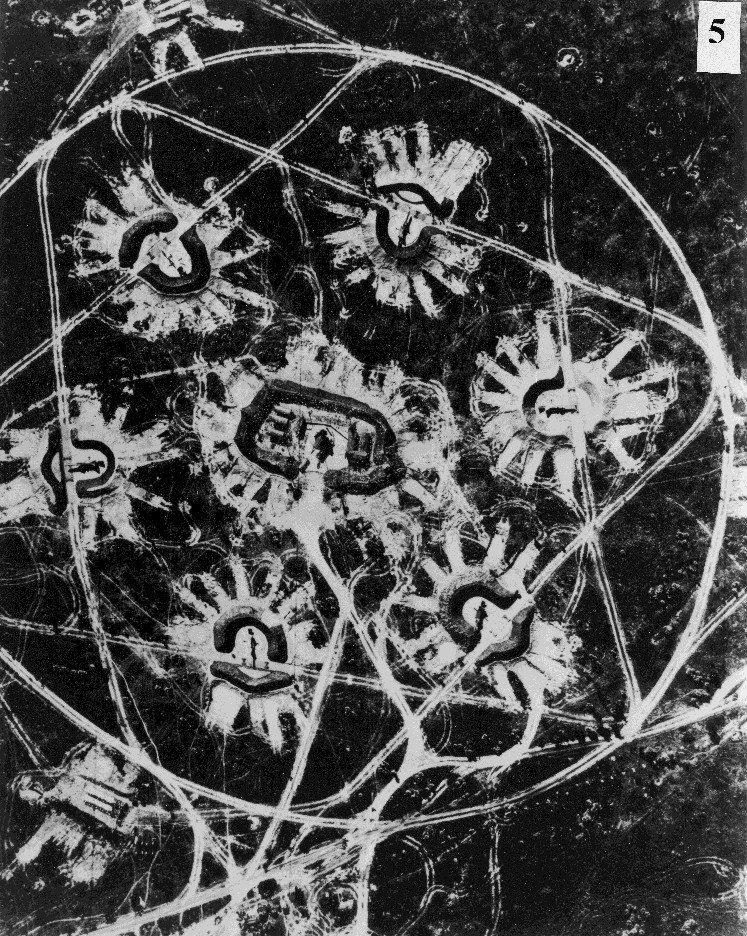
At 1:00 pm ABC News reporter John Scali met Aleksandr Fomin, the cover name of KGB station chief Alexander Feklisov, who floated a deal: Soviet withdrawal under UN supervision in return for a public US statement that it would not invade Cuba. From 6:00 pm the State Department received a long, emotional letter that appeared to be written personally by Khrushchev, repeating the outline: Soviet ships would carry no armaments and the US would pledge not to invade. Later accounts indicate that Fomin was probably acting without official backing, but his offer and the letter pointed the same way. Kennedy said only a US attack could remove the missiles, but gave diplomacy more time.
1962
Stevenson confronts Zorin at the UN Security Council Standoff
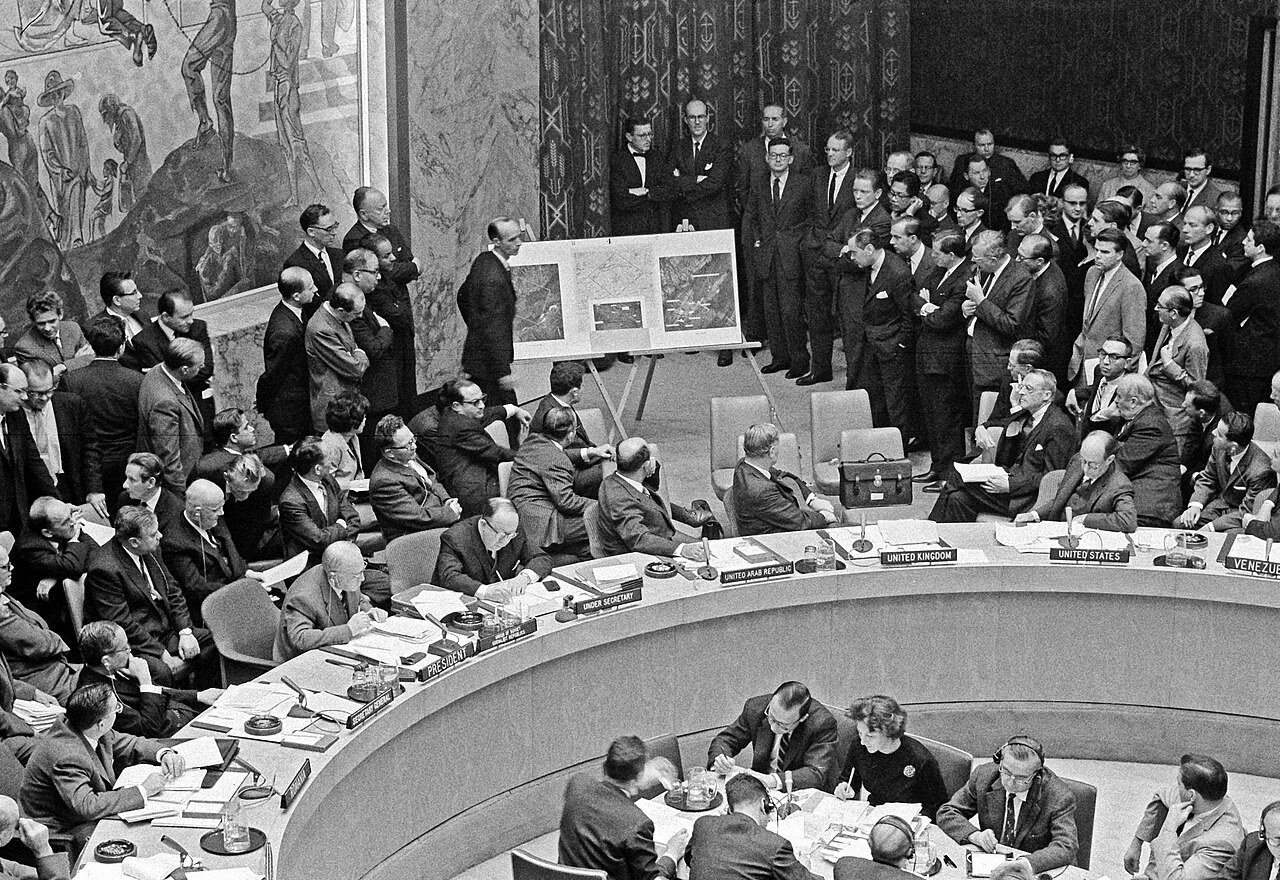
At an emergency meeting of the Security Council, US ambassador Adlai Stevenson challenged Soviet ambassador Valerian Zorin to admit that missiles existed and displayed aerial photographs. Zorin refused to answer. UN Secretary-General U Thant also urged both governments to avoid confrontation, and two days later Kennedy asked that a message be sent to him asking the Soviets to suspend work on the missile sites while negotiations were carried out.
1962
Soviet ships approach the quarantine line Standoff
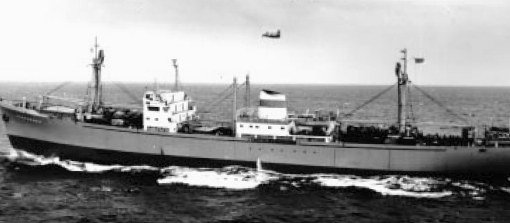
The naval quarantine took effect on the morning of 24 October. Khrushchev called the US action an “act of aggression” and sent a telegram warning that its “outright piracy” would lead to war. Some Soviet ships turned back, while others were stopped, inspected on 24–25 October and allowed to proceed. Kennedy’s choice of the word quarantine rather than blockade was meant to avoid the formal implications of a state of war.
1962
The OAS backs the quarantine Standoff
The day after Kennedy’s speech the Organization of American States backed the US quarantine, condemned the Soviet missile buildup in Cuba and voted to take measures to prevent more offensive weapons from reaching Cuba. That gave Washington regional cover for a naval action.
1962
Kennedy tells the world and orders a quarantine Standoff
On 21 October Kennedy weighed two remaining options: an air strike on the missile bases or a naval blockade. On 22 October he formally established the Executive Committee, met congressional leaders who demanded stronger action and, at 7:00 pm EDT, delivered a nationwide television address announcing the discovery of the missiles. He ordered a naval quarantine and sent a letter to Khrushchev, and the Joint Chiefs set DEFCON 3.
1962
Kennedy meets Gromyko and does not reveal what he knows Standoff
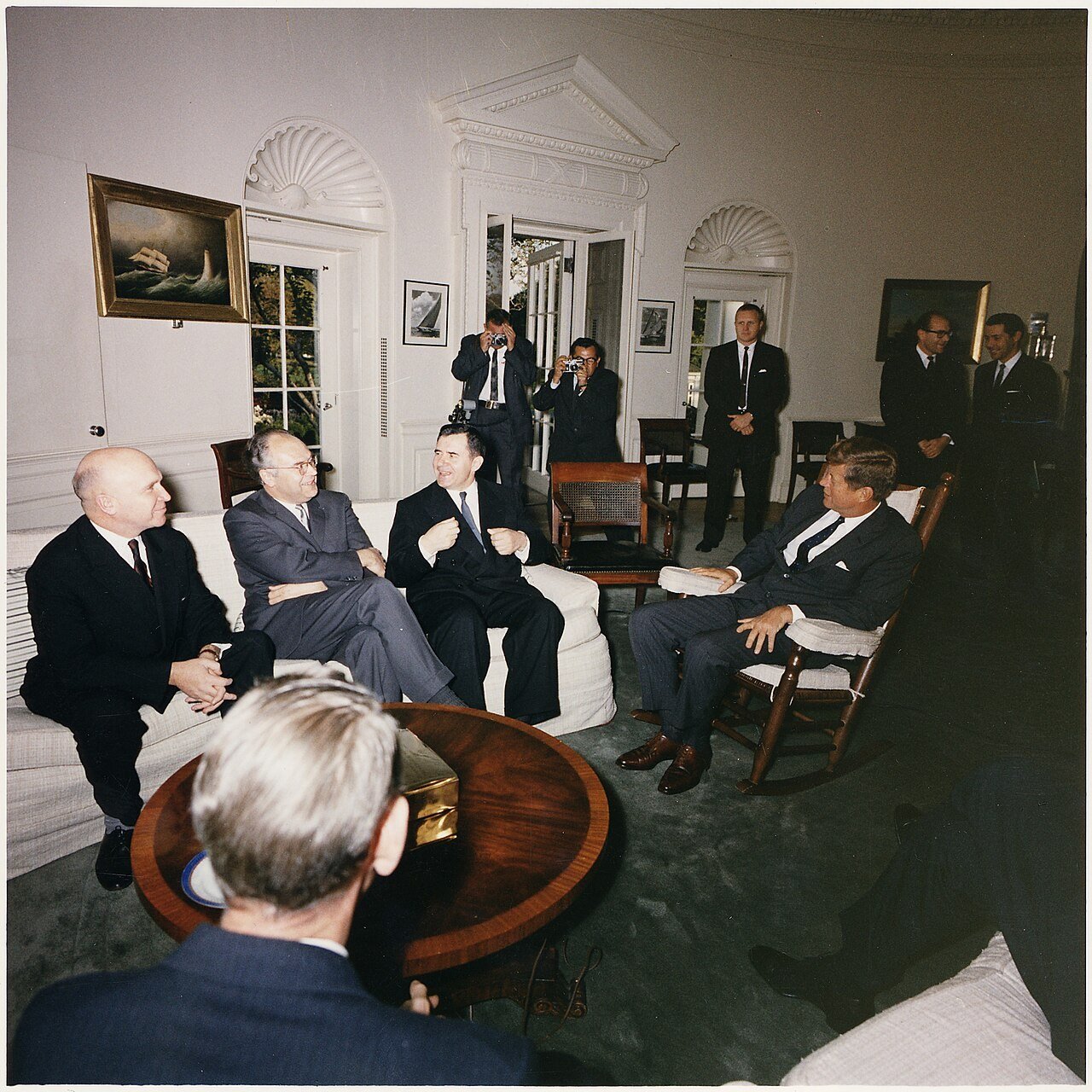
The day before, Soviet intermediary Georgi Bolshakov delivered a message from Khrushchev that surface-to-surface missiles would not be sent to Cuba. On 18 October Kennedy met Soviet foreign minister Andrei Gromyko at the White House. Kennedy did not reveal that he already knew about the buildup, buying time for the ExComm to prepare.
1962
Kennedy is briefed and convenes ExComm Standoff
McGeorge Bundy showed Kennedy the photographs on the morning of 16 October. At 6:30 pm Kennedy convened the National Security Council members and other advisers, the group that became the Executive Committee, or ExComm. The options were air strikes, an invasion or a quarantine. Some military advisers favoured direct attacks, but Kennedy chose a more limited initial response, leaving room for diplomacy. Robert Kennedy also contacted the Soviet ambassador the same day.
1962
A U-2 photographs the missile sites Build-up
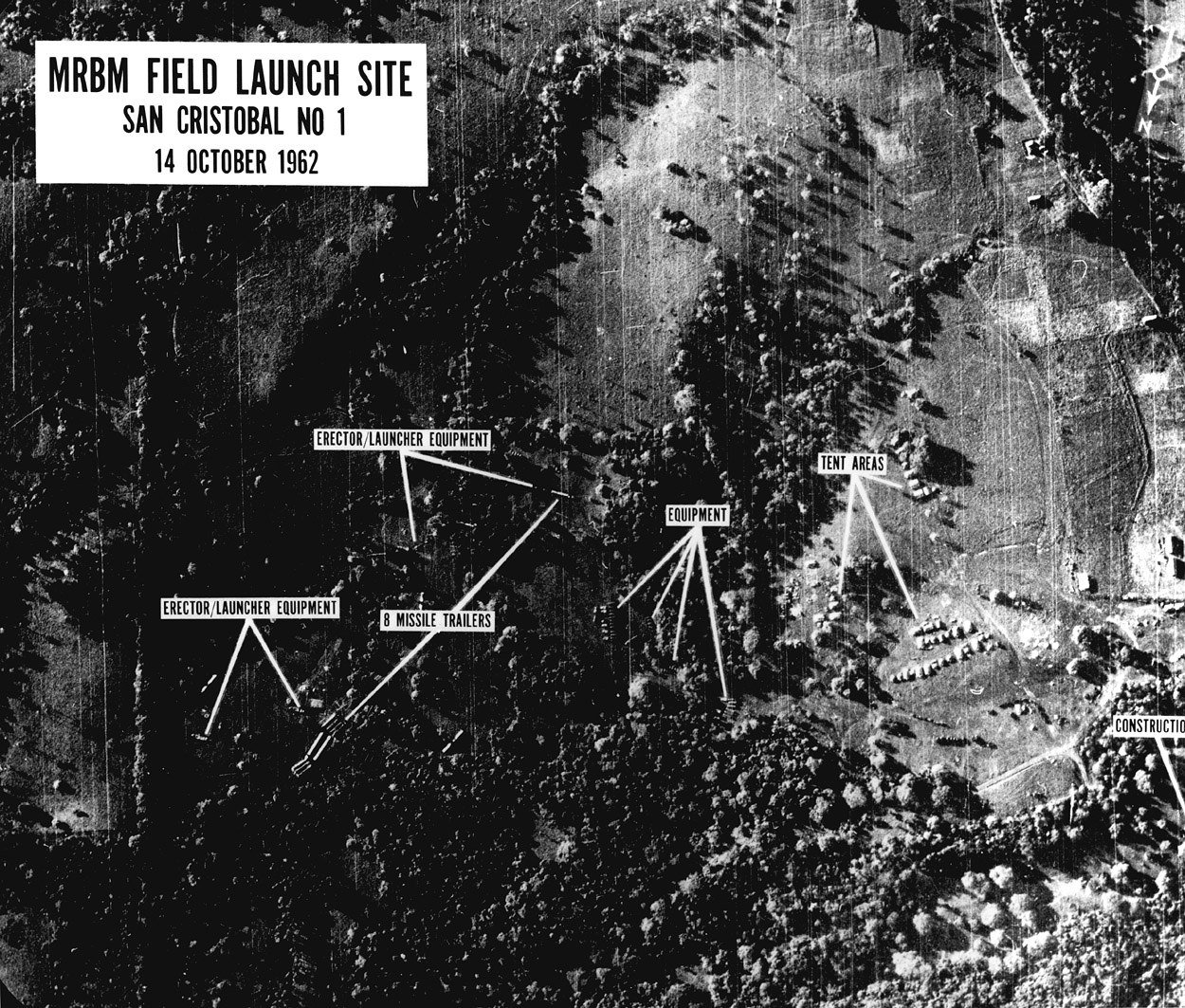
Major Richard Heyser’s U-2 flight on 14 October took 928 pictures, including an SS-4 site at San Cristobal. The CIA’s National Photographic Interpretation Center identified medium-range ballistic missiles on 15 October and that evening the CIA notified the State Department. A five-week “photo gap” in U-2 coverage had followed restrictions on flights over Cuba imposed on 10 September.
Warnings, shipments and a photo gap Build-up
On 4 September Kennedy publicly warned against introducing “offensive weapons into Cuba”. The first Soviet R-12 missiles arrived on the night of 8 September, with a second shipment on 16 September. On 10 September Rusk and Bundy restricted U-2 flights over Cuba after an earlier U-2 had strayed over Soviet territory, creating the photo gap. On 11 September the Soviet Union publicly warned that a US attack on Cuba or on Soviet ships supplying it would mean war.
Moscow and Havana agree to deploy missiles Build-up
In May 1962 Khrushchev decided to place intermediate-range missiles in Cuba to counter the US lead in strategic missiles. Marshal Malinovsky approved the Anadyr plan on 4 July and Khrushchev on 7 July: nine sites, 40 launchers, six for R-12 and three for R-14 missiles. Missile specialists arrived in July disguised as machine operators and agricultural specialists. Che Guevara travelled to the USSR on 30 August to sign the final agreement. Ultimately 43,000 Soviet troops were brought in. The decision was also a response to US missiles in Turkey and Italy and to Cuba’s fear of a second invasion.
Bay of Pigs and the Jupiter missiles Build-up
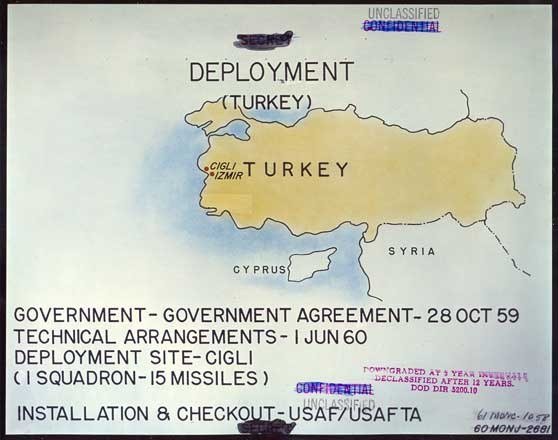
In April 1961 the US supported a failed invasion of Cuba by exiles at the Bay of Pigs, which left Cuba’s leadership expecting another attack. In the same year the US placed Jupiter nuclear missiles in Italy and Turkey, within range of Moscow, under an agreement with Turkey that provided for one squadron of 15 missiles. Both facts would shape what each side believed it was defending in 1962.
Black Saturday in One Picture
Hour by Hour: 27 October 1962
Times from the Cuban Missile Crisis chronology; sources differ by minutes on some.
| Time (EDT) | Event, 27 October 1962 | Source note |
|---|---|---|
| 06:00 | CIA reports that all missiles in Cuba are ready for action | Cuban Missile Crisis chronology |
| 09:00 | Radio Moscow broadcasts Khrushchev’s new message: missiles in Cuba for missiles in Turkey | Public broadcast, contrary to the 26 Oct letter |
| 10:00 | ExComm meets and concludes the change reflects debate in the Kremlin | Kennedy: it “will look like a very fair trade” to others |
| About 12:00 | Anderson’s U-2 shot down near Banes by a Soviet SA-2 | Fired on the order of two Soviet generals |
| 15:41 | US Navy RF-8A low-level aircraft fired on | Chronology |
| 16:00 | ExComm recalled; Kennedy decides not to retaliate unless another attack follows | Taylor delivers news of the shoot-down |
| Evening | Robert Kennedy meets Dobrynin; Jupiter assurance conveyed, not to be announced | Exact time not fixed in the sources used |
| 20:05 | Kennedy’s reply to the 26 Oct letter is delivered and released to the press | Accepts withdrawal for a no-invasion assurance |
| 21:00 | ExComm reconvenes to prepare for the next day | Air-strike plans drawn up if no answer |
| Next morning | Radio Moscow broadcast: Khrushchev agrees to dismantle | About 9:00 am Washington time, 28 Oct |
The Secret Deal: What Was Public and What Was Private
The public agreement and the confidential understanding were separate parts of the settlement.
| Element | Public or private | What it said | When it became clear |
|---|---|---|---|
| Soviet withdrawal | Public | Khrushchev’s 28 Oct broadcast: dismantle, crate and return the missiles | Immediately |
| US non-invasion assurance | Public, conditional | Kennedy’s 27 and 28 Oct letters; subject to UN verification | Never formalised after Cuba refused inspection |
| Jupiter missiles in Turkey and Italy | Confidential | Robert Kennedy to Dobrynin: removed soon after the crisis; Turkey not to be named | Acknowledged in January 1989; missiles out April 1963 |
| IL-28 bombers | Public follow-up | Removal negotiated after 28 Oct; quarantine ended 20 Nov | November to December 1962 |
Why it stayed secret. Kennedy’s advisers worried that a public trade of Turkish for Cuban missiles would undermine NATO, and Turkey had said it would deeply resent one. The assurance was therefore given through Robert Kennedy and Dobrynin, with Rusk’s proviso that no part of the deal mention Turkey.
It was not the only reason. The Soviet withdrawal also followed US military pressure, the quarantine, the threat that the US would remove the missiles by force and Khrushchev’s fear of losing control of events. Historians disagree about how much the Turkey assurance mattered compared with these.
The cost of secrecy. Because the Jupiter understanding was acknowledged only in 1989, the public memory for decades was of a Soviet retreat, not a two-way compromise.
Five Lessons: Why It Ended Without War
1. Private channels created room. Scali and Fomin on 26 October, Khrushchev’s long letter that evening and Robert Kennedy’s meeting with Dobrynin on 27 October let each side explore terms without surrendering its public position.
2. Kennedy chose limits. A quarantine rather than an air strike or invasion gave pressure without an immediate act of war, and Kennedy later refused to retaliate automatically when the U-2 was shot down.
3. Kennedy ignored the harder message. Khrushchev’s second, public demand for a Turkey trade would have been hard to accept. Kennedy answered the first letter instead and handled Turkey privately.
4. Luck mattered. Anderson’s shoot-down was not ordered from Moscow, B-59 nearly fired a nuclear torpedo and a stray U-2 flew over Soviet airspace on the same day. Arkhipov’s veto is a reason that nobody can say diplomacy alone prevented war.
5. The settlement needed follow-through. Missile ships left in early November, the quarantine ended on 20 November, the bombers left in December and the Jupiters were removed by April 1963. Announcing an agreement was only one stage.
The Popular Story vs the Record
Short versions of the crisis are useful, but several of them blur the details.
| Popular version | What the record shows |
|---|---|
| Khrushchev simply backed down | He got a public no-invasion assurance and a confidential commitment on the Turkish Jupiters |
| The Turkey missiles were swapped in public | Kennedy refused a public trade; the assurance was private and not to be mentioned |
| Khrushchev’s 27 Oct demand was a private message | It was broadcast on Radio Moscow; Kennedy answered the earlier private 26 Oct letter instead |
| The hotline existed in 1962 | It was agreed 20 June 1963 and began operating 30 August 1963 |
| The crisis ended on 28 October | The quarantine ended 20 November and the IL-28s left in December |
| Diplomacy alone prevented war | Restraint after the U-2 shoot-down and one officer’s veto aboard B-59 also mattered |
The Crisis in Numbers
| Measure | Figure | Source and caveat |
|---|---|---|
| Duration of acute crisis | 13 days | 16-28 Oct 1962; quarantine ended 20 Nov |
| U-2 photographs, 14 Oct | 928 | Maj. Richard Heyser’s flight |
| Soviet troops in Cuba | 43,000 | Eventually brought in under Operation Anadyr |
| Missiles removed | 42 | Loaded on eight Soviet ships |
| Soviet nuclear warheads in Cuba | 162 | Later accounts; tactical warheads confirmed 1992 |
| US Jupiters in Turkey and Italy | 15 and 30 | Removed 1-24 April 1963 |
| Strategic Air Command bombers | 1,436 | One-eighth on airborne alert; DEFCON 2 for the only confirmed time |
| Distance from Florida | About 90 miles (145 km) | Khrushchev’s letter said 99 miles by sea |
How the Crisis Changed the Nuclear Age
Communication became a priority. The hotline began operating on 30 August 1963, and its first real use came in 1967 during the Six-Day War.
Arms control moved forward. The Partial Nuclear Test Ban Treaty was signed on 5 August 1963, prohibiting nuclear tests in the atmosphere, in outer space and under water.
Khrushchev paid a price. The compromise embarrassed him, and his fall from power two years later was in part blamed on the Soviet retreat.
The risk of accidents became clearer. The shoot-down, the stray U-2 and the B-59 incident showed how events could outrun political control. Revelations in 1989, 1992 and 2002 added to the picture.
Cuba stayed contested. The no-invasion assurance was never formalised, and in 2026 the dispute concerns oil, sanctions and the embargo.
Who Shaped the Thirteen Days
Roles as described in public sources. Where sources differ, this page says so.
John F. Kennedy
US president who chose a limited quarantine over an immediate strike, ignored Khrushchev’s public Turkey demand and accepted the private 26 October offer.
Nikita Khrushchev
Decided in May 1962 to deploy missiles to Cuba and announced their withdrawal on 28 October; his fall two years later was partly blamed on the concessions.
Robert F. Kennedy
Met Dobrynin repeatedly and conveyed the confidential Jupiter assurance on 27 October.
Anatoly Dobrynin
The channel for the back-channel talks; acknowledged the Turkey understanding in Moscow in 1989.
Rudolf Anderson Jr.
Shot down over Cuba on 27 October; the only combatant killed in the crisis and the first recipient of the Air Force Cross.
Vasili Arkhipov
Flotilla commander aboard B-59 who withheld consent to launch a nuclear torpedo.
Explore More Timelines
People Also Ask
Frequently Asked Questions
Related AiTimeline Stories
⚠️ Editorial Note
This page is a dated, sourced record drawn from the US Department of State Office of the Historian, the National Archives, the JFK Library, the National Security Archive and reference chronologies. Several details in the original brief were refined: Khrushchev’s 27 October demand was a public Radio Moscow broadcast, and Kennedy answered his earlier private letter instead; the Kennedy-Khrushchev deployment decision dates to May 1962 with plans approved in July; the non-invasion assurance was conditional and never formalised; and the hotline came in 1963, not during the crisis. The Jupiter understanding was confidential and is labelled so throughout. Historians disagree about Khrushchev’s motives and about how much the understanding mattered. The 2026 items are reported from AP, ABC News and Al Jazeera and were current on 20 October 2026; the UN vote had not taken place.
Sources & further reading
Every dated entry above was checked against these references. Last reviewed 20 October 2026.
- The Cuban Missile Crisis, October 1962
- One Step from Nuclear War
- Khrushchev's 28 October 1962 message
- Robert Kennedy and Anatoly Dobrynin, 27 October meeting
- The Jupiter missiles and the crisis endgame
- Soviet Union and the United States: archival documents
- Cuban Missile Crisis
- Moscow-Washington hotline
- US and Cuba clash at UN as Washington seeks to sway annual vote on economic embargo (19 Oct 2026)
- Trump orders tariffs on countries supplying oil to Cuba, declares national emergency (30 Jan 2026)
- Russia says it will stick to limits of expired nuclear treaty if US does (11 Feb 2026)
- Biden says nuclear Armageddon risk highest since Cuban Missile Crisis (7 Oct 2022)