Gaza Diplomatic Speeches: A Timeline of UN Resolutions
How UN language on Gaza moved from 1947 partition to pauses, ceasefire and Resolution 2803's Board of Peace, with the votes and vetoes behind each shift.
Latest Story
From the 1947 partition vote to the 2026 fight over whether a Gaza peace plan can work, the words of UN diplomacy have kept changing, and kept coming back. Partition became refugees, refugees became occupation, occupation became two states, and after 7 October 2023 the vocabulary narrowed to hostages, pauses and ceasefire. Since November 2025 it has widened again to governance and reconstruction under Security Council Resolution 2803. This timeline follows the UN resolutions on Gaza and Palestine that changed the diplomatic framework, and the speeches that explained why governments backed, blocked or questioned them.
💡 Short Answer
The UN has addressed Palestine since Resolution 181 recommended partition in 1947. Key texts include 194 on refugees (1948), 242 on land for peace (1967), 1397 on two states (2002) and 2334 on settlements (2016). After 7 October 2023 the Security Council moved from humanitarian pauses (2712) to an immediate ceasefire (2728) and a three-phase deal (2735). Resolution 2803 of November 2025 created a Board of Peace and a stabilisation force. By September 2026 its later phases had not begun.
UN Resolutions on Gaza: Key Questions
79 Years of UN Diplomacy in Ten Lines
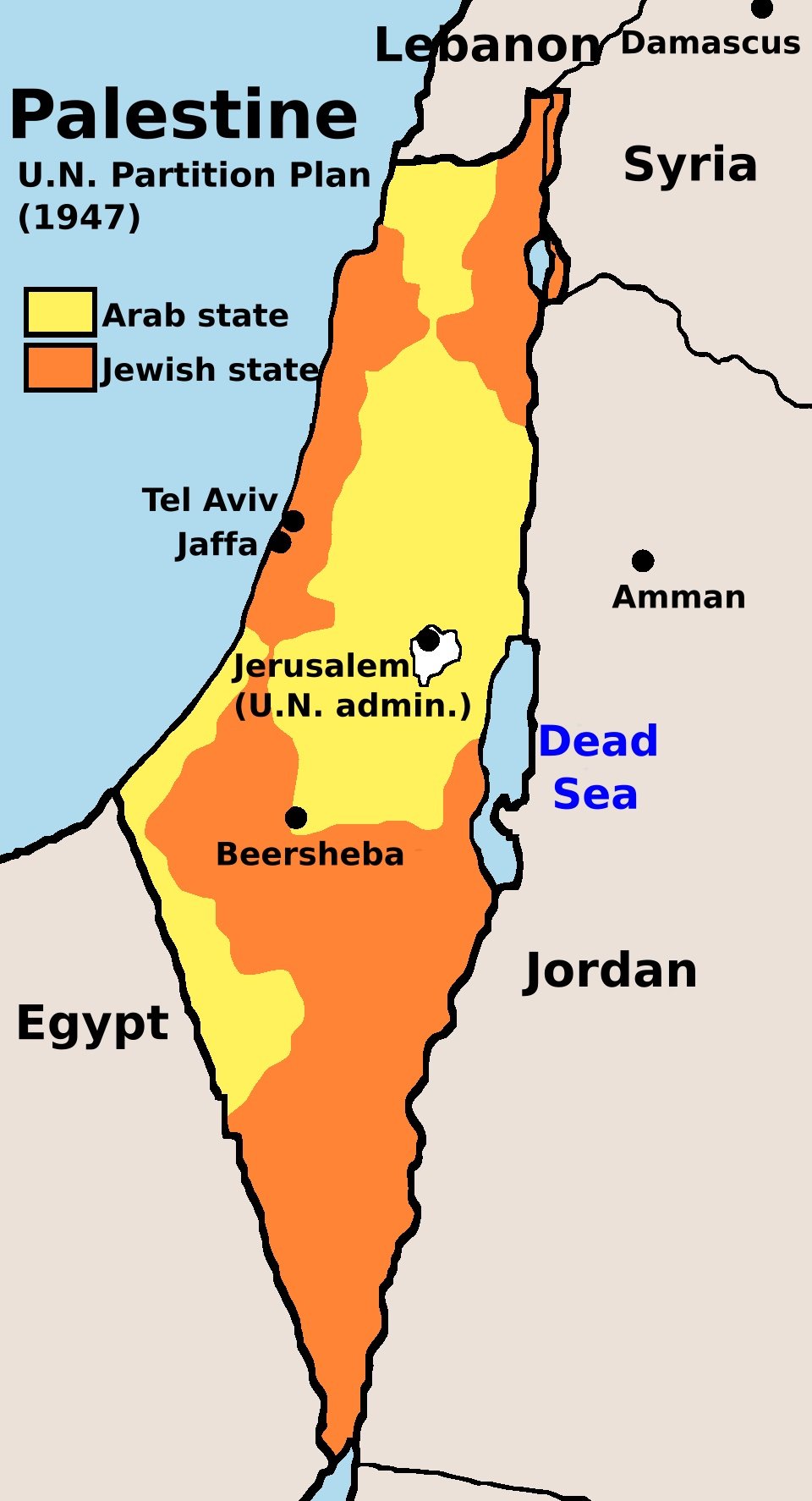
- 1947: Resolution 181 recommends partition. The map never becomes reality.
- 1948: Resolution 194 addresses refugee return and compensation; UNRWA follows in 1949.
- 1967: Resolution 242 links Israeli withdrawal to peace and secure borders.
- 1974: Arafat speaks at the UN; Palestinian national rights enter Assembly language.
- 2002: Resolution 1397 puts a two-state vision into Security Council language.
- 2016: Resolution 2334 says settlements have no legal validity; the US abstains.
- Oct 2023 to Mar 2024: Pauses become a ceasefire demand after seven failed drafts.
- 2024: The ICJ calls the occupation unlawful; the Assembly sets a 12-month deadline that passes.
- Nov 2025: Resolution 2803 shifts the debate from ceasefire to governing Gaza.
- Sep 2026: The ceasefire holds imperfectly; disarmament and withdrawal have not begun.
First: What Does a UN Resolution Actually Do?
Why the vote is part of the story.
General Assembly vs Security Council
The General Assembly speaks for the whole membership, but its resolutions are mostly recommendations. The Security Council can make decisions that bind every state, but any of its five permanent members, China, France, Russia, the United Kingdom and the United States, can block a draft. An abstention is not a veto: several key Gaza texts passed only because a permanent member chose to abstain rather than vote no.
Since 2023 most Assembly action on Gaza has come through its tenth emergency special session, first convened in 1997 under the Uniting for Peace procedure, which lets the Assembly take up a question when the Council is deadlocked. That explains a pattern repeated throughout this timeline: a large Assembly majority, then a Council veto, or the reverse.
Eleven words, 79 years
Tap a year. See the word that dominated UN diplomacy, the text behind it, and the argument made for it.
Gaza at the UN: Timeline 1947 to 2026
Newest first. Resolutions, vetoes and the speeches around them.
2026
“The ground does not yet match the documents”
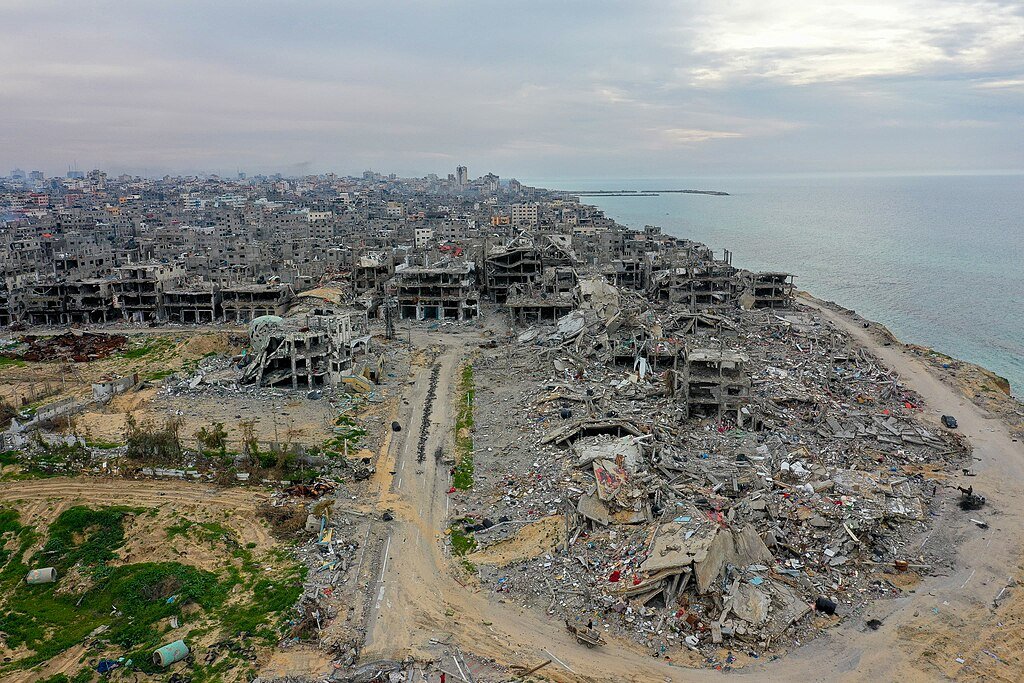
Briefing the Council, the Board of Peace’s High Representative for Gaza, Nickolay Mladenov, says the situation on the ground does not yet match the documents. The plan’s later phases, Hamas disarmament and full Israeli withdrawal, have not begun. UNRWA reports 1,394 Palestinians killed since the October 2025 ceasefire. In the West Bank, the UN warns that Israel’s tender for 1,234 homes in the E1 area near East Jerusalem would cut the territory in two.
2026
Guterres: support for two states “must go beyond words”
At a meeting titled The Road Ahead, hosted by Canada, France, Saudi Arabia and the United Kingdom, the Secretary-General calls the two-state solution based on the pre-1967 lines, with Jerusalem as the capital of both States, the only credible path to peace. He warns the conditions for a viable Palestinian state are being systematically erased, says the E1 settlement plan would deal a deathblow to a contiguous state, and insists Gaza and the West Bank stay integrated under a single Palestinian government.
2026
“A point of no return”
Mladenov gives his most urgent warning yet: the ceasefire is heading toward a point of no return. He tells the Council that Hamas and other factions agreed on 30 July to a roadmap for handing over weapons, and that the ceasefire holds and casualties have fallen sharply but they have not stopped. Aid groups at the same meeting accuse the Board of failing on basic access.
The first Board of Peace report
Six months after Resolution 2803, the Board of Peace files its first written report, covering 17 November 2025 to 14 May 2026. Mladenov tells the Council the guns have largely fallen silent and food security has improved, but there is no recovery in Gaza: about 80% of buildings damaged or destroyed and more than a million people without permanent shelter.
The transitional bodies take shape
The structures Resolution 2803 welcomed are set up. Ali Shaath becomes chief commissioner of the National Committee for the Administration of Gaza, the Palestinian technocratic body; it meets for the first time in Cairo on 15 January and is formally established on 16 January, the day the Board of Peace charter is signed. Nickolay Mladenov, a former UN Middle East envoy, becomes High Representative.
2025
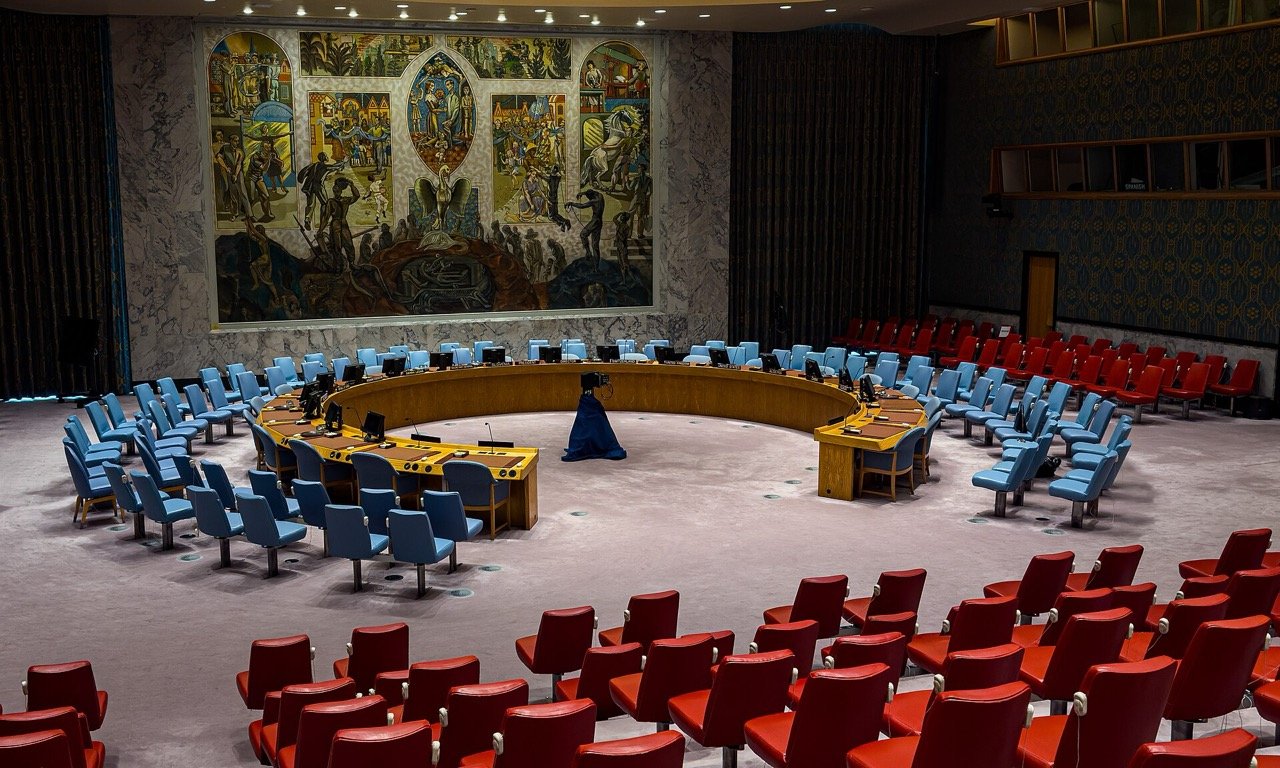
Resolution 2803: from ceasefire to governance
The Council endorses the Comprehensive Plan to End the Gaza Conflict of 29 September 2025, welcomes a Board of Peace as a transitional administration and authorises a temporary International Stabilization Force to secure borders, support demilitarisation and train a Palestinian police force. Mandates run to 31 December 2027. The text says that after Palestinian Authority reform and redevelopment, conditions may finally be in place for a credible pathway to Palestinian self-determination and statehood.
US Ambassador Mike Waltz calls it a significant step toward a stable Gaza and a secure Israel. Russia’s Vasily Nebenzia says it gives complete control of the Strip to the Board of Peace. China’s Fu Cong criticises its skimpy details on the force and the Board.
A ceasefire outside the UN
US President Donald Trump publishes a 20-point plan on 29 September. Israel and Hamas agree its first phase; the ceasefire takes effect on 10 October. The last 20 living Israeli hostages are released on 13 October in exchange for Palestinian prisoners and detainees, as leaders meet at Sharm el-Sheikh. The deal is brokered by the US, Egypt, Qatar and Turkey, not the UN, but it needs the Council to give it international legal cover.
Recognition wave and another veto
On 12 September the General Assembly endorses the New York Declaration on the two-state solution, 142 to 10 with 12 abstentions. On 18 September the United States vetoes a ceasefire draft 14 to 1, its sixth Gaza veto since 2023. On 21 and 22 September the United Kingdom, Canada, Australia, Portugal and France, among others, formally recognise the State of Palestine.
A truce collapses, famine is declared
A three-phase ceasefire modelled on Resolution 2735 takes effect on 19 January 2025. It breaks down on 18 March when Israel resumes strikes. On 4 June the US vetoes another ceasefire draft (14 to 1). On 22 August the Integrated Food Security Phase Classification confirms famine in Gaza Governorate, which Israel disputes.
The Assembly demands a permanent ceasefire
The General Assembly demands an immediate, unconditional and permanent ceasefire, the release of all hostages, and implementation of Resolution 2735. The same day it backs UNRWA’s mandate (ES-10/25, 159-9-11) after Israel’s parliament voted to bar the agency. Three weeks earlier, on 20 November, the US had vetoed a similar Council draft 14 to 1.
“End the occupation within 12 months”
Acting on the International Court of Justice’s 19 July 2024 advisory opinion, which found Israel’s continued presence in the Occupied Palestinian Territory unlawful, the Assembly demands that it end within 12 months. It is the first resolution drafted by the State of Palestine itself. Israel and the US vote against; the deadline passes in September 2025 without effect.
2024
Resolution 2735: a three-phase deal
The Council welcomes the ceasefire proposal announced by President Joe Biden on 31 May. Phase one: an immediate, full and complete ceasefire; release of hostages including women, the elderly and the wounded; return of remains; exchange of Palestinian prisoners; Israeli withdrawal from populated areas; return of civilians to their homes; aid at scale. Phase two: a permanent end to hostilities. Phase three: a multi-year reconstruction plan.
The region “on the brink”, and a membership veto
On 18 April, days after Iran’s first direct attack on Israel, Guterres tells the Council the Middle East is on the brink and that de-escalation must start in Gaza. The same day the US vetoes a recommendation to admit Palestine as a full UN member (12 in favour, UK and Switzerland abstaining). On 10 May the Assembly responds with ES-10/23 (143-9-25), giving Palestine extra rights in the Assembly.
2024
Resolution 2728: the word ceasefire
After a US veto of an Algerian draft on 20 February and a Russian-Chinese veto of a US draft on 22 March, the Council finally demands an immediate ceasefire for Ramadan leading to a lasting, sustainable ceasefire, and the immediate and unconditional release of all hostages. US officials call it non-binding; most other members disagree. Two months earlier, on 26 January, the ICJ had ordered Israel to take provisional measures in South Africa’s genocide case.
2023
Resolution 2720: aid and a coordinator
The Council demands the safe and unhindered delivery of humanitarian assistance at scale and asks for a Senior Humanitarian and Reconstruction Coordinator for Gaza. Former Dutch minister Sigrid Kaag takes the job. Earlier language calling for a suspension of hostilities is softened to secure US support.
2023
Article 99, a veto and 153 votes
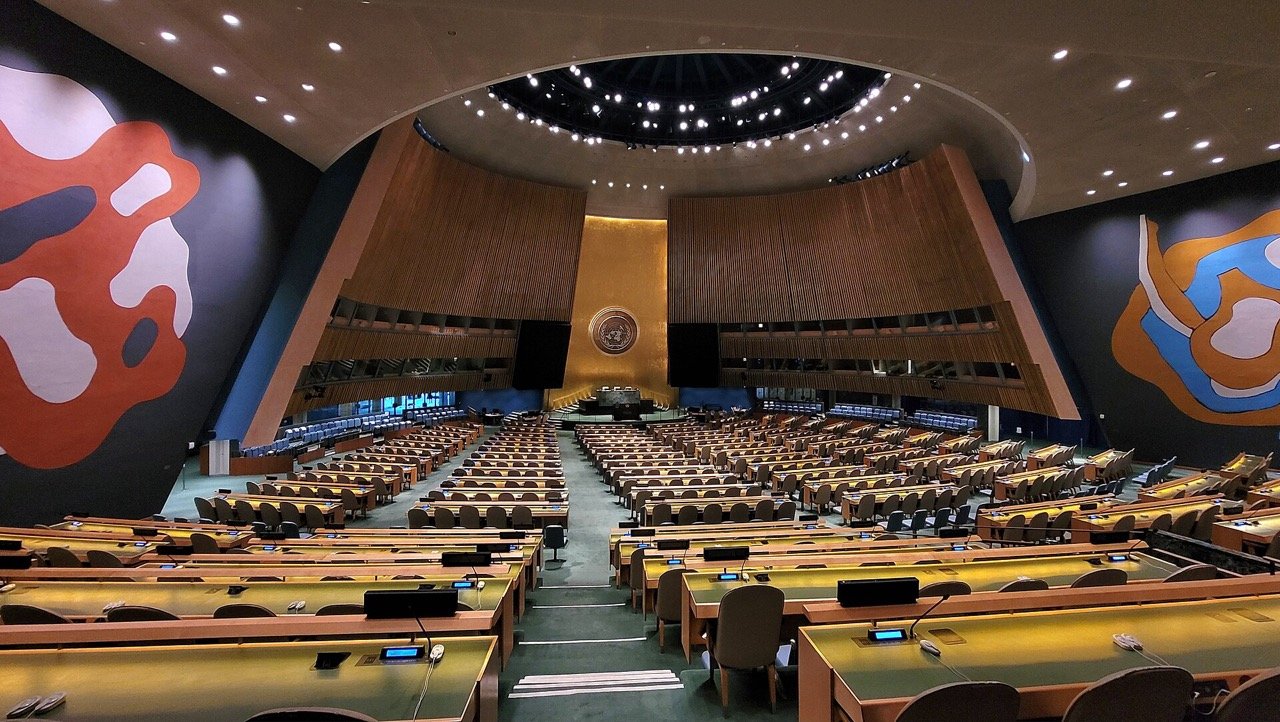
On 6 December Guterres invokes Article 99 of the Charter, formally telling the Council the war threatens international peace and security, the first time he has used the power. A UAE ceasefire draft on 8 December wins 13 votes but is vetoed by the United States, with the UK abstaining. On 12 December the Assembly demands an immediate humanitarian ceasefire, 153 to 10 with 23 abstentions (ES-10/22).
2023
Resolution 2712: humanitarian pauses
The Council’s first Gaza text after 7 October calls for urgent and extended humanitarian pauses and corridors for a sufficient number of days, and the immediate and unconditional release of all hostages, especially children. Malta, which drafted it, focused on children to find language all sides could accept.
2023
Deadlock in the Council, a vote in the Assembly
Four Council drafts fail in ten days: a Russian text lacks votes (16 October), the US vetoes a Brazilian draft (18 October), and Russia and China veto a US draft while a second Russian text fails (25 October). On 24 October Guterres condemns the Hamas attacks but says they did not happen in a vacuum; Israel’s ambassador Gilad Erdan calls for his resignation. On 27 October the Assembly adopts ES-10/21 (120-14-45), calling for a humanitarian truce and the release of all civilians held captive.
2023
The attack that changed the vocabulary
Hamas-led fighters kill about 1,200 people in southern Israel and take 251 hostages into Gaza. Israel declares war. Guterres condemns the attacks in the strongest terms and calls for the immediate release of hostages, while warning that civilians in Gaza must be protected. From this point, hostages and civilians appear in nearly every UN text and speech.
2016
Resolution 2334: settlements
The Council says Israeli settlements in territory occupied since 1967, including East Jerusalem, have no legal validity and are a flagrant violation of international law, and demands a halt to settlement activity. The Obama administration abstains rather than veto, a rare break. Israel’s government condemns the vote.
Observer state, then another war
On 29 November 2012, exactly 65 years after partition, the Assembly makes Palestine a non-member observer state (Resolution 67/19, 138-9-41). In the 2014 Gaza war (8 July to 26 August) the Council never passes a resolution; it manages only a presidential statement on 28 July. The fighting stops through an Egyptian-brokered truce.
Disengagement, Hamas rule and Resolution 1860
Israel withdraws its settlers and troops from inside Gaza in August and September 2005, while keeping control of its airspace, sea and most crossings. Hamas wins Palestinian legislative elections in January 2006 and seizes Gaza from Fatah in June 2007; Israel and Egypt tighten restrictions on movement and goods. After war breaks out in late December 2008, Resolution 1860 (8 January 2009, 14-0-1, US abstaining) calls for an immediate, durable and fully respected ceasefire and full Israeli withdrawal.
Two states enter Council language
During the Second Intifada, Resolution 1397 affirms a vision of a region where two States, Israel and Palestine, live side by side within secure and recognized borders (14-0-1, Syria abstaining). In 2003 the Quartet of the US, EU, Russia and UN publishes the Road Map, which the Council endorses unanimously in Resolution 1515.
Oslo moves diplomacy out of the UN
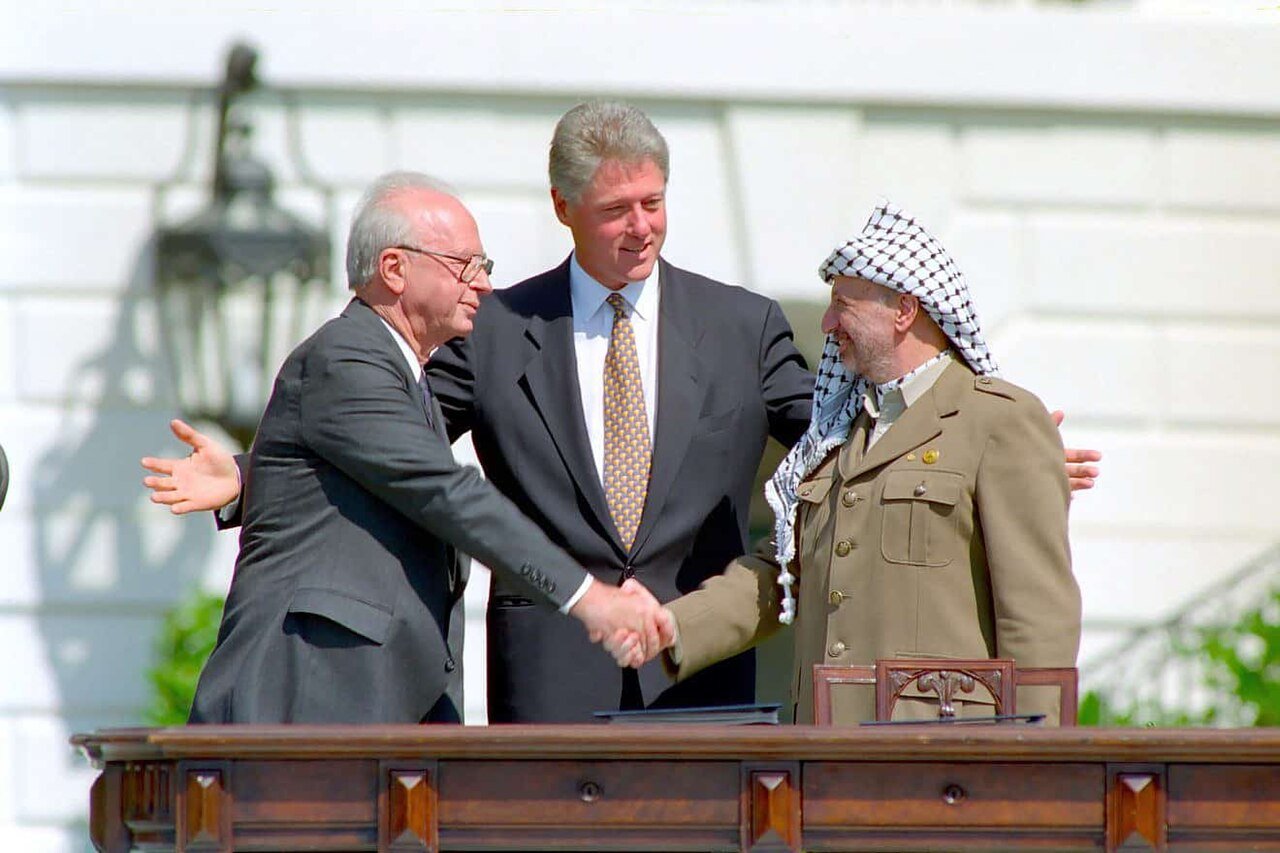
After Israel and the PLO exchange letters of mutual recognition, the Declaration of Principles is signed at the White House. It creates the Palestinian Authority and interim self-rule in parts of the West Bank and Gaza, and postpones the hardest questions: borders, Jerusalem, refugees, settlements and security. Negotiation shifts from UN chambers to direct talks.
Palestine declared, and renamed at the UN
The Palestine National Council declares an independent State of Palestine in Algiers, referring to UN resolutions including 181. On 15 December the Assembly acknowledges the proclamation in Resolution 43/177 and decides the name Palestine should replace Palestine Liberation Organization in the UN system.
Arafat at the rostrum
Yasser Arafat addresses the General Assembly on 13 November, saying he has come bearing an olive branch and a freedom fighter’s gun, and asking members not to let the olive branch fall. Resolution 3236 affirms the Palestinian people’s rights to self-determination, national independence and sovereignty, and Resolution 3237 gives the PLO observer status.
1973
Resolution 338: ceasefire plus talks
During the October War, the Council calls for a ceasefire within 12 hours, implementation of Resolution 242 in all of its parts, and negotiations under appropriate auspices toward a just and durable peace. It fixes a formula still used today: stop the fighting, then negotiate.
1967
Resolution 242: land and peace
After Israel captures Gaza, the West Bank, East Jerusalem, the Golan Heights and Sinai in the June 1967 war, the Council emphasises the inadmissibility of the acquisition of territory by war. It calls for withdrawal of Israeli armed forces from territories occupied in the recent conflict, an end to belligerency, and every state’s right to live within secure and recognized boundaries.
Resolution 194 and the refugee question
After the 1948 war, in which roughly 700,000 Palestinians fled or were expelled, Resolution 194 says refugees wishing to return home and live at peace with their neighbours should be permitted to do so, with compensation for those who choose not to return. A year later, Resolution 302 creates UNRWA. Most of Gaza’s population today descends from those refugees.
1947
Resolution 181: partition
The General Assembly recommends dividing Mandatory Palestine into an Arab state and a Jewish state, with Jerusalem under an international regime and an economic union between them. The Jewish Agency accepts; Arab leaders and states reject it. War follows when the British Mandate ends in May 1948, and the proposed map never becomes reality.
The Votes That Shaped the Framework
Security Council unless marked GA. Vote shown as yes-no-abstain.
| Resolution | Date | Main focus | Vote (abstaining) |
|---|---|---|---|
| 181 (GA) | 29 Nov 1947 | Partition plan | 33-13-10 |
| 194 (GA) | 11 Dec 1948 | Refugees, return, compensation | 35-15-8 |
| 242 | 22 Nov 1967 | Withdrawal, secure borders | Unanimous |
| 338 | 22 Oct 1973 | Ceasefire and negotiations | 14-0 (China did not vote) |
| 1397 | 12 Mar 2002 | Two-state vision | 14-0-1 (Syria) |
| 1515 | 19 Nov 2003 | Road Map | Unanimous |
| 1860 | 8 Jan 2009 | Gaza ceasefire | 14-0-1 (US) |
| 2334 | 23 Dec 2016 | Settlements | 14-0-1 (US) |
| 2712 | 15 Nov 2023 | Humanitarian pauses | 12-0-3 (Russia, UK, US) |
| 2720 | 22 Dec 2023 | Aid at scale, coordinator | 13-0-2 (US, Russia) |
| 2728 | 25 Mar 2024 | Immediate ceasefire | 14-0-1 (US) |
| 2735 | 10 Jun 2024 | Three-phase ceasefire | 14-0-1 (Russia) |
| 2803 | 17 Nov 2025 | Board of Peace, stabilisation force | 13-0-2 (China, Russia) |
The Assembly numbers are striking for their stability. Between 120 and 158 states voted yes on every major Gaza text from October 2023 to September 2025, while the no column never rose above 14. The Council, by contrast, went through ten failed Gaza drafts in the same period before landing on texts the United States, Russia and China could all live with.
The Drafts That Failed
Council texts on Gaza and Palestine blocked from October 2023 to September 2025.
| Date | Drafted by | Core demand | Vote | Outcome |
|---|---|---|---|---|
| 16 Oct 2023 | Russia | Humanitarian ceasefire | Failed, 5 in favour | Not enough votes |
| 18 Oct 2023 | Brazil | Humanitarian pauses | 12-1-2 | US veto |
| 25 Oct 2023 | United States | Pauses, right to self-defence | 10-3-2 | Russia and China veto |
| 25 Oct 2023 | Russia | Humanitarian ceasefire | Failed, 4 in favour | Not enough votes |
| 8 Dec 2023 | UAE | Immediate humanitarian ceasefire | 13-1-1 | US veto |
| 20 Feb 2024 | Algeria | Immediate humanitarian ceasefire | 13-1-1 | US veto |
| 22 Mar 2024 | United States | Ceasefire tied to hostage deal | 11-3-1 | Russia and China veto |
| 18 Apr 2024 | Algeria | Palestine UN membership | 12-1-2 | US veto |
| 20 Nov 2024 | Elected ten | Immediate, unconditional ceasefire | 14-1 | US veto |
| 4 Jun 2025 | Elected ten | Ceasefire, aid access | 14-1 | US veto |
| 18 Sep 2025 | Elected ten | Ceasefire, lift aid restrictions | 14-1 | US veto |
The failed drafts show both sides of the argument. US envoys said drafts they vetoed failed to condemn Hamas, did not link a ceasefire to hostage release, or undercut talks Washington was brokering with Egypt and Qatar. Russia and China said the US drafts they blocked were too permissive of Israel’s operations and stopped short of an unconditional ceasefire. Elected members, led in 2024 and 2025 by Algeria, repeatedly tabled texts they knew might fail, to put positions on the record.
From crisis to resolution, and back again
Step through the cycle Gaza has gone round since 2008. Each step shows a real example.
What Diplomats Kept Saying
The arguments behind the texts, in the speakers’ own words where verified.
“It is important to also recognize the attacks by Hamas did not happen in a vacuum.”
Antonio Guterres, Security Council, 24 October 2023. He said the same speech that the grievances of the Palestinian people could not justify the appalling attacks. Israel demanded he resign.
“The conditions for an independent, democratic, contiguous, viable and sovereign Palestinian State are being systematically erased.”
Antonio Guterres, high-level meeting on the two-state solution, 22 September 2026.
“The situation on the ground does not yet match the documents.”
Nickolay Mladenov, High Representative for Gaza, Security Council, 28 September 2026.
Across the whole period the UN Secretariat has repeated five positions and presented them as a package, not a menu: condemn the attacks on Israeli civilians; demand the release of hostages; protect Palestinian civilians; respect international humanitarian law; pursue a political settlement. Israel’s government has argued that UN bodies apply those principles unevenly and focus on its conduct over Hamas’s. Palestinian and Arab delegations have argued the Council has repeatedly failed to enforce its own texts. Both critiques are part of the record.
Six real lines. Where did each one come from?
Speeches explain diplomacy. Resolutions record the decision. Guess which is which.
the inadmissibility of the acquisition of territory by war
two States, Israel and Palestine, live side by side within secure and recognized borders
urgent and extended humanitarian pauses and corridors
did not happen in a vacuum
the situation on the ground does not yet match the documents
support for two States must go beyond words
What Resolution 2803 Actually Created
The biggest shift in UN Gaza language since the war began.
Board of Peace
Welcomed as a transitional administration to coordinate Gaza’s redevelopment and funding. Its High Representative, Nickolay Mladenov, reports to the Council every six months.
Palestinian technocratic committee
A committee of Palestinian technocrats, the National Committee for the Administration of Gaza headed by Ali Shaath, for day-to-day services until a reformed Palestinian Authority takes over.
International Stabilization Force
A temporary force to secure border areas, support demilitarisation, protect civilians and aid corridors, and train a vetted Palestinian police.
Pathway to statehood
After Palestinian Authority reform and redevelopment, conditions may be in place for a credible pathway to Palestinian self-determination and statehood. No date is set.
✔️ What has happened
- Ceasefire in effect since 10 October 2025
- Living hostages released, 13 October 2025
- Board of Peace and Palestinian committee set up, January 2026
- First six-monthly report filed, May 2026
- Factions agreed a weapons roadmap, 30 July 2026
✖️ What has not, as of 28 Sep 2026
- Hamas disarmament has not begun
- Full Israeli withdrawal has not begun
- Strikes continue; 1,394 killed since the ceasefire (UNRWA)
- Reconstruction below the scale needed
- No agreed political process toward statehood
That makes 2803 different from every earlier Gaza text. It does not just ask the fighting to stop; it tries to answer who governs Gaza, who secures it and who pays to rebuild it. Supporters argue it is the first resolution with an operational plan attached. Critics, including Russia and several aid groups, argue it hands the Strip to an externally run body with thin Palestinian ownership. Its mandate ends on 31 December 2027 unless the Council renews it.
The UN’s Gaza Vocabulary, 1947 to 2026
| Era | Dominant diplomatic language |
|---|---|
| 1947 | Partition |
| 1948-49 | Refugees, return, compensation |
| 1967 | Occupation, withdrawal, secure borders |
| 1973 | Ceasefire, negotiations |
| 1974 | Self-determination, Palestinian representation |
| 1988 | Palestinian statehood |
| 1993 | Mutual recognition, interim self-government |
| 2002-03 | Two states, Road Map |
| 2009 | Gaza ceasefire, humanitarian access |
| 2012 | Observer state |
| 2016 | Settlements, two-state viability |
| Oct 2023 | Hostages, civilians, international law |
| Nov 2023 | Humanitarian pauses |
| Dec 2023 | Aid at scale, Article 99 |
| Mar-Jun 2024 | Immediate ceasefire, three-phase deal |
| Jul-Sep 2024 | Unlawful occupation, 12-month deadline |
| Dec 2024 | Permanent ceasefire |
| Sep 2025 | Recognition, New York Declaration |
| Nov 2025 | Governance, stabilisation, reconstruction |
| 2026 | Implementation, disarmament, two states again |
🤔 Did You Know?
- The UN’s annual International Day of Solidarity with the Palestinian People falls on 29 November, the anniversary of the 1947 partition vote.
- Resolution 242’s English text calls for withdrawal from territories occupied, without the word the; its French text says des territoires. Both are official.
- The General Assembly’s tenth emergency special session on Palestine was first convened in 1997 and has been resumed dozens of times since.
- Before Guterres in December 2023, Article 99 had been explicitly invoked only a handful of times, the last in 1989.
The Big Picture: A 79-Year Loop
Seen from a distance, the timeline shows a vocabulary that keeps expanding without shedding anything. Partition gave way to refugees, then occupation, negotiations, two states, ceasefires, pauses, hostage deals and now governance and stabilisation. Each new word arrived because the previous framework had not been carried out, not because it had been settled.
The underlying questions have hardly moved since 1947. Who governs? Where are the borders? How are civilians protected? What happens to refugees? How is security guaranteed for both sides? Can Gaza and the West Bank be one political unit? Resolution 2803 is the first Council text to try to answer several of them at once for Gaza. Whether it works depends less on its wording than on what Israel, Hamas, the Palestinian Authority and the plan’s sponsors do next.
So the latest chapter ends where the first began, with a question: can an international resolution become an agreement on the ground, and can that agreement become lasting peace?
Quiz: UN Resolutions on Gaza
Tap a question to reveal the answer.
1. Which body adopted Resolution 181 on partition?
2. Which resolution first set out a two-state vision in Security Council language?
3. What did Resolution 2712 call for in November 2023?
4. What did Guterres invoke on 6 December 2023?
5. Which country abstained on Resolution 2728?
6. What did Resolution 2803 create?
7. Which two permanent members abstained on 2803?
8. What did Mladenov tell the Council on 28 September 2026?
Explore More Timelines
People Also Ask
Frequently Asked Questions
Related AiTimeline Stories
⚠️ Editorial Note
This is a curated timeline of turning points, not a list of every UN text on Palestine. Resolution texts and vote counts are checked against UN press releases and the UN Digital Library; 2026 events against UN News and UN meetings coverage of the Security Council on 26 August and 28 September 2026 and the Secretary-General’s 22 September 2026 remarks. Casualty counts differ between UNRWA, the Gaza Health Ministry and news agencies; we cite the source for each. Corrections made to circulating summaries: Guterres invoked Article 99 on 6 December 2023, before the Assembly’s 12 December vote and Resolution 2720, not after; Resolution 1860 passed 14-0-1 with the US abstaining; Resolution 338 passed 14-0 with China not voting; Resolution 1397 describes two states but does not use the phrase two-state solution; and ES-10/21 called for release of civilians held captive without naming Hamas. We have also added events those summaries omitted, including the 2012 observer-state vote, the 2024 ICJ advisory opinion and ES-10/24, the ten failed Council drafts, the 2025 ceasefire collapse, the New York Declaration and the September 2025 recognitions. Quotations are from official UN records.
Sources & further reading
Every dated entry above was checked against these references. Last reviewed 29 September 2026.
- UN: Security Council adopts Resolution 2803 (SC/16225, 17 November 2025)
- UN Secretary-General's remarks to the high-level meeting on the two-State solution (22 September 2026)
- UN DPPA: Acting Special Coordinator's briefing on Resolution 2334 (28 September 2026)
- UNSCO: Security Council briefing (26 August 2026)
- Board of Peace report on implementing Resolution 2803 (S/2026/418)
- Security Council Resolution 242 (1967), official text
- UN: History of the Question of Palestine
- Al Jazeera: Gaza truce failure a 'point of no return', envoy warns (26 August 2026)