AI Investment Boom: Where the Trillions Are Going, and Will It Pay Off?
AI investment hit $581.7B in 2025 and Big Tech plans $720-745B of 2026 capex. Where the money goes, the mega-deals, India, and whether it can pay off.
Latest Story
The AI investment boom is the largest flow of private money into a single technology since the internet. Corporate investment in AI more than doubled to US$581.7 billion in 2025, and the four biggest US tech companies plan to spend another US$720–745 billion on data centres in 2026. This page tracks where the money came from, where it goes, and the question hanging over all of it: can AI earn enough to pay for itself?
Two different numbers are often mixed up. The first is investment in AI companies: venture rounds, acquisitions, stakes and listings, which the Stanford AI Index measures. The second is capital spending by cloud and platform giants on their own buildings, chips and power. Both are now in the hundreds of billions a year, and together they explain why “trillion” has become the unit of the AI debate.
💡 Short Answer
Global corporate AI investment reached US$581.7 billion in 2025, up 130%, with US$344.7 billion in private funding and US$170.9 billion for generative AI, according to the Stanford AI Index 2026. On top of that, Amazon, Alphabet, Microsoft and Meta plan US$720–745 billion of 2026 capital spending, mostly on AI data centres. Money is concentrated in a few US labs and giants, and the open question is whether AI revenue can catch up with the spending.
AI Investment Boom: Key Questions
The AI Money Story in Ten Points
- Origins: AlexNet (2012) and the transformer (2017) showed that more data and computing gave better AI.
- First boom: corporate AI investment hit US$360.7 billion in 2021, before ChatGPT.
- The dip: rising rates cut it to US$201.0 billion in 2023, even as generative AI took off.
- The surge: US$581.7 billion in 2025, more than double 2024.
- Concentration: 28 private rounds above US$1 billion in 2025; the US took US$285.9 billion.
- Infrastructure: Big Tech plans US$720–745 billion of 2026 capex, up about 77%.
- Labs: OpenAI (about US$852 billion, seeking US$1.4 trillion) and Anthropic (US$965 billion) raise record sums.
- Commitments: Stargate up to US$500 billion; Anthropic’s reported obligations about US$518 billion.
- Power: data-centre electricity use heading from 485 TWh to about 950 TWh by 2030.
- The test: revenue, not spending, will decide whether this is a build-out or a bubble.
Thirteen Years of AI Investment
Corporate investment in AI companies, 2013–2025.
The chart has three acts. From 2013 to 2021 investment grew about 25-fold as machine learning spread into advertising, search, cars, health and finance, ending in a 2021 peak fuelled by near-zero interest rates and acquisitions. In 2022 and 2023 it fell by more than 40%, just as ChatGPT was showing what generative AI could do, because higher rates hit deal-making and older AI start-ups. Then in 2025 it jumped 129.9% to US$581.7 billion, with private investment up 127.5% and acquisitions up 132.6%.
The money also became more concentrated. The average private AI round in 2025 was US$66.5 million, up 46%, and 28 rounds topped US$1 billion, against 15 in 2024. A handful of labs and infrastructure companies took most of the capital, while thousands of smaller start-ups shared the rest.
| Year | Corporate AI investment | Change | What drove it |
|---|---|---|---|
| 2013 | US$14.6B | Deep learning leaves the lab | |
| 2017 | US$53.7B | +59% on prior year | Transformer paper |
| 2019 | US$103.3B | +30% on prior year | First year over US$100B |
| 2020 | US$221.9B | +115% on prior year | Pandemic digitisation, big minority stakes |
| 2021 | US$360.7B | +63% on prior year | Cheap money, M&A boom |
| 2022 | US$253.2B | -30% on prior year | Rate rises; ChatGPT in Nov |
| 2023 | US$201.0B | -21% on prior year | M&A slump, labs funded by Big Tech |
| 2024 | US$253.0B | +26% on prior year | Generative AI rounds |
| 2025 | US$581.7B | +130% on prior year | Mega-rounds, M&A +132.6% |
2026: The Data-Centre Arms Race
What the four biggest spenders told investors in July 2026.
Capital spending is where the AI boom turns into concrete, steel and silicon. Four companies, Amazon, Alphabet, Microsoft and Meta, plan to spend roughly US$720–745 billion in 2026, more than all corporate AI investment worldwide in 2025. Oracle, CoreWeave, xAI and the Gulf-backed funds add tens of billions more, and Morgan Stanley estimates spending by the five largest hyperscalers could approach US$1.1 trillion in 2027.
That spending is starting to strain even the richest balance sheets. Analysts have pointed to negative free cash flow at Amazon over the latest twelve months and Alphabet’s first negative free-cash-flow quarter, and Goldman Sachs expects hyperscaler investment-grade bond issuance to more than double in 2026. For the first time in this cycle, AI is being financed with significant amounts of debt.
Pick a layer of the AI stack to see who spends, who earns, and what could go wrong.
Every dollar raised by an AI company passes through some of these six layers.
Choose a layer above
AI Investment Boom: The Full Timeline
Newest first, from OpenAI’s September 2026 fundraising back to AlexNet in 2012.
2026
OpenAI seeks money at a US$1.4 trillion valuation Reported
Bloomberg reports that OpenAI is seeking at least US$30 billion in new funding at a valuation of about US$1.4 trillion, six months after raising US$122 billion at about US$852 billion. Its annualised revenue run-rate passed US$40 billion over the summer. At its DevDay the same week, CEO Sam Altman says OpenAI will not go public this year.
2026
Anthropic’s prospectus shows a US$518 billion compute bill Reported
Reuters reports on a draft IPO prospectus from Anthropic, not yet public on the SEC’s database. It lists about US$518 billion of future cloud, computing and infrastructure obligations, roughly 80% non-cancellable: about US$111 billion with Google, US$110 billion with Amazon, US$31 billion with Microsoft and US$161 billion of Broadcom-related equipment leases. 2025 revenue was about US$4.6 billion, a twelvefold rise, with an operating loss of about US$8.1 billion. A listing at more than US$2 trillion is expected after the November midterm elections.
Why it matters: it is the clearest public look yet at how far AI labs’ commitments run ahead of their revenue.
Nvidia: US$89 billion of data-centre sales in a quarter Official
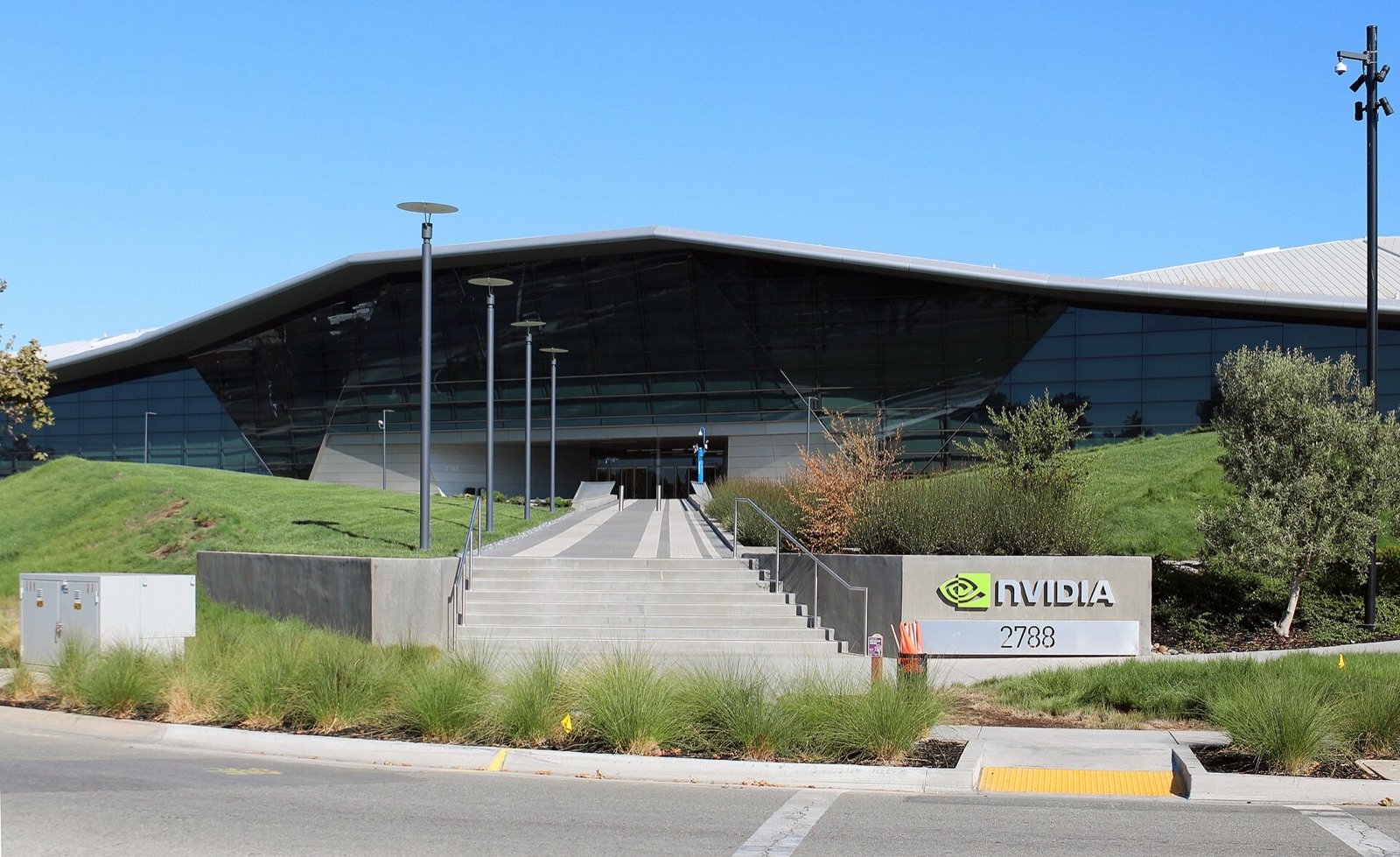
For the quarter to 26 July 2026 Nvidia reports revenue of US$96.2 billion, up 106% in a year, of which US$89.0 billion comes from data centres, up 117%. Sales to the big cloud companies roughly double, and sales to specialist “AI clouds”, industry and enterprise more than double. Nvidia is worth roughly US$5.4 trillion in September.
2026
Big Tech lifts 2026 capex to US$720–745 billion Official
In their second-quarter results the four largest US cloud and platform companies raise or narrow their 2026 capital-spending plans to a combined US$720–745 billion, about 77% more than the roughly US$410 billion spent in 2025. Alphabet raises its range for the third time this year; Amazon cites higher memory prices; Microsoft’s lower figure reflects a lease-accounting change rather than less building.
Warning signs: analysts note negative free cash flow at Amazon over the past year and Alphabet’s first negative free-cash-flow quarter, as spending outruns operating cash.
Anthropic raises US$65 billion at US$965 billion Reported
Anthropic announces a US$65 billion Series H at a US$965 billion valuation, overtaking OpenAI as the most valuable AI start-up at that point. Eight months earlier, in September 2025, it had raised US$13 billion at US$183 billion.
2026
Stanford AI Index: US$581.7 billion in 2025 Official
The Stanford AI Index 2026 reports global corporate AI investment of US$581.7 billion in 2025, more than double 2024. Private investment rises 127.5% to US$344.7 billion; generative AI takes US$170.9 billion. The number of private rounds above US$1 billion nearly doubles to 28, and the average round grows 46% to US$66.5 million: more money, in fewer hands. The US accounts for US$285.9 billion of private investment.
IEA: data-centre power to roughly double by 2030 Official
The International Energy Agency estimates that data centres used about 485 TWh of electricity in 2025, up 17%, while consumption inside AI-focused facilities jumped about 50%. It projects about 950 TWh by 2030, around 3% of world demand, with AI-focused data centres’ use tripling. Grid connections and power equipment become a bottleneck for new campuses.
OpenAI raises US$122 billion Reported
OpenAI closes a funding round of about US$122 billion, the largest private raise on record, at a reported post-money valuation of about US$852 billion. Much of the money is earmarked for computing capacity, including the Stargate data centres.
Microsoft and Amazon pledge US$52.5 billion for India Official
Microsoft announces US$17.5 billion for cloud and AI infrastructure, skills and operations in India, its largest investment in Asia. A day later Amazon says it will invest more than US$35 billion in India by 2030 across AI, cloud and logistics. They follow Google’s October 2025 plan for a US$15 billion AI hub in Visakhapatnam.
2025
The circular mega-deals Reported
OpenAI signs a US$300 billion, five-year computing contract with Oracle for 4.5 gigawatts from 2027. Nvidia announces a plan to invest up to US$100 billion in OpenAI as it deploys Nvidia systems, and AMD agrees to supply 6 gigawatts of chips with warrants for OpenAI to take a stake in AMD. On 29 October Nvidia becomes the first company worth US$5 trillion. Analysts start mapping how the same dollars circulate between chipmakers, clouds and labs.
Nvidia becomes the first US$4 trillion company
Six months after the DeepSeek scare, Nvidia closes above a US$4 trillion market value for the first time. In the same month Google pays US$2.4 billion to license technology from and hire leaders of coding start-up Windsurf, and Thinking Machines Lab raises a US$2 billion seed round at US$12 billion.
2025
The DeepSeek shock
Chinese lab DeepSeek releases a reasoning model said to have been trained for a small fraction of US rivals’ costs, and its app tops Apple’s US App Store. Investors question whether so much spending is needed: Nvidia’s market value falls about US$589 billion in one session, a record. Big Tech answers within days by confirming, then raising, its spending plans.
2025
Stargate: up to US$500 billion Official
At the White House, OpenAI, SoftBank, Oracle and Abu Dhabi’s MGX announce Stargate, a venture to invest US$100 billion immediately and up to US$500 billion over four years in US AI data centres. The first campus, in Abilene, Texas, is built with Oracle and Crusoe. Further sites in Texas, New Mexico, Ohio and Michigan follow later in 2025.
Why it matters: AI investment is now announced in the language of national infrastructure.
US$253 billion and a new market leader Official
Corporate AI investment recovers to US$253.0 billion. Private AI investment reaches US$151.5 billion, with generative AI near US$50 billion. On 18 June 2024 Nvidia briefly becomes the world’s most valuable listed company. In India the Union Cabinet approves the IndiaAI Mission on 7 March with ₹10,371.92 crore over five years.
Big Tech buys into the labs Official
In January Microsoft announces a multiyear, multibillion-dollar extension of its OpenAI partnership, widely reported at about US$10 billion. In September Amazon agrees to invest up to US$4 billion in Anthropic, and Google commits up to US$2 billion in October. Nvidia passes US$1 trillion in May. Yet total corporate AI investment falls to US$201.0 billion, its lowest since 2020, as higher interest rates hit acquisitions and older AI start-ups.
2022
ChatGPT launches
OpenAI releases ChatGPT as a free research preview. It reaches an estimated 100 million users in about two months, then the fastest adoption of any consumer app. Investors who had been cooling on AI after 2021 now see a mass-market product. The full investment response arrives in 2023 and 2024.
Why it matters: it moved AI from a research budget line to a boardroom priority.
The pre-ChatGPT peak Official
Cheap money, pandemic-era digitisation and large acquisitions push corporate AI investment to US$360.7 billion, a record that stands until 2025. Much of it goes to AI-enabled software, autonomous vehicles, health and fintech rather than to large language models.
Microsoft backs OpenAI; GPT-3 arrives
In July 2019 Microsoft invests US$1 billion in OpenAI and becomes its exclusive cloud provider. In 2020 OpenAI’s 175-billion-parameter GPT-3 shows that larger models trained on more data and computing power gain new abilities, the “scaling” idea that later justifies enormous data-centre budgets. Corporate AI investment passes US$100 billion in 2019 and reaches US$221.9 billion in 2020.
“Attention Is All You Need”
Eight Google researchers publish the transformer architecture, which processes text in parallel and scales efficiently on GPUs. It becomes the basis of GPT, Gemini, Claude, Llama and almost every large model since. Corporate AI investment that year is US$53.7 billion.
Deep learning works, and Big Tech notices
In 2012 the AlexNet neural network, trained on two Nvidia gaming GPUs, wins the ImageNet image-recognition contest by a wide margin. Google, Facebook, Microsoft and Baidu hire deep-learning researchers, and in January 2014 Google buys London’s DeepMind. Corporate AI investment in 2013 is just US$14.6 billion, about one-fortieth of the 2025 level.
Why it matters: it showed that more data and more computing produced better AI, the bet behind every dollar since.
The Mega-Deals That Define the Boom
Headline commitments are often multi-year, conditional or both; read them as ceilings, not cheques.
| Deal | When | Size | What it covers |
|---|---|---|---|
| Stargate | Jan 2025 | Up to US$500B over four years | OpenAI, SoftBank, Oracle, MGX; US data centres |
| OpenAI–Oracle | Sep 2025 | US$300B over five years | 4.5 GW of computing from 2027 |
| Nvidia–OpenAI | Sep 2025 | Up to US$100B (planned) | Investment tied to deploying Nvidia systems |
| OpenAI funding | Mar 2026 | US$122B at ~US$852B | Largest private round reported |
| Anthropic Series H | May 2026 | US$65B at US$965B | Altimeter, Dragoneer, Greenoaks, Sequoia |
| Anthropic compute | Reported Sep 2026 | ~US$518B obligations | Google, Amazon, Microsoft, Broadcom leases |
| Google Texas | Nov 2025 | US$40B through 2027 | Data centres and AI infrastructure |
| Microsoft India | Dec 2025 | US$17.5B | Cloud and AI infrastructure, skills |
| Amazon India | Dec 2025 | US$35B+ by 2030 | AI, cloud and logistics |
The Electricity Problem
AI’s hardest limit may be the grid, not the chip.
The IEA says a typical AI-focused data centre uses as much electricity as 100,000 households, and the largest now under construction will use about 20 times as much. That is why AI campuses are now announced in gigawatts, why tech companies sign deals for gas turbines and nuclear power, and why grid connections, transformers and turbines have become bottlenecks. In the US, Ireland and parts of Asia, local communities and regulators are asking who pays for new transmission lines.
Is the AI Boom a Bubble?
The case for, the case against, and the dot-com comparison.
Valuations far ahead of revenue
Anthropic’s reported 2025 revenue was about US$4.6 billion against a US$965 billion private valuation and a US$518 billion compute bill. OpenAI’s reported US$1.4 trillion target is about 35 times its US$40 billion revenue run-rate.
Circular money
Chipmakers and clouds invest in labs that then buy their chips and capacity. It can make demand look stronger than end-customer spending.
Rising debt and fast depreciation
More spending is funded by bonds, leases and private credit, while AI chips may be economically obsolete in a few years.
Real, fast-growing demand
Nvidia’s data-centre sales doubled in a year; OpenAI’s run-rate passed US$40 billion; 88% of surveyed organisations used AI in 2025.
Rich spenders
Most capex comes from companies with huge existing profits, unlike the debt-fuelled telecom start-ups of 2000.
Boom with corrections
Some companies and data centres will fail and valuations may fall sharply, while the infrastructure is reused, as unused fibre was after 2002.
| Dot-com boom | AI boom | |
|---|---|---|
| Era | 1995–2002 | 2012–2026 |
| Core technology | Web, e-commerce, fibre networks | Neural networks, GPUs, large models |
| Who spent most | Start-ups and telecom carriers, often on debt | Highly profitable Big Tech, plus heavily funded labs |
| Infrastructure | Fibre optic cable, much of it unused for years | Data centres, chips, power; utilisation high so far |
| Revenue reality | Many firms had little or none | Real and fast-growing revenue, but far below spending |
| Warning signs | Sky-high valuations, IPO frenzy | Circular deals, rising debt, chip depreciation |
| How it ended / may end | Nasdaq fell about 78% from March 2000 to October 2002 | Unknown; a correction would not erase the technology |
Where the Money Goes, Country by Country
Private AI investment and newly funded AI companies, 2025.
| Country | Private AI investment, 2025 | Newly funded AI companies |
|---|---|---|
| United States | US$285.9B | 1,953 |
| China | US$12.4B | 161 |
| United Kingdom | US$5.9B | 172 |
| France | US$4.4B | 84 |
| Canada | US$4.3B | 79 |
| India | US$4.1B | 108 |
| Germany | US$3.9B | 92 |
| Israel | US$3.6B | 64 |
| Saudi Arabia | US$2.0B | — |
The United States dominates, with more private AI investment than the next fifty or so countries combined, and US generative AI investment alone exceeded China and Europe together. The Stanford figures understate China, where government guidance funds have put an estimated US$184 billion into AI firms between 2000 and 2023, and in March 2025 Beijing announced a further US$138 billion state venture fund for AI and other frontier technologies. The Gulf is the fastest-rising source of capital: Abu Dhabi’s MGX is a Stargate partner, and Saudi Arabia’s HUMAIN has signed infrastructure deals with AWS, Nvidia and others.
The AI Investment Boom and India
A modest share of venture money, a much larger share of Big Tech’s infrastructure plans.
India’s AI start-ups raised US$4.1 billion of private investment in 2025, sixth in the world, and India had 108 newly funded AI companies, fourth after the US, the UK and China. The bigger money is foreign infrastructure: Google’s planned US$15 billion AI hub in Visakhapatnam (announced October 2025), Microsoft’s US$17.5 billion and Amazon’s US$35 billion by 2030, both announced in December 2025. Indian conglomerates and data-centre operators are adding their own capacity.
The government’s IndiaAI Mission, approved in March 2024 with ₹10,371.92 crore over five years, subsidises shared GPU computing for start-ups and researchers and funds Indian foundation models. India’s advantage is less in training the largest models than in using AI at scale across payments, languages, public services and IT services, a story covered in our India AI revolution timeline.
Corrections to Claims Circulating Online
“Data centres: 460 TWh in 2024, over 1,000 TWh by 2030”
Those figures come from the IEA’s January 2024 report and referred to 2022 and 2026. The IEA’s current estimates are 415 TWh in 2024, 485 TWh in 2025 and about 950 TWh in 2030.
“Anthropic’s 2026 filings revealed…”
The US$518 billion figure comes from a draft IPO prospectus reviewed by Reuters in September 2026, not yet a public SEC filing. It should be attributed as reported.
“Hundreds of billions committed in 2026”
Four companies alone guided to US$720–745 billion of 2026 capital spending, close to three-quarters of a trillion dollars.
“US$581.7 billion invested in AI” as total spending
The Stanford figure counts investment in AI companies, including about US$214 billion of acquisitions. It excludes Big Tech’s own capex, which is far larger.
“A single AI campus uses as much power as a major city”
The IEA’s comparison: a typical AI data centre uses as much as 100,000 households, and the biggest planned ones about 20 times that.
The 2025–26 mega-rounds
An earlier AI-generated draft of this page stopped short of OpenAI’s US$122 billion round, Anthropic’s US$65 billion round, the July 2026 capex guidance and the September 2026 IPO news. All are now included.
Did You Know?
- Gaming roots: AlexNet, the 2012 breakthrough, was trained on two Nvidia GeForce gaming cards.
- Fortyfold: corporate AI investment grew from US$14.6 billion in 2013 to US$581.7 billion in 2025.
- Record day: Nvidia’s US$589 billion fall on 27 January 2025 is the largest one-day loss of market value for any company.
- Consumer value: Stanford estimates US users got about US$172 billion a year of value from generative AI by early 2026, mostly from free tools.
- Adoption speed: generative AI reached about 53% population-level adoption within three years, faster than the PC or the internet.
- Billion-dollar seeds: Thinking Machines Lab raised a US$2 billion seed round in 2025.
Quick Quiz: AI Investment Boom
1. How much was global corporate AI investment in 2025?
2. Which year was the pre-ChatGPT peak for corporate AI investment?
3. What was the maximum size announced for Stargate in January 2025?
4. What did Nvidia lose in market value on 27 January 2025?
5. How much electricity does the IEA expect data centres to use in 2030?
6. Which country received the most private AI investment in 2025?
Explore More Timelines
People Also Ask
Frequently Asked Questions
The Trillion-Dollar Question
The AI investment boom is no longer funded like a software trend. It is financed like a new layer of industrial infrastructure, with chips, power plants, transmission lines and data centres built years ahead of the revenue meant to pay for them. That makes the next two years a test. If AI agents and assistants turn into products that businesses and consumers pay for at scale, today’s spending will look like the railways or the fibre networks that later carried the modern economy. If revenue lags, the weakest lenders, landlords and labs will be exposed first. Either way, the money has already reshaped markets, energy systems and national strategies.
Related AiTimeline Stories
⚠️ Editorial Note
Last updated 5 October 2026. Items marked Official rest on company results, government statements and the Stanford AI Index 2026 and IEA reports; items marked Reported rely on news reports (Bloomberg, Reuters, CNBC) or analyst estimates and are attributed. Valuations and commitments change often, and multi-year deals may be conditional. This page is not investment advice. It replaces an earlier AI-generated draft; see the corrections section.
Sources & further reading
Every dated entry above was checked against these references. Last reviewed 5 October 2026.
- Stanford HAI: AI Index Report 2026, Chapter 4 Economy
- IEA: Energy and AI, Executive summary
- IEA: Key Questions on Energy and AI (2026)
- OpenAI: Announcing The Stargate Project
- OpenAI: Stargate advances with 4.5 GW partnership with Oracle
- NVIDIA Q2 fiscal 2027 results (SEC 8-K)
- CNBC: Anthropic tops OpenAI as most valuable AI startup
- InvestmentNews/Reuters: Anthropic IPO filing shows $518B compute bill
- Bloomberg: OpenAI targets $30 billion in new funding round