AMD’s Comeback: How a $660 Million Loss Turned Into a Challenge to Nvidia
AMD's comeback: from a $660M loss and sub-$2 shares in 2015 to $34.6B revenue, Zen, EPYC, Xilinx and 6-gigawatt AI deals that make it Nvidia's main rival.
Latest Story
AMD’s comeback is one of the biggest turnarounds in the chip industry. In 2015 the company made $3.99 billion in revenue, lost $660 million and saw its shares fall below $2. Ten years later it reported $34.6 billion in revenue, and in October 2026 its market value passed $1 trillion. Along the way it sold its factories, bet on a new CPU design called Zen, took server share from Intel and became the main alternative to Nvidia in AI chips. This is the full record, year by year, with corrections to common claims.
💡 Short Answer
AMD came back from heavy losses in 2012–2016 by spinning off its factories in 2009, making Lisa Su CEO in 2014 and betting on its Zen CPU design, which launched as Ryzen and EPYC in 2017. Chiplets, TSMC manufacturing and the Xilinx deal followed. Revenue rose from $3.99 billion in 2015 to $34.6 billion in 2025, and Instinct AI GPUs now make AMD Nvidia’s main rival.
AMD’s Comeback: Key Questions
AMD’s Turnaround in Ten Points
- Never bankrupt: AMD had five years of losses and shares under $2, but never filed or defaulted.
- 2009 fab spin-off: GlobalFoundries took AMD’s factories and about $1.2 billion of debt.
- Lisa Su, CEO from October 2014, narrowed AMD to high-performance computing.
- Zen beat its own target: about 52% more instructions per clock against a promised 40%.
- 2017 was the turn: Ryzen in March, EPYC in June, first annual profit since 2011.
- Luck helped: GlobalFoundries quit 7nm in 2018, pushing AMD to TSMC just as Intel’s 10nm slipped.
- Chiplets let AMD build 64-core server chips cheaply from 2019.
- Xilinx ($49 billion at close, 2022) added adaptive and embedded chips.
- AI arrived late but big: MI300X in 2023, then 6-gigawatt deals with OpenAI and Meta.
- Revenue grew about 8.7 times from 2015 to 2025, and one 2026 quarter is now almost three times all of 2015.
How Close Did AMD Come to Collapse?
Distress, not bankruptcy. The difference matters.
Five straight loss years
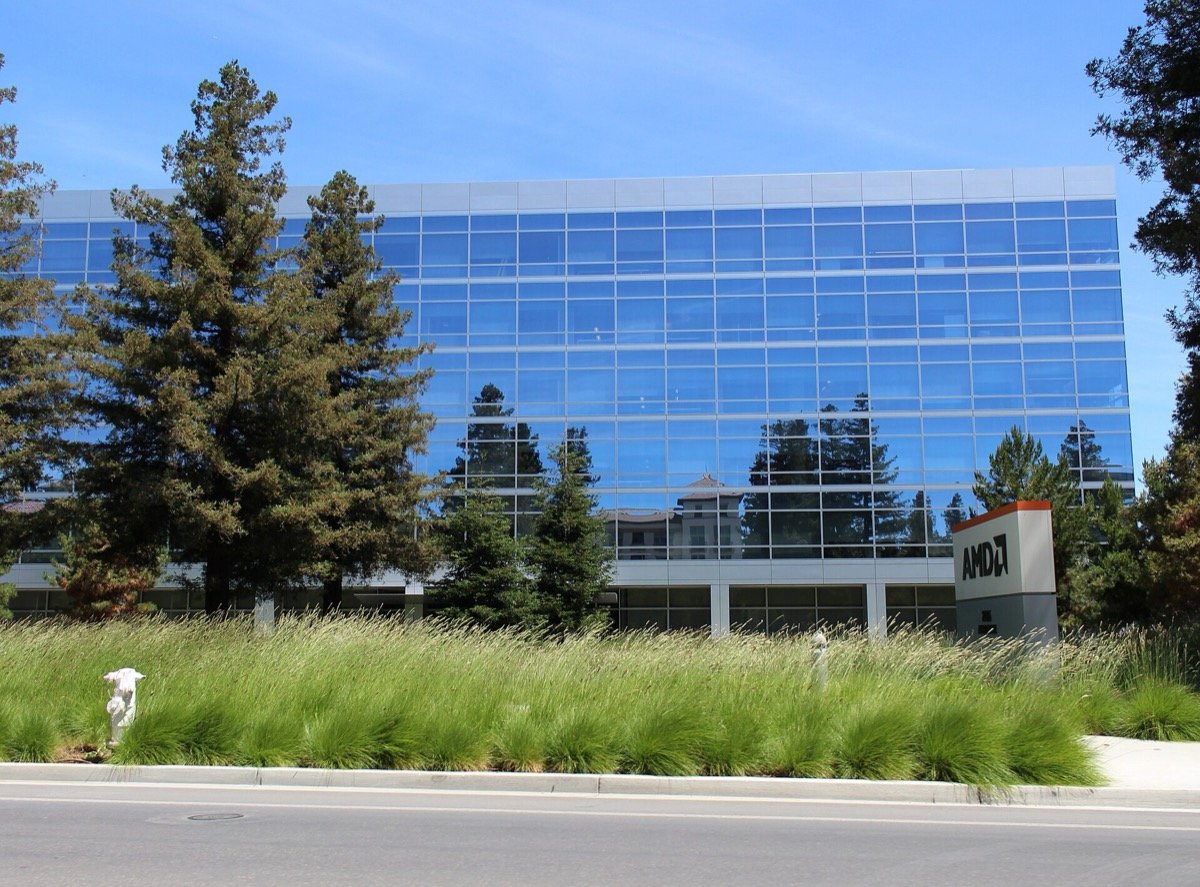
From 2012 to 2016 AMD lost about $2.8 billion in total under GAAP, led by $1.18 billion in 2012 and $660 million in 2015.
Down 28% in one year
2015 revenue of $3.99 billion was the lowest in more than a decade, as PC demand fell and its Bulldozer-family CPUs lost to Intel’s.
Debt against shrinking cash
About $2.2 billion of debt at the end of 2015, against cash of under $1 billion. Assets were sold or leased back to stay liquid.
Shares under $2
The stock fell below $2 in 2015 and early 2016. Many analysts expected AMD to be sold or broken up.
The phrase “near-bankruptcy” appears in many retellings, including the material this page was built from, but it is not accurate. AMD never filed for court protection, never missed a debt payment and always kept access to credit. What it lacked was room for another failure. If Zen had disappointed in 2017, the most likely result would have been a sale of the company or a break-up, not a court filing.
What kept AMD alive in those years was cash from three places: console chips for Sony and Microsoft, asset sales (the Austin campus in 2013, the Penang and Suzhou packaging plants in 2016) and a Chinese licensing deal worth $293 million. Almost all of it went into Zen.
Pick a year to see AMD’s numbers, its key product and what changed.
GAAP figures from AMD filings. Updated 6 October 2026.
Choose a year above
From $3.99 Billion to $34.6 Billion
Annual revenue and the shift toward data centres.
AMD’s Comeback: The Full Timeline, 2009–2026
Newest first. Tags mark low points, bets, payoffs, deals and setbacks.
Shares hit a record; market value passes $1 trillion Results
AMD’s stock closed at a record $633.91 on 2 October 2026 and briefly traded near $645, pushing its market value above $1 trillion, according to market reports. Investors were pricing in the MI450 ramp for OpenAI and Oracle, both due to start in the second half of 2026. The same shares traded below $2 in 2015.
Why it matters: one of OpenAI’s warrant tranches is tied to AMD reaching $600 a share. The stock price is now part of the deal mechanics, not just a scoreboard.
Q2 2026: record $11.5 billion, data centre doubles Results
Revenue rose 50% to $11.5 billion, with GAAP gross margin of 54%, operating income of $2.0 billion and net income of $2.3 billion. Data Center reached $6.7 billion, 58% of sales, driven by EPYC CPUs and MI350 GPUs; it swung from a $155 million operating loss a year earlier (hit by MI308 export charges) to $2.1 billion of profit. Client grew 23% to $3.1 billion, Embedded 19% to $977 million, while Gaming fell 31% to $779 million as console chip sales slowed.
Advancing AI 2026: MI400, Helios and EPYC Venice launch Payoff
AMD launched the Instinct MI400 series and put Helios into full production, with revenue shipments from the end of the third quarter. A Helios rack holds 72 MI455X GPUs, 18 EPYC CPUs and about 31 TB of HBM4; AMD claims 50% more memory capacity than Nvidia’s Vera Rubin NVL72, a vendor figure not yet independently tested. EPYC Venice (Zen 6, up to 256 cores) is the first x86 server CPU on TSMC 2nm. On 22 July Anthropic agreed to deploy up to 2 gigawatts of MI450-series GPUs, with AMD investing up to $5 billion in Anthropic. MI500 is promised for 2027.
Meta signs for 6 gigawatts Deal
Days after expanding its Nvidia order, Meta agreed to deploy 6 gigawatts of AMD GPUs over several generations, starting with a custom MI450-based chip and EPYC Venice CPUs in Helios racks in the second half of 2026. Like OpenAI, Meta received a warrant for up to 160 million AMD shares at one cent each, vesting with deployments and share-price targets.
2025 results: $34.6 billion, a record year Results
Revenue grew 34% to $34.6 billion, almost nine times the 2015 figure. Data Center made $16.6 billion (up 32%), Client and Gaming $14.6 billion (up 51%) and Embedded $3.5 billion. GAAP net income was $4.3 billion. The year absorbed about $440 million of net charges after the US required export licences for the MI308, a reduced chip designed for China, in April 2025.
OpenAI picks AMD for 6 gigawatts Deal
Exactly a year before this update, OpenAI agreed to deploy 6 gigawatts of AMD Instinct GPUs, starting with 1 gigawatt of MI450 chips in the second half of 2026. In return AMD granted a warrant for up to 160 million shares, about a tenth of the company, vesting with deployments and AMD share-price milestones. A week later Oracle said it would offer 50,000 MI450 GPUs from the third quarter of 2026. In November AMD told analysts it targeted revenue growth above 35% a year and data-centre growth above 60% a year over the next three to five years.
Why it matters: this was the first time a leading AI lab had committed to AMD at Nvidia-scale volumes.
MI350 launches; Helios is previewed Bet
At Advancing AI 2025 AMD launched the MI350 series and previewed the MI400 and Helios rack for 2026. The rack strategy relied on ZT Systems, a server builder AMD agreed to buy for $4.9 billion in August 2024 and completed in March 2025; it kept ZT’s design engineers and agreed to sell the factories to Sanmina for $3 billion. The MI350 ramp drove record Instinct revenue in the second half of 2025.
US export rules hit the China chip Setback
The US government required licences to export the MI308 to China, forcing AMD to write down inventory. Full-year 2025 charges came to about $440 million net, after a partial reversal in the fourth quarter, when AMD sold about $390 million of MI308s to China. The episode showed how much of the AI chip business depends on trade policy.
MI300X: AMD’s first serious AI challenger Bet
A year after ChatGPT launched, AMD unveiled the MI300X, a chiplet-based accelerator with 192 GB of HBM3, more memory than Nvidia’s H100. Lisa Su forecast a $400 billion AI-accelerator market by 2027. Instinct revenue went from a small base to more than $5 billion in 2024, AMD’s fastest product ramp, though still a fraction of Nvidia’s sales.
Revenue dips as the PC market slumps Setback
After the pandemic boom, PC demand collapsed. AMD’s client revenue fell sharply in late 2022 and 2023, and total revenue slipped from $23.6 billion to $22.7 billion, the only annual decline since the turnaround. Data centre and embedded sales held up, and the AI story was only just starting.
Frontier: the first exascale supercomputer Payoff
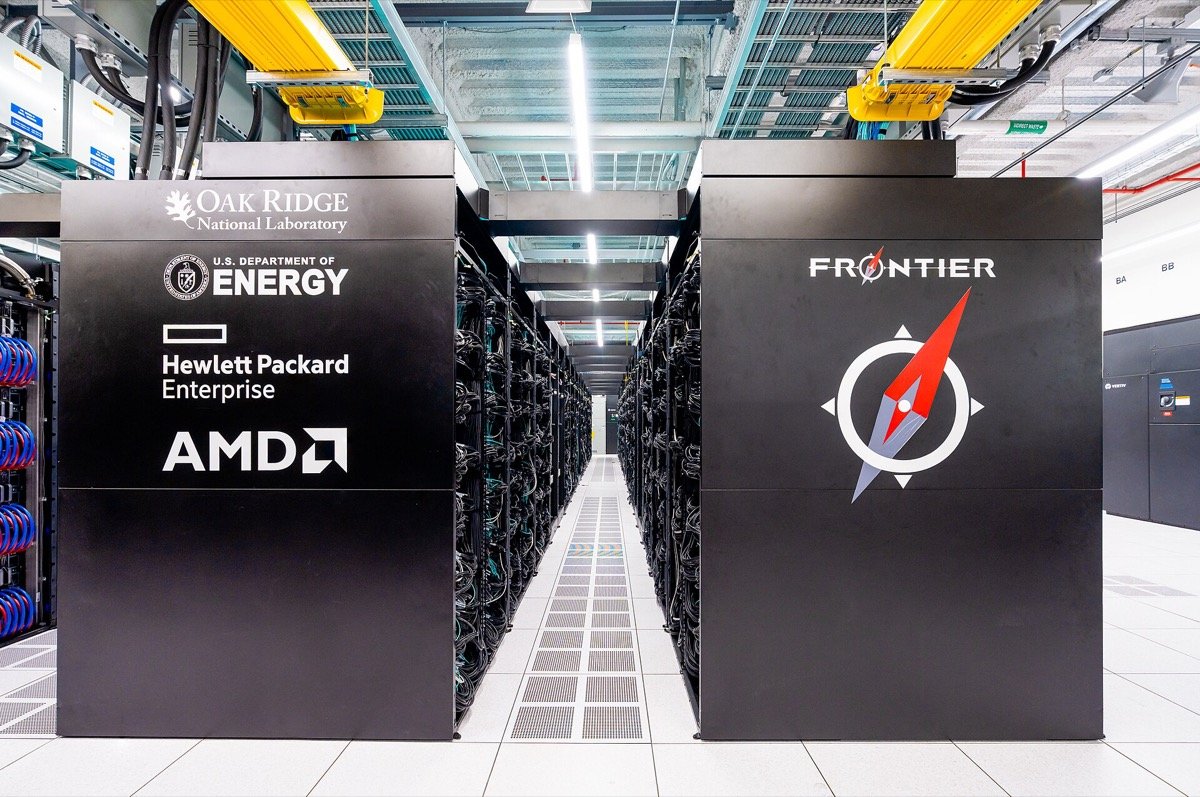
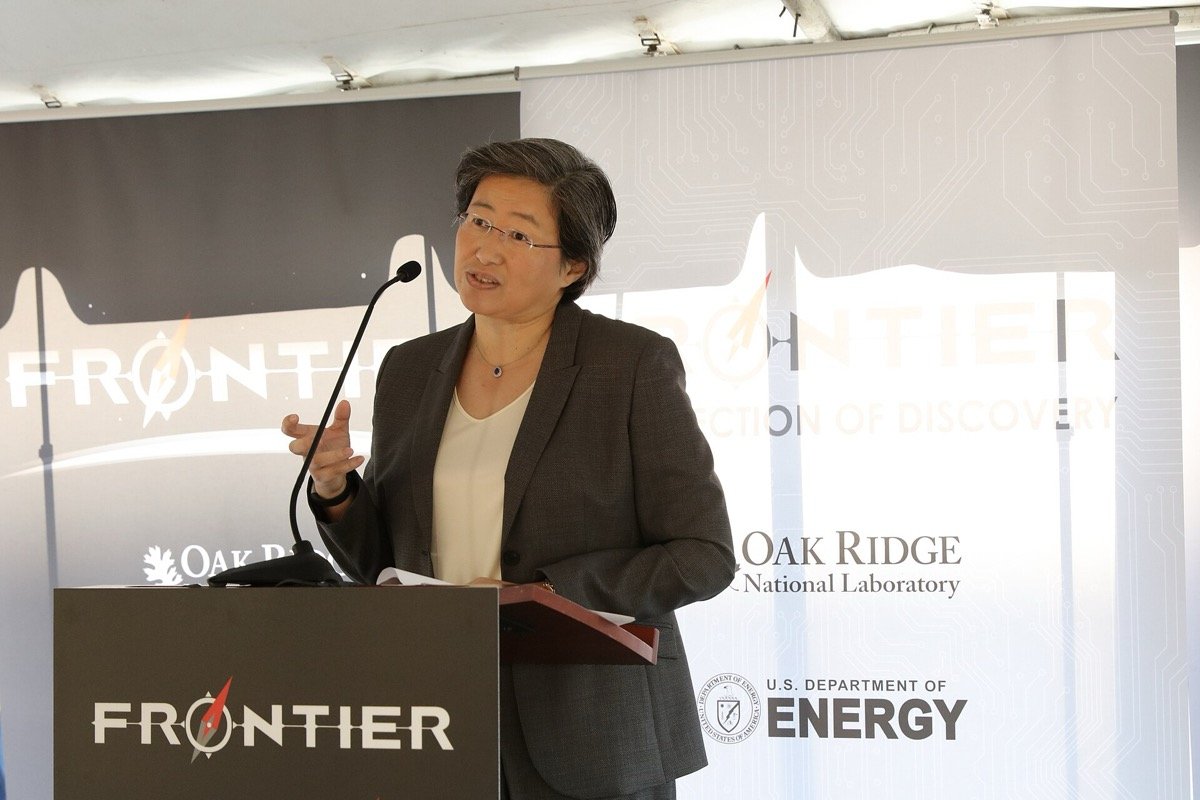
Frontier, built by HPE with AMD EPYC CPUs and MI250X GPUs, became the first machine to pass one exaflop on the TOP500 list. AMD had won the contract in 2019. In November 2024 El Capitan, using the MI300A chip, took the top spot again for AMD. The supercomputer wins gave Instinct credibility years before generative AI.
Xilinx and Pensando: beyond CPUs and GPUs Bet
AMD completed its all-stock purchase of Xilinx, announced at $35 billion in October 2020 and worth about $49 billion by closing. It added FPGAs and adaptive chips for cars, factories, telecoms and aerospace, and the engineers behind AMD’s later AI engines. In May it bought Pensando, a networking-chip maker, for about $1.9 billion. In June it told analysts its target market was about $300 billion.
Revenue nearly doubles in two years Results
Revenue reached $9.76 billion, up from $6.48 billion in 2018. Zen 3 chips in November 2020 gave AMD the fastest gaming CPUs, the last category Intel had held. The PlayStation 5 and Xbox Series X|S, both using AMD chips, launched the same month. The following year revenue jumped 68% to $16.4 billion.
Zen 2 and chiplets: the design that scaled Payoff
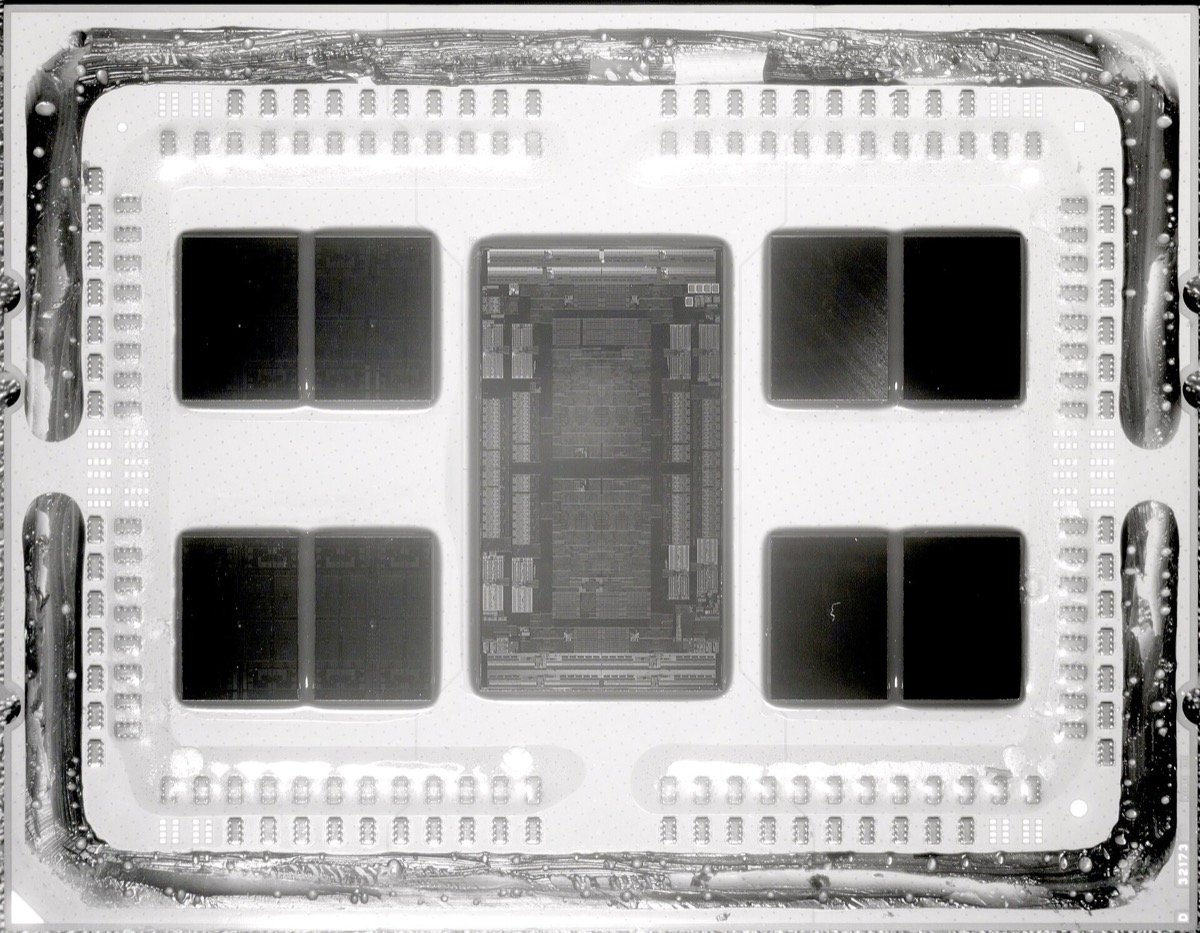
Zen 2 split each processor into 7nm core chiplets made by TSMC and a 12nm input-output die made by GlobalFoundries. The 64-core EPYC Rome had more than twice the cores of Intel’s mainstream 28-core Xeon at the time. The first Zen EPYC in 2017 had already joined four dies in one package, but Rome’s mix-and-match design is what made AMD’s products cheap to scale.
GlobalFoundries quits 7nm; AMD moves to TSMC Bet
GlobalFoundries stopped developing its 7nm process, which pushed all of AMD’s leading-edge chips to TSMC. It turned out to be lucky timing: Intel’s own 10nm process was years late, so AMD’s TSMC-made chips had a manufacturing lead over Intel for the first time. A 2016 amendment to AMD’s wafer agreement, which cost $335 million, had already given it the freedom to use other foundries.
Ryzen and EPYC arrive; AMD returns to profit Payoff
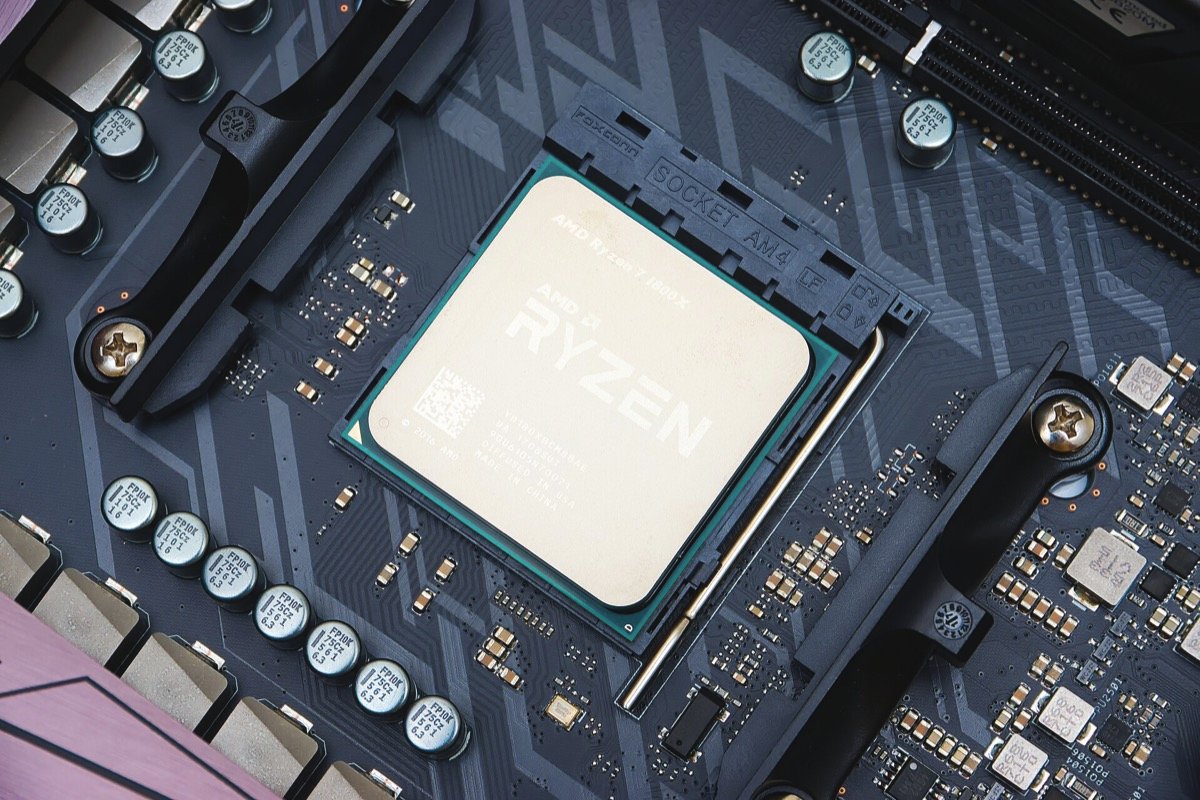
The first Ryzen 7 chips offered eight cores for roughly half the price of Intel’s eight-core desktop parts. Zen delivered about 52% higher instructions per clock than the core it replaced, beating the 40% AMD had promised. EPYC followed in June with up to 32 cores. Revenue rose 25% to $5.33 billion and AMD made a $43 million net profit, its first annual profit since 2011.
Selling assets to fund Zen Low point
AMD sold 85% of its chip assembly and test plants in Penang and Suzhou to Tongfu Microelectronics for about $371 million and licensed server technology to a Chinese joint venture for $293 million. Most of the money was used to keep AMD going until Zen arrived. Graphics chief Raja Koduri’s group launched the Radeon Instinct brand and ROCm software in late 2016, AMD’s first focused push into data-centre AI.
The low point Low point
Revenue fell to $3.99 billion with an operating loss of $481 million and a net loss of $660 million. AMD carried about $2.2 billion of debt, and its server CPU share was close to zero. At its May analyst day AMD described Zen and promised a 40% gain in instructions per clock. Jim Keller, who had returned in 2012 to lead the CPU effort, left in September 2015, with the core design largely finished.
Correction: AMD was never ‘near-bankrupt’ in a legal sense. It was in financial distress, but it never filed for bankruptcy or missed a debt payment.
Lisa Su becomes CEO Bet
Su, an MIT-trained engineer who had run semiconductor research at IBM and networking chips at Freescale, became AMD’s president and CEO. Her plan was simple to state and hard to do: build great products, deepen customer relationships and simplify the company. She focused the company on high-performance computing and stopped trying to compete in every market.
Losses, layoffs and a sold headquarters Low point
Under Rory Read, AMD cut staff, took a large charge to give up its remaining GlobalFoundries stake and lost $1.18 billion in 2012. In 2013 it sold its Austin campus and leased it back for cash. Two console wins helped: custom AMD chips inside the PlayStation 4 and Xbox One (November 2013) brought in steady revenue during the lean years.
The factories go: GlobalFoundries is born Bet
Under CEO Dirk Meyer, AMD moved its fabs into GlobalFoundries, a joint venture with Abu Dhabi’s Advanced Technology Investment Company. The new company assumed about $1.2 billion of AMD debt, and ATIC committed $2.1 billion of investment. AMD became a fabless designer, but a wafer supply agreement tied it to GlobalFoundries for most of the next decade.
Background: AMD had paid $5.4 billion for the graphics company ATI in 2006, which gave it Radeon but stretched its balance sheet just as Intel’s Core chips pulled ahead.
AMD’s Numbers, Year by Year
GAAP figures from AMD annual reports and SEC filings. Swipe sideways on mobile.
| Year | Revenue | Net income (GAAP) | What drove it |
|---|---|---|---|
| 2014 | $5.51B | −$403M | Old Bulldozer-family CPUs, console chips |
| 2015 | $3.99B | −$660M | PC slump, near-zero server share |
| 2016 | $4.27B | −$497M | Asset sales fund Zen |
| 2017 | $5.33B | $43M | Ryzen and EPYC launch |
| 2018 | $6.48B | $337M | Ryzen 2000, EPYC gains |
| 2019 | $6.73B | $341M | Zen 2 chiplets on TSMC 7nm |
| 2020 | $9.76B | $2.49B* | Zen 3, new consoles, pandemic PCs |
| 2021 | $16.43B | $3.16B | PC and server boom |
| 2022 | $23.60B | $1.32B | Xilinx added; acquisition amortisation |
| 2023 | $22.68B | $854M | PC slump; MI300X unveiled |
| 2024 | $25.79B | $1.64B | Instinct passes $5B |
| 2025 | $34.64B | $4.34B | MI350 ramp, EPYC, Ryzen share gains |
| Q2 2026 (quarter) | $11.5B | $2.3B | Data Center $6.7B, up 107% |
* 2020 net income includes a one-off tax benefit of about $1.3 billion. The 2022–2024 profits are reduced by billions of dollars a year of amortisation from the Xilinx deal, which is why AMD’s non-GAAP earnings are much higher. The missing years in many retellings, 2018 to 2022, are where most of the growth happened: revenue rose from $6.5 billion to $23.6 billion before AI was a meaningful part of the business.
Why Chiplets and TSMC Mattered
The manufacturing story behind the CPU story.
Fabless by necessity
Spinning off the factories was a survival move. It meant AMD could later buy the best process on the market rather than live with its own.
Four dies, one package
The first EPYC joined four eight-core dies in one package, cheaper than one huge die with the same core count.
Core chiplets plus an I/O die
Zen 2 put the cores on small TSMC 7nm chiplets and everything else on a cheaper 12nm die. One chiplet design served desktops and servers.
Chiplets for AI
MI300 stacked compute dies on I/O dies with HBM memory around them. Venice and MI455X continue the approach on TSMC’s most advanced processes.
Every Instinct Generation, 2016–2027
AMD did not enter AI in 2022. It started in 2016 and broke through in 2023.
| Accelerator | Launched | Memory | Known for |
|---|---|---|---|
| Radeon Instinct MI6/MI8/MI25 | Dec 2016 (announced) | up to 16 GB | First Instinct brand, with ROCm |
| Instinct MI100 | Nov 2020 | 32 GB HBM2 | First CDNA compute architecture |
| Instinct MI250X | Nov 2021 | 128 GB HBM2e | Frontier, first exascale system |
| Instinct MI300X / MI300A | Dec 2023 | 192 GB HBM3 / 128 GB | Chiplet AI GPU; MI300A powers El Capitan |
| Instinct MI325X | Oct 2024 | 256 GB HBM3E | Memory upgrade |
| Instinct MI350X / MI355X | Jun 2025 | 288 GB HBM3E | Drove 2025-26 record data-centre sales |
| Instinct MI455X (MI400) | Jul 2026 | about 432 GB HBM4 | Helios rack; OpenAI, Meta, Anthropic deals |
| Instinct MI500 | 2027 (planned) | not disclosed | Next Helios generation |
The Gigawatt Deals
Who has committed to AMD AI chips, and on what terms.
| Customer | Announced | Size | Terms |
|---|---|---|---|
| OpenAI | 6 Oct 2025 | 6 GW | First 1 GW of MI450 from H2 2026; warrant for up to 160M AMD shares |
| Oracle | 14 Oct 2025 | 50,000 MI450 GPUs | Public cloud supercluster from Q3 2026 |
| Meta | 24 Feb 2026 | 6 GW | Custom MI450 from H2 2026; warrant for up to 160M shares |
| Anthropic | 22 Jul 2026 | Up to 2 GW | First GW in H1 2027; AMD to invest up to $5B |
| Microsoft | Ongoing | Not disclosed | Azure deployments named in Q2 2026 results |
The warrants are unusual. OpenAI and Meta can each receive up to 160 million AMD shares, together about a fifth of the company, if they buy enough chips and AMD’s share price reaches set targets. Critics call these circular deals, because AMD effectively pays customers in stock to buy its products. Supporters say they lock in volume that would otherwise default to Nvidia. Both readings can be true; the deals only pay off for AMD if the hardware is actually deployed and used.
AMD vs Nvidia: Where the Fight Really Is
Six layers, not one benchmark.
AMD vs Nvidia in AI computing, October 2026
AMD’s real advantage is that it is the only company selling both a leading x86 server CPU and a competitive AI GPU. Its weaknesses are software maturity and scale. The question for 2027 is not whether AMD beats Nvidia but whether big buyers split their orders, with AMD as the standard second supplier. The OpenAI, Meta and Anthropic deals suggest that is already happening.
Corrections to Claims Circulating Online
From the summary material this page was built from, and common in coverage.
“Near-bankruptcy”
AMD never filed, defaulted or entered insolvency. “Financial distress” is accurate; “near-bankrupt” is not.
“AMD entered AI in 2022”
Radeon Instinct and ROCm launched in 2016; the MI100 shipped in 2020 and MI250X powered Frontier in 2022.
“Fabless since 2009”
Partly. A wafer agreement tied AMD to GlobalFoundries until it was loosened in 2016; the move to TSMC came after GlobalFoundries quit 7nm in 2018.
Chiplets without a date
Multi-die EPYC arrived in 2017; the core-chiplet-plus-I/O-die design arrived with Zen 2 in 2019.
“Advancing AI 2026 introduced MI400 and Helios”
Both were previewed in June 2025. July 2026 was their launch and full-production announcement.
The deals behind 2026
OpenAI (6 GW, Oct 2025), Meta (6 GW, Feb 2026), Anthropic (2 GW, Jul 2026), ZT Systems and the MI308 export charges were all missing.
What to Watch Next
Q3 results
AMD guided to about $13 billion. The test is whether the promised second-half data-centre acceleration arrives.
Helios and Venice ramp
First revenue shipments of Helios racks and the broad EPYC Venice launch.
OpenAI’s first gigawatt
Deployment milestones trigger warrant tranches, so progress will show up in filings.
Anthropic’s first gigawatt
The first of up to 2 GW of MI450-series capacity is due to come online.
MI500
The next Instinct generation and Helios refresh, on AMD’s annual cadence.
Export rules
US licensing for China-bound AI chips has already cost AMD hundreds of millions of dollars.
Did You Know?
- Same city, distant cousins: Lisa Su and Nvidia’s Jensen Huang were both born in Tainan, Taiwan, and are distant relatives.
- Beating its own promise: AMD said Zen would be 40% faster per clock and shipped about 52%.
- Two manufacturers, one chip: a 2019 EPYC Rome used TSMC 7nm core chiplets and a GlobalFoundries 12nm I/O die.
- Consoles kept the lights on: every PlayStation and Xbox since 2013 has used an AMD chip.
- Supercomputers first: AMD held the TOP500 number-one spot with Frontier (2022) and El Capitan (2024) before its big AI wins.
- Price as a deal term: one tranche of OpenAI’s AMD warrant vests only if AMD shares reach $600; they closed at $633.91 on 2 October 2026.
Quick Quiz
1. What was AMD’s revenue in 2015, its low point?
2. Which company makes AMD’s leading-edge chips today?
3. When did the first Ryzen chips go on sale?
4. How many GPUs are in one AMD Helios rack?
5. Which AI lab signed a 6-gigawatt AMD deal on 6 October 2025?
Explore More Timelines
People Also Ask
Frequently Asked Questions
The Bottom Line
AMD did not come back with one chip. It came back through a chain of decisions, several made years before they paid off: giving up its factories in 2009, putting an engineer in charge in 2014, protecting the Zen budget through the worst years, and building chiplets, server CPUs and GPUs that could be combined. Some luck helped, especially Intel’s manufacturing delays.
The first comeback, from distress to competition, is done. The second, from competitor to a permanent second platform for AI, is being tested now. Helios shipments, the OpenAI and Meta deployments and ROCm’s progress over the next 12 months will show whether AMD’s $1 trillion valuation reflects contracts or hope.
Related AiTimeline Stories
⚠️ Editorial Note
Last updated 6 October 2026. Financial figures are GAAP numbers from AMD’s annual reports and SEC 8-K earnings releases; market-share figures are from Mercury Research as reported; share-price and market-value figures are from market reports. Performance comparisons with Nvidia are AMD’s own claims unless stated. Planned launches and deployments are company targets, not guarantees. This is not investment advice.
Sources & further reading
Every dated entry above was checked against these references. Last reviewed 6 October 2026.
- SEC: AMD Q2 2026 earnings release (8-K, 4 Aug 2026)
- SEC: AMD Q4 and full year 2025 earnings release (8-K, 3 Feb 2026)
- AMD: AMD and OpenAI announce strategic partnership to deploy 6 gigawatts of AMD GPUs (6 Oct 2025)
- AMD Newsroom: AMD and Anthropic strategic partnership, up to 2 GW of Instinct MI450 (Jul 2026)
- CNBC: Meta to use 6GW of AMD GPUs days after expanded Nvidia deal (24 Feb 2026)
- Moor Insights & Strategy: AMD Advancing AI 2026, Helios ships, Venice and ROCm
- Tom's Hardware: AMD reaches 46% of server x86 CPU revenue (Mercury Research, Q2 2026)
- TOP500: Frontier becomes the first exascale supercomputer (June 2022 list)