← AiTimeline Home

Science · Space · 1955–2028

Nuclear Propulsion to Mars: A Timeline of Faster Space Travel

📅 Updated 9 October 2026🚀 From Project Rover and NERVA to NASA’s SR-1 Freedom
Advertisement

View as Web Story

In short

Nuclear propulsion to Mars, from Project Rover and NERVA tests to NASA's SR-1 Freedom reactor spacecraft due in 2028, and what it means for crewed trips.

Latest Story

Getting to Mars faster is less about burning more fuel than about burning it better. Nuclear propulsion to Mars has been studied since the late 1940s: the US ground-tested about 20 nuclear rocket reactors and engines between 1959 and 1972, then cancelled the programme before any flew. In 2026 the idea is back. NASA plans to launch Space Reactor-1 Freedom, a robotic nuclear-electric spacecraft, to Mars in late 2028, and on 8 October 2026 it signed a new space nuclear agreement with the US Department of Energy. This page traces every major step, separates tests from targets, and explains what a nuclear engine could and could not change for astronauts.

Advertisement

💡 Short Answer

No spacecraft has yet reached Mars using nuclear propulsion. The US ground-tested nuclear thermal rockets under Rover and NERVA from 1959 to 1972, then cancelled them in 1973. NASA now plans SR-1 Freedom, a robotic craft driven by a roughly 20-kilowatt reactor and electric thrusters, for launch in late 2028. Crewed nuclear Mars trips have no confirmed date.

⚡ Nuclear Propulsion to Mars: Quick Facts
First reactor testKiwi-A, 1 July 1959
NERVA cancelledJanuary 1973, never flown
Next planned flightSR-1 Freedom, late 2028
SR-1 reactor power~20 kW electric, HALEU
NTP efficiency~2× best chemical
Crewed Mars goal2036 (planning target)
⚡ Quick Answers — AI Overview Ready

Nuclear Propulsion to Mars: Key Questions

How much faster could nuclear propulsion reach Mars?
There is no single number. NASA studies aim to keep a crewed round trip close to two years, against about three for many chemical plans, and the US Department of Energy says nuclear thermal propulsion could cut transit time by up to 25%. Actual time depends on the vehicle, trajectory and stay at Mars.
What is NASA’s SR-1 Freedom?
Space Reactor-1 Freedom is a robotic NASA mission, announced in March 2026, to demonstrate nuclear electric propulsion. A HALEU-fuelled reactor of about 20 kilowatts powers Hall thrusters on a 12-tonne craft. It targets launch in late 2028, arrival in 2029, and carries three SkyFall helicopters.
Has a nuclear rocket ever flown?
No nuclear rocket engine has flown. NERVA engines were fired on the ground in Nevada until the programme was cancelled in 1973, and DARPA’s DRACO orbital demonstration was cancelled in 2025. Nuclear reactors have flown for power, including the US SNAP-10A in 1965 and many Soviet satellites.
Nuclear thermal or nuclear electric: what is the difference?
Nuclear thermal propulsion heats liquid hydrogen in a reactor and expels it through a nozzle, giving high thrust at about twice chemical efficiency. Nuclear electric propulsion turns reactor heat into electricity for plasma thrusters: very efficient, but very low thrust, so it fires for months.
📚 Key Takeaways

Nuclear Propulsion to Mars in Ten Points

  • 1955: Project Rover began at Los Alamos to heat hydrogen with a reactor.
  • 1959–1972: about 20 nuclear rocket reactors and engines were ground-tested in Nevada.
  • 1965: SNAP-10A became the only US fission reactor operated in orbit, for power.
  • 1973: Rover and NERVA were cancelled before any flight.
  • 2005 and 2025: Project Prometheus and DARPA’s DRACO were also cancelled.
  • 2025: NASA ran 100+ cold-flow tests on a flight-like reactor unit.
  • March 2026: NASA announced SR-1 Freedom, a nuclear-electric craft for Mars.
  • May 2026: a directive set a 2036 planning goal for round-trip Mars missions.
  • 8 October 2026: NASA and DOE signed a space nuclear power and propulsion agreement.
  • Still unresolved: fuel, shielding, radiators, testing, launch approval and steady funding.

Why Mars Needs a Better Engine

Chemical rockets are superb for launch. For a crewed trip to Mars, they make every kilogram expensive.

A chemical rocket burns fuel with an oxidiser and gets a big push quickly, but the best hydrogen-oxygen engines reach a specific impulse of only about 450 seconds. To go faster you need much more propellant, and the extra propellant needs its own propellant. Mars also moves: Earth and Mars line up for efficient transfers only about every 26 months.

A longer journey means more radiation from cosmic rays, more food, water and oxygen, and fewer options if something goes wrong. A more efficient engine can help with all of these. It cannot by itself make a Mars mission safe.

Propellant efficiency: specific impulse in seconds (higher = less fuel)01,0002,0003,0004,000Best chemical (hydrogen-oxygen)Flown for decades~450Nuclear thermal (NERVA-class)Ground-tested 1959–72~800–900Hall thruster (electric)Flying on many spacecraft~1,500–3,000Gridded ion thruster (electric)Flown, e.g. Dawn~3,000–4,000Typical published ranges, rounded. Electric thrusters trade thrust for efficiency: thousands of seconds, but only a gentle push.
Nuclear thermal roughly doubles chemical efficiency; electric propulsion multiplies it, at very low thrust. Scroll sideways on small screens.
🚀 Capsule 1 · Interactive: Mars in 2 Years, or Less?

Pick a propulsion option and see the kind of trip it buys

Durations are illustrative ranges from published NASA and DOE mission studies, not schedules. Real numbers depend on the launch year, vehicle mass and time spent at Mars. Nothing you click is recorded.

Choose an option above

–Round trip (illustrative)
–Thrust
–Status

    ⚛️ Capsule 2 · Nuclear Heat vs Nuclear Electricity

    Two ways to use a reactor to cross space

    Both use controlled fission. One uses the reactor’s heat directly; the other turns it into electricity first.

    Nuclear thermal (NTP)
    Reactor heats hydrogen, nozzle expels it
    VS
    Nuclear electric (NEP)
    Reactor makes power for plasma thrusters
    High: minutes-long burnsThrustVery low: months of firing
    ~800–900 sEfficiency (Isp)~1,500–4,000+ s
    Liquid hydrogen, kept at −253°CPropellantXenon, krypton or lithium
    Fuel surviving 2,500°C+Hardest partRadiators and megawatt power conversion
    Crewed transfers, fast departuresBest forHeavy cargo, long deep-space trips
    NERVA tests, DRACO (cancelled)Track recordSNAP-10A test, SR-1 Freedom (2028)

    Same reactor physics, opposite trade-offs: push hard briefly, or push gently for months.

    Nuclear Propulsion to Mars: The Full Timeline, 1940s–2026

    Newest first. Tags show what was flown, ground-tested, completed, cancelled or only targeted.

    Advertisement
    8 Oct
    2026

    NASA and the Energy Department sign a space nuclear pact 2026 Policy

    MoU: “Accelerating American Leadership in Space Nuclear Power and Propulsion”Effective 1 November 2026

    NASA Administrator Jared Isaacman and Energy Secretary Chris Wright sign a memorandum covering the whole chain: fuel production, research, testing, launch integration and operations. NASA’s release names SR-1 Freedom (launch 2028) and Lunar Reactor-1 for the Moon by 2030.

    Why it matters: a space reactor needs DOE fuel, labs and safety approvals as much as NASA rockets. This is the agreement that is supposed to stop those two agencies working at different speeds.

    22 May
    2026

    One office for everything nuclear, and a Mars deadline 2026 Policy

    Administrator’s directiveSpace Reactor OfficeMars study within 60 days

    Isaacman puts all space nuclear work under a Space Reactor Office inside a new Research and Technology Mission Directorate, with Steve Sinacore as acting director. The office must deliver an integrated plan in 60 days, and a 60-day study comparing nuclear thermal, nuclear electric and chemical propulsion for unrefuelled round-trip crewed and cargo missions to Mars by 2036.

    Why it matters: 2036 is a planning target, not a funded mission. But it is the first time in decades a NASA chief has tied a Mars date to a propulsion decision.

    28 Apr
    2026

    A record-power plasma thruster revealed 2026 Ground test

    Lithium-fed magnetoplasmadynamic thrusterFired 24 February at JPLUp to 120 kW

    Over five ignitions, the thruster reaches up to 120 kilowatts, more than 25 times the power of the Hall thrusters on NASA’s Psyche probe, with its tungsten electrode passing 2,800°C. It is the first time in years a lithium MPD thruster has been fired in the US. The goal is 500 kW to 1 MW per thruster.

    Why it matters: a crewed nuclear-electric ship needs thrusters that can swallow megawatts. This is a step towards that, still far from flight.

    25 Mar
    2026

    NASA announces SR-1 Freedom 2026 Target

    Nuclear-electric Mars mission~20 kWe HALEU reactorLaunch target December 2028

    NASA unveils Space Reactor-1 Freedom, billed as the first fission-powered interplanetary spacecraft. A roughly 20-kilowatt-electric reactor with a closed Brayton-cycle converter will drive Hall thrusters, using the 48-kW electric propulsion system from Gateway’s Power and Propulsion Element. The 12-tonne craft would take about a year to reach Mars and release SkyFall, three Ingenuity-derived helicopters looking for subsurface ice.

    Why it matters: it would be the first time a nuclear reactor drives a spacecraft beyond Earth orbit. It is robotic and small; a crewed ship would need around 100 times more power.
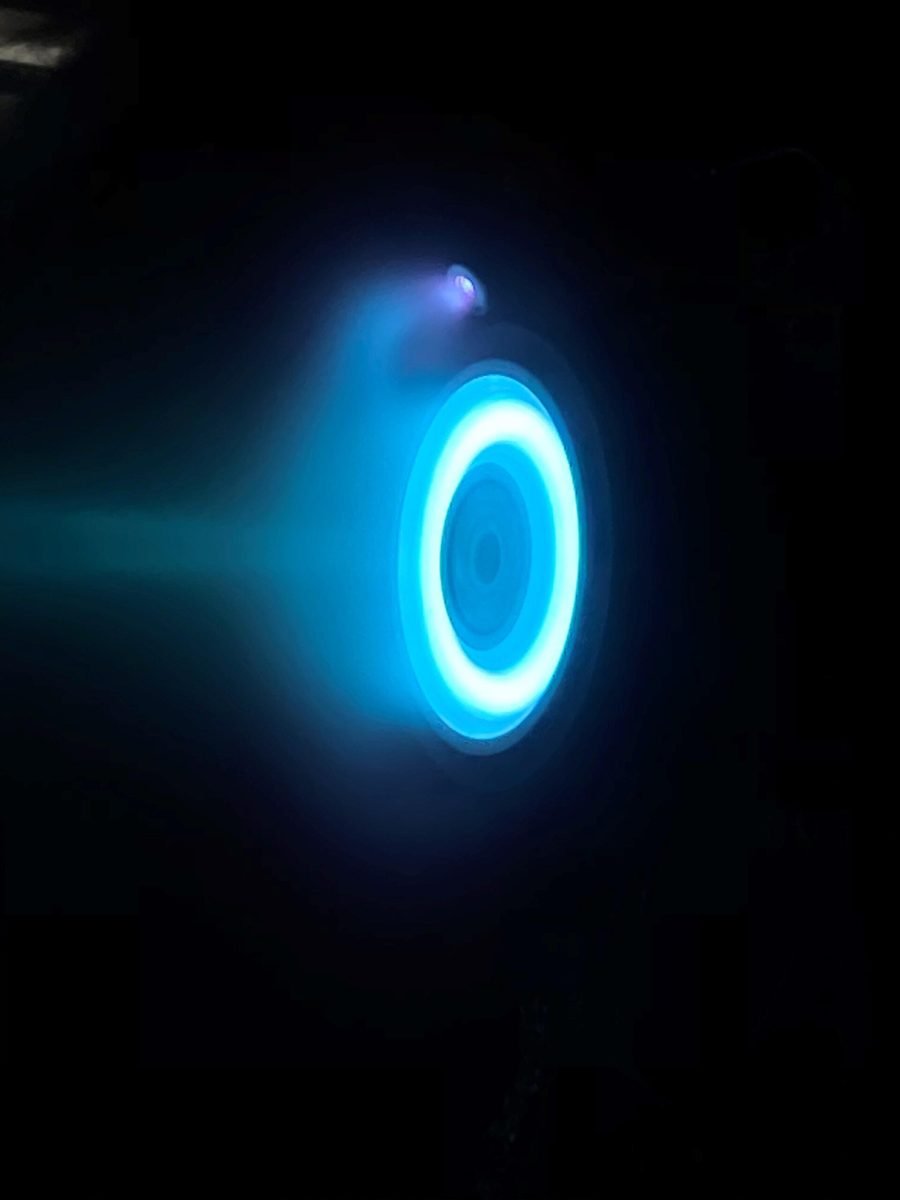
    A Hall-effect thruster for NASA’s Psyche mission fires at JPL. SR-1 Freedom will use larger
    A Hall-effect thruster for NASA’s Psyche mission fires at JPL. SR-1 Freedom will use larger, 12-kilowatt-class Hall thrusters powered by its reactor. NASA/JPL-Caltech, public domain, via Wikimedia Commons.
    Jul–Sep
    2025

    Cold-flow tests on a flight-like reactor unit Completed

    BWXT engineering development unit100+ testsReported January 2026

    Engineers at NASA Marshall push gas through a full-scale, flight-like reactor core, 44 by 72 inches, built by BWX Technologies, without any nuclear fuel. More than 100 tests show the design resists destructive vibration and pressure waves from the propellant flow.

    Why it matters: NASA calls it the most detailed flow data for a flight-like space reactor in more than 50 years. Fifty-eight years earlier, NERVA’s XE engine also arrived at its test stand in a cold-flow setup.

    30 May
    2025

    DRACO is cancelled Cancelled

    FY2026 budget requestDARPA ends programme

    The DARPA and NASA plan to fly a nuclear thermal engine in Earth orbit, announced in January 2023 with Lockheed Martin and BWXT chosen that July, gets no money in the FY2026 budget request. DARPA winds it down and hands knowledge to NASA. Reasons cited include cost, nuclear ground-test and approval hurdles, and cheaper reusable launch weakening the case for saving propellant.

    Why it matters: it was the closest the US had come to flying a nuclear rocket engine since NERVA.
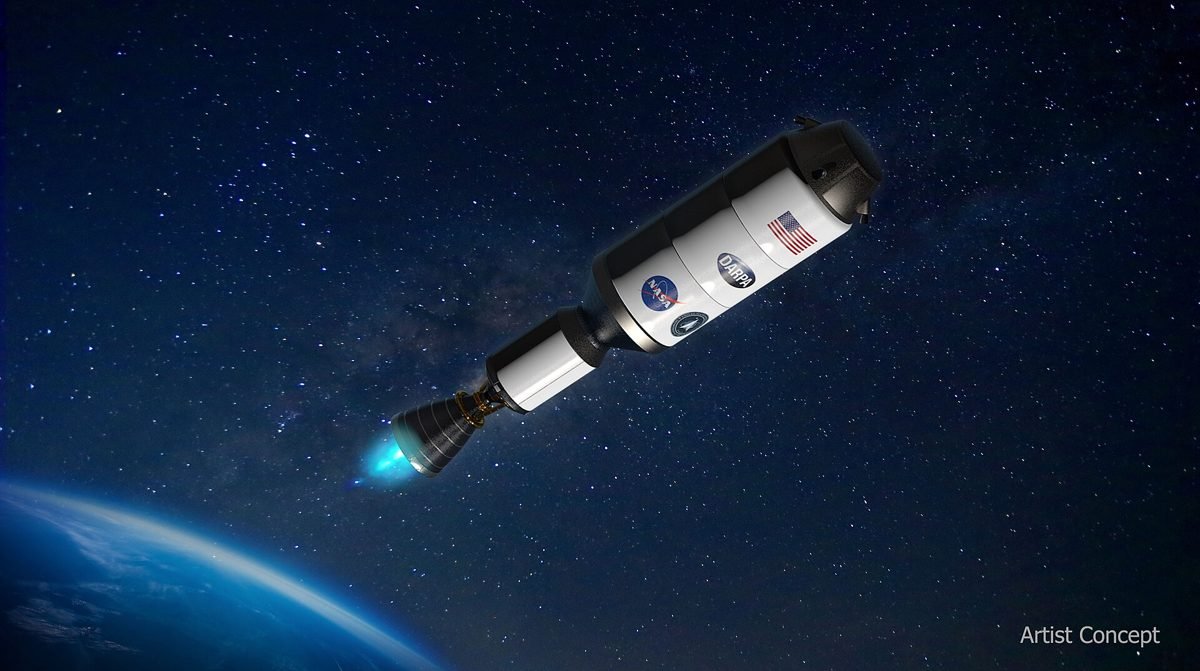
    Artist’s concept of DRACO
    Artist’s concept of DRACO, the DARPA and NASA nuclear thermal rocket demonstrator cancelled in 2025. DARPA, public domain, via Wikimedia Commons.

    MARVL: radiators robots could build in space Ground test

    NASA LangleyModular Assembled Radiators for NEP Vehicles

    Langley starts work on a radiator system for a crewed nuclear-electric ship, split into modules that robots could assemble in orbit because the full panels would not fit inside any rocket fairing. Liquid metal coolant would carry the reactor’s waste heat out to the panels.

    Why it matters: for nuclear electric propulsion, getting rid of heat is as hard as making it.

    Three reactor designs for a Mars engine Completed

    NASA and DOE via Idaho National LaboratoryBWXT, General Atomics, Ultra Safe Nuclear

    After a February 2021 call for proposals, NASA and the Energy Department pick three teams for nuclear thermal reactor design contracts worth about $5 million each: BWXT with Lockheed Martin, General Atomics with Aerojet Rocketdyne and X-energy, and Ultra Safe Nuclear Technologies with Blue Origin and others.

    Why it matters: nuclear thermal propulsion was back in NASA’s budget for the first time since the early 1990s, built on modern HALEU fuels.

    Nov 2017–
    Mar 2018

    KRUSTY runs a small space reactor at full power Ground test

    KilopowerNevada National Security Site

    NASA and DOE test a 1-kilowatt-class Kilopower reactor with a uranium core, heat pipes and Stirling engines, including a full-power run of about 28 hours. It is the first new US space fission reactor test in roughly 40 years.

    Why it matters: it showed a space reactor could be designed and tested on a modest budget, and fed directly into surface-power plans and LR-1.
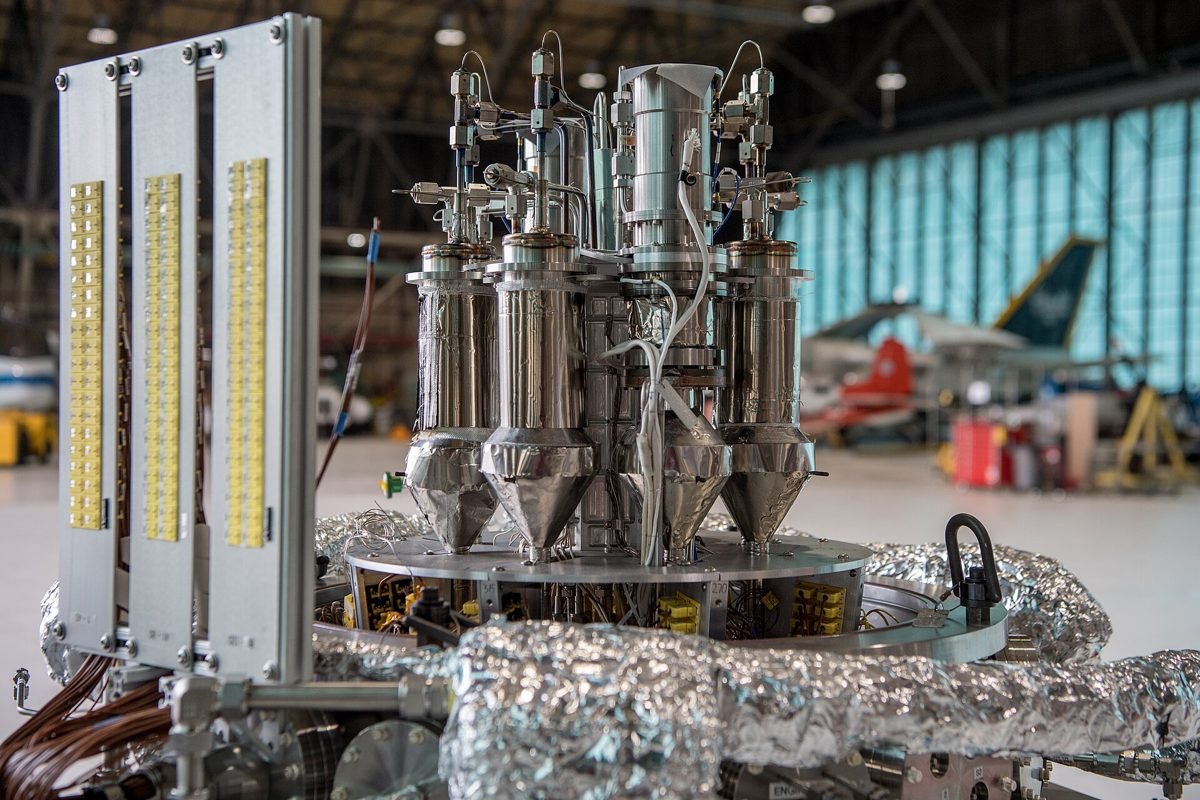
    Kilopower prototype reactor hardware before the KRUSTY tests in Nevada
    Kilopower prototype reactor hardware before the KRUSTY tests in Nevada, which ran a small space fission reactor at full power in 2018. NASA Glenn, public domain, via Wikimedia Commons.
    2003–
    2005

    Project Prometheus and a nuclear Jupiter probe Cancelled

    Jupiter Icy Moons OrbiterNuclear electric propulsion

    NASA launches Project Prometheus to build space reactors, starting with the Jupiter Icy Moons Orbiter, a nuclear-electric spacecraft to tour Europa, Ganymede and Callisto. By 2005 it is cancelled as NASA moves money to the Moon and Mars exploration plan.

    Why it matters: nuclear electric propulsion had a real mission and still lost to a shift in budget priorities, the same pattern as NERVA.

    1980s–
    1990s

    Nuclear electric propulsion enters Mars plans

    SP-100 space reactorNASA Mars architecture studies

    The SP-100 programme works on a 100-kilowatt space reactor, and NASA’s Mars studies after the 1989 Space Exploration Initiative compare nuclear thermal and nuclear electric vehicles. A short-lived early-1990s nuclear thermal effort also runs. None reaches flight.

    Why it matters: the trade-offs mapped then, high thrust versus high efficiency, are the same ones NASA is studying in 2026.

    Rover and NERVA are cancelled Cancelled

    After 20 reactor testsNo flight

    With Apollo winding down, the crewed Mars plan dropped and NASA’s budget cut, the nuclear rocket programme loses its vehicle and is ended in January 1973. Over its life, Rover and NERVA had tested about 20 reactors and engines.

    Why it matters: the technology largely worked on the ground. It was the mission and the money that disappeared.
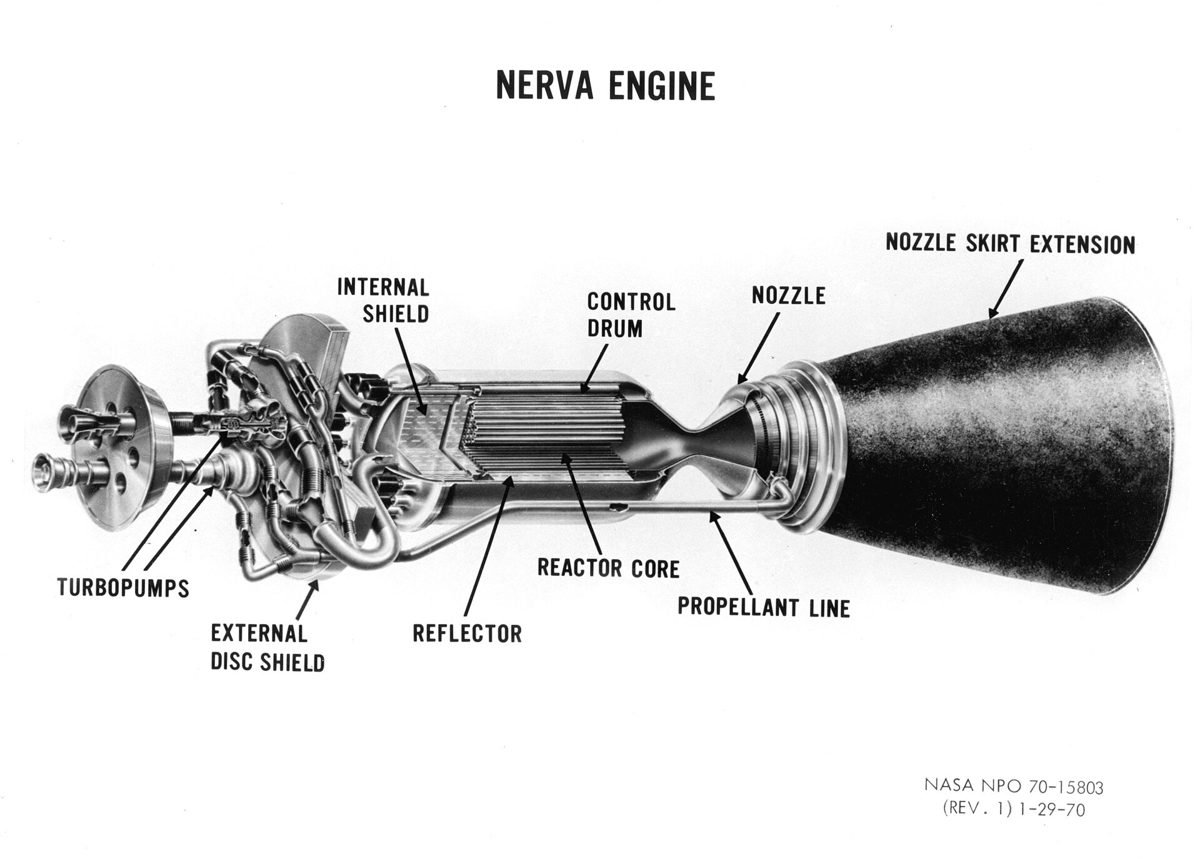
    NASA’s 1970 diagram of the NERVA engine
    NASA’s 1970 diagram of the NERVA engine: turbopumps feed liquid hydrogen through the reactor core, steered by control drums, and out through the nozzle. NASA, public domain, via Wikimedia Commons.

    XE-Prime: a flight-like engine fires Ground test

    NERVAEngine Test Stand No. 1, Jackass Flats

    The XE-Prime engine, the closest thing to a flight NERVA, is fired pointing downward in a test stand that simulates the low pressure of space, with repeated restarts. NASA’s history records the tests as successful.

    Why it matters: restarting reliably is exactly what a Mars engine has to do. It never got the chance to show it in space.
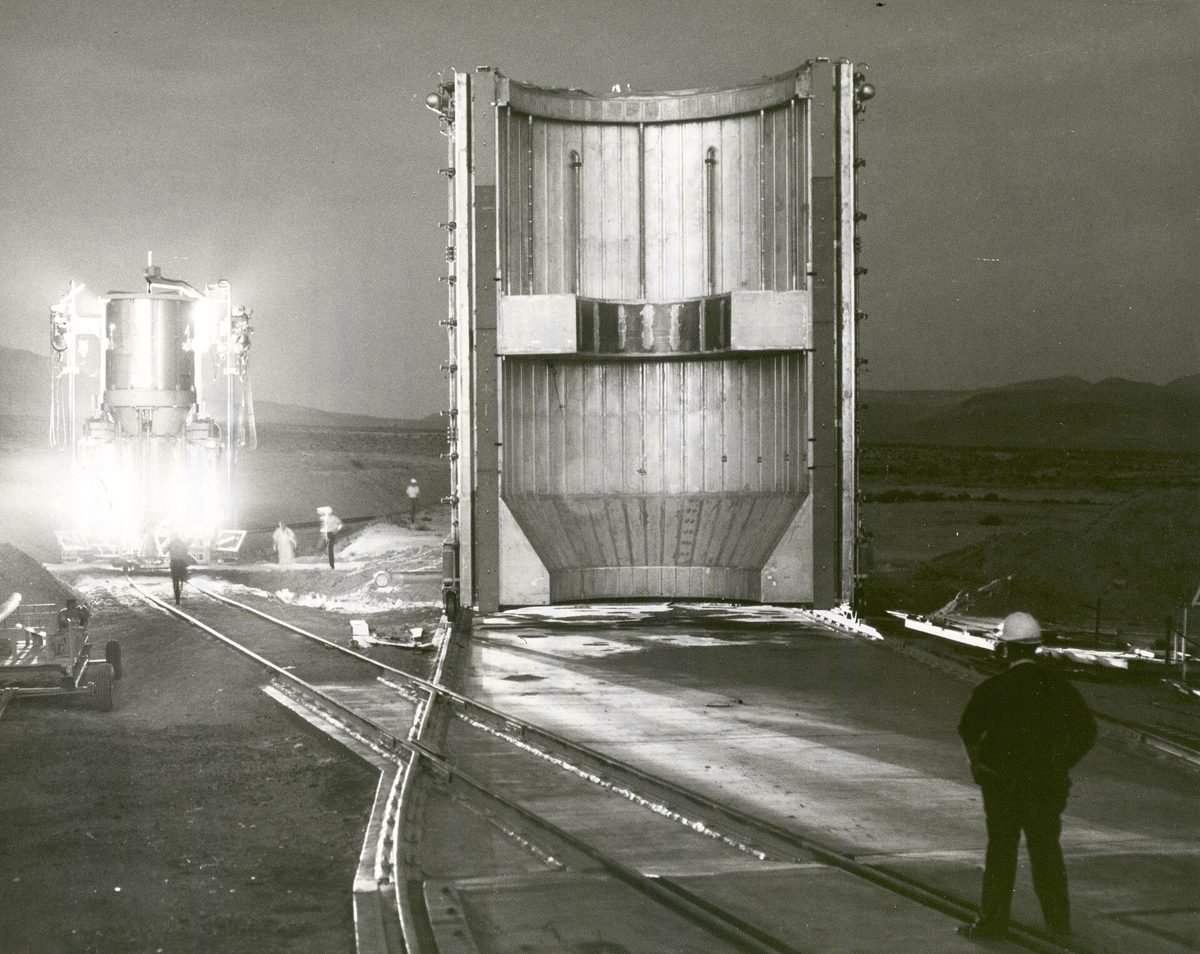
    The NERVA XE ground-experimental engine
    The NERVA XE ground-experimental engine, in cold-flow configuration, arrives at Engine Test Stand No. 1 at Jackass Flats, Nevada, December 1967. AEC-NASA, public domain, via Wikimedia Commons.

    Phoebus 2A: the most powerful nuclear rocket reactor Ground test

    Project RoverAbout 4,000 megawatts

    Los Alamos runs Phoebus 2A at around 4,000 megawatts of thermal power, the most powerful nuclear rocket reactor ever tested. The small Pewee reactor tests new fuel the same year.

    Why it matters: it showed the physics could scale to the size a crewed Mars engine would need.

    3 Apr
    1965

    SNAP-10A: the only US reactor in orbit Flown

    Space nuclear powerExperimental ion thruster aboard

    The US launches SNAP-10A, a small fission reactor making about 500 watts of electricity. It also carries a small experimental ion thruster. The reactor runs for 43 days before an electrical fault shuts it down; it is still in orbit.

    Why it matters: it remains the only US fission reactor operated in space, and an early, tiny pairing of a reactor with electric propulsion.
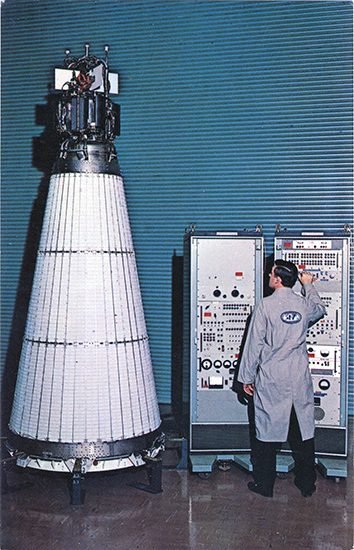
    SNAP-10A
    SNAP-10A, the only US fission reactor ever operated in orbit, launched on 3 April 1965. Atomics International for the US Atomic Energy Commission, public domain, via Wikimedia Commons.

    NERVA turns research towards a flight engine

    NASA and Atomic Energy CommissionAerojet and Westinghouse

    NASA and the AEC, working through a joint Space Nuclear Propulsion Office, start NERVA to turn Rover reactors into an engine for a real vehicle, with Aerojet and Westinghouse as industrial partners. Wernher von Braun’s teams sketch nuclear upper stages and Mars ships.

    Why it matters: the goal moved from proving physics to building hardware for a mission.

    1 Jul
    1959

    Kiwi-A: the first nuclear rocket reactor test Ground test

    Nuclear Rocket Development Station, Jackass Flats, Nevada

    The first Kiwi reactor, named after the flightless bird because it was never meant to fly, is run in the Nevada desert. Kiwi tests continue to 1964, including a deliberate destruction test in 1965 to study what happens in an accident.

    Why it matters: nuclear rockets moved from paper to real hardware heating real hydrogen.
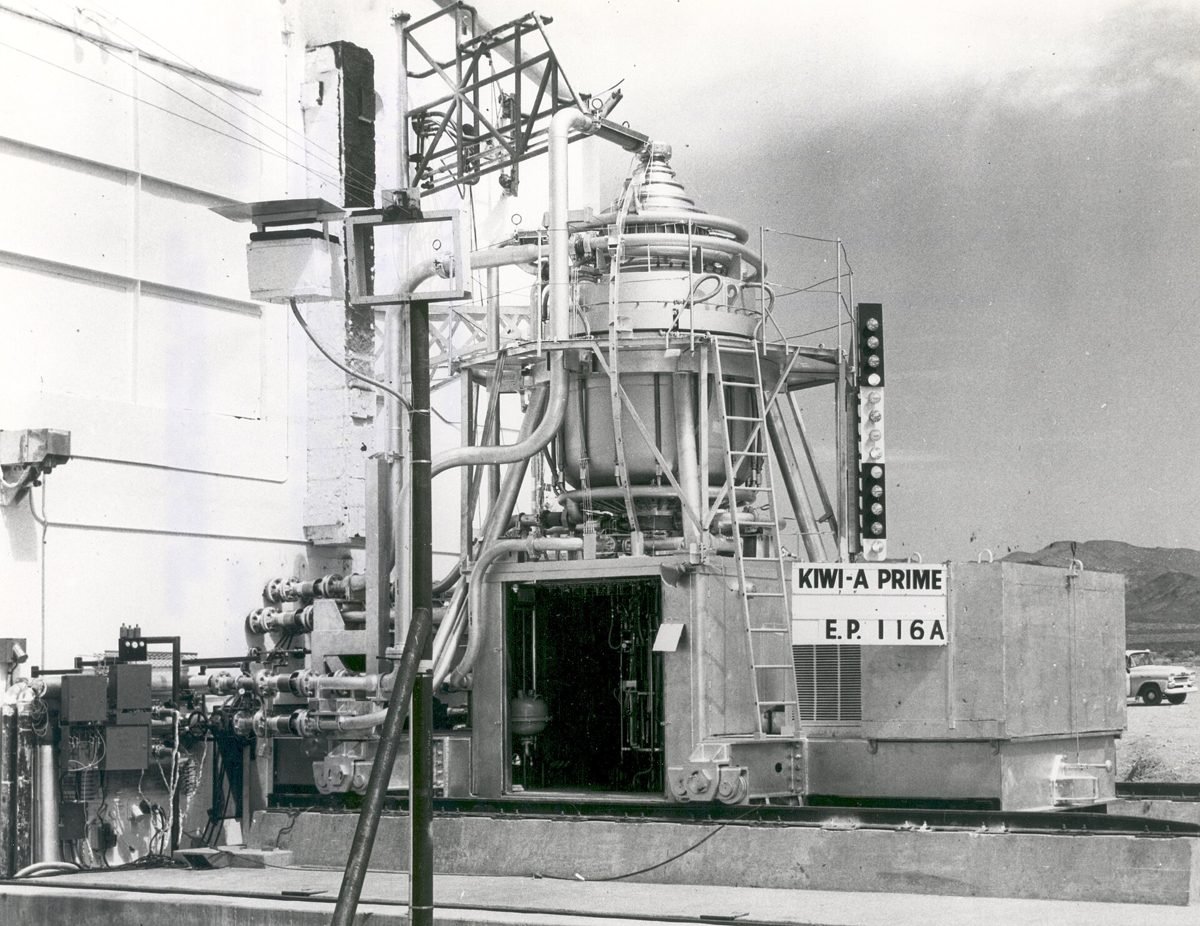
    Kiwi-A Prime
    Kiwi-A Prime, one of the Project Rover test reactors built by Los Alamos to prove that fission could heat hydrogen to rocket temperatures, 1960. NASA, public domain, via Wikimedia Commons.

    Project Rover begins

    Los Alamos Scientific LaboratoryUS Atomic Energy Commission

    The US starts Project Rover to find out whether a reactor can heat hydrogen to well over 2,000°C without falling apart. The original military interest was a nuclear upper stage for missiles; that use soon faded and the space case took over.

    Why it matters: Rover laid the experimental base for every nuclear thermal design since.

    Late
    1940s

    The first nuclear rocket ideas

    Post-war studies

    Soon after the Second World War, US scientists and engineers begin studying whether fission could power a rocket. They see the promise, a far more efficient engine, and the problems: heat, materials, cost and radiation.

    Why it matters: nuclear propulsion becomes an engineering question, not just science fiction.

    Advertisement
    🔄 Capsule 4 · From NERVA to Freedom

    Seventy years in eleven cards

    Swipe or scroll sideways. Green tags are things that happened; amber tags are targets; red tags are cancellations.

    1955

    Project Rover

    Los Alamos sets out to heat hydrogen with a reactor.

    Completed

    1959

    Kiwi-A

    First nuclear rocket reactor runs in Nevada.

    Ground test

    1965

    SNAP-10A

    Only US reactor operated in orbit, for power.

    Flown

    1969

    XE-Prime

    Flight-like NERVA engine fired and restarted.

    Ground test

    1973

    NERVA ends

    Cancelled before any flight.

    Cancelled

    2005

    Prometheus ends

    Nuclear-electric Jupiter probe dropped.

    Cancelled

    2018

    KRUSTY

    Small space reactor runs at full power.

    Ground test

    2025

    DRACO ends

    Orbital nuclear thermal demo cancelled.

    Cancelled

    2025

    Cold-flow tests

    100+ tests on a flight-like reactor unit.

    Completed

    2028

    SR-1 Freedom

    Nuclear-electric craft due to launch for Mars.

    Target

    2036

    Crewed Mars goal

    NASA planning target for round trips.

    Target

    → swipe for more

    From Watts to Megawatts

    The power gap between what has been tested and what a crewed nuclear-electric ship would need.

    From watts to megawatts: electric power, kilowatts (log scale)0.11101001,00010,000SNAP-10A (1965)Flew0.5 kWKilopower / KRUSTY (2018)Ground test1 kWSR-1 Freedom reactor (2028 target)Planned20 kWJPL lithium MPD test (2026)One thruster, ground120 kWCrewed NEP Mars ship (NASA study)Concept1,900 kWEach gridline is ten times the last. SR-1 is a pathfinder: a crewed ship needs roughly 100 times its power.
    Why SR-1 is a first step, not the Mars ship. Sources: NASA, DOE, JPL; crewed figure from NASA Glenn mission studies.

    Every Major US Space Nuclear Programme at a Glance

    Propulsion and the power reactors it depends on. Dates are programme lifetimes.

    ProgrammeYearsTypeOutcome
    Project Rover (Kiwi, Phoebus, Pewee)1955–1973Nuclear thermal reactorsGround-tested; cancelled
    NERVA (NRX, XE-Prime)1961–1973Nuclear thermal engineGround-tested; cancelled
    SNAP-10A1965Space power reactorFlew; 43 days of operation
    SP-1001983–1994Space power reactorNot flown
    Project Prometheus / JIMO2003–2005Nuclear electricCancelled
    Kilopower / KRUSTY2015–2018Small fission powerGround-tested
    NASA NTP reactor designs2021–Nuclear thermalDesign and cold-flow tests
    DRACO2023–2025Nuclear thermal flight demoCancelled
    SR-1 Freedom2026–Nuclear electric flight to MarsTarget launch late 2028
    Lunar Reactor-12026–Surface fission powerTarget ready by 2030
    🚧 Capsule 3 · What Is Holding Back the Nuclear Rocket?

    Tap each hurdle to reveal it

    Six engineering and programme problems that stand between today’s tests and a crewed nuclear ship.

    1. Fuel that does not melt
    A nuclear thermal core must heat hydrogen to around 2,500°C while the fuel keeps its shape and does not shed radioactive particles into the exhaust. NERVA-era fuel corroded in hot hydrogen; modern ceramic and HALEU fuels are still being qualified.
    2. Shielding without the weight
    A crew needs protection from the reactor as well as from space. Designers use distance, as with SR-1’s reactor at the end of a long truss, and a shadow shield, because surrounding the whole ship with shielding would be far too heavy.
    3. Radiators the size of a building
    Nuclear electric systems turn only part of the reactor’s heat into electricity; the rest must be radiated into space. For a megawatt-class Mars ship the panels are so large that NASA Langley is designing them to be assembled by robots in orbit.
    4. Keeping hydrogen cold for months
    Liquid hydrogen boils at −253°C. A nuclear thermal Mars ship must store it for many months without losing much to boil-off, which needs insulation and active cooling that has not been demonstrated at that scale in space.
    5. Proving it before it flies
    NERVA was fired in open-air test stands in Nevada. Modern rules need exhaust to be captured and filtered, and no full-power nuclear rocket test facility exists today. Launch approval adds another layer of review.
    6. Money that outlasts politics
    NERVA (1973), Prometheus (2005) and DRACO (2025) were all cancelled with working hardware or designs. A crewed nuclear ship takes longer than any single administration’s term to build.

    The physics was proven in the 1960s. Integration, testing and funding are the real hurdles.

    What Would a Faster Mars Journey Actually Change?

    Mission challengePotential benefitWhat remains unresolved
    Transit timeShorter or more flexible transfersDuration depends on vehicle and trajectory
    Propellant massLess propellant for the same missionReactor, shielding and radiators add mass
    Crew radiation doseLess time exposed to cosmic raysSolar storms and reactor radiation remain
    Mission flexibilityWider departure and abort optionsThe whole vehicle must be tested and qualified
    Cargo deliveryEfficient haulage of heavy cargoHigh-power reactors and thrusters still immature

    Faster propulsion is a system-level achievement. A better engine helps, but so do vehicle design, trajectory planning, life support, radiation protection and reliable power.
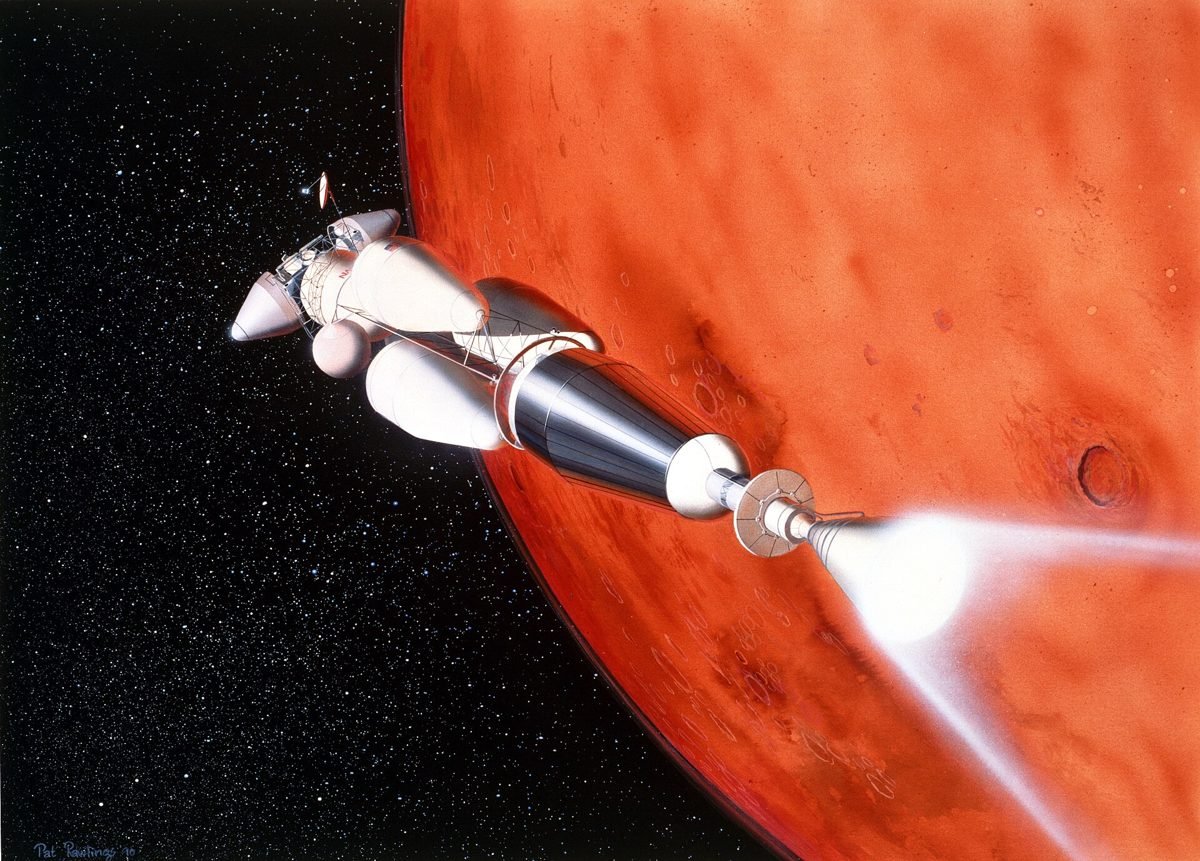
    A 1990s NASA concept of a nuclear thermal rocket braking into orbit around Mars
    A 1990s NASA concept of a nuclear thermal rocket braking into orbit around Mars. NASA/SAIC/Pat Rawlings, public domain, via Wikimedia Commons.

    Corrections and Updates to Common Claims

    Checked against NASA, DOE and DARPA records and reporting up to 9 October 2026.

    Date

    “NASA announced SR-1 Freedom in October 2026”

    SR-1 Freedom was announced in March 2026. The 8 October 2026 news was a NASA and Energy Department agreement on space nuclear power and propulsion.

    Status

    “DRACO was completed”

    DRACO never flew. It was cancelled in 2025 after the FY2026 budget request gave it no funding, and DARPA ended the programme.

    Timing

    “Cold-flow tests ran in 2026”

    The 100+ tests ran from July to September 2025. NASA reported the completed campaign in January 2026.

    Precision

    “No nuclear reactor has ever flown”

    No nuclear rocket engine has flown, but power reactors have: SNAP-10A in 1965 and dozens of Soviet reactors on satellites.

    Overstated

    “Nuclear rockets will get us to Mars in weeks”

    Few-week trips come from early concept studies. Built or tested technology points to transits of several months.

    Scope

    “SR-1 is the first crewed nuclear Mars ship”

    SR-1 is robotic and about 20 kilowatts. A crewed nuclear-electric ship would need roughly 100 times as much power.

    When Could Astronauts Ride a Nuclear Engine to Mars?

    There is no confirmed date. NASA’s May 2026 directive set 2036 as a planning goal for unrefuelled round-trip crewed and cargo missions to Mars and asked for a study comparing nuclear thermal, nuclear electric and chemical propulsion. No crewed nuclear vehicle has been funded, designed in detail or approved.

    • Ground qualification: fuel, reactor, power conversion and thrusters proven on the ground, including hot-fire testing that meets today’s environmental rules.
    • Flight demonstration: a reactor running a spacecraft in deep space, which is what SR-1 Freedom is meant to do.
    • Integrated design: propulsion combined with shielding, life support, communications and abort options.
    • Human rating and approval: safety, reliability, launch authorisation and money that lasts the full programme.

    Explore More Timelines

    People Also Ask

    Is nuclear propulsion legal in space?
    Yes. The 1967 Outer Space Treaty bans nuclear weapons in orbit, not nuclear power. A 1992 UN resolution sets principles for nuclear power sources in space, and in the US a 2019 presidential memorandum and later updates define the review and approval process for launching a reactor.
    How fast is a nuclear thermal rocket?
    Its exhaust is roughly twice as efficient as the best chemical engines, at about 800 to 900 seconds of specific impulse. That does not make the ship twice as fast, but it allows shorter transfers or more payload for the same mass.
    Who builds nuclear rocket reactors in the US?
    BWX Technologies built the reactor unit for the 2025 cold-flow tests and was the reactor partner for DRACO. General Atomics and Ultra Safe Nuclear won NASA reactor design contracts in 2021, and national labs such as Idaho, Los Alamos and Oak Ridge supply fuel and testing work.
    Are other countries building nuclear spacecraft?
    Russia has long promoted a megawatt-class nuclear tug, and China has studied nuclear propulsion and space reactors, but neither has flown a nuclear propulsion system. The Soviet Union did fly dozens of power reactors on satellites until 1988.
    Will SpaceX Starship use nuclear propulsion?
    No. Starship uses methane and oxygen Raptor engines and relies on refuelling in orbit to reach Mars. Cheaper reusable launch is one reason critics argued DRACO was no longer needed, since more chemical propellant can be launched instead.

    Frequently Asked Questions

    Has any spacecraft reached Mars using nuclear propulsion?
    No. No spacecraft has yet travelled to Mars, or anywhere beyond Earth orbit, using nuclear propulsion. NASA’s Space Reactor-1 Freedom is meant to be the first: a robotic nuclear-electric spacecraft targeting launch in late 2028 and arrival at Mars in 2029. Until it flies, every nuclear rocket remains a ground-tested or paper design.
    What is Space Reactor-1 Freedom?
    SR-1 Freedom is a planned NASA robotic mission, announced in March 2026, to demonstrate nuclear electric propulsion on a trip to Mars. A roughly 20-kilowatt fission reactor fuelled with HALEU will make electricity for Hall-effect thrusters. It will carry SkyFall, three Ingenuity-derived helicopters to scout for subsurface ice. It carries no astronauts.
    When will SR-1 Freedom launch?
    NASA is targeting late 2028, with the March 2026 plan pointing to December 2028, and arrival at Mars in 2029 after a cruise of about a year. The date is a target. The design was due to be finished in mid-2026 and assembly and testing are planned for 2028, so slips are possible.
    What is the difference between nuclear thermal and nuclear electric propulsion?
    Nuclear thermal propulsion uses a reactor to heat a propellant, usually liquid hydrogen, and blasts it out of a nozzle, giving high thrust. Nuclear electric propulsion uses a reactor to make electricity that powers ion, Hall or plasma thrusters, giving very low thrust but outstanding fuel efficiency over months of continuous firing.
    How much faster could nuclear propulsion get humans to Mars?
    It depends on the vehicle and trajectory. NASA studies aim to keep a crewed round trip close to two years, compared with about three years for many chemical-rocket plans. The US Department of Energy says nuclear thermal propulsion could cut Mars transit time by up to 25%. There is no single guaranteed figure.
    Could a nuclear rocket reach Mars in a few weeks?
    Not with any technology that has been built. Claims of 45-day or few-week trips come from early-stage concept studies with optimistic assumptions. Realistic nuclear thermal or nuclear electric designs still take several months one way, though they can shorten transits and widen launch windows compared with chemical rockets.
    What was Project Rover?
    Project Rover was the US programme, started in 1955 at the Los Alamos Scientific Laboratory, to find out whether a fission reactor could heat hydrogen to rocket temperatures. Its Kiwi, Phoebus and Pewee test reactors were run at the Nuclear Rocket Development Station at Jackass Flats, Nevada, from 1959.
    What was NERVA?
    NERVA, the Nuclear Engine for Rocket Vehicle Application, was the joint NASA and Atomic Energy Commission effort, started in 1961, to turn Rover reactors into a flight engine, with Aerojet and Westinghouse as contractors. Its XE-Prime engine was test-fired in 1969, but the programme was cancelled in January 1973 before any flight.
    Why was NERVA cancelled?
    NERVA lost its mission. After Apollo, the Nixon administration and Congress cut NASA’s budget, and plans for a crewed Mars mission, a space station-based nuclear shuttle and a Saturn V upper stage were dropped. Without a vehicle to fly on, Rover and NERVA were ended in January 1973, despite strong ground-test results.
    Has a nuclear reactor ever flown in space?
    Yes, for power rather than propulsion. The US launched SNAP-10A on 3 April 1965, its only orbiting fission reactor, which also carried a small experimental ion thruster. The Soviet Union flew dozens of reactors on radar-ocean surveillance satellites and two TOPAZ reactors in 1987. Many probes also use radioisotope generators, which are not reactors.
    What is HALEU and why does SR-1 use it?
    HALEU is high-assay low-enriched uranium, enriched to between 5% and 20% uranium-235. It is more concentrated than ordinary power-reactor fuel, allowing a compact core, but well below weapons-grade levels. Using HALEU instead of highly enriched uranium eases security and regulatory hurdles for launching and operating a space reactor.
    What happened to DARPA’s DRACO nuclear rocket?
    DRACO, the Demonstration Rocket for Agile Cislunar Operations, was a DARPA and NASA plan announced in January 2023 to fly a nuclear thermal engine in Earth orbit, with Lockheed Martin and BWXT selected that July. It was cancelled in 2025: the FY2026 budget request in May 2025 gave it no funding and DARPA ended it.
    What did NASA’s 2025 cold-flow tests show?
    Between July and September 2025, NASA ran more than 100 cold-flow tests on a flight-like reactor engineering development unit built by BWXT, pushing non-nuclear gas through it. The data showed the design resists damaging flow-driven vibration and pressure waves. NASA called it the most detailed such flow data in more than 50 years.
    What is a magnetoplasmadynamic thruster?
    An MPD thruster uses a strong electric current and magnetic field to accelerate a plasma, here lithium vapour, to very high speed. JPL fired a lithium-fed MPD thruster on 24 February 2026 at up to 120 kilowatts, more than 25 times the power of Psyche’s thrusters. The team aims for 500 kW to 1 MW per thruster.
    Is nuclear propulsion safe?
    Space reactors are designed to launch cold, with almost no radioactivity, and to start only once safely in space; SR-1 is planned to switch on within about 48 hours of launch. Risks remain around launch accidents, crew shielding and end-of-life disposal, which is why safety reviews and launch approval are a major part of any nuclear mission.
    Does nuclear propulsion mean nuclear explosions?
    No. Nuclear thermal and nuclear electric systems use a controlled fission reactor, the same basic process as a power station, to produce heat or electricity. The old Project Orion idea of pushing a ship with nuclear bomb blasts is a different concept that was abandoned in the 1960s and is not part of any current plan.
    Why can’t chemical rockets just go faster?
    Chemical rockets carry both fuel and oxidiser, and the best hydrogen-oxygen engines reach a specific impulse of about 450 seconds. Going faster needs exponentially more propellant, which means more launches and mass. Nuclear thermal engines roughly double that efficiency, and electric thrusters multiply it many times, so the same push needs far less propellant.
    What is specific impulse?
    Specific impulse measures how efficiently an engine uses propellant: the higher the number, the more push per kilogram. Good chemical engines reach about 450 seconds. Nuclear thermal designs are around 800 to 900 seconds. Electric thrusters reach thousands of seconds, but their thrust is so low that they must fire for months.
    Why do nuclear electric spacecraft need large radiators?
    Turning reactor heat into electricity is far from 100% efficient, so most of the energy ends up as waste heat. In a vacuum it can only be shed by radiating it away, which needs large panels. NASA Langley’s MARVL project is designing modular radiators that robots could assemble in space for a crewed Mars ship.
    What is the Lunar Reactor-1?
    Lunar Reactor-1, or LR-1, is NASA’s planned fission surface power system for the Moon. A December 2025 executive order directs NASA to have a launch-ready lunar surface reactor by 2030, and NASA’s May 2026 directive set LR-1 to be ready for launch by 2030 to power a future Moon base.
    What did the October 2026 NASA and Energy Department agreement do?
    On 8 October 2026, NASA Administrator Jared Isaacman and Energy Secretary Chris Wright signed a memorandum titled “Accelerating American Leadership in Space Nuclear Power and Propulsion”. It sets up end-to-end cooperation, from fuel production and testing to launch integration and operations, and takes effect on 1 November 2026.
    When could astronauts travel to Mars with nuclear propulsion?
    There is no confirmed date. NASA’s May 2026 directive asked for a study to guide spending towards unrefuelled round-trip crewed and cargo missions to Mars by 2036, comparing nuclear thermal, nuclear electric and chemical options. That is a planning goal; no crewed nuclear vehicle has been funded, built or approved.
    Which is better for a Mars mission, NTP or NEP?
    Neither is clearly better. Nuclear thermal gives high thrust for quick departures and arrivals and suits crewed transfers. Nuclear electric is far more fuel-efficient and suits heavy cargo, but needs megawatt-class power and big radiators for crews. Many NASA studies combine nuclear electric propulsion with a chemical stage for the high-thrust moments.
    How big a reactor would a crewed nuclear electric ship need?
    Far bigger than SR-1. NASA Glenn mission studies identified a need for roughly 1.9 megawatts of electric power for a two-year round-trip crewed Mars mission using a hybrid nuclear-electric and chemical vehicle. SR-1’s reactor makes about 20 kilowatts, roughly one-hundredth of that, which is why it is called a pathfinder.
    Does a faster trip protect astronauts from radiation?
    Partly. A shorter transit reduces the total dose from galactic cosmic rays, which are hard to shield against. But it does not remove the risk from solar storms, and the reactor adds its own radiation, which designers manage with distance, shielding and placement, such as SR-1’s reactor at the end of a long truss.
    What are the biggest obstacles to a nuclear Mars ship?
    Fuel that survives temperatures above 2,500°C, storing liquid hydrogen for months without it boiling away, reactor shielding, power conversion and radiators for electric systems, launch safety approval, ground-test facilities that meet modern environmental rules, and above all funding that lasts longer than one administration.
    What is Project Prometheus?
    Project Prometheus was NASA’s 2003 programme to develop space nuclear reactors, centred on the Jupiter Icy Moons Orbiter, a nuclear-electric spacecraft meant to tour Jupiter’s moons. It was cancelled in 2005 as NASA shifted money to the Moon and Mars exploration plan, another example of nuclear propulsion losing out on budget priorities.

    The Engine Is Only the Beginning

    The history of nuclear propulsion is a story of strong engineering repeatedly running into budgets and shifting priorities. Rover and NERVA showed that nuclear thermal rockets work on the ground; Prometheus and DRACO showed how easily a mission can disappear. In 2026 the work is moving again, with new reactor hardware tests, much more powerful electric thrusters and a planned robotic reactor-driven flight to Mars.

    The real breakthrough will not be reaching Mars a few months sooner. It will be making repeatable, safer and more capable journeys to Mars practical.

    Related AiTimeline Stories

    ⚠️ Editorial Note

    Last updated 9 October 2026. Future dates (SR-1 Freedom in 2028, Lunar Reactor-1 by 2030, crewed Mars missions by 2036) are NASA targets and planning goals, not commitments, and are labelled as such. Trip durations and specific-impulse figures are typical published ranges; the interactive capsule is illustrative. Historical test details are drawn from NASA and Los Alamos histories. Images: public domain (NASA, AEC, DARPA), credited in captions. Sources are listed below.

    Advertisement
    International Day of Women and Girls in Science: India’s Journey US Independence Day: Drafting and Debates of the Declaration
    →
    Next Article