Darwin Day: Why Charles Darwin Delayed Publishing On the Origin of Species — A Timeline (1809–1859)
Darwin Day: why Charles Darwin waited 20 years to publish On the Origin of Species, from his 1844 essay to Wallace's 1858 letter and the 1859 book.
Latest Story
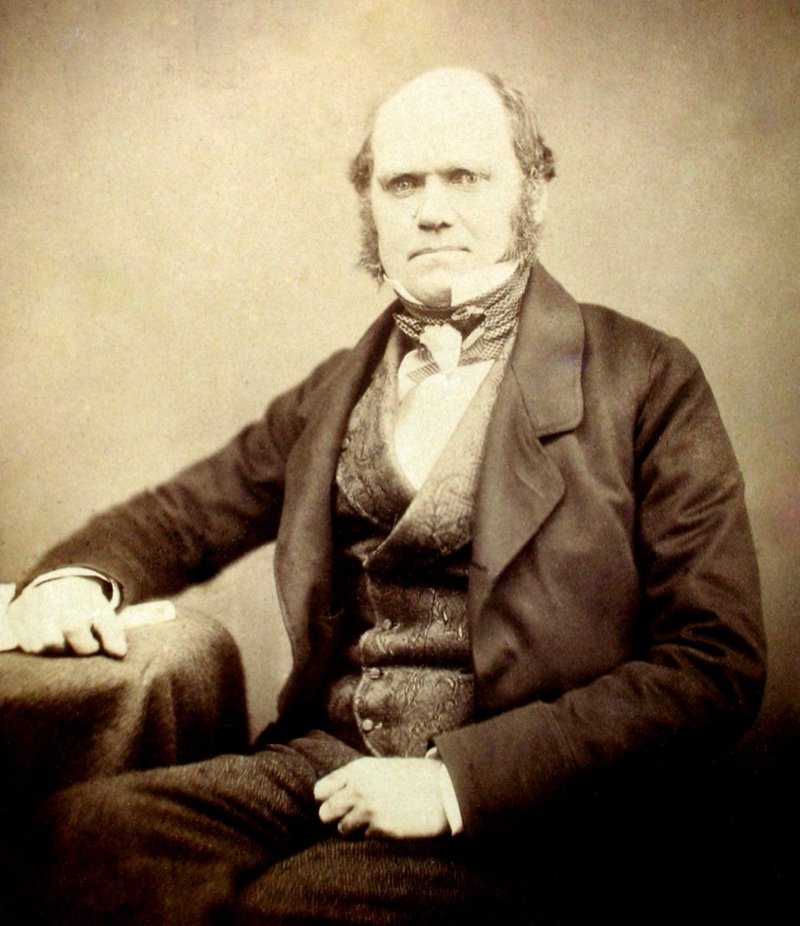
Every year on 12 February, Darwin Day marks the birth of Charles Darwin, the naturalist whose theory of evolution by natural selection changed how we understand life. Darwin was born on 12 February 1809, and his most famous book, On the Origin of Species, appeared on 24 November 1859. Yet he had worked out the theory 21 years earlier, written it down in 1842 and expanded it into a long essay in 1844. This timeline follows that gap, and the letter from Alfred Russel Wallace in June 1858 that finally ended it.
💡 Short Answer
Darwin conceived natural selection in 1838 but published On the Origin of Species only in November 1859. He wanted overwhelming evidence, spent eight years on barnacles, and from 1856 was writing a huge treatise. He also knew the idea would be controversial. In June 1858 Alfred Russel Wallace sent him an essay with the same theory. Their papers were read jointly on 1 July 1858, and Darwin wrote the shorter book in 13 months.
Darwin Day and the Origin of Species: Key Questions
Darwin’s Delay in Nine Points
- The voyage: HMS Beagle, 1831-1836, supplied the observations, not the theory.
- The idea: Darwin accepted that species change in 1837 and found the mechanism after reading Malthus in September 1838.
- The drafts: a 35-page pencil sketch in 1842 and a long essay in 1844, which he asked Emma to publish if he died.
- The warning: the hostile reception of Vestiges in 1844 showed what happened to a thin argument.
- The detours: geology books and eight years on barnacles, 1846-1854.
- The big book: begun 14 May 1856; about 250,000 words and half finished by June 1858.
- The shock: Wallace’s essay arrived on 18 June 1858.
- The compromise: joint reading at the Linnean Society on 1 July 1858, arranged by Lyell and Hooker.
- The book: written in 13 months and 10 days, published 24 November 1859.
Darwin’s Publication Timeline: Latest First
From the 1859 book back to Darwin’s birth in 1809. Each entry is colour-coded by phase, so the three stages the brief history often blurs, private writing, Wallace’s discovery and the joint presentation, stay distinct.
On the Origin of Species is published Road to publication
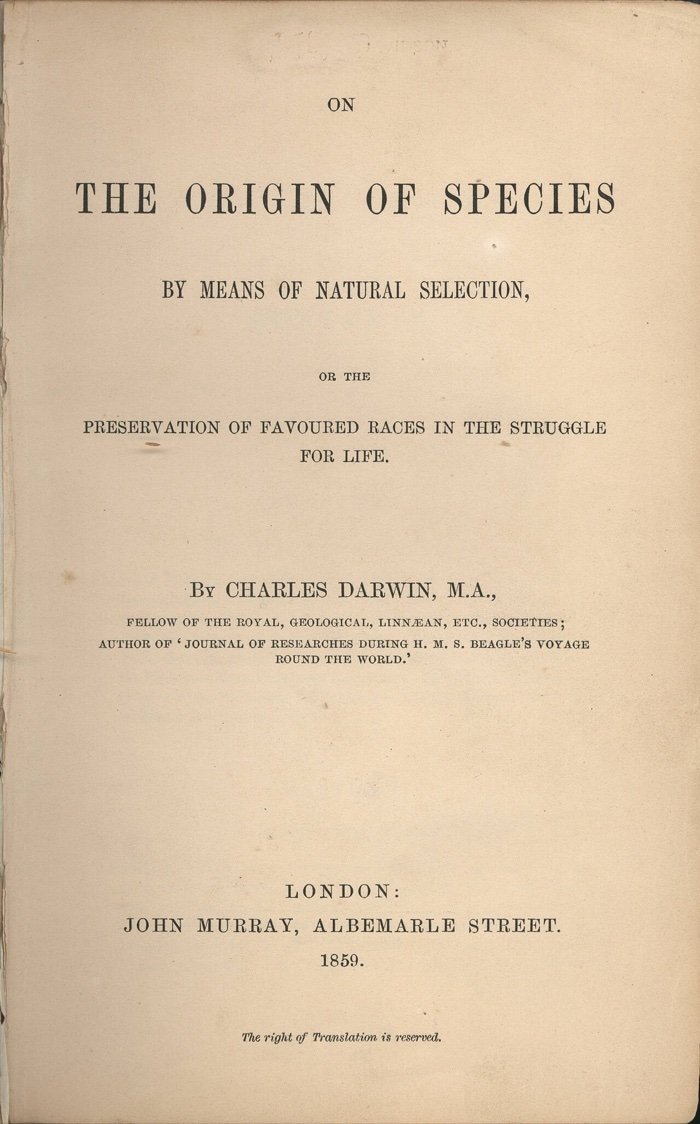
What happened: Darwin’s book, On the Origin of Species by Means of Natural Selection, or the Preservation of Favoured Races in the Struggle for Life, was published in London by John Murray, with 24 November 1859 as the official publication date. The first printing was 1,250 copies.
The sale: Two days earlier, on 22 November, Murray offered the book to booksellers at his autumn trade sale. Orders exceeded the printing by about 250 copies, so the whole first edition was taken up before the publication date. That is the origin of the popular line that it “sold out on the first day”. Murray asked Darwin for a second edition at once.
What the book argued: Species are not fixed. Populations change over generations, and natural selection explains how adaptations and new species arise. Darwin built the case from domestic breeding, geographical distribution, fossils, comparative anatomy, embryology and classification, and he gave a whole chapter to “Difficulties on Theory”. The main text ran to 502 pages, with a single diagram: a branching tree of descent.
Darwin finishes correcting the proofs Road to publication
What happened: Darwin finished the last proof sheets in early October 1859, and then left for a water cure at Ilkley in Yorkshire, where he was staying when the book came out.
13 months and 10 days: He reckoned the book had cost him “13 months & 10 days” of work from the day he began the abstract in July 1858. He rewrote heavily in proof, worried about the length and style, and feared that Murray would lose money on it.
The title: The working title included the words “An Abstract of an Essay”. On Murray’s advice the word “abstract” was dropped, though Darwin still called the book an abstract in its introduction.
Darwin completes the manuscript Road to publication
What happened: By the middle of March 1859 Darwin had finished the last chapter of his abstract. Charles Lyell helped arrange publication with John Murray, who agreed terms in early April without reading the whole text.
Why it grew: Darwin had first planned a paper for the Linnean Society’s journal. Each argument needed examples, and each example needed answers to the obvious objections. The “abstract” became a book of 14 chapters.
Darwin begins writing the abstract on the Isle of Wight Road to publication
What happened: With his family away from Down House to escape the scarlet fever outbreak, Darwin began writing the abstract of his species theory at Sandown on the Isle of Wight, where the family stayed until mid-August.
The method: He worked from the manuscript of his unfinished “big book” and his notes, cutting the references and much of the detail. He wrote to his cousin W. D. Fox on 21 July that he was “beginning to prepare an abstract” of his species theory.
The Darwin-Wallace papers appear in print Road to publication
What happened: The papers read on 1 July were published in the Society’s zoology journal under a joint title: “On the Tendency of Species to form Varieties; and on the Perpetuation of Varieties and Species by Natural Means of Selection”.
The reaction: There was little immediate reaction. In his address in May 1859 the Society’s president, Thomas Bell, said the year had not been marked by any of those “striking discoveries” that revolutionise a branch of science.
Darwin decides to write a fuller account Road to publication
What happened: Writing to Joseph Hooker after the meeting, Darwin said he would start work on an abstract of his theory for the Linnean Society’s journal while the family was on the Isle of Wight.
The problem: He wanted the abstract to carry evidence, not just announce the idea. That made a journal paper too small almost from the start.
Darwin’s and Wallace’s work is presented jointly Wallace & 1858
What happened: The Society’s secretary read three documents: extracts from Darwin’s unpublished 1844 essay, part of his letter to Asa Gray of 5 September 1857, and Wallace’s essay “On the Tendency of Varieties to Depart Indefinitely from the Original Type”. Charles Lyell and Joseph Hooker had arranged the reading and introduced the papers with a covering letter.
Who was absent: Neither author attended. Darwin was at home after the death of his son. Wallace was in the Malay Archipelago and did not know about the arrangement until afterwards.
Why it was done this way: The order of the papers, Darwin’s first, set out the dates of his earlier work. Including Wallace’s essay in full recognised his independent discovery. Wallace later said he was satisfied with the arrangement.
Darwin’s youngest son dies of scarlet fever Wallace & 1858
What happened: Charles Waring Darwin, aged about 18 months, died of scarlet fever during an outbreak in the village of Downe. His daughter Henrietta, then 14, had been ill since early June and was struck down with diphtheria in the same weeks.
Why it matters here: Darwin left the handling of Wallace’s essay to Lyell and Hooker, and missed the Linnean meeting. The family then left Down House to escape the outbreak.
What it does not explain: The illness and grief came in the middle of the 1858 crisis. They are not the reason for the long delay before it, which had begun 20 years earlier.
Wallace’s essay reaches Darwin Wallace & 1858
What happened: Darwin received a manuscript essay from Alfred Russel Wallace, then collecting in the Malay Archipelago. Wallace asked Darwin, if he thought it good enough, to send it on to Charles Lyell.
Darwin’s reaction: Darwin forwarded it the same day. “Your words have come true with a vengeance that I shd. be forestalled,” he wrote to Lyell. “If Wallace had my M.S. sketch written out in 1842 he could not have made a better short abstract!”
A disputed date: The 18 June date comes from Darwin’s letter to Lyell. Some historians have argued that the essay arrived earlier and that Darwin held it back; the Darwin Correspondence Project and most recent research accept 18 June.
Wallace reaches natural selection independently Wallace & 1858
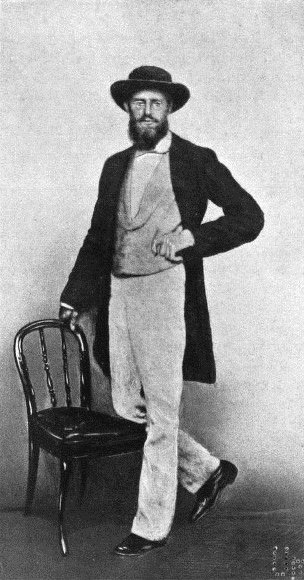
What happened: During a bout of malarial fever, Wallace thought about Malthus’s essay on population and saw that in every generation the less fit would die and the better adapted would survive. He wrote out the idea over the next two evenings and posted it to Darwin, whom he knew to be interested in the species question.
His route to the idea: Wallace had travelled in the Amazon from 1848 to 1852 and in the Malay Archipelago from 1854. His 1855 paper on the “law” governing the introduction of new species had already shown he was close to the answer.
Darwin outlines natural selection to Asa Gray Private theory
What happened: Darwin sent the American botanist Asa Gray an abstract of his theory, including natural selection and the “principle of divergence”, which explained why descendants spread into different ways of life.
Why it mattered later: The letter was dated and in another person’s hands. In July 1858 an extract from it was read at the Linnean Society as proof that Darwin’s ideas predated Wallace’s essay.
Darwin begins his “big book” Private theory
What happened: Lyell, who had read Wallace’s 1855 paper and discussed the theory with Darwin in April 1856, urged him to publish before someone else did. Darwin began writing on 14 May 1856.
The scale: He first considered a short sketch, but could not bring himself to publish without the evidence. The project became a treatise called Natural Selection. By June 1858 he had written about ten and a half chapters, roughly a quarter of a million words, and was about halfway through.
Wallace’s “Sarawak Law” paper Wallace & 1858
What happened: Writing from Sarawak in Borneo, Wallace published “On the Law which has Regulated the Introduction of New Species”. It argued that every species had come into existence close in space and time to a related species.
Why it mattered: The paper did not give a mechanism, but Lyell read it as a sign that someone else was close to Darwin’s idea and began pressing him to publish. Darwin and Wallace started corresponding in 1856 and 1857.
Darwin returns to the species question Private theory
What happened: On the same day he finished eight years of work on barnacles, Darwin began “sorting notes for Species Theory”, in the words of his own journal.
What he worked on: Over the next two years he ran experiments on whether seeds survive in seawater, bred and skeletonised fancy pigeons, gathered data on variation in plants and animals, and wrote to naturalists around the world for facts on distribution and breeding.
Eight years on barnacles Private theory
What happened: Darwin began a study of a single odd barnacle in October 1846 and ended up revising the whole group. The work produced four monographs between 1851 and 1854 and won him the Royal Society’s Royal Medal in 1853.
Why it is part of the story: It is often described as a detour, but it gave Darwin first-hand knowledge of variation and classification, and the standing of a working specialist rather than a speculator.
The death of Annie Darwin Private theory
What happened: Darwin’s eldest daughter, Anne, died at the age of ten at Malvern, where she had been taken for treatment. Darwin was devastated.
Why it is mentioned: Her death is often linked to the loss of Darwin’s remaining Christian faith. It is part of the background to his later reluctance to cause pain to his devout wife, Emma, through public controversy.
Vestiges causes a sensation Private theory
What happened: Vestiges of the Natural History of Creation, published anonymously (its author was the Edinburgh publisher Robert Chambers), argued that life had developed through natural laws. It became a best seller.
The reaction: Scientists attacked it fiercely for errors of fact and loose argument. Darwin followed the reviews closely. He concluded that a theory of transmutation would be dismissed unless it rested on far more evidence.
Darwin finishes a long essay and plans for his death Private theory
What happened: Darwin expanded his 1842 sketch into a long essay and had a fair copy made. On 5 July 1844 he wrote to his wife, Emma, asking that if he died suddenly she should pay an editor £400 to complete and publish it.
What it shows: Darwin was convinced the theory mattered. He did not want it lost, but he did not think the essay strong enough to publish while he could still improve it. In January that year he had told Joseph Hooker that admitting species were not immutable was “like confessing a murder”.
The first written sketch of the theory Private theory
What happened: In May and June 1842, while visiting family, Darwin wrote a short pencil sketch of about 35 pages setting out descent with modification and natural selection. In September the Darwins moved to Down House in Kent.
What it contained: Many arguments that appear in the Origin, including the comparison between artificial and natural selection, are already in the sketch. It was a private document and was not published until 1909.
Reading Malthus gives Darwin the mechanism Private theory
What happened: Darwin read Thomas Malthus’s Essay on the Principle of Population, which argued that populations grow faster than food supply. He saw that in nature this pressure would preserve favourable variations and destroy unfavourable ones.
The four ideas: Variation, inheritance, a struggle for existence, and unequal survival and reproduction. Put together, they made natural selection.
What came next: Darwin married Emma Wedgwood in January 1839, the year his Journal of Researches on the Beagle voyage was published. His long illness began around the same time.
Darwin opens his private species notebooks Private theory
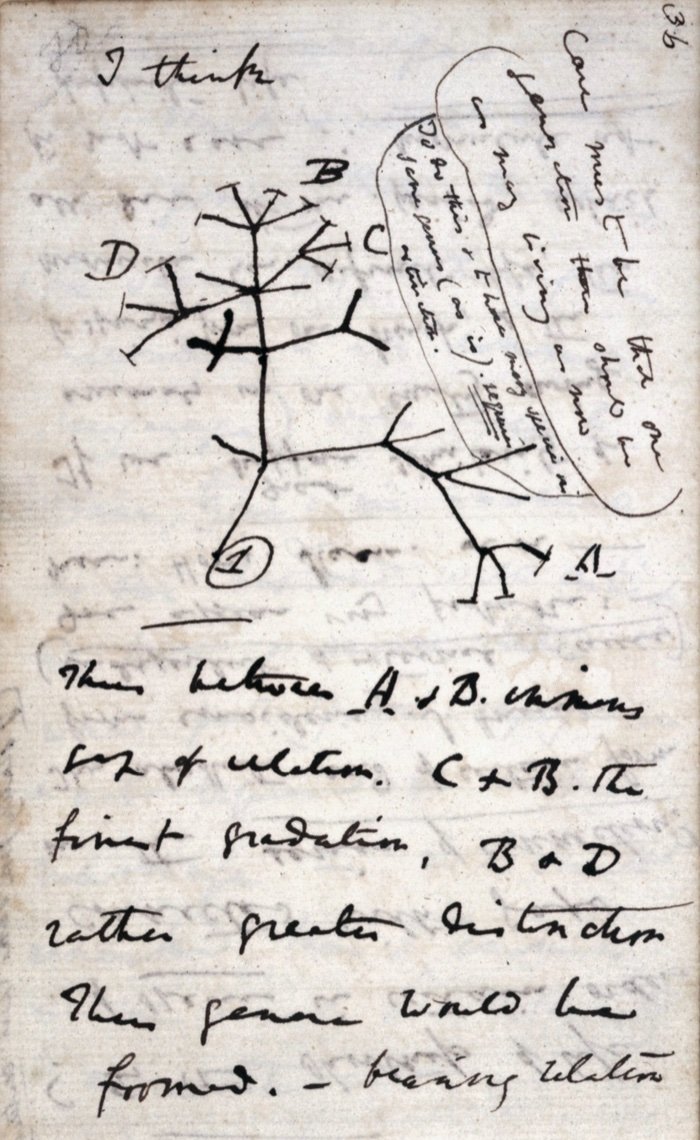
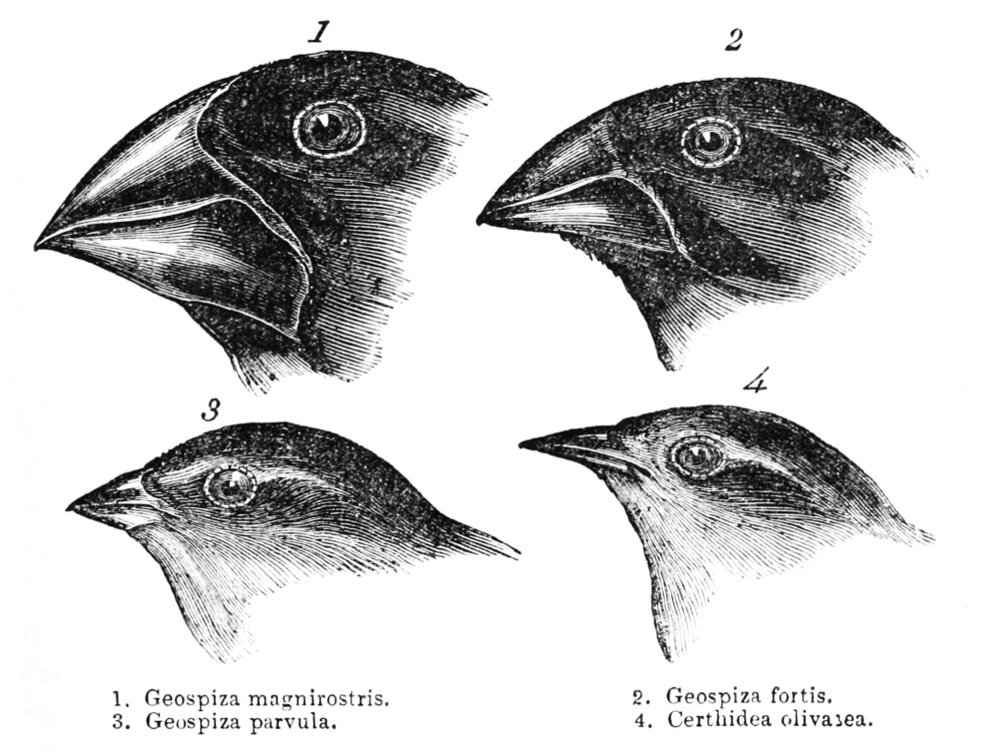
What happened: Back from the voyage and working through his collections with specialists, Darwin opened a notebook on the “transmutation of species”. By then the ornithologist John Gould had told him that the Galapagos mockingbirds belonged to several species and that his finches were a group of closely related species.
The tree: On one page Darwin wrote “I think” and drew a small branching diagram showing species descending from a common ancestor, the first sketch of a tree of life.
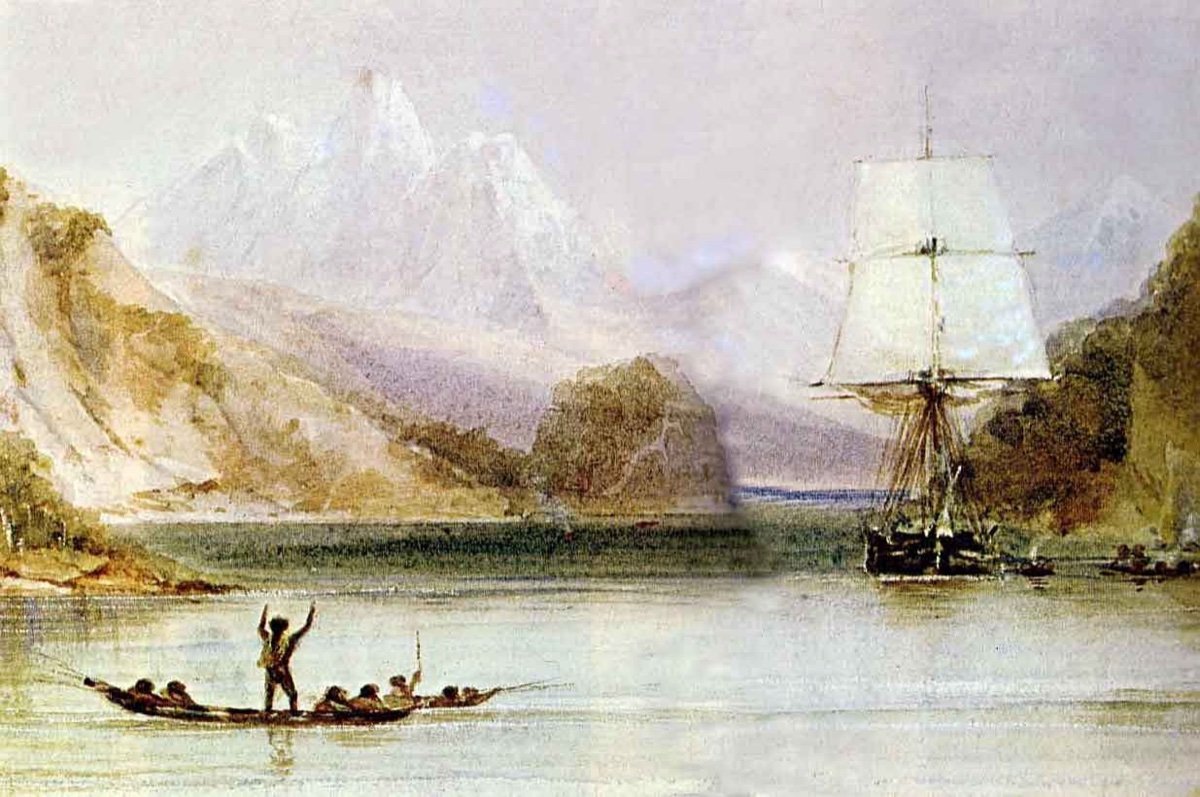
The voyage of HMS Beagle Early life & voyage
What happened: Darwin sailed from Plymouth on 27 December 1831 as a gentleman naturalist on the survey ship HMS Beagle under Captain Robert FitzRoy. The voyage lasted almost five years, most of it in South America, and returned to Falmouth on 2 October 1836.
What he saw: Fossils of giant extinct mammals in Argentina, related species replacing one another down the continent, earthquake-raised coastlines in Chile and, from September to October 1835, the Galapagos Islands, where the animals differed from island to island.
What it did not do: Darwin did not leave the Galapagos with a theory of evolution. The voyage supplied the observations; their meaning became clear only when he worked through the collections in London.
Charles Darwin is born Early life & voyage
What happened: Charles Robert Darwin was born at Shrewsbury in Shropshire, the fifth child of the doctor Robert Darwin and Susannah Wedgwood. He was born on the same day as Abraham Lincoln.
The family: His grandfather Erasmus Darwin had speculated about evolution in the 1790s, and his mother’s family were the Wedgwood potters. Charles studied medicine at Edinburgh and then prepared for the Church at Cambridge before the Beagle offer came.
Why Did Darwin Delay Publishing On the Origin of Species?
Seven connected reasons, from the evidence he wanted to the letter that ended the wait.
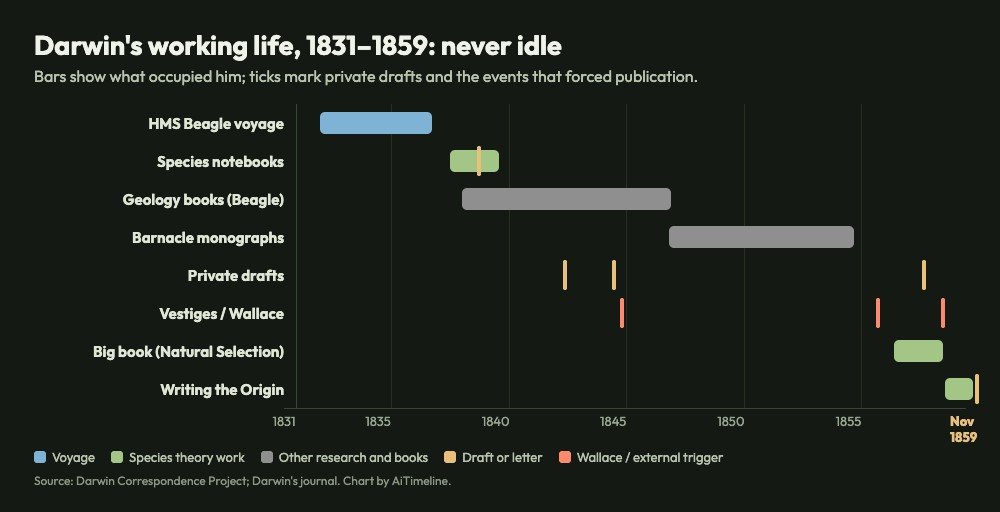
Darwin’s delay was the result of several connected factors. His letters and manuscripts show concern about evidence, scientific credibility, the scale of the work and the risk of publishing an incomplete argument. Historians still argue about how much weight each one carries.
1. He wanted overwhelming evidence
Claiming that species change challenged both scientific and religious assumptions. Darwin did not want to rest the case on a single observation, so he gathered evidence from many fields:
- Domestic breeding and artificial selection, including pigeons he bred himself.
- Fossils and the order in which they appear in the rocks.
- The geographical distribution of species, especially on islands.
- Similarities in anatomy and in embryos.
- Variation within wild and domestic populations.
- The relationships between living and extinct organisms.
2. He feared publishing an incomplete theory
Darwin repeatedly said that a short summary would be inadequate, because each major argument needed facts behind it. He was not waiting for a convenient moment; he was trying to write something that could withstand criticism from the best naturalists of the day.
3. He was busy with other research
Between 1838 and 1846 he wrote up the geology and zoology of the Beagle voyage. From 1846 to 1854 he worked on barnacles. These were not distractions so much as the work that made him an authority, and they gave him direct experience of variation and classification. Darwin even studied how coral reefs form, a question still at the heart of the modern coral reef crisis.
4. He was writing a much larger book
From May 1856 Darwin was writing a full treatise, Natural Selection. By June 1858 it ran to about a quarter of a million words and was only half done. Even when Wallace forced him to cut, the “abstract” became a book of more than 500 pages.
5. He knew the controversy his ideas would cause
In January 1844 Darwin told Joseph Hooker that admitting species were not immutable was “like confessing a murder”. He watched the attacks on Vestiges the same year, and he knew his wife Emma was distressed by his loss of faith. But it would be misleading to reduce the whole delay to fear: the documents point at least as strongly to scientific caution and the sheer amount of research still to do.
6. His health and family life slowed him
From the late 1830s Darwin suffered long bouts of illness that often limited him to a few hours’ work a day. He had ten children, three of whom died young, including Annie in 1851 and Charles Waring in June 1858. These help explain the pace of his work, though not the two decades on their own.
7. Wallace made the delay impossible
The most immediate reason Darwin published in 1858 and 1859 was Wallace’s essay. Another naturalist had independently reached the same explanation. Lyell and Hooker’s solution was a joint presentation, followed by Darwin’s book.
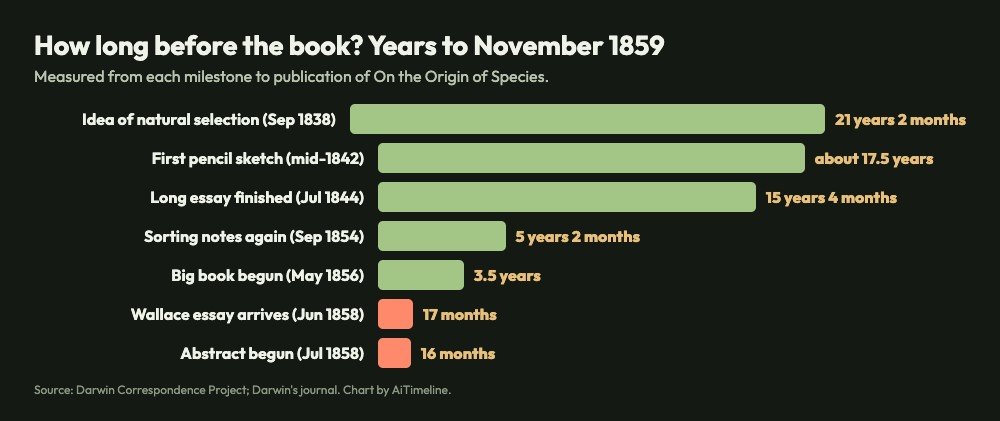
Was there really a “delay”?
For much of the 20th century, biographers described Darwin as a man who hid his theory for 20 years out of fear of scandal. In 2007 the historian John van Wyhe, director of Darwin Online, challenged this in a paper titled “Mind the gap”. He argued that Darwin told many friends about his views, never said he was delaying out of fear, and was following a plan to finish the barnacles and then the species book.
Most historians now take a middle position: Darwin’s caution was real, but so were his scientific reasons and his workload. The documents, rather than any single motive, are the best guide, and they show a theory that was always being worked on.
Every Version of the Theory, 1837–1859
Darwin’s early private writings, the joint presentation and the book were different documents with different readers.
| Version | Date | Form | Who saw it | What happened to it |
|---|---|---|---|---|
| Species notebooks | 1837-1839 | Private notebooks B to E | Darwin only | Published in full only in the 20th century |
| Pencil sketch | May-June 1842 | About 35 pages | Darwin only | Published 1909 |
| Essay | Completed July 1844 | Fair copy of roughly 230 pages | Emma Darwin; later Hooker | Extracts read 1 July 1858; full text 1909 |
| Letter to Asa Gray | 5 September 1857 | Short abstract in a letter | Asa Gray | Extract read 1 July 1858 |
| Natural Selection (big book) | May 1856 – June 1858 | About 250,000 words, half finished | Darwin; parts to Hooker | Abandoned; published 1975 |
| Linnean paper | 1 July 1858 | Extracts with Wallace’s essay | Linnean Society | Printed 20 August 1858 |
| On the Origin of Species | Published November 1859 | 502 pages of text, 14 chapters | The public | 1,250 copies; six editions by 1872 |
Darwin and Alfred Russel Wallace: Who Discovered Natural Selection?
Two independent discoveries, one joint presentation.
Darwin and Wallace developed the principle of evolution by natural selection independently. Darwin had worked on it since 1838 and had written private sketches, an essay and a letter to Asa Gray before Wallace’s paper reached him. Wallace developed his own explanation while collecting in the Malay Archipelago, after years of fieldwork in the Amazon and in Borneo.
Their routes overlapped in one striking way: both men credited Thomas Malthus’s essay on population with the decisive insight. Their circumstances did not. Darwin was a wealthy, established naturalist with powerful friends; Wallace was a professional collector paying for his travels by selling specimens. That difference is why some writers have questioned whether the 1858 arrangement was fair to Wallace, who was not asked in advance.
Wallace himself never complained. He was pleased to be presented alongside Darwin, defended natural selection for the rest of his life and called his 1889 book on the subject Darwinism. It is most accurate to describe natural selection as an idea independently discovered by both men, with Darwin’s 1859 book supplying the extended evidence that persuaded the scientific world.
| Charles Darwin | Alfred Russel Wallace | |
|---|---|---|
| Born | 12 February 1809, Shrewsbury | 8 January 1823, Usk, Monmouthshire |
| Field experience | HMS Beagle, 1831-1836 | Amazon 1848-1852; Malay Archipelago 1854-1862 |
| Reached natural selection | September 1838, after reading Malthus | February 1858, after recalling Malthus during a fever |
| First written statement | 1842 sketch (private) | 1858 Ternate essay, sent to Darwin |
| Published account | Linnean paper 1858; the Origin 1859 | Linnean paper 1858; Darwinism 1889 |
| Social standing in 1858 | Wealthy gentleman naturalist, Royal Medal winner | Self-funded collector selling specimens |
What Was Darwin’s Theory of Natural Selection?
Natural selection is the process by which inherited characteristics that improve an organism’s chances of surviving and reproducing become more common in a population over generations. It rests on four connected ideas:
Over many generations these differences change populations, and over longer periods they can produce new species. Darwin’s key analogy was with breeders: if farmers could transform pigeons, dogs and crops by choosing which animals and plants to breed, nature could do the same over far longer spans of time. Modern plant breeding, from the dwarf wheat of India’s Green Revolution onwards, is the same principle applied deliberately. Darwin did not know how inheritance worked; Mendel’s genetics, rediscovered in 1900, later supplied that missing piece.
HMS Beagle and the Galapagos Islands: Where the Questions Began
The five-year voyage of HMS Beagle took Darwin around South America, across the Pacific and home by way of Australia and the Cape of Good Hope. Most of his time was spent on land, collecting rocks, fossils, plants and animals. The five weeks in the Galapagos Islands in 1835 are the most famous part, but the fossils of the Argentine pampas and the way related species replaced each other along the continent mattered as much.
Darwin left the Galapagos without realising the importance of what he had collected. Only when specialists examined his specimens in London did the picture change: the islands’ mockingbirds were distinct species, and his finches turned out to be a whole group of related species. The finches later became the textbook example of adaptive radiation, thanks largely to long-term field studies in the 20th century.
Five things often told wrongly about Darwin and the Origin
- “The book sold out on publication day.” All 1,250 copies were ordered by booksellers at Murray’s trade sale on 22 November 1859, two days before the official 24 November publication date.
- “Darwin worked out evolution on the Galapagos.” He left the islands in October 1835 without a theory. It was the mockingbirds, and John Gould’s classification of the birds in London in 1837, that changed his mind.
- “Darwin coined ‘survival of the fittest’.” Herbert Spencer did, in 1864. Darwin added it to the fifth edition in 1869.
- “His eldest daughter was ill in June 1858.” The daughter with diphtheria was Henrietta, then 14. His eldest daughter, Annie, had died in 1851.
- “Wallace’s paper was published and Darwin’s was not.” Both were read together on 1 July 1858 and printed together in August 1858.
Why Darwin Day Is Celebrated on 12 February
Darwin Day is observed every year on 12 February, the anniversary of Charles Darwin’s birth in 1809. It began as an informal celebration organised by scientists, humanist groups and universities, and is now marked by museums, schools and science societies in many countries with lectures, exhibitions and nature walks. It is not a public holiday.
The day celebrates scientific inquiry, evidence-based thinking and natural history. It is also a reminder of how scientific ideas actually develop: through observation, testing, debate, collaboration and revision, rather than a single flash of insight. The bicentenary of Darwin’s birth in 2009, which was also the 150th anniversary of the Origin, was marked around the world.
Darwin Day is not the anniversary of the book. The two dates mark different milestones:
- 12 February 1809: birth of Charles Darwin, marked as Darwin Day.
- 24 November 1859: publication of On the Origin of Species, sometimes marked as Evolution Day.
For other turning points in the history of science, see how Galvani and Volta made the first battery, the history of computing pi and the story of the Nobel Prizes. For the living world Darwin studied, see the discovery of the first adult T. rex trackway and India’s Project Tiger.
Explore More Timelines
People Also Ask
Darwin Day and On the Origin of Species: Frequently Asked Questions
Conclusion: Darwin Waited for Evidence, but Wallace Changed the Timetable
Charles Darwin did not publish his theory as soon as he had it. He spent years examining specimens, comparing species, studying fossils and testing his explanation against everything he could think of. His private writings show that he had the central argument by 1842 and 1844, yet he kept gathering evidence because he believed an incomplete account would fail.
Alfred Russel Wallace’s essay in June 1858 turned a private research programme into a question of priority. Lyell and Hooker’s joint presentation acknowledged both naturalists, and 17 months later On the Origin of Species appeared. Darwin Day celebrates more than a famous birthday: it is a reminder that major discoveries are rarely instant, and that publishing them takes both evidence and nerve.
Related AiTimeline Stories
⚠️ Editorial Note
Last updated 31 October 2026. Dates follow the Darwin Correspondence Project at Cambridge University Library, Darwin’s own journal and standard references. Where accounts differ we say so: for example, the 18 June 1858 arrival date of Wallace’s essay is accepted by most historians but has been disputed. Some popular summaries contain errors, which we correct in the “Common mix-ups” box. Quotations from Darwin’s letters keep his original abbreviations.
Sources & further reading
Every dated entry above was checked against these references. Last reviewed 31 October 2026.
- Darwin Correspondence Project: Before Origin, the big book
- Darwin Correspondence Project: The writing of Origin
- Darwin Correspondence Project: Darwin in letters, 1858-1859
- Darwin Correspondence Project: Letter to Charles Lyell, 18 June 1858
- Darwin Correspondence Project: Letter to Asa Gray, 5 September 1857
- US National Library of Medicine: Writing the Origin
- Biological Journal of the Linnean Society: The famous Linnean Society meeting, from old errors to new insights (2022)
- Natural History Museum: Charles Darwin archive recognised by UNESCO
- PBS Evolution: Darwin's diary, 1858
- Charles Darwin Foundation: Happy Darwin Day