Lithium Supply Concentration: A Global Timeline of Mining and Refining
Lithium supply concentration explained: Australia mines the most, China refines ~75%. A timeline from 1817 to the 2026 price rebound and export bans.
Latest Story
Lithium powers phones, electric cars and the batteries that store solar and wind power, but the countries that dig it up are mostly not the ones that turn it into battery chemicals. Australia mines the most; Chile holds the largest reserves; China refines about three-quarters of the world’s lithium and makes most of its battery cells. This is lithium supply concentration as a timeline, from Arfwedson’s discovery in 1817 to the price rebound and export bans of 2026, with every share labelled by stage, source and year, and the IEA’s 2035 projections kept apart from the facts.
💡 Short Answer
Lithium supply is concentrated differently at each stage. In 2025 Australia mined about 32% of the world’s lithium, China 21% and Chile 19%, on USGS estimates, and the top three’s share is slowly falling as Argentina, Zimbabwe and Mali grow. Refining runs the other way: China produced about 75% of refined lithium chemicals in 2025, up from 70% in 2024, according to the IEA, and makes about 99% of lithium iron phosphate cells. The IEA projects China’s refining share easing only to about 66% by 2035.
Lithium Supply Concentration: Key Questions
Lithium Supply in Ten Points
- Three stages: mining, refining and cell-making are concentrated in different places and must be measured separately.
- Mining, 2025: Australia ~32%, China ~21%, Chile ~19% of about 290,000 tonnes (USGS).
- Refining, 2025: China ~75% of lithium chemicals, up from 70% in 2024 (IEA).
- Cells: China makes ~99% of LFP cells; in 2020 it had ~77% of all cell capacity (BNEF).
- Reserves: Chile leads with ~9.2 million tonnes; Bolivia has big resources but little output.
- History: leadership moved from US rock in the 1950s to Chilean brine in the 1990s and Australian rock in the 2010s.
- Prices: up ~8x in 2021-22 to ~USD 80,000/t, down more than 80%, then nearly doubled to ~USD 20,000 in early 2026.
- Policy: export bans (Zimbabwe), state control (Chile, Mexico) and export controls (China) now shape supply.
- 2035: the IEA projects mining below 70% top-three share but China still ~66% of refining.
- India: a 5.9 Mt inferred resource at Reasi is not yet a mine; KABIL’s Argentine blocks and auctions are the near-term route.
Three Stages, Three Different Maps
Why a country can lead one stage and barely appear in the next.
Rock and brine
Lithium comes from hard-rock spodumene (Australia, China, Zimbabwe, Brazil, Mali) or from salt-flat brines (Chile, Argentina, China). In 2025 hard rock was the larger and faster-growing source.
Carbonate and hydroxide
Concentrate and brine are converted into battery-grade lithium carbonate or hydroxide. This chemical step is where concentration is highest, with China at about 75%.
Cathodes and cells
Refined lithium goes into cathode materials and then cells and packs. China leads here too, especially in LFP chemistry used in cheaper cars and grid storage.
Ore travels to refiners
Most Australian and African concentrate is shipped to China for conversion. A new mine outside China does not, by itself, create a new supply chain.
The Lithium Supply Timeline, 1817–2026
Newest first. Tags mark mining, refining, policy, technology and price milestones. Shares are given with their stage, source and year.
Prices rebound, Zimbabwe shuts the door on concentrate Policy
On 25 February 2026 Zimbabwe, Africa’s largest producer, suspended exports of raw minerals and lithium concentrate with immediate effect, a year ahead of its planned 2027 ban, to force more processing at home. The first lithium refinery in Africa, a China-owned Zhejiang Huayou plant in Zimbabwe designed for about 6.5 kt of lithium, began ramping up in the first half of the year. With Jiangxi permits tightened and battery storage demand rising, the IEA says lithium carbonate nearly doubled to about USD 20,000 a tonne in early 2026. CATL restarted its Jianxiawo mine on 29 June after almost a year. The IEA’s 2026 outlook found that critical-mineral investment fell 9% in 2025, with lithium companies cutting spending by about 40%, and that China’s share of refined lithium rose to about 75%. Benchmark assessed carbonate at USD 18,160 a tonne on 10 August. The next date to watch is 10 November 2026, when China’s suspension of its battery and graphite-anode export controls is due to end.
Mining spreads out, refining tightens Refining
World mine output jumped about 31% to roughly 290,000 tonnes of lithium content, the USGS estimates: Australia about 92,000, China 62,000, Chile 56,000, Zimbabwe 28,000, Argentina 23,000 and Mali, new to the list, 9,400. Africa now supplies about 14% of mined lithium, but the IEA notes that more than 65% of the continent’s new capacity is owned by Chinese companies. Refining moved the other way: Chinese chemical output rose close to 40% and its share of world refining went from 70% to 75%. In January China proposed export controls on lithium refining technology; on 9 October it announced controls on lithium-ion batteries, graphite anodes and their equipment, then suspended them on 7 November after US-China talks. In October the US government took a 5% stake in Lithium Americas, developer of Nevada’s Thacker Pass. In December Chile’s Codelco and SQM formed NovaAndino Litio, the Atacama joint venture that runs to 2060. Finland’s Keliber became Europe’s newest producer.
Oversupply, and a clearer split Mining
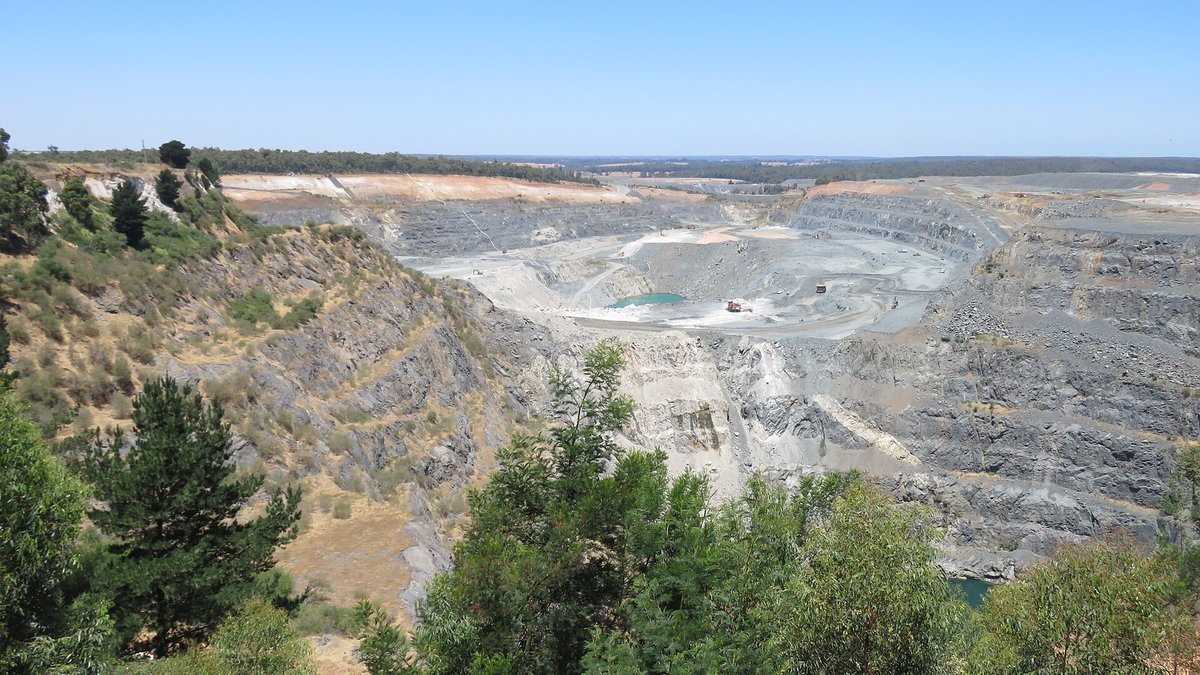
Global lithium production rose more than 35% in 2024 and pushed prices to about USD 12,000 a tonne of lithium carbonate equivalent, the IEA says; the lithium in a typical 57 kWh car battery fell in cost from about USD 67 in 2022 to USD 15. The USGS puts 2024 mine output at about 222,000 tonnes: Australia 82,700, Chile 48,900, China 41,400, Zimbabwe 20,000. The IEA’s 2025 report described the split this article is about: China held about 22% of lithium resources but refined 70% of lithium chemicals and about 95% of hard-rock ore. Low prices forced consolidation: Rio Tinto agreed to buy Arcadium Lithium in October. India’s state-owned KABIL signed for five lithium brine blocks in Catamarca, Argentina, on 15 January.
The crash, and new state strategies Prices
The boom reversed. New supply arrived as electric-car growth slowed and buyers ran down stocks, and the IEA reported that lithium spot prices fell about 75% during 2023; by its 2025 outlook the fall since the peak exceeded 80%. Governments moved anyway. On 20 April 2023 Chile announced a National Lithium Strategy giving the state a majority in strategic salt flats, the policy that produced the Codelco-SQM venture. In February the Geological Survey of India reported 5.9 million tonnes of inferred lithium resources at Reasi in Jammu and Kashmir, an early-stage estimate of clay-hosted ore; the block’s auction was later annulled twice. India published its first list of 30 critical minerals, lithium among them.
2022
An eightfold price spike Prices
Electric-car sales took off in China and Europe while new mines were still years away. Lithium prices rose about eightfold over 2021-22, the IEA says, peaking around USD 80,000 a tonne of carbonate equivalent in late 2022; the USGS annual US contract average went from USD 11,700 in 2021 to USD 63,700 in 2022. Supply security became industrial policy. Mexico nationalised lithium in April 2022. The US Inflation Reduction Act of August 2022 tied electric-car tax credits to where battery minerals were mined and processed. In December Zimbabwe banned exports of unprocessed lithium ore.
China’s grip on batteries becomes the headline Refining
BloombergNEF’s first battery supply-chain ranking, in 2020, placed China first, with about 77% of global battery cell manufacturing capacity and 80% of the processing capacity for battery raw materials. Those figures describe cells and processing, not lithium mining. The IEA later used 2020 as its baseline year: across key energy minerals, the top three refining countries then held about 82% of supply, rising to 86% by 2024.
2019
Australia’s ore, China’s chemical plants Mining
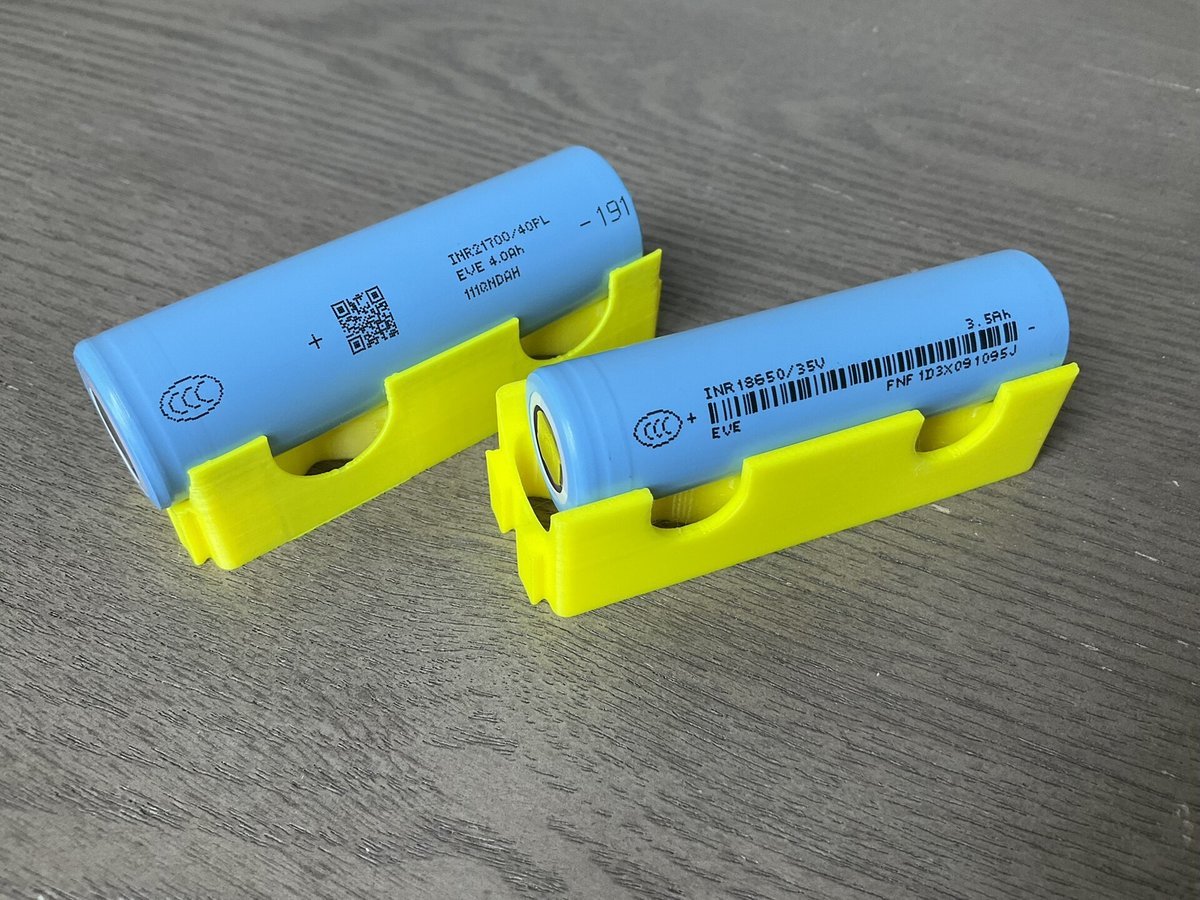
China’s Tianqi Lithium took control of Talison, owner of the Greenbushes mine in Western Australia, in 2013, later sharing it with Albemarle. As Australian spodumene output grew, Australia overtook Chile as the largest miner by the mid-2010s, and most of that ore was shipped to China for conversion. The pattern of the next decade was set: mined in Australia, refined in China, put into cells in China. In December 2018 Tianqi bought 23.77% of Chile’s SQM for about USD 4.1 billion. In 2019 Whittingham, Goodenough and Yoshino shared the Nobel Prize in Chemistry for the lithium-ion battery.
2012
Brine dominates, China builds converters Refining
Cheap brine from the Atacama made Chile the price-setter, and SQM and the US-owned Chilean operation (later Albemarle) led the market. Meanwhile China built a chemical industry: Ganfeng Lithium was founded in 2000, and Chinese battery and cathode makers grew with the country’s electronics assembly. By the early 2010s government incentives and new electric-car programmes began to change the size of the market from phone and laptop batteries to car packs hundreds of times larger.
1999
South American brine and Australian rock Mining
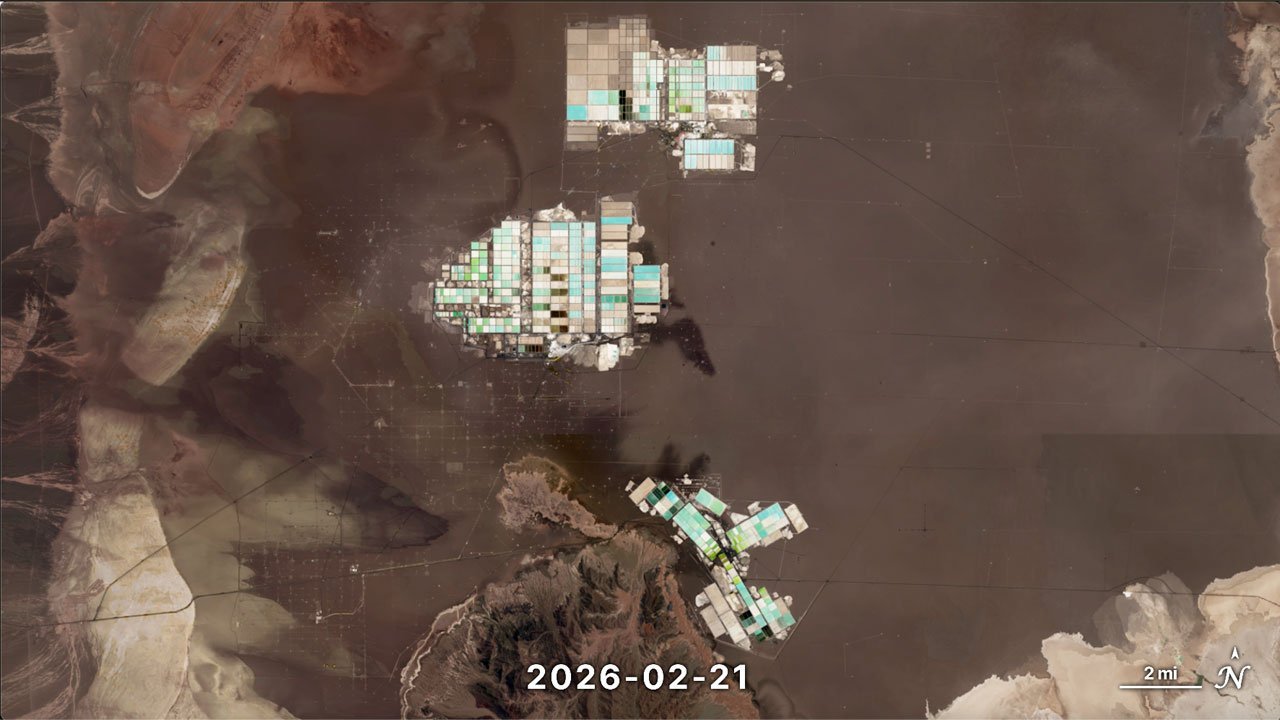
Production at Chile’s Salar de Atacama began in 1984 through Sociedad Chilena del Litio, a venture of the US firm Foote Mineral. Pumping brine into solar evaporation ponds proved far cheaper than mining rock, and when SQM started producing lithium carbonate from the same salt flat in the late 1990s, prices fell and US hard-rock mines in North Carolina closed. In Western Australia, Greenbushes, an old tin and tantalum field, became a major spodumene source. The geography of supply moved south.
Sony sells the first lithium-ion battery Technology
Sony began selling the first commercial rechargeable lithium-ion battery in 1991, first in a camcorder; A&T Battery, an Asahi Kasei and Toshiba venture, followed in 1992. Japanese firms led the cell business for years afterwards, before Korean and then Chinese manufacturers caught up. For lithium, this was the start of a demand driver that would eventually dwarf glass, ceramics and grease.
1985
The battery science Technology
At Exxon in the 1970s, Stanley Whittingham built a rechargeable lithium battery with a titanium disulphide cathode. In 1980 John Goodenough’s Oxford team showed that lithium cobalt oxide gave a much higher voltage, and in 1985 Akira Yoshino at Asahi Kasei paired it with a carbon anode to make a safer cell, the basis of the modern lithium-ion battery. Research in the US, UK and Japan, not a mine, created the demand that would reshape the market.
1960s
The nuclear decades Policy
Lithium became strategic for the first time in the 1950s, when the US Atomic Energy Commission needed lithium-6 for hydrogen bombs. The COLEX enrichment plant at Oak Ridge, Tennessee, ran from 1955 to 1963 and left a lasting mercury pollution problem. Government buying supported US mines in North Carolina, which, with Foote Mineral and Lithium Corporation of America, made the United States the leading producer for decades.
Commercial lithium metal Mining
Germany’s Metallgesellschaft AG began the first commercial production of lithium metal in 1923, by electrolysing a molten mixture of lithium chloride and potassium chloride. Uses followed in alloys, lubricating greases, glass and ceramics, small markets that kept lithium a speciality chemical until batteries arrived.
Arfwedson finds a new element Technology
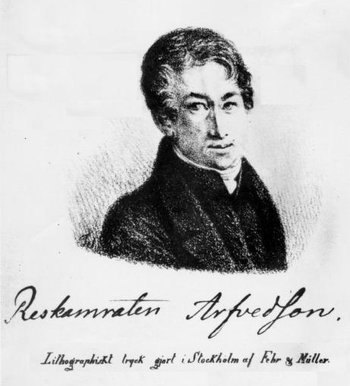
Working in Jöns Jacob Berzelius’s laboratory, Johan August Arfwedson found an unknown alkali in petalite from the iron mine on the island of Utö, near Stockholm. Berzelius named it lithion, from the Greek lithos, because it had been found in a mineral rather than in plants. Only tiny amounts of the metal were made until Robert Bunsen and Augustus Matthiessen produced it by electrolysis in 1855.
Pick a stage of the supply chain
The answer changes with the stage you measure. Each figure shows its source and its catch.
Who Mines Lithium
Mine production by country in 2025, in tonnes of lithium content.
Mining vs Refining Concentration
The two stages are moving in opposite directions.
Where the World’s Lithium Comes From
Broad roles, not a complete ranking. 2025 figures from USGS and IEA.
| Country or region | Main role | 2025 figure | Why it matters |
|---|---|---|---|
| Australia | Hard-rock (spodumene) mining | ~92,000 t mined | Largest miner; most ore refined in China |
| China | Mining, refining, cells | ~62,000 t mined; ~75% of refining | Dominant converter and cell maker |
| Chile | Brine production | ~56,000 t mined; largest reserves | State-led NovaAndino since Dec 2025 |
| Argentina | Brine projects | ~23,000 t mined | Fastest-growing major producer |
| Zimbabwe | Hard-rock mining | ~28,000 t mined | Concentrate exports suspended Feb 2026 |
| Mali, Brazil, Canada | New hard-rock supply | 9,400 / 12,000 / 5,600 t | Diversification at the mine |
| Bolivia | Brine resources | Little output; ~23 Mt resources | Resources are not supply |
| US and Europe | New mines, refineries, cells | US output withheld; Keliber in Finland | Policy-backed diversification |
The Price Cycle
Booms bring new mines; new mines bring crashes.
Drag from 1817 to 2035
See the era, the main use of lithium and what was happening to supply. Years after 2026 are IEA projections, not facts.
Why China’s Refining Position Matters
China’s strength is integration. Its converters sit next to cathode plants and cell factories, run at high utilisation and buy ore from Australia, Africa and South America. Chinese companies also own stakes upstream, from Greenbushes to new mines in Zimbabwe and Mali. That gives scale, low costs and a ready market for every tonne refined.
The exposure is that one country’s rules can move the whole market. China has already proposed controls on lithium refining technology and announced, then suspended, controls on batteries and anode materials. The IEA’s 2026 report says the number of mineral product codes under Chinese export controls has tripled since 2023. The risk is not that China stops selling lithium; it is that a disruption at one hub reaches every customer at once.
What Could Disrupt Lithium Supply
Export bans and controls
Zimbabwe’s concentrate suspension and China’s technology and battery controls show how quickly trade rules can change.
Slow mines and refineries
New projects take years, and refineries outside China have run well below capacity while learning the process.
Boom and bust
Low prices in 2023-25 cut lithium investment about 40% in 2025, which plants the seed of the next shortage.
Water, power and acid
Brine draws water in arid salt flats; hard-rock refining needs energy and reagents. The IEA notes about 60% of battery-grade lithium chemicals rely on sulphuric acid, whose exports China halted in May 2026.
How Countries Are Trying to Reduce Dependence
State control of resources: Chile’s 2023 strategy and the Codelco-SQM venture, Mexico’s 2022 nationalisation and Zimbabwe’s export bans all aim to capture more value at home. Public money: the US Inflation Reduction Act ties car subsidies to supply-chain origins, and Washington took equity in Lithium Americas. New refineries: the IEA expects Argentina to reach about 10% of global lithium chemical capacity by 2035, followed by the US and Australia. Recycling and chemistry: recycled supply is small today but rising, and sodium-ion cells can replace lithium in some uses. No single step ends dependence; the aim is more than one route if one hub fails.
What It Means for India
A resource is not a mine, and a mine is not a supply chain.
Reasi, Jammu and Kashmir
The GSI reported 5.9 million tonnes of inferred (G3) lithium resources in clay-hosted ore. The auction was annulled twice for lack of qualified bidders; clay lithium is not yet proven commercially anywhere at scale.
KABIL in Argentina
State-owned Khanij Bidesh India signed for five lithium brine blocks covering about 15,703 hectares in Catamarca, with a project cost of about Rs 200 crore.
National Critical Mineral Mission
The Cabinet approved a mission to fund exploration, overseas assets, processing and recycling. The Katghora lithium and rare-earth block in Chhattisgarh was auctioned for exploration.
Refining is the bottleneck
Even with ore in hand, India would still need battery-grade conversion capacity, cathode plants and recycling. Owning a deposit and securing supply are different goals.
Lithium Supply in Numbers
Measured, estimated and projected figures, kept apart and labelled.
| Figure | What it measures | Source | How to read it |
|---|---|---|---|
| ~290,000 t | World mine output, 2025 | USGS MCS 2026 | Lithium content, not carbonate |
| ~72% | Top-three miners’ share, 2025 | Calculated from USGS | Was ~78% in 2024 |
| ~75% | China’s share of refined lithium, 2025 | IEA GCMO 2026 | Up from 70% in 2024 |
| ~66% | China refined share, 2035 | IEA GCMO 2026 base case | Projection |
| 37 Mt | World reserves | USGS MCS 2026 | Chile largest, 9.2 Mt |
| ~USD 80,000/t | Peak carbonate price, 2022 | IEA | Spot, lithium carbonate equivalent |
| ~USD 20,000/t | Carbonate price, early 2026 | IEA GCMO 2026 | Nearly double the 2025 low |
| -40% | Lithium companies’ investment, 2025 | IEA GCMO 2026 | All critical minerals: -9% |
| ~5% | Recycling share of supply, 2025 | IEA GCMO 2026 | Recycled volume +40% |
| 5.9 Mt | Inferred lithium resource, Reasi (India) | GSI, Feb 2023 | G3 estimate of ore, not a reserve |
Corrections and Clarifications
Claims in the brief this page was built from, checked against the IEA, USGS, BloombergNEF and the historical record.
“Sony and Asahi Kasei began sales in 1991”
Sony launched the first commercial lithium-ion battery in 1991. Asahi Kasei’s Yoshino invented the design, but its own cells came through A&T Battery, with Toshiba, in 1992.
“China above 60% of refining in 2035”
That is the IEA’s 2025 projection. Its 2026 outlook gives China about 75% in 2025, easing to about 66% by 2035 in the base case.
“Refining remains concentrated”
It became more concentrated: China’s refined share rose from 70% in 2024 to 75% in 2025, as Chinese chemical output grew close to 40% in a year.
“China: ~75% of battery capacity, 2020”
The brief cited Wikipedia. BloombergNEF’s 2020 ranking gives about 77% of cell manufacturing capacity and 80% of raw-material processing.
“1920s–1950s: industrial uses”
The dated milestones are Metallgesellschaft’s commercial metal in 1923 and the US lithium-6 programme of the 1950s, which made the US the leading producer.
Chile’s brine and Australia’s rock
The shift from US mines to Atacama brine (1984 onwards) and then Australian spodumene shipped to Chinese converters is the core of how concentration formed.
2025-26 policy shocks
China’s October 2025 battery export controls and their 10 November 2026 expiry, Zimbabwe’s February 2026 concentrate ban and Chile’s NovaAndino venture were absent.
Country numbers
The brief gave roles without figures. USGS 2025 estimates and IEA shares are now in the charts and tables, with their dates.
Will Lithium Supply Become Less Concentrated?
At the mine, probably. Argentina, Africa and new projects in North America and Europe are already lowering the top three countries’ share, and the IEA’s pipeline points to roughly 500,000 tonnes of mined output by 2035. In refining, only slowly: more than half of planned new refining capacity is still in China, and plants elsewhere have to match its costs and utilisation.
The IEA also warns that the pipeline falls about 25% short of what demand would need in 2040, equal to about ten more median-sized mines. The 2023-25 investment cuts make that gap harder to close. The next tests are near: whether China lets its battery export-control suspension lapse in November 2026, whether Zimbabwe’s processing push works, and whether refineries outside China can run at full rate.
Explore More Timelines
People Also Ask
Frequently Asked Questions
The Bottom Line
Lithium went from a laboratory find in 1817 to a strategic battery metal, and its supply has been concentrated at every stage of that history: in US mines in the 1950s, Chilean brine in the 1990s and Australian rock and Chinese refineries today. In 2025 the top three miners produced about 72% of the world’s lithium while China refined about 75% and made almost all LFP cells. Mining is diversifying; refining is the harder problem. Supply security depends less on who finds lithium than on who can refine it and make batteries competitively.
Related AiTimeline Stories
⚠️ Editorial Note
Last updated 12 October 2026. Mine production, reserves, resources and US price averages are USGS Mineral Commodity Summaries 2026 estimates in tonnes of lithium content; refining shares, investment, price levels and 2035 projections come from the IEA’s Global Critical Minerals Outlook 2025 and 2026, and projections are not forecasts of certainty. Battery capacity in 2020 is from BloombergNEF; the August 2026 spot price from Benchmark Mineral Intelligence. Policy dates are from government announcements as reported. Mining shares for 2024 and 2025 are calculated from USGS totals. Different price series use different bases. This is not investment advice.
Sources & further reading
Every dated entry above was checked against these references. Last reviewed 12 October 2026.
- USGS Mineral Commodity Summaries 2026: Lithium (2024-25 mine production, reserves, resources, prices)
- IEA: Global Critical Minerals Outlook 2026 (China refining share 75% in 2025, investment, prices, 2035 projections)
- IEA: Global Critical Minerals Outlook 2025, executive summary (top-three refining share 82% to 86%)
- IEA: Global Critical Minerals Outlook 2025, outlook for key minerals (lithium mining below 70% by 2035)
- Energy Live News: China tops BloombergNEF lithium-ion battery supply chain ranking (2020)
- Herbert Smith Freehills Kramer: China suspends export controls on lithium batteries and graphite anode materials
- Mining MX: Zimbabwe halts all raw mineral and lithium concentrate exports (25 Feb 2026)
- Benchmark Mineral Intelligence: Lithium price watch (August 2026)
- Tribune India: Reasi lithium block auction annulled
- NS Energy: India's KABIL signs for lithium exploration blocks in Catamarca, Argentina (Jan 2024)
- WebElements (University of Sheffield): Lithium, historical information
- Materials (MDPI): Brief history of early lithium-battery development