Project Tiger: India’s Conservation Success Story — A Timeline
Project Tiger timeline: from 9 reserves in 1973 to an estimated 3,682 tigers in 2022, the Sariska crisis, NTCA reform, 58 reserves and the 2026 census.
Latest Story
In 1972 India counted only about 1,827 tigers. A year later it launched Project Tiger with nine reserves and a simple idea: save the tiger by saving its forests. Five decades on, India holds about three-quarters of the world’s wild tigers, with an estimated 3,682 in 2022 across what are now 58 reserves. The road included a poaching wave, the loss of every tiger at Sariska and Panna, a new law and authority, and a far more honest way of counting. This timeline traces it from the 1969 alarm to the census under way in 2026.
💡 Short Answer
Project Tiger was launched on 1 April 1973 at Corbett with nine reserves covering about 18,278 sq km. After poaching losses and the 2005 Sariska scandal, the 2006 law created the National Tiger Conservation Authority. India’s scientific tiger estimate rose from 1,411 in 2006 to 3,682 in 2022, about 75% of the world’s wild tigers, and the network now has 58 reserves.
Project Tiger: Key Questions
Project Tiger in Ten Points
- The alarm: a 1972 count found about 1,827 tigers; hunting had been banned in 1970.
- The launch: nine reserves from 1 April 1973, starting at Corbett.
- Habitat first: the aim was to protect whole ecosystems, not just tigers.
- The 1980s setback: poaching for skins and bones cut numbers, hidden by weak counting.
- Sariska, 2005: a reserve’s entire tiger population was found to be gone.
- The reset: the 2006 law created the NTCA and a wildlife crime bureau.
- Honest counting: camera traps put the 2006 figure at 1,411.
- Reintroductions: Sariska from 2008 and Panna from 2009 got tigers back.
- Recovery: 3,682 tigers in 2022 and 58 reserves by 2025.
- The new test: conflict, deaths outside reserves and corridors in 2025–26.
Project Tiger at a Glance
Key facts. Scroll the table sideways on a phone.
| Key fact | Details |
|---|---|
| Launched | 1 April 1973, at Corbett National Park |
| Initial network | 9 tiger reserves, about 18,278 sq km |
| Tiger reserves in 2026 | 58, about 84,488 sq km (latest: Madhav, March 2025) |
| First all-India count | About 1,827 tigers (1972, pugmarks) |
| 2006 estimate | 1,411 (range 1,165–1,657) |
| 2018 estimate | 2,967 (range 2,603–3,346) |
| 2022 estimate | 3,682 (range 3,167–3,925), about 75% of world’s wild tigers |
| Run by | National Tiger Conservation Authority, created in 2006 |
| Reintroductions | Sariska (from June 2008), Panna (from March 2009) |
| Next count | Sixth cycle began January 2026; report expected 2027 |
The Timeline, Newest First
From the 2026 census back to the 1969 alarm.
Success brings a new problem: tigers outside reserves 2026
Reporting in September 2026 underlined the paradox of Project Tiger’s success. Officials estimate that 30–35% of India’s tigers now live outside protected areas, where they meet people, cattle and crops. In Karnataka alone, about 30 tigers were captured between September 2025 and May 2026 after conflict incidents.
At the same time, the distribution is uneven: 18 tiger reserves are reported to hold fewer than 10 tigers, and five have none. The Centre has backed a programme for managing tigers outside reserves, covering monitoring, conflict response and prey recovery.
The sixth national tiger count begins Census
Field work for the sixth All India Tiger Estimation began in January 2026. For the first time it includes Gujarat, where a young tiger had settled in the Ratanmahal landscape on the Madhya Pradesh border from early 2025, decades after the state last recorded a tiger, and Sikkim, where tigers were photographed in the Himalaya.
Besides tigers, the survey records prey, habitat quality and corridor condition. The national result is expected in 2027.
A record year for tiger deaths Crisis
NTCA data showed 166 tiger deaths in 2025, 40 more than in 2024. Madhya Pradesh, which has the most tigers, recorded 55, the highest for any state in a single year since Project Tiger began. A large share of the deaths occurred outside protected areas.
Experts pointed mostly to territorial fights as tigers run out of space, along with road and rail accidents, electrocution from illegal fences and some poaching.
Madhav becomes the 58th tiger reserve Milestone
Madhav National Park in Shivpuri district was declared India’s 58th tiger reserve, Madhya Pradesh’s ninth. Tigers had been reintroduced to Madhav in 2023 after an absence of many years.
2024
Two new reserves in central India Milestone
Chhattisgarh notified Guru Ghasidas–Tamor Pingla as the 56th tiger reserve in November 2024. At about 2,829 sq km it is India’s third-largest, linking forests towards Madhya Pradesh and Jharkhand. Ratapani, near Bhopal, became the 57th in December 2024.
2023
3,682 tigers: the detailed 2022 estimate Census
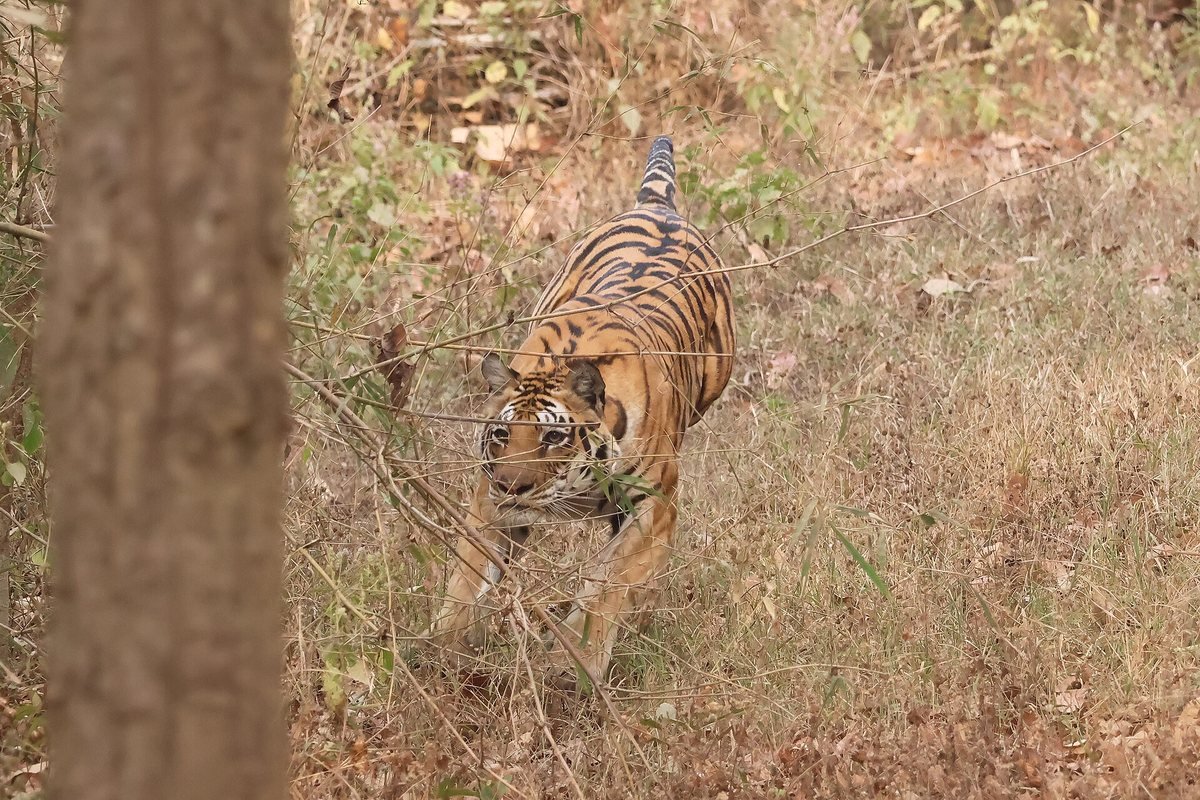
The Wildlife Institute of India’s full analysis of the 2022 survey, released on International Tiger Day, estimated an average of 3,682 tigers, with a range of 3,167 to 3,925, up from 2,967 in 2018. The government said India holds almost 75% of the world’s wild tigers.
Madhya Pradesh had the most (785), followed by Karnataka (563), Uttarakhand (560) and Maharashtra (444). Corbett had the highest number of any reserve (260). But parts of the Western Ghats showed local declines, and Mizoram, Nagaland, Jharkhand, Goa, Chhattisgarh and Arunachal Pradesh had small, worrying populations.
2023
Fifty years of Project Tiger Milestone
At an event in Mysuru marking 50 years of the project, Prime Minister Narendra Modi announced a minimum estimate of 3,167 tigers from camera-trapped areas and launched the International Big Cat Alliance for seven big-cat species. By then the network had grown to 53 reserves over 75,796 sq km.
2,967 tigers in 2018 Census
The fourth cycle estimated 2,967 tigers, up a third from 2014. The survey placed camera traps across tens of thousands of locations and collected tens of millions of photographs; it was later recognised by Guinness World Records as the largest camera-trap wildlife survey.
Past 2,000: 2,226 tigers Census
The 2014 cycle estimated 2,226 tigers, up about 30% in four years. Wider use of camera traps made the figures more reliable, though gains were concentrated in the Western Ghats, central India and the Shivalik-Terai landscape.
First signs of recovery: 1,706 Census
The second scientific cycle estimated 1,706 tigers in 2010, up from 1,411. The good news came with a caveat: the area occupied by tigers outside protected areas had shrunk, making corridors between reserves a priority.
Panna loses its tigers, then gets new ones Crisis
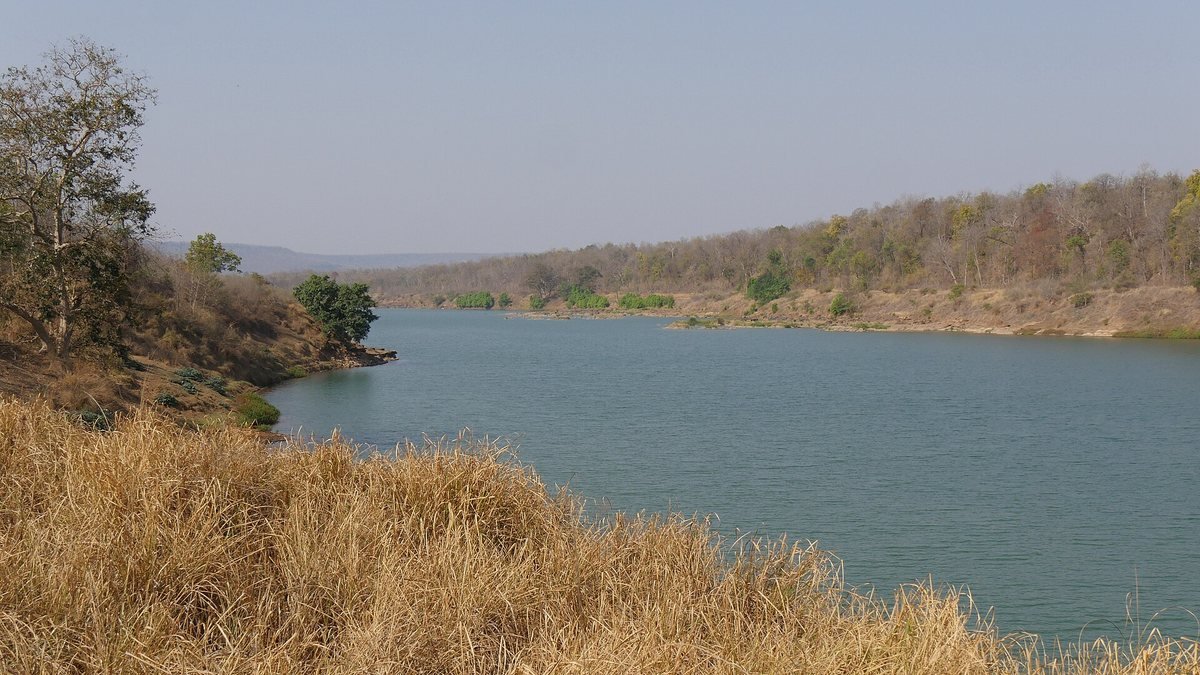
Panna Tiger Reserve in Madhya Pradesh had lost its tigers to poaching, and in 2009 it was confirmed that no resident tigers remained. Two tigresses, from Bandhavgarh and Kanha, were moved in from March 2009, followed by a male from Pench later in the year.
Cubs were born from 2010, and Panna rebuilt a breeding population. It is now cited as one of the world’s most successful tiger reintroductions.
2008
Tigers return to Sariska Milestone
A male tiger from Ranthambhore was flown by Indian Air Force helicopter to Sariska and released into an enclosure, the first time wild tigers had been reintroduced into an Indian reserve. A tigress followed on 4 July, and more transfers came in later years.
A sobering count: 1,411 tigers Census
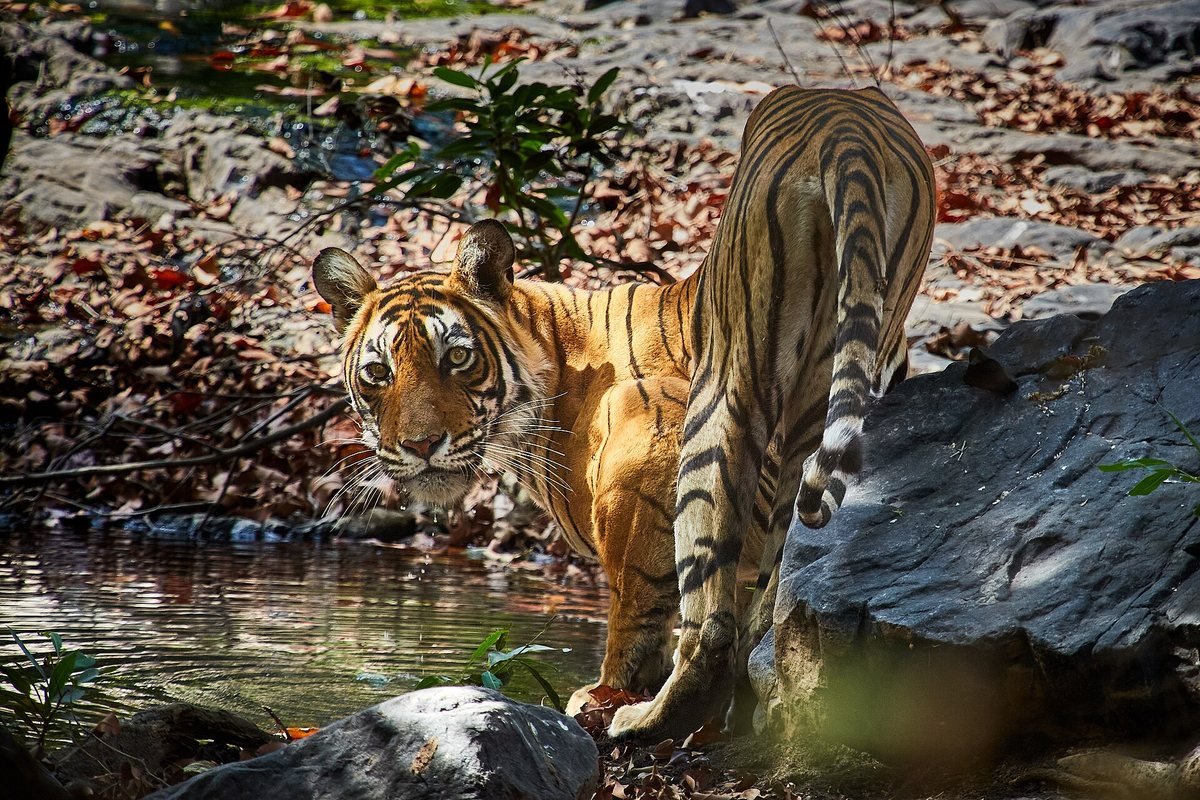
The first national estimate using the new scientific method, carried out in 2006 by the NTCA and the Wildlife Institute of India, put the population at just 1,411. A 2001-02 pugmark census had reported more than 3,600.
The gap was not all a fall in tigers; much of it was a fall in over-counting. Either way, it reset the baseline from which all later progress is measured.
2007
A new law and a new authority Law
Acting on the Tiger Task Force, Parliament amended the Wild Life (Protection) Act to create the National Tiger Conservation Authority, with statutory powers over tiger reserves, and to provide for a Wildlife Crime Control Bureau, which was set up in 2007. Reserves had to define inviolate core and buffer areas and prepare tiger conservation plans.
Sariska’s tigers vanish Crisis
Investigations confirmed that Sariska, a reserve since 1978, had no tigers left; they had been poached while official records still showed them present. The scandal prompted the Prime Minister to set up a Tiger Task Force chaired by Sunita Narain, whose 2005 report called for better science, stronger enforcement and partnership with forest communities.
1990s
Expansion and a poaching wave Crisis
The network kept growing, to about 15 reserves by the late 1980s and 23 by 1997. But the government itself acknowledges that the 1980s saw a decline due to extensive poaching, driven by demand for skins and for tiger bone in traditional medicine markets abroad. Counting still relied on pugmarks, which hid the scale of losses.
1973
Project Tiger is launched Milestone
Project Tiger was launched at Corbett National Park with nine tiger reserves: Bandipur, Corbett, Kanha, Manas, Melghat, Palamau, Ranthambhore, Similipal and Sundarbans. The plan, drafted by a task force chaired by Dr Karan Singh under Prime Minister Indira Gandhi, aimed to save tigers by protecting entire ecosystems.
Forester Kailash Sankhala became its first director.

A law and a shock count Law
Parliament passed the Wild Life (Protection) Act, 1972, giving India a national framework for protected species and areas. The same year, the first all-India tiger census, based on pugmarks, found only about 1,827 tigers.
1970
The alarm is raised Crisis
Conservationists meeting in New Delhi at the 1969 IUCN General Assembly warned that the tiger was in danger. India’s Indian Board for Wild Life recommended stopping the export of wild-cat skins, and by July 1970 tiger hunting had been banned across India.
Census by Census: How the Count Changed
Each estimate is a range, not a head count.
Pick a census. How many tigers did India have?
Tap a year to fill the meter with the national estimate and its range.
| Assessment year | Estimate | Range | Method |
|---|---|---|---|
| 1972 | About 1,827 | — | Pugmarks (not comparable) |
| 2001–02 | About 3,642 | — | Pugmarks (not comparable) |
| 2006 | 1,411 | 1,165–1,657 | Camera traps + statistical model |
| 2010 | 1,706 | 1,520–1,909 | Camera traps + statistical model |
| 2014 | 2,226 | 1,945–2,491 | Camera traps + statistical model |
| 2018 | 2,967 | 2,603–3,346 | Camera traps + statistical model |
| 2022 | 3,682 | 3,167–3,925 | Camera traps + statistical model |
| 2026 | In progress | — | Report expected 2027 |
Where India’s Tigers Live
Tigers are concentrated in a few states and landscapes.
Pick a state to see its 2022 tiger estimate.
The eight states with the most tigers in the 2022 assessment.
| Tiger reserve | State | Tigers (2022) |
|---|---|---|
| Corbett | Uttarakhand | 260 |
| Bandipur | Karnataka | 150 |
| Nagarhole | Karnataka | 141 |
| Bandhavgarh | Madhya Pradesh | 135 |
| Dudhwa | Uttar Pradesh | 135 |
| Mudumalai | Tamil Nadu | 114 |
| Kanha | Madhya Pradesh | 105 |
| Kaziranga | Assam | 104 |
| Sundarbans | West Bengal | 100 |
| Tadoba-Andhari | Maharashtra | 97 |
How Project Tiger Helped India Recover
Five tools that worked together.
Protected habitats
Inviolate core zones for breeding, with buffer zones that allow mixed use and reduce pressure on the core.
Protection and enforcement
Field staff, anti-poaching patrols and, since 2007, the Wildlife Crime Control Bureau against organised trade.
Scientific monitoring
Four-yearly estimates using camera traps and statistics, plus daily patrol data, guide where money and staff go.
Reintroduction
Sariska and Panna showed that emptied forests can be restocked, once poaching is under control.
Landscapes and corridors
Since 2005 the focus has widened from single reserves to connected landscapes that let tigers disperse and mix genes.
The Challenges That Remain
Fragmentation
Roads, railways, canals and mines cut through corridors and isolate small populations.
Poaching and trade
Demand for skins and bones persists; electrocution from illegal fences also kills tigers.
Tigers near people
With 30–35% of tigers outside protected areas, attacks on people and livestock are rising in some regions.
Regional declines
Parts of the Western Ghats and the North-East have declining or tiny populations; 18 reserves hold fewer than 10 tigers.
Communities
Relocation must be voluntary and fair, and forest rights respected, if local people are to support tiger conservation.
Common Myths About Project Tiger
“Tigers fell from 3,600 to 1,411”
The higher figure came from pugmark counts that over-counted. The 2006 estimate used a new, more reliable method.
“Every tiger is counted”
The figures are statistical estimates with ranges; 3,682 is an average between 3,167 and 3,925.
“Panna was restocked in 2008”
Sariska’s reintroduction began in 2008. Panna’s began in March 2009.
“The job is done”
Numbers are up, but deaths reached 166 in 2025 and conflict outside reserves is growing.
Explore More Timelines
People Also Ask
Frequently Asked Questions
Conclusion: A Conservation Story Still Being Written
From nine reserves in 1973 to 58 today, Project Tiger has turned India from a country where tigers were heading for extinction into the place where most of the world’s wild tigers live. It did not happen in a straight line: the 1980s poaching wave, the empty forests of Sariska and Panna and the shock of the 2006 count all forced change.
The next chapter is less about numbers than about space. A tiger population cannot be secured by counting tigers alone; it needs connected forests, healthy prey, effective institutions and the trust of people who share the land with them.
Related AiTimeline Stories
⚠️ Editorial Note
Population figures come from the All India Tiger Estimation reports of the NTCA and the Wildlife Institute of India, as published by the Press Information Bureau on 29 July 2023 and 25 November 2024. Reserve numbers and areas follow NTCA. 2025–26 figures on deaths, conflict and the sixth census come from NTCA data as reported by Indian media and Mongabay. All tiger numbers are statistical estimates with ranges.
Sources & further reading
Every dated entry above was checked against these references. Last reviewed 13 October 2026.
- National Tiger Conservation Authority: About Project Tiger and NTCA
- Press Information Bureau: 50 years of Project Tiger and the detailed All India Tiger Estimation 2022 (29 July 2023)
- Press Information Bureau: Tiger population estimates 2014-2022 and conflict management (25 November 2024)
- NTCA: Milestone initiatives, including tiger reintroduction in Sariska and Panna
- NTCA: M-STrIPES patrolling and monitoring system
- Wildlife Conservation Trust: The road to Project Tiger
- The Tribune: Gujarat, Sikkim join sixth All India Tiger Census for first time (2026)
- Mongabay India: As tigers spill beyond reserves, India rethinks conservation (18 September 2026)