1984 Anti-Sikh Riots: A Timeline of Justice, Accountability and Legacy
1984 anti-Sikh riots timeline: 3,325 dead (official), Nanavati report, convictions, Sajjan Kumar's death and 2026 court rulings, with cases still open.
Latest Story
The 1984 anti-Sikh riots followed Prime Minister Indira Gandhi’s assassination on 31 October 1984, when Sikhs were killed and their homes, shops and gurdwaras attacked, above all in Delhi. This timeline runs newest first and separates commission findings, prosecution allegations and what courts have decided, because outcomes differ from case to case and some cases remain open.
💡 Short Answer
After Indira Gandhi was assassinated on 31 October 1984, attacks on Sikhs killed 3,325 people across India, 2,733 of them in Delhi, according to the Home Ministry. Commissions in 1986 and 2005, reinvestigations and trials followed. Convictions came decades later: Sajjan Kumar was convicted in 2018 and 2025, acquitted in January 2026 and died on 20 August 2026; Jagdish Tytler faces a trial.
1984 Anti-Sikh Riots: Key Questions
The 1984 Cases in Ten Points
- Trigger: Indira Gandhi was assassinated on 31 October 1984; violence began that evening.
- Toll: 3,325 killed nationwide, 2,733 in Delhi, per the Home Ministry.
- Commissions: Misra (reported Aug 1986) and Nanavati (reported 9 Feb 2005) led a total of 14 panels.
- Apology: Manmohan Singh apologised in Parliament on 11 August 2005.
- Relief: Rs 714.76 crore package in 2006; Rs 5 lakh more per death in December 2014.
- Reinvestigation: the 2015 SIT filed chargesheets in five cases; the Dhingra SIT reviewed 186.
- First death sentence: Yashpal Singh, November 2018.
- Kumar: convicted 2018 and 2025, acquitted January 2026, died 20 August 2026.
- Tytler: charges framed 13 September 2024; he pleaded not guilty; trial ongoing.
- Delay: a September 2026 court said revived investigations need fresh, credible evidence.
1984 Anti-Sikh Riots Timeline, Latest First
Each entry is tagged by theme and ends with why it matters. Use the filter to isolate a theme.
Courts, commissions or the violence itself? Filter the 1984 anti-Sikh riots timeline by theme.
–
Status check: what is still open after Kumar’s death Courts & verdicts
Several matters were reported open at the latest check. The CBI trial of Jagdish Tytler over the Pul Bangash Gurdwara killings was still at the witness stage: on 1 July 2026 Special Judge Jitendra Singh adjourned it to 15 July because a prosecution witness could not be examined (ETV Bharat). No later hearing or verdict was found. The Hindustan Times reported on 26 August 2026 that an appeal by the CBI and a relative of a deceased man against Sajjan Kumar’s September 2023 acquittal in a Sultanpuri murder case was still awaiting completion of pleadings before the Delhi High Court Registrar, with no next date. The Indian Express reported in late 2025 that appeals by two convicts in a Mahipalpur case, one sentenced to death and one to life, were pending in the High Court. Kumar’s Supreme Court appeal against his 2018 conviction was reported pending when he died (India TV); no report on how the court treated it afterwards was found. Readers should check the court records before relying on any status here.
2026
Court sets aside a 2017 order to register an FIR into two 1984 deaths Courts & verdicts
A Delhi special judge set aside a January 2017 magisterial order that had directed police to register an FIR into the deaths of Amir Singh and Narender Singh. The complaint by a riot survivor, filed in 2005, alleged police inaction and the wrongful arrest of family members and sought action against two senior police officers of the time. The court said the case suffered from extraordinary delay, that there was no credible contemporaneous proof the complaint had been pursued, and that earlier inquiries had found no reliable material of misconduct by the officers. It noted that in 1987 the family had attributed the deaths to mob violence. The judge said: “Every proceeding must, at some point, reach finality.” The ruling covers this one complaint only.
2026
High Court closes Sajjan Kumar’s appeal in the Saraswati Vihar murder case Courts & verdicts
A Delhi High Court bench told by an SIT sub-inspector that Kumar had died held that his appeal against the February 2025 conviction for the murders of Jaswant Singh and Tarundeep Singh had abated. An abatement ends the appeal because the appellant has died; it does not decide whether the conviction was right. The Hindustan Times, which reported the order on 26 August, said the trial court had called the Delhi Police’s acceptance of an “untrace report” in 1994 a “grave failure of justice”.
2026
Sajjan Kumar dies at Safdarjung Hospital while serving a life term Courts & verdicts
Former Congress MP Sajjan Kumar died on 20 August 2026 while serving life sentences linked to the 1984 violence. Hospital authorities did not disclose the cause; reports mentioned high blood pressure and Parkinson’s disease. He died on the day the Supreme Court was to hear his plea for three weeks’ parole to tend to his ailing wife; the plea did not come up. His Supreme Court appeal against the 2018 conviction, filed in December 2018, was reported pending at his death. He had been convicted by the Delhi High Court in December 2018 over the killing of five Sikhs in Raj Nagar, Palam Colony, and by a trial court in February 2025 over the Saraswati Vihar murders; the Indian Express also recalled that the Nanavati Commission had said there was “credible material” that he was “probably involved”. A commission’s view and a court’s verdict are different things.
2026
Kumar acquitted in the Janakpuri and Vikaspuri case Courts & verdicts
A Delhi court acquitted Kumar over the killings of Sohan Singh and Avtar Singh in Janakpuri and the alleged burning of Gurcharan Singh in Vikaspuri, citing the “absence of admissible, reliable evidence” of his presence or participation. The complainant, Harvinder Singh Kohli, had died before being examined, and the court noted that most witnesses were hearsay or had not named Kumar for three decades. Rejecting the argument that his earlier convictions showed guilt here, it wrote: “A man may be convicted of 100 crimes, but to be held guilty of the 101st crime, proof beyond a reasonable doubt in that crime is required.” Survivors expressed dismay at the verdict. He remained in jail on the earlier convictions.
2025
Indian Express: 13 murder convictions in 41 years Courts & verdicts
The Indian Express reported that, 41 years on, just 28 riot cases had ended in convictions, 13 of them in murder cases, fewer than the 14 panels that investigated the violence. It cited the Nanavati Commission’s count of 587 FIRs in Delhi, of which 241 could not be traced and 253 had ended in acquittals, with 40 pending trial at that time. It also said Kumar’s appeal against his 2018 conviction was due for final hearing in the Supreme Court on 12 November 2025, and that one trial each was running in the Karkardooma and Saket courts. These are the newspaper’s figures, not a final national count.
2025
Kumar convicted, then given life, over the Saraswati Vihar murders Courts & verdicts
A Delhi trial court convicted Kumar on 12 February 2025 of instigating a mob that killed Jaswant Singh and his son Tarundeep Singh on 1 November 1984 and sentenced him to life imprisonment on 25 February. The case had been closed by police with an untrace report in 1994 and was revived after the SIT process began. Kumar appealed in October 2025; the appeal ended with his death in August 2026.
2024
Tytler: court orders charges, including murder, in the Pul Bangash case Courts & verdicts
On 30 August 2024 a Delhi court held there was enough material to put former Congress leader Jagdish Tytler on trial over the killing of three Sikhs, Thakur Singh, Badal Singh and Guru Charan Singh, near Pul Bangash Gurdwara on 1 November 1984. Charges were formally framed on 13 September 2024, and Tytler pleaded not guilty. The allegations come from the CBI’s chargesheet of May 2023, which said he incited the mob. The trial continued into 2026 with no verdict reported. Framing a charge is not a finding of guilt.
2020
Government accepts the Dhingra SIT report Commissions & probes
The Supreme Court had appointed a three-member SIT headed by former Delhi High Court judge S.N. Dhingra in January 2018 to re-examine 186 cases. The Home Ministry told the court on 15 January 2020 that it had accepted the SIT’s report, which implicated several police personnel and said the main reason crimes went unpunished was the police’s lack of interest in acting according to law. The Supreme Court later asked the Centre for a fresh status report on acting on it. The report’s detailed findings are summarised here from news coverage.
2018
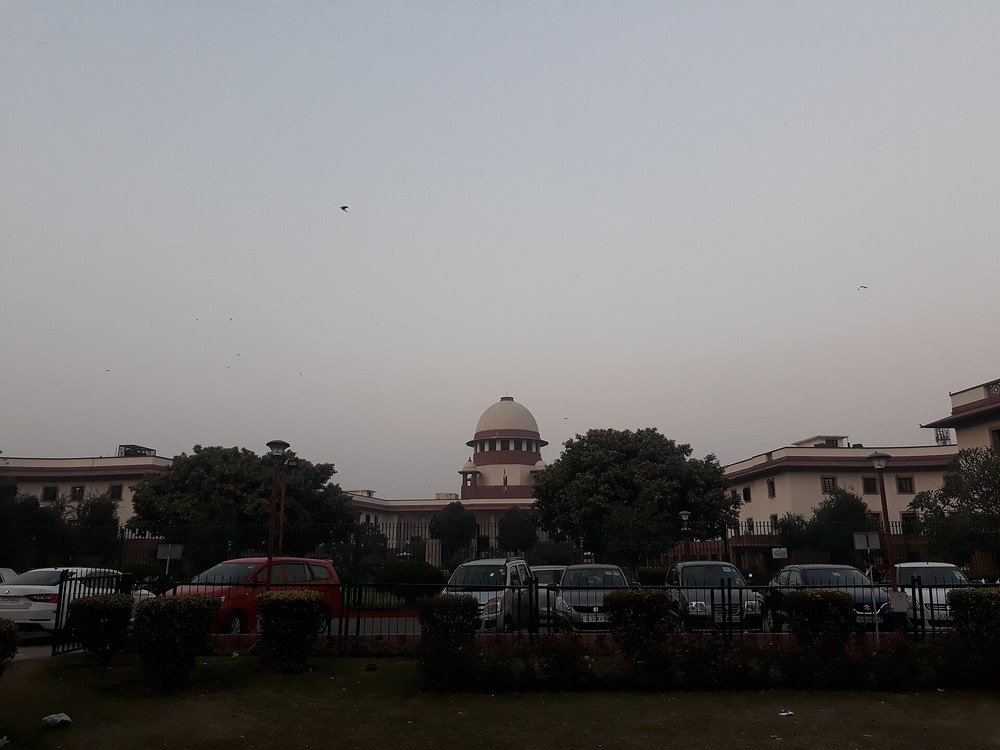
High Court convicts Sajjan Kumar and sentences him to life Courts & verdicts
The Delhi High Court reversed Kumar’s 2013 acquittal and sentenced him to life imprisonment for the remainder of his natural life over the killing of five Sikhs in Raj Nagar, Palam Colony, on 1–2 November 1984 and the burning of a gurdwara. It affirmed the convictions of five others in the case, including life terms for Balwan Khokhar, Bhagmal and Giridhari Lal. Kumar was told to surrender by 31 December and moved the Supreme Court against the conviction; reports in 2025 still described that appeal as pending.
2018
First death sentence in a 1984 case: Mahipalpur killings Courts & verdicts
Additional Sessions Judge Ajay Pandey sentenced Yashpal Singh to death and Naresh Sherawat to life imprisonment for the murders of Hardev Singh and Avtar Singh in Mahipalpur on 1 November 1984. It was the first death sentence in a 1984 riot case and the first verdict in a case reopened by the 2015 SIT; Delhi Police had closed the case in 1994. The judge said the offence fell in the “rarest of rare” category. Sentencing was held inside Tihar Jail after one convict was attacked at the court on 15 November, when both were convicted; each was fined Rs 35 lakh. The file went to the High Court for confirmation; appeals were still pending in late 2025.
2015
Home Ministry forms an SIT to re-examine closed cases Commissions & probes
The Home Ministry set up a special investigation team to re-investigate serious Delhi cases that had been closed. According to the Indian Express, the SIT scrutinised 293 closed or untraced cases, closed 199 because of “incomplete, illegible” records or the absence of witnesses, and began preliminary enquiries in 60. Of those, 52 ended in closure, leaving eight; police filed chargesheets in five, of which one ended in an acquittal and one was pending in the Karkardooma court at the time of that report.
2014
Government sanctions Rs 5 lakh more for each victim’s next of kin Violence & relief
The Union government sanctioned an additional Rs 5 lakh for the next of kin of each person who died in the 1984 riots. A written reply in the Rajya Sabha on 11 March 2015 recorded the sanction and gave the official toll: 3,325 people killed across the country, 2,733 of them in Delhi (Ahooja Committee). Money cannot reverse the loss, and the reply left criminal accountability to the states, since policing is a state subject.
2006
Rehabilitation package of Rs 714.76 crore sanctioned Violence & relief
After the Nanavati report the government sanctioned a rehabilitation package with a total outlay of Rs 714.76 crore. According to the Home Ministry’s March 2015 reply to the Rajya Sabha, money is reimbursed to state governments after utilisation certificates, Rs 534.20 crore had been reimbursed by then, and the package was closed from 30 June 2012.
2005
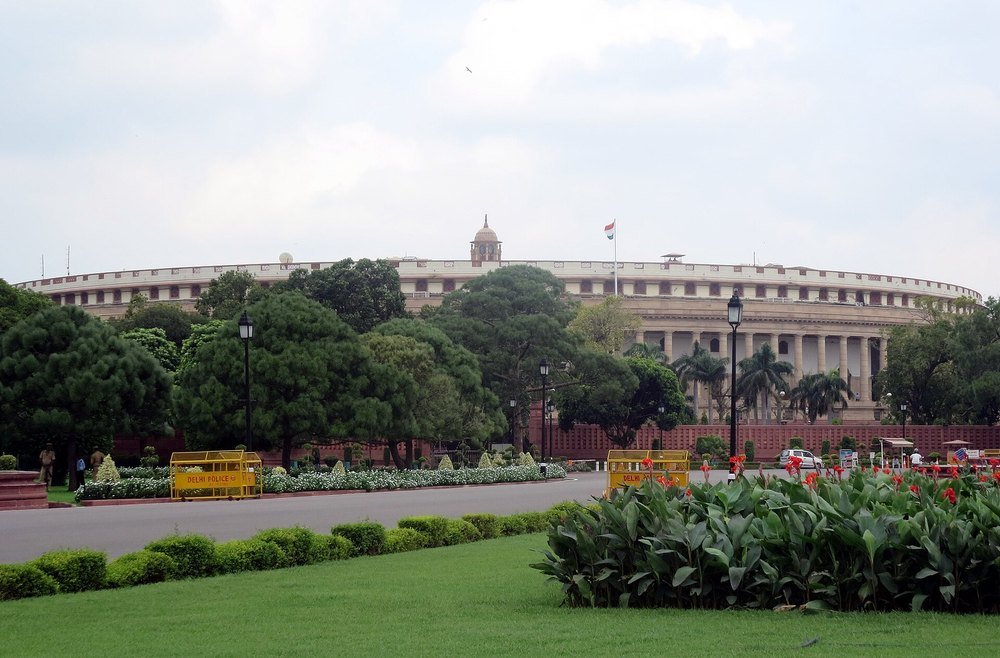
Prime Minister Manmohan Singh apologises in Parliament Commissions & probes
During the debate on an Opposition motion on the Nanavati Commission report, Prime Minister Manmohan Singh said: “I apologise not only to the Sikh community but to the whole nation, because what took place in 1984 is a negation of the concept of nationhood enshrined in our Constitution.” The motion was defeated by voice vote after Home Minister Shivraj Patil announced two committees to ensure due compensation. The brief places the apology in “Parliament”; the Tribune’s report dates it to the Rajya Sabha, and one archive attributes it to the Lok Sabha.
2005
Nanavati Commission submits its report Commissions & probes
The commission found “credible material” that Sajjan Kumar and Balwan Khokhar were “probably involved” as alleged by witnesses and said the Delhi Police had recorded only five FIRs in the Delhi Cantonment area, where it counted 246 Sikhs killed between 31 October and 5 November 1984. It also said Jagdish Tytler was “very probably” involved, according to reports, and he later resigned from the Union Cabinet. It recommended that cases in which witnesses had named people but no chargesheet followed, or where cases had been closed as untraced, should be examined. A commission’s finding is not a criminal conviction.
Nanavati Commission of Inquiry appointed Commissions & probes
The Home Ministry appointed the Justice Nanavati Commission on 8 May 2000, fifteen years after the first inquiry, to examine the violence and the handling of cases. It was the second commission of inquiry named in the Home Ministry’s own account, after the Ranganath Misra Commission.
Ahooja Committee settles the Delhi death toll at 2,733 Commissions & probes
The Ahooja Committee, set up on the Misra Commission’s recommendation, put the number killed in Delhi at 2,733. The Nanavati Commission cited it as an official estimate, while Sikh organisations said more than 3,000 had died. The Home Ministry later cited 3,325 across India, including 2,733 in Delhi. Different bodies counted differently, so the toll depends on the source.
Ranganath Misra Commission reports; three committees follow Commissions & probes
The Justice Ranganath Misra Commission, appointed in 1985, submitted its report to the Government of India in August 1986. As per the Home Ministry’s account, Delhi Administration then appointed three committees: Kapur-Mittal (conduct of police officers), Jain-Agrawal (allegations of grave offences) and Ahooja (the exact number of deaths). Their recommendations were accepted and implemented, self-employment schemes were started and financial relief was revised.
1984
Violence spreads across Delhi and other places Violence & relief
The most intense violence in Delhi came in the first days of November. Sikh residents were attacked and homes, shops and gurdwaras were looted or burned. The Nanavati Commission’s report records that violence began on the evening of 31 October, continued intensely for two days and persisted in some places until 5 November. Many families fled or sought shelter in relief camps and with neighbours. Allegations of police inaction and political involvement became central to every later inquiry.
1984
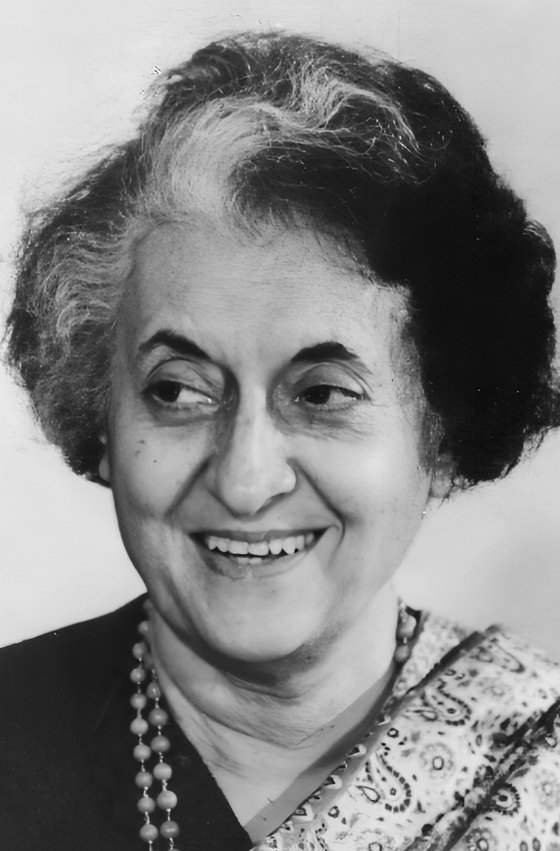
Prime Minister Indira Gandhi is assassinated Violence & relief
Prime Minister Indira Gandhi was assassinated by two Sikh bodyguards. The killing caused grief and upheaval and was the immediate backdrop to the attacks on Sikhs that followed. It did not justify collective violence against civilians who had no part in it.
What Happened to the Delhi FIRs
What the 2015 SIT Found
The Cases at a Glance
Dates and figures as reported; the legal outcome is separate from allegations and findings.
| Date | Event | Detail |
|---|---|---|
| 31 Oct 1984 | Assassination | Indira Gandhi killed by two Sikh bodyguards |
| 1-5 Nov 1984 | Violence | Most intense in Delhi on 1-2 Nov; persisted in places to 5 Nov |
| Aug 1986 | Misra Commission report | Followed by Kapur-Mittal, Jain-Agrawal and Ahooja committees |
| 9 Feb 2005 | Nanavati report | Two volumes; 587 Delhi FIRs reviewed |
| 11 Aug 2005 | Apology | Manmohan Singh in Parliament |
| 16 Jan 2006 | Rehabilitation package | Rs 714.76 crore sanctioned |
| 16 Dec 2014 | Further relief | Rs 5 lakh more per next of kin |
| 12 Feb 2015 | SIT formed | 293 closed cases scrutinised |
| Jan 2018 | Supreme Court SIT | Dhingra-led, 186 cases |
| 20 Nov 2018 | First death sentence | Yashpal Singh; Naresh Sherawat life |
| 17 Dec 2018 | Kumar convicted | Delhi High Court, life term, Palam Colony |
| 13 Sep 2024 | Tytler charges framed | Pul Bangash Gurdwara case; not guilty plea |
| 12/25 Feb 2025 | Kumar convicted again | Saraswati Vihar murders, life term |
| 22 Jan 2026 | Kumar acquitted | Janakpuri-Vikaspuri case |
| 20/25 Aug 2026 | Kumar dies; appeal closed | Appeal in Saraswati Vihar case abated |
| 1 Sep 2026 | FIR order set aside | Special judge cites delay and no fresh evidence |
Reading the Legal Terms
| Term | Meaning | Why it matters here |
|---|---|---|
| Commission of inquiry | A body that investigates and recommends, with no power to convict | Misra and Nanavati commissions; findings are not verdicts |
| FIR | First Information Report, the police record that starts a case | 587 Delhi FIRs were counted by Nanavati |
| Untrace report | Police tell the court the accused could not be traced | 241 Delhi FIRs; also used to close the Saraswati Vihar case in 1994 |
| Chargesheet | The police report setting out evidence and the accused | Not a finding of guilt |
| Framing of charges | The court formally states the offences the accused will face | Done for Tytler on 13 Sep 2024 |
| Acquittal | The court finds guilt not proved beyond reasonable doubt | Includes Kumar, Jan 2026 |
| Abatement | An appeal ends because the appellant has died | Kumar appeal closed 25 Aug 2026; no ruling on merits |
| SIT | Special investigation team | Home Ministry 2015; Supreme Court-appointed Dhingra team 2018 |
Why Did Cases Take Decades?
Closed files. Of 587 Delhi FIRs in the Nanavati tally, 241 were closed as untraced, and the SIT of 2015 closed 199 of 293 reviewed cases because of “incomplete, illegible” records or no witnesses.
Police inaction. The Nanavati Commission said only five FIRs were recorded in an area where it counted 246 Sikhs killed. The Dhingra SIT report, accepted by the Centre in January 2020, said the basic reason crimes went unpunished was the police’s lack of interest in acting according to law, according to news coverage.
Time and evidence. Witnesses died or could not be found, complainants such as Harvinder Singh Kohli died before being examined, and courts have asked why accounts surfaced only after thirty years.
Standard of proof. In January 2026 a court wrote that a person may be convicted of 100 crimes, but a 101st still needs proof beyond reasonable doubt. That is why some cases led to convictions and others to acquittal or closure.
Who Is Who in the Record
Roles examined in the case, not final findings of guilt.
Ranganath Misra Commission
Appointed 1985; reported Aug 1986; led to three Delhi committees.
Justice G.T. Nanavati Commission
Appointed 8 May 2000; report 9 Feb 2005; said Kumar was probably involved.
SIT of 2015 and Dhingra SIT of 2018
Re-examined closed cases; the Dhingra report was accepted by the Centre in Jan 2020.
Sajjan Kumar
Life terms in 2018 and 2025; acquitted Jan 2026; died 20 Aug 2026.
Jagdish Tytler
Charges framed Sept 2024 in the Pul Bangash case; pleaded not guilty; no verdict reported.
Yashpal Singh, Naresh Sherawat
Mahipalpur killings; death sentence and life term in Nov 2018.
Delhi High Court and trial courts
Convicted, acquitted and closed appeals across 2018-2026.
Families and lawyers such as H.S. Phoolka
Pressed for reinvestigation and fuller accountability for four decades.
Relief and Rehabilitation
Delhi Administration revised financial relief and began self-employment schemes after the Misra report. The government sanctioned a Rs 714.76 crore Rehabilitation Package on 16 January 2006, of which Rs 534.20 crore had been reimbursed to states by March 2015, and it closed on 30 June 2012. On 16 December 2014 it sanctioned Rs 5 lakh more for the next of kin of each person who died. Financial help cannot reverse the loss of life or settle criminal responsibility.
The Legacy of 1984
The violence remains a major chapter in India’s modern history because it raises lasting questions about protecting minorities, the conduct of public institutions, the quality of criminal investigations and equal access to justice.
For survivors, justice has meant more than compensation: recognition of their suffering, credible investigations, fair trials, accountability where guilt is proved and preservation of the historical record. The proceedings of 2025 and 2026 show that legal developments can still occur decades after a crime, and also the limits of delayed justice.
Remembering 1984 means preserving survivors’ experiences while distinguishing proven facts from allegations, and recognising that accountability depends on credible evidence and a functioning justice system.
The Popular Story vs the Record
Short versions of the story blur several details.
| Popular version | What the record shows |
|---|---|
| The toll is 3,325 in Delhi | The Home Ministry cites 3,325 across India, of which 2,733 in Delhi; Sikh bodies say Delhi alone exceeded 3,000 |
| Sajjan Kumar was convicted only in 2025 | The Delhi High Court convicted him on 17 Dec 2018 in the Palam Colony case; the Feb 2025 case was a second conviction |
| His death ended every case against him | The Saraswati Vihar appeal abated; an appeal against his Sultanpuri acquittal was reported pending, and his 2018 Supreme Court appeal status is unconfirmed |
| 253 cases ended in convictions | In the Nanavati tally, 253 of 587 Delhi FIRs ended in acquittals; the Indian Express counts 28 convictions, 13 for murder |
| The Sept 2026 ruling closed all outstanding cases | It set aside one 2017 FIR order about two deaths and said nothing about other cases |
| Tytler has been convicted | Charges were framed in Sept 2024 and he pleaded not guilty; no verdict is reported |
| The Janakpuri acquittal cleared him of 1984 | It covered one incident; his earlier convictions were separate and he remained in jail |
The Cases in Numbers
| Measure | Figure | Source and caveat |
|---|---|---|
| Deaths in India | 3,325 | Home Ministry reply, 11 Mar 2015 |
| Deaths in Delhi | 2,733 | Ahooja Committee, as cited by the Home Ministry |
| Delhi FIRs reviewed | 587 | Nanavati Commission, via Indian Express |
| Untraced | 241 | Same tally |
| Acquittals | 253 | Same tally |
| Convictions to date | 28 (13 murder) | Indian Express, late 2025 |
| Rehabilitation package | Rs 714.76 crore | Sanctioned 16 Jan 2006 |
| Extra relief per death | Rs 5 lakh | Sanctioned 16 Dec 2014 |
| Cases reviewed by Dhingra SIT | 186 | Supreme Court, Jan 2018 |
| Panels that investigated | 14 | Indian Express count |
Explore More Timelines
People Also Ask
Frequently Asked Questions
Related AiTimeline Stories
⚠️ Editorial Note
This page separates inquiry findings, prosecution allegations, convictions, acquittals and procedural orders. Case status is described as of 21 October 2026 from the cited reporting; check the latest court orders before relying on any procedural status. Changes from the original brief: the High Court’s 17 December 2018 conviction of Sajjan Kumar, the November 2018 death sentence, the 2018 Supreme Court-appointed SIT and the 2025 Indian Express figures were added; the Indian Express count of 253 acquittals belongs to the Nanavati tally of 587 Delhi FIRs, not to a conviction comparison; the September 2026 ruling is stated as setting aside a January 2017 magisterial order about two deaths and a complaint against police officers; the brief’s undated 1990s entry could not be sourced and is omitted. Court orders in 2026 were taken from news reports, not from the orders themselves, and the treatment of Kumar’s Supreme Court appeal after his death, and the Tytler trial after 1 July 2026, could not be confirmed. Terms such as riots, massacre and pogrom are used differently by officials and communities; no court here has settled a legal label.
Sources & further reading
Every dated entry above was checked against these references. Last reviewed 21 October 2026.
- Benefits to 1984 Sikh Riot Victims (PIB, 11 Mar 2015)
- Report of the Justice Nanavati Commission of Inquiry (1984 anti-Sikh riots), Volumes I and II
- 41 years after 1984 anti-Sikh riots: murder convictions and status of cases
- Nanavati Commission findings and Sajjan Kumar
- Sajjan Kumar acquitted in a separate 1984 riots case (Janakpuri-Vikaspuri)
- Delhi High Court closes Sajjan Kumar appeal following his death
- No fresh evidence after 40 years: court sets aside FIR order in 1984 riots case
- Manmohan Singh apologises in Parliament (Tribune, 12 Aug 2005)
- 1984 riots: Delhi court frames murder charge against Jagdish Tytler
- 1984 riots: man sentenced to death in murder case, another gets life
- Sajjan Kumar
- Nanavati Commission