Trump’s Midterm Test: How the 2026 Elections Could Reshape Congress
The US midterm elections are on 3 November 2026. See how control of Congress could affect Trump's agenda, oversight, taxes, spending and nominations.
Latest Story
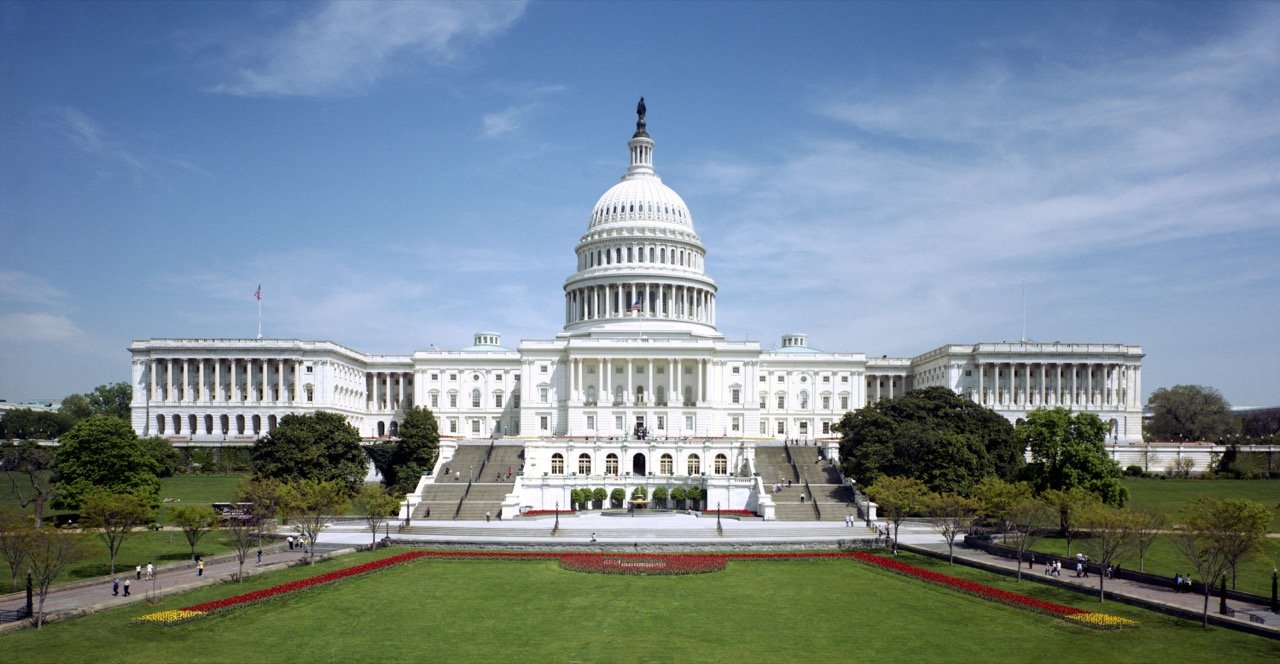
US midterms 2026 take place on 3 November and will decide who controls Congress for the last two years of Donald Trump’s presidency. Trump stays in office either way, but the House and Senate shape taxes, spending, immigration law, nominations and oversight. This timeline runs from the 1994 Republican wave to the 2026 campaign, redistricting fights and the seat arithmetic, and keeps results, estimates and unverified claims apart. For related context see US government shutdowns and debt-ceiling standoffs.
💡 Short Answer
The 2026 US midterms are on 3 November. All 435 House seats and 35 Senate seats are up. Republicans hold the Senate 53–47 and the House 218–214 with two vacancies, so Democrats need a net gain of about three House seats or four Senate seats to take a chamber. Trump is not on the ballot and stays president to January 2029; control of Congress would change oversight, funding and confirmations.
US Midterms 2026: Key Questions
The 2026 Midterms in Ten Points
- Date: Election Day is 3 November 2026.
- Not a presidential vote: Trump stays in office to January 2029.
- Senate: 53–47 Republican; Democrats need 51, a net four.
- House: 218–214 with an independent and two vacancies; about three seats decide control.
- History: the party out of power gained House seats in 1994, 2006, 2010, 2014, 2018 and 2022.
- Exceptions: the president’s party gained House seats in 1998 and 2002.
- Redistricting: Texas’s new map stands, but reported Republican gains shrank as other states stalled.
- Funding: the 43-day 2025 shutdown shows what a funding fight costs.
- Oversight: the House majority controls hearings and subpoenas.
- Verify: counts change; check the House Clerk and Senate sites.
US Midterms Timeline, Latest First
Each entry is tagged by theme and ends with why it matters. Use the filter to isolate the 2026 campaign, map fights, laws and funding or past midterms.
2026 campaign, maps, laws and funding, or past midterms? Filter the timeline by theme.
–
Final fortnight: prices, immigration and a weak approval rating 2026 campaign
With Election Day on 3 November 2026, Reuters reporting this month describes a campaign dominated by the cost of living and immigration, with the president’s approval rating at the lowest point of his second term and voter unease over prices and the Iran war. Reuters also reported on 18 October that Trump was faulting aides over campaign spending, candidate choices and the redistricting push, based on people familiar with internal discussions.
Treat polling and ratings as a snapshot, not a result. Individual House and Senate races turn on candidates, turnout and local issues as much as on the national mood. AiTimeline could not open the Reuters pages directly, so these points rely on their headlines and syndicated summaries; check the originals before quoting figures.
2026
Where the chambers stand: Senate 53–47, House 218–214 with two vacancies 2026 campaign
A congressional tracker updated on 19 October 2026 showed the Senate at 53 Republicans, 45 Democrats and 2 independents who caucus with Democrats, and the House at 218 Republicans, 214 Democrats, 1 independent and 2 vacancies (Congress Countdown tracker). The House independent, Kevin Kiley of California, left the Republican Party in 2026 but remains in the House Republican Conference.
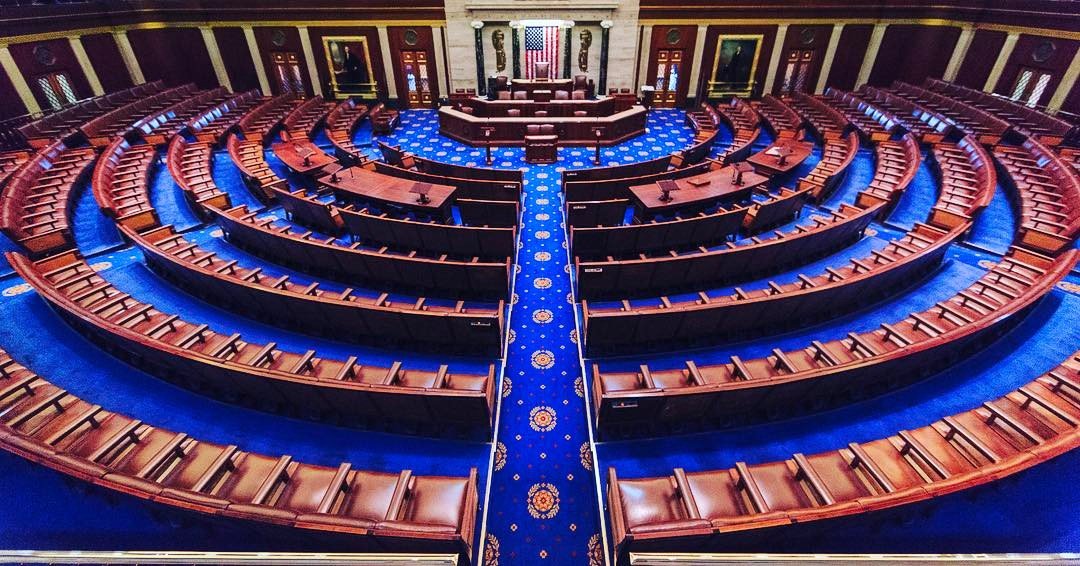
Because Vice President JD Vance casts the tie-breaking Senate vote, Democrats need 51 seats, a net gain of four, to control the Senate. In the House, Democrats need a net gain of about three seats against the 2024 results; the exact number moves with vacancies and special elections. Check the official rolls (House Clerk, Senate party division) before relying on any count.
Redistricting: Texas map stands, other Republican redraws stall Maps & redistricting
Mid-decade redistricting turned into a tug-of-war. Texas’s 2025 Republican-drawn congressional map, aimed at five extra GOP seats, was blocked by a three-judge federal panel in November 2025 but allowed by the Supreme Court for 2026, so the primaries ran on the new lines. California voters approved the Democratic-backed Proposition 50 in November 2025. Republicans in Indiana and Kansas declined to redraw, South Carolina’s state Senate blocked a new map in May, and North Carolina and Missouri did redraw, with Missouri’s plan facing lawsuits and a possible referendum.
An April 2026 Supreme Court decision in Louisiana v. Callais weakened Section 2 of the Voting Rights Act and prompted further redraws, including in Louisiana, where a hearing is set for 27 October. Reuters’ 21 October analysis, as its headline puts it, describes the Republican redistricting gambit as having faltered; Axios reporting relayed by other outlets said the expected net gain had shrunk from about 13 seats to about four. Those projections are estimates, and litigation can still change individual maps.
The longest US government shutdown, 43 days Laws & funding
A funding lapse began on 1 October 2025 and ended on 12 November, the longest shutdown on record at 43 days, when a stopgap funding bill passed. It showed how thin margins and appropriations fights can freeze Washington, and it left spending deadlines as live campaign material. See AiTimeline’s US government shutdowns timeline and the debt-ceiling standoffs timeline for earlier standoffs.
Off-year elections and California’s Proposition 50 Maps & redistricting
On 4 November 2025 Democrats won the Virginia and New Jersey governorships and California voters approved Proposition 50, which let the legislature use Democratic-drawn congressional lines through the decade’s remaining elections. Analysts read the results as an early sign of the political climate, though off-year contests are not reliable predictors of a midterm.
Texas redraws its map and the redistricting race begins Maps & redistricting
In late August 2025 Texas Republicans passed a new congressional map after Democratic legislators briefly left the state to block a vote. Trump-backed, it was meant to add up to five Republican-leaning seats and set off retaliatory and copycat moves in other states.
2025
Trump signs the One Big Beautiful Bill Act Laws & funding
Trump signed the One Big Beautiful Bill Act on 4 July 2025. It combined tax provisions with changes to federal spending programmes, and it became the centrepiece of the administration’s domestic agenda. Supporters argued it would promote growth; critics pointed to deficits and cuts to social programmes. Whether a new majority could revise it depends on Senate rules, the budget process and the presidential veto. Bill text and status are on Congress.gov.
2025
Second term begins with Republicans controlling both chambers Past midterms
Trump was inaugurated for a second term with Republicans holding the Senate at 53–47 and a narrow House majority. Unified control gave the White House a clear legislative route, though thin House margins let a handful of Republican defections stall votes.
Trump defeats Kamala Harris; Republicans win the Senate Past midterms
Trump won the 2024 presidential election and Republicans took the Senate from Democrats while holding a narrow House majority. Official certified results are published by the Federal Election Commission.
Republicans win the House; Democrats keep the Senate Past midterms
Republicans won the House by a narrow margin, about nine seats net, while Democrats retained the Senate. Divided government followed for Joe Biden’s last two years, with House Republicans leading committees and investigations.
Democrats take the House during Trump’s first term Past midterms
Democrats won the House with a net gain of roughly 41 seats while Republicans kept the Senate and added seats there. House Democrats used committee powers to investigate the administration and impeached Trump in December 2019. Historical results are tabulated by the House Office of the Historian.
Republicans win the Senate in Obama’s sixth year Past midterms
Republicans gained nine Senate seats and took control of the chamber, and added about 13 House seats, giving them both chambers for Barack Obama’s last two years. Senate control mattered most for judicial and executive confirmations.
Republicans win the House during Obama’s presidency Past midterms
Republicans gained roughly 63 House seats, while Democrats kept the Senate. The new House majority reshaped spending debates and challenged the administration’s agenda.
Democrats win both chambers in George W. Bush’s second term Past midterms
Democrats gained about 31 House seats and won the Senate, ending Republican control of Congress during the Iraq War. It is the last midterm in which one party flipped both chambers.
Republicans win the House for the first time in 40 years Past midterms
Republicans gained roughly 54 House seats and won the Senate, taking the House for the first time since 1954 under Newt Gingrich’s “Contract with America.” Midterms do not always punish the president’s party: Democrats gained House seats in 1998 and Republicans in 2002.
How Big Past Midterm Swings Were
The Seat Arithmetic
Counts as of 19 October 2026 from a public tracker; verify with the House Clerk and Senate before relying on them.
| Chamber | Now (19 Oct 2026) | Control threshold | What Democrats need |
|---|---|---|---|
| Senate | 53 R, 45 D, 2 independents (caucus with D) | 51 seats (VP breaks 50–50 ties) | Net gain of 4 |
| House | 218 R, 214 D, 1 independent, 2 vacancies | 218 of 435 (217 with two vacancies) | Net gain of about 3 against the 2024 results |
| Senate seats up | 35 incl. special elections in Florida and Ohio | About 23 are Republican-held | Republicans defend more seats |
| House seats up | All 435 | Every seat, every two years | District lines differ in Texas, California and others |
What Each Outcome Could Mean
Institutional possibilities, not predictions of the result.
| Possible result | What it could mean |
|---|---|
| Republicans keep both chambers | A direct route for the administration’s legislative priorities, though narrow margins and party disagreements can still stall bills |
| Democrats win the House | Democratic committee chairs and subpoena power increase scrutiny; legislation would need more negotiation |
| Democrats win the Senate | Confirmation votes and Senate strategy change; the president still nominates |
| Democrats win both | The first flip of both chambers since 2006; funding, taxes, nominations and oversight all become negotiated |
| Parties split the chambers | Legislation becomes hard to pass, needing both chambers and the White House |
The Story at a Glance
Dates and figures from the House Office of the Historian, USA.gov, the Federal Election Commission and the news sources listed below.
| Date | Event | Detail |
|---|---|---|
| 1994 | Republicans take the House | First time since 1954 |
| 2006 | Democrats flip both chambers | Bush second term |
| 2010 | Republicans win the House | About 63 seats |
| 2014 | Republicans win the Senate | Net gain of nine |
| 2018 | Democrats win the House | About 41 seats |
| 2022 | Republicans win the House | Democrats keep the Senate |
| 5 Nov 2024 | Trump beats Harris | Republicans win the Senate |
| 20 Jan 2025 | Second term begins | Republican Congress |
| 4 Jul 2025 | One Big Beautiful Bill Act | Tax and spending law |
| Aug 2025 | Texas redraws its map | Starts mid-decade redistricting |
| 1 Oct–12 Nov 2025 | Government shutdown | 43 days, the longest |
| 4 Nov 2025 | Off-year elections, Prop 50 | Democratic wins in Virginia and New Jersey |
| Apr 2026 | Louisiana v. Callais | Weakens Voting Rights Act Section 2 |
| 19 Oct 2026 | Tracker | Senate 53–47; House 218–214 |
| 3 Nov 2026 | Election Day | All 435 House seats; 35 Senate seats |
How the US Midterms Work
The House of Representatives. All 435 voting seats are elected every two years, so every House seat is contested in 2026.
The Senate. Senators serve six-year terms in three staggered classes, so about one-third of seats are up each cycle. In 2026 that is 33 regular seats plus special elections in Florida and Ohio.
The president. The president is not on the ballot. Impeachment and removal follow separate constitutional procedures. Official explainers are at USA.gov and the Federal Election Commission.
Why midterms test the president. Midterms fall halfway through a term, so voters can respond to the administration’s record, and the governing party usually loses ground. Results also reflect local candidates, turnout and district lines, and do not directly predict the next presidential race. For how polls have missed before, see US election polling error history.
| Term | Meaning | Why it matters here |
|---|---|---|
| Midterm election | A national election held halfway through a presidential term | Decides Congress, not the presidency |
| Divided government | Different parties control the White House and part of Congress, or the two chambers differ | Slows legislation and increases oversight |
| Mid-decade redistricting | Redrawing congressional lines outside the post-census cycle | Drove the 2025–26 map fights |
| Section 2, Voting Rights Act | Bans voting rules that deny minority voters an equal opportunity | Weakened by Louisiana v. Callais |
| Subpoena power | Committee authority to compel documents or testimony | Goes to the majority party in each chamber |
| Appropriations | Bills that fund federal agencies | Failure triggers shutdowns |
| Veto override | Two-thirds vote in both chambers to enact a bill over a veto | Rarely achieved |
| Senate confirmation | Senate approval of judges and senior officials | Changes with Senate control |
| Special election | A vote to fill a seat vacated mid-term | Florida and Ohio Senate seats in 2026 |
Why the Result Matters for Trump
1. Legislation. A Republican Congress gives the president an easier path; a Democratic chamber means negotiation or blocked bills. Executive actions can proceed without Congress but can be challenged in court.
2. Investigations. The majority controls committee chairs, hearings and subpoenas, subject to congressional rules and legal limits. Investigations yield information, not verdicts.
3. Funding. Congress must pass appropriations to keep agencies open; see the shutdown timeline.
4. Tax policy. Revisiting the 2025 law would need both chambers, Senate budget rules and the president’s signature or a veto override.
5. Confirmations. Senate control decides the pace of judicial and executive nominations.
The final-two-years effect will depend on the margin, party discipline and willingness to negotiate. For trade and foreign-policy context see US–Canada tariffs and the US–China AI rivalry.
Who Is Who in the Story
Donald Trump
Not on the ballot; term runs to January 2029.
JD Vance
Casts the tie-breaking Senate vote, which is why Democrats need 51 seats.
Mike Johnson
Republican leader of a narrow House majority.
Hakeem Jeffries
Leads House Democrats, who need about three net seats.
John Thune
Republican leader defending a 53–47 Senate.
Chuck Schumer
Leads Senate Democrats, who need a net four.
Kevin Kiley
California congressman who left the GOP in 2026 but remains in its conference.
Supreme Court
Allowed Texas’s map and decided Louisiana v. Callais.
The Popular Story vs the Record
| Popular version | What the record shows |
|---|---|
| The midterms could remove Trump | They elect Congress; removal needs impeachment and a two-thirds Senate conviction vote |
| The president’s party always loses seats | It usually does, but Democrats gained House seats in 1998 and Republicans in 2002 |
| Winning the House lets Democrats pass laws | They can block bills and investigate, but bills still need the Senate and the president’s signature |
| Redistricting guarantees extra seats | Courts, voters and turnout can undo a map’s intended effect; reported GOP gains shrank from about 13 to about four |
| Democrats need four House seats | Against the 2024 results the figure is about three, and it moves with vacancies |
| Democrats win the Senate with 50 seats | They need 51 because the Vice President casts the tie-breaking vote |
| Control will be known on election night | Close races, mail ballots and recounts can take days or weeks |
The 2026 Midterms in Numbers
| Measure | Figure | Source and caveat |
|---|---|---|
| Election date | 3 Nov 2026 | USA.gov |
| House seats up | 435 | Constitution |
| Senate seats up | 35 (incl. 2 special) | Senate; trackers |
| Senate now | 53 R, 45 D, 2 I | Tracker, 19 Oct 2026 |
| House now | 218 R, 214 D, 1 I, 2 vacant | Tracker; verify with House Clerk |
| Senate gain needed | Net 4 | VP breaks ties |
| House gain needed | About net 3 | Wikipedia; moves with vacancies |
| 2025 shutdown | 43 days | Congress |
| Redistricting gain, reported | About 13 to about 4 seats | Axios via other outlets; estimate |
Explore More Timelines
People Also Ask
Frequently Asked Questions
Related AiTimeline Stories
⚠️ Editorial Note
Last updated 22 October 2026. This page describes stakes and possible outcomes; it does not predict which party will win. Seat counts come from a public tracker dated 19 October 2026 and should be checked against the House Clerk and Senate. Reuters articles of 18–21 October could not be opened directly by AiTimeline and are cited by headline and syndicated summary. Corrections to the draft brief: Democrats need about three net House seats, not four; Democrats held, not won, the Senate in 2022; and its generic Reuters 19 October link was dropped because it could not be verified. The Axios redistricting estimate is a reported projection, not a result.
Sources & further reading
Every dated entry above was checked against these references. Last reviewed 22 October 2026.
- USA.gov: Midterm elections
- Federal Election Commission: Election results and voting information
- Clerk of the US House of Representatives
- US Senate: Party division
- House Office of the Historian: Election statistics
- Congress.gov: Legislation and records
- Wikipedia: 2026 United States House of Representatives elections
- Congress Countdown: Party breakdown of Congress (19 Oct 2026)