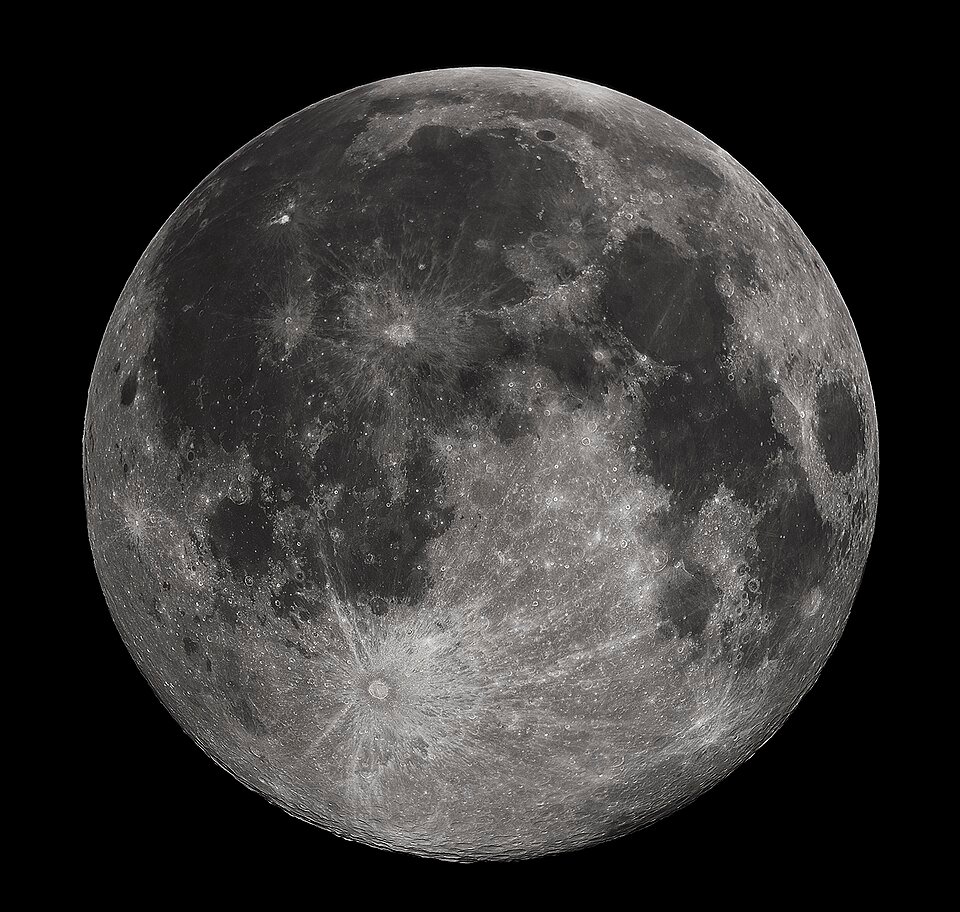
Strawberry Full Moon Timeline: History, Meaning, Astrology & Astronomy Explained
Strawberry Full Moon history timeline: June full moon meaning, Native American moon names, astronomy facts and astrology beliefs clearly separated.
Latest Story
The Strawberry Full Moon history timeline traces the June full moon from ancient sky-watching and Native American harvest naming to modern astrophotography and viral astrology. Despite its lush name, the Strawberry Moon is rarely pink — it is simply the full moon of June, named for the short strawberry-picking season in northeastern North America. This guide separates verified astronomy from cultural tradition and clearly labelled astrology, so you get the facts, the folklore and the meaning in one place.
Latest Update — October 2026
The next Strawberry Moon will reach full phase at 00:44 UTC on June 19, 2027 — 8:44 p.m. EDT on June 18 in the Americas — per JPL DE421 ephemeris data (via ForecastBar) and Star Walk. At about 401,952 km from Earth it will be a micromoon, and it is the full moon closest to the June 2027 solstice, so it will again ride low in the northern summer sky. This article has also corrected the 2026 peak time to 7:57 p.m. EDT (23:57 UTC) on June 29, 2026; some listings had shown it as 7:57 a.m.
🧠 AI Overview Summary
The Strawberry Moon is the full moon of June, named by Algonquian peoples for the ripening of wild strawberries, not for its color. Astronomically it is an ordinary full moon — the Moon opposite the Sun, fully lit — and it usually looks white, golden or orange near the horizon, never truly pink. In astrology (a belief system, not science) it is linked to harvest, gratitude and emotional reflection. It is visible worldwide and popularized by the Farmers’ Almanac.
Strawberry Full Moon: Key Questions
Strawberry Moon — What to Know
- The Strawberry Moon is the June full moon, named for the strawberry harvest, not for a pink color.
- It is a normal full moon astronomically — the Moon opposite the Sun, fully illuminated, occurring about every 29.5 days.
- The Moon can look golden, amber or red near the horizon due to atmospheric scattering, the same effect that reddens sunsets.
- The name was popularized by the Maine Farmers’ Almanac in the 1930s, drawing on Algonquian (Native American) tradition.
- European names for the June moon include the Rose Moon, Mead Moon and Honey Moon.
- Astrology ties it to gratitude, abundance and emotional reflection — belief-based meaning, not scientific fact.
- It is visible from both hemispheres, though it signals early summer in the north and early winter in the south.
- Verified astronomy, historical records, cultural traditions and astrological beliefs are clearly separated throughout this timeline.
Why It’s Called the Strawberry Moon
The name is a seasonal calendar, not a color description.
The Strawberry Moon takes its name from the ripening of wild strawberries in June across northeastern North America. For Algonquian-speaking peoples such as the Ojibwe and other tribes, the June full moon marked a brief, precious window to gather this fruit — so the moon became a natural calendar marker for the harvest.
The name spread into mainstream culture through almanacs. In the 1930s, the Maine Farmers’ Almanac began printing Native American full moon names alongside each month, and the Old Farmer’s Almanac (founded 1792) helped cement them. Europeans had their own June names — the Rose Moon, Mead Moon and Honey Moon — tied to blooming roses, honey harvesting and midsummer weddings. None of these names describe the Moon’s appearance; they describe the season on Earth.
Most Notable Strawberry Moons
Standout June full moons that captured attention for astronomy, rarity or scale.
Astronomy
Astronomy
Astronomy
Culture
Strawberry Full Moon History Timeline (Reverse Chronological)
Newest events first. Each entry separates astronomy, culture and clearly labelled astrology.
The 2026 Strawberry Moon
Historical Event: The 2026 Strawberry Moon reached peak fullness on Monday, June 29, 2026, at 7:57 p.m. EDT (23:57 UTC; 12:57 a.m. June 30 in the UK), per Star Walk and Live Science, closing out a month of clear-sky viewing and social sharing.
Astronomical Significance: A standard full moon — Earth sits between the Sun and Moon, so the Moon’s near side is fully lit. It was the first full moon of summer in the Northern Hemisphere, hung lower in the sky than any other full moon of 2026, and was the year’s second-smallest full moon — a combination that deepened its golden-amber color near the horizon.
Astrological Interpretation (belief-based): Astrologers framed a late-June full moon in Capricorn as a time for discipline, closure and long-term goals. This is spiritual interpretation, not scientific fact.
Cultural Importance: Almanacs, museums and news outlets again ran Strawberry Moon guides, and communities held moon-viewing meetups and photo walks.
Scientific Context: No special equipment is needed — the full moon is bright enough to see with the naked eye, though binoculars reveal maria and craters near the terminator.
Why It Matters Today: Annual Strawberry Moon coverage is now a reliable on-ramp for public interest in astronomy and sky-watching.
The Lowest Strawberry Moon in Decades
Historical Event: The June 11, 2025 Strawberry Moon was one of the lowest-hanging full moons in years, coinciding with a major lunar standstill.
Astronomical Significance: During a major lunar standstill, the Moon’s tilted orbit reaches its extremes, so the June full moon traced an unusually low path across the sky — its lowest in roughly 18 years.
Astrological Interpretation (belief-based): Astrologers linked the Sagittarius full moon to truth-seeking, optimism and release. These are cultural readings, not scientific claims.
Cultural Importance: The low, amber moon produced striking photos worldwide and drove a surge of “why is the moon so low?” searches.
Scientific Context: A low moon shines through more atmosphere, which scatters blue light and lends a stronger orange or red tint — pure physics, not a color change in the Moon itself.
Why It Matters Today: It showcased how orbital geometry, not folklore, drives the Moon’s dramatic horizon colors.
The Social-Media Astrophotography Boom
Historical Event: Smartphone cameras and social platforms turned each Strawberry Moon into a viral event, with millions sharing photos every June.
Astronomical Significance: The 2021 Strawberry Moon (June 24) was a supermoon, appearing slightly larger and brighter because the full phase fell near perigee, the Moon’s closest point to Earth.
Astrological Interpretation (belief-based): Astrology and “manifestation” content exploded online, tying full moons to rituals and intentions. This is spiritual practice, not evidence-based science.
Cultural Importance: Search interest in “Strawberry Moon” spiked each June, and news outlets standardized annual explainer coverage.
Scientific Context: A supermoon looks only marginally bigger — the difference is hard to notice by eye, and the famous “huge moon on the horizon” is mostly the Moon illusion.
Why It Matters Today: The boom made lunar phases a mainstream cultural touchpoint and a gateway to real astronomy.
Strawberry Moon Meets the Summer Solstice
Historical Event: The 2016 Strawberry Moon fell on the June summer solstice — a pairing that had not happened since about 1967.
Astronomical Significance: The solstice marks the Sun’s highest path, so the opposing full moon rode especially low, glowing warm amber for much of the night.
Astrological Interpretation (belief-based): The solstice-plus-full-moon combination was widely read as a potent moment for renewal and intention-setting. This is belief, not science.
Cultural Importance: The rare alignment drew huge media coverage and public viewing, boosting global name recognition of the “Strawberry Moon.”
Scientific Context: Solstice and full moon follow independent cycles, so their overlap is a coincidence of timing, not a physical interaction.
Why It Matters Today: It is a textbook example of how a well-timed coincidence can turn a routine full moon into a global talking point.
The Space Age Reframes the Moon
Historical Event: The Soviet Luna probes (from 1959) and NASA’s Apollo 11 landing (1969) transformed the Moon from a folklore symbol into a place humans could study and visit.
Astronomical Significance: Missions mapped the lunar surface, returned samples and confirmed the Moon is airless, cratered rock — the same body that appears full each June.
Astrological Interpretation (belief-based): Even as science advanced, astrology continued to assign the Moon emotional and symbolic meaning. These readings remain cultural, not scientific.
Cultural Importance: The Moon landing reshaped humanity’s relationship with the night sky, blending ancient wonder with modern exploration.
Scientific Context: We now know the full moon is simply the near side fully lit by sunlight — no glow of its own, and no color tied to strawberries.
Why It Matters Today: Lunar science underpins today’s return-to-the-Moon programs, even as traditional moon names endure.
The Maine Farmers’ Almanac Names the Moons
Historical Event: In the 1930s, the Maine Farmers’ Almanac began publishing Native American full moon names for each month, including the Strawberry Moon for June.
Astronomical Significance: The almanac tied each name to a specific lunar month, helping the public track full moons across the year.
Astrological Interpretation (belief-based): Almanacs mixed practical astronomy with older astrological and weather lore, though the moon names themselves are seasonal, not astrological.
Cultural Importance: This is the moment “Strawberry Moon” entered mainstream American vocabulary and, eventually, global media.
Scientific Context: The names are a cultural calendar layered over the real 29.5-day synodic cycle of lunar phases.
Why It Matters Today: Nearly every modern “full moon names” article traces back to these almanac listings.
The Old Farmer’s Almanac Spreads Moon Lore
Historical Event: Robert B. Thomas founded the Old Farmer’s Almanac in 1792, spreading moon phase calendars, planting guides and seasonal lore to a wide readership.
Astronomical Significance: Almanacs provided accurate full moon dates and phases, a practical astronomy tool for farmers before mass media.
Astrological Interpretation (belief-based): Early almanacs also carried astrological planting advice, blending observation with tradition — a mix modern readers should treat with care.
Cultural Importance: The almanac helped standardize how English-speaking communities named and tracked the year’s full moons.
Scientific Context: Full moon predictions rely on the well-understood, highly regular motion of the Moon around Earth.
Why It Matters Today: The Old Farmer’s Almanac still publishes full moon names and remains a widely cited popular source.
Galileo Turns a Telescope on the Moon
Historical Event: In 1610, Galileo Galilei published Sidereus Nuncius, sharing the first detailed telescopic observations of the Moon’s mountains and craters.
Astronomical Significance: Galileo showed the Moon was a rugged world, not a smooth celestial orb, helping overturn ancient ideas about the heavens.
Astrological Interpretation (belief-based): In Galileo’s era, astronomy and astrology were still intertwined; only later did science fully separate measurable astronomy from symbolic astrology.
Cultural Importance: His work marked a turning point toward evidence-based study of the sky, including the Moon we call the Strawberry Moon each June.
Scientific Context: Telescopes confirmed that lunar phases, including the full moon, are simply changing angles of sunlight on a solid sphere.
Why It Matters Today: Every modern Strawberry Moon photo builds on the telescopic tradition Galileo began.
Ancient Sky-Watching & Native Naming
Historical Event: Long before almanacs, cultures worldwide tracked the Moon — Algonquian peoples named the June moon for strawberries, while Europeans called it the Rose or Mead Moon.
Astronomical Significance: Ancient civilizations, from Babylonians to builders of stone circles, used full moons to structure lunar calendars and mark the seasons.
Astrological Interpretation (belief-based): Many early cultures assigned the Moon divine or symbolic power; these are historical belief systems, distinct from today’s astronomy.
Cultural Importance: The Strawberry Moon’s name is a living link to Indigenous seasonal knowledge and European folklore alike.
Scientific Context: The same predictable lunar cycle these cultures observed still governs the full moon we see each June.
Why It Matters Today: These traditions gave us the poetic moon names that keep drawing new generations to look up.

The Space Age turned the Moon from a folklore symbol into a place humans could study and visit — even as ancient moon names endure.
The Astronomy of a Full Moon
Verified science: what a full moon is and why the Moon changes appearance.
What is a full moon? A full moon is the lunar phase when the Moon’s Earth-facing side is completely lit by the Sun. It happens when Earth lies roughly between the Sun and Moon, so we see the whole near side glowing.
Why does a full moon occur? The Moon does not produce light — it reflects sunlight. As it orbits Earth, the angle between Sun, Earth and Moon changes, cycling through phases. Full moon is the point of opposition, when that angle is near 180 degrees.
The Moon’s orbit: The Moon circles Earth about every 27.3 days relative to the stars, but the full-moon-to-full-moon (synodic) cycle is about 29.5 days, because Earth is also moving around the Sun. That is why full moons drift about 11 days earlier each year on our calendar.
Moon phases: The eight phases run new, waxing crescent, first quarter, waxing gibbous, full, waning gibbous, last quarter and waning crescent — a continuous cycle driven purely by geometry.
Why the Moon looks bigger near the horizon: This is the Moon illusion, a trick of human perception. The Moon is not actually larger — measurements show it is the same size low or high; our brains just judge it bigger against foreground objects.
Why the Strawberry Moon can look golden or orange: When the Moon is low, its light passes through more of Earth’s atmosphere, which scatters shorter blue wavelengths and lets longer red and orange light through. This Rayleigh scattering — the same physics that reddens sunsets — is why a low June moon often glows warm, and why it is never truly pink.
The Astrology of the Strawberry Moon
Cultural belief, clearly labelled.
Common zodiac association: In astrology, the June full moon usually falls in Sagittarius (opposite the Sun in Gemini), and in Capricorn when it occurs in late June. Believers read Sagittarius moons as expansive and truth-seeking, and Capricorn moons as disciplined and goal-focused.
Traditional symbolic meanings: The Strawberry Moon is popularly linked to abundance, harvest, sweetness and gratitude, echoing its agricultural origins.
Reflection themes: It is often treated as a moment to pause mid-year, take stock and set intentions — a cultural ritual of reflection rather than a scientific prompt.
Emotional symbolism: Because the Moon has long symbolized emotion in folklore, full moons are associated with heightened feelings and “release.” No scientific study has confirmed a lunar effect on human mood or behavior.
Popular rituals (as cultural practice): Common practices include journaling, gratitude lists, charging crystals or simply moon-viewing gatherings. These are best understood as meaningful cultural rituals, not evidence-based methods.
Cultural History Around the World
How different peoples named and celebrated the June full moon.
Native American traditions: Algonquian-speaking peoples named June’s moon for the strawberry harvest; others used names like the Blooming Moon, Green Corn Moon or Hoer Moon, reflecting local ecology and farming.
European folklore: In Europe the June moon was the Rose Moon (blooming roses), the Mead Moon or Honey Moon (honey gathering and midsummer weddings), and sometimes the Hot Moon as summer began.
Farmers’ Almanac naming: American almanacs compiled and popularized these names in print, making “Strawberry Moon” the dominant English label for the June full moon.
Harvest traditions: Across cultures, full moons marked planting, harvesting and festival timing — practical uses of a reliable natural clock.
Global full moon celebrations: Full moons anchor major festivals worldwide, from Buddhist observances such as Poson in Sri Lanka (which falls in June) to harvest and lantern festivals elsewhere, showing how deeply lunar cycles are woven into human culture.
Key Entities Explained
The people, bodies and terms behind the Strawberry Moon story.
Farmers’ Almanac
American almanacs — the Maine Farmers’ Almanac and the Old Farmer’s Almanac (founded 1792) — popularized Native American full moon names, including the Strawberry Moon, and still publish moon calendars cited by media every June.
NASA
NASA studies the Moon through missions, imagery and public education. Its data explains lunar phases, supermoons and why the Moon looks colored near the horizon, and it is a leading authoritative source for full moon science.
The Moon
Earth’s only natural satellite, about 384,400 km away, is a solid, airless, cratered world that shines by reflecting sunlight. The “Strawberry Moon” is simply this same Moon at its full phase in June.
Lunar Phase
A lunar phase is the shape of the Moon’s sunlit portion as seen from Earth. The full moon is one of eight phases in the roughly 29.5-day synodic cycle, driven entirely by Sun–Earth–Moon geometry.
June Full Moon
The June full moon is the astronomical event behind the Strawberry Moon. It signals early summer in the Northern Hemisphere and early winter in the Southern Hemisphere, and is visible worldwide.
Rayleigh Scattering
The scattering of shorter blue wavelengths by air molecules. It reddens the low Strawberry Moon and sunsets alike, and is the real, verified reason a June moon can glow golden or orange — not any pink coloring.
Science vs Belief: A Clear Comparison
Separating verified astronomy from tradition and astrology.
| Question | Scientific Explanation | Traditional Belief | Astrological Interpretation |
|---|---|---|---|
| Why “Strawberry”? | Named for June strawberry harvest season | Marks time to gather wild strawberries | Symbol of sweetness and abundance |
| Is it pink? | No; scattering can make it golden/orange | Color linked to the fruit, not the sky | Pink read as love and gentleness (belief) |
| What is it? | Ordinary full moon (lunar opposition) | A seasonal calendar marker | An emotional, reflective turning point |
| Effect on people? | No proven effect on mood or behavior | Time for harvest and celebration | Heightened emotion and release (belief) |
| Historical origin | Regular 29.5-day lunar cycle | Algonquian and European folklore | Zodiac placement (Sagittarius/Capricorn) |
Moon Photography Tips
A genuine, practical guide to shooting the Strawberry Moon.
- Shoot near moonrise: Photograph as the Moon clears the horizon, when it looks largest and glows warm gold, and you can include landscape or landmarks for scale.
- Use a tripod: Steady your camera or phone on a tripod to avoid blur, since you will use precise focus and controlled exposure.
- Turn off auto and lower exposure: The full moon is bright; use manual mode, a low ISO and a faster shutter so detail and craters are not blown out to a white disc.
- Zoom or use a telephoto: A long lens (200mm+) or a phone with strong optical zoom captures surface detail; avoid heavy digital zoom, which adds noise.
- Focus manually to infinity: Tap-to-focus on the Moon or set manual focus to sharpest, then lock it so autofocus does not hunt.
- Include a foreground: Trees, buildings or hills add depth and emphasize the low June moon; scout your location and direction in advance.
Discover: Amazing Moon Facts & Tips
- Not pink: The Strawberry Moon is named for a harvest, not a color — it usually looks white, gold or amber.
- Historic observation: Galileo’s 1610 telescope sketches of the Moon still match features we identify today.
- Photography tip: The warmest, most photogenic moment is the first 20–30 minutes after moonrise.
- Cultural tradition: June’s Honey and Mead Moons connect to midsummer weddings and the word “honeymoon.”
- Astronomy highlight: The 2025 Strawberry Moon rode its lowest in ~18 years due to a major lunar standstill.
- Global reach: The June full moon is visible from both hemispheres on the same night.
Explore More Timelines
People Also Ask
Strawberry Moon FAQ
Forty of the most-searched questions about the June full moon, its meaning, astronomy and folklore.
Explore More Timelines
⚠️ Editorial Note & Sources
This article clearly separates verified astronomical facts (lunar phases, orbital distances, atmospheric scattering) from historical records (almanac publishing, Galileo, the Space Age), cultural traditions (Native American and European moon names) and astrological interpretations. Astrology is included only to explain popular meaning and is not presented as scientific evidence. Astronomy details align with mainstream sources such as NASA and major almanacs; exact full moon dates and times vary by year and location, so verify with a current calendar. This content is editorial and AI-assisted, compiled from publicly available sources.
Sources & further reading
Every dated entry above was checked against these references. Last reviewed 18 October 2026.