Trump Rejected Iran’s Seven-Day Hormuz Plan. How Did One Strait Become the Bargaining Chip?
Trump rejected Iran's seven-day plan to reopen the Strait of Hormuz on 26 Sep 2026. See the terms, why he said no, and the 1984-2026 history behind it.
Latest Story
On Saturday 26 September 2026, Donald Trump told reporters at the White House that Iran’s latest offer “would not be acceptable”. “I reject their proposal,” he said. The plan, set out by Foreign Minister Abbas Araghchi at the UN General Assembly a day earlier, promised to reopen the Strait of Hormuz and restart talks within seven days if Washington lifted its naval blockade, waived oil sanctions, released frozen funds and agreed to a ceasefire on every front. The dispute is not about whether Hormuz should reopen. Both sides say they want that. It is about who sets the terms, and it is the latest chapter in a forty-year contest over a channel that carried 20.9 million barrels of oil a day in the first half of 2025. This page explains the proposal, the rejection and the history behind it, and separates what is confirmed from what is only claimed.
💡 Short Answer
Trump rejected Iran’s 25 September 2026 proposal because it asked the United States to lift its naval blockade, waive oil sanctions and release frozen funds before Iran reopened the Strait of Hormuz, with nuclear talks left for later. Trump said Iran wanted a quick deal only because it was “losing so badly”, and Washington wants the nuclear issue settled up front. He still said he expected more indirect talks, through Qatar, the following week.
Trump, Iran and Hormuz: Key Questions
The Hormuz Standoff in Ten Lines
- The chokepoint: In the first half of 2025, 20.9 million barrels of oil a day passed through Hormuz, about a fifth of world consumption, per the US EIA.
- The old pattern: In the 1980s Tanker War, Iran pressured shipping and the US Navy escorted tankers, then fought Iran’s navy in Operation Praying Mantis in April 1988.
- The war: The US and Israel attacked Iran on 28 February 2026. On 2 March the Revolutionary Guards declared the strait closed.
- The blockade: After talks in Islamabad failed, the US blockaded Iranian ports from 13 April 2026.
- The deal that failed: A memorandum signed on 17 June lifted the blockade. It collapsed within weeks, and Trump declared the ceasefire “over” on 8 July.
- The second blockade: Trump announced it on 13 July, with a 20% charge on Hormuz cargo he later dropped. CENTCOM reinstated it on 14 July.
- The offer: After mediated talks at the UN, Iran proposed on 25 September to reopen Hormuz within seven days in exchange for US concessions.
- The rejection: Trump said on 26 September, “I reject their proposal”, and posted an image relabelling the waterway “Trump Strait”.
- The door left open: On 27 September he said he expected more talks: “They want to make a deal, but it is not the deal that I want to make.”
- The real question: Not whether Hormuz reopens, but in what order the concessions come, and who controls passage while they do.
25 September: What Iran Actually Offered
A seven-day sequence, submitted through Qatar.
Iran’s plan came out of the first substantial US–Iran contact in months. On 22–23 September, on the sidelines of the UN General Assembly in New York, US envoys Steve Witkoff and Jared Kushner held indirect talks with Araghchi, with mediators carrying messages between rooms. Trump later described it as a three-hour meeting. Witkoff called the talks “promising” and “constructive”.
On Friday 25 September Araghchi made the terms public. Iran said the US steps could be completed in four to five days, allowing the strait to reopen and negotiations to begin by day seven. Iran formally submitted the roadmap through Qatar the same day. The sequence closely resembles the 17 June memorandum, on a faster clock. Araghchi also pitched a quick deal as helpful to Trump before November’s US midterm elections.
| What Iran asked the US to do | What Iran offered in return |
|---|---|
| End the naval blockade of Iranian ports | Reopen the Strait of Hormuz to normal passage |
| Waive sanctions on Iranian oil sales | Restart negotiations, including on the nuclear programme |
| Release frozen Iranian assets (reported at about $12 billion) | Complete the sequence within seven days |
| A ceasefire on all fronts, including Lebanon and Yemen | President Pezeshkian later told CBS Iran would admit UN nuclear inspectors under a longer ceasefire |
26–27 September: Why Trump Said No
He rejected the terms, not the idea of a reopened strait.
Speaking to reporters on 26 September, Trump said: “They want to make a deal, and I think that’s fine. I’d like to make a deal, too.” But the Iranian plan “would not be acceptable”. “I reject their proposal.” Iran, he said, wanted to open the strait immediately only “because they’re losing so badly”. An administration official added that the US was “not in a rush”.
Four reasons stand out in the public record:
The four sticking points
- Sequence. Iran’s plan front-loads US concessions and pushes the nuclear question into later talks. The White House said on 25 September that there had been no breakthrough and that it wanted the nuclear issue dealt with up front.
- Leverage. The Wall Street Journal reported on 7 September that the blockade had halted new Iranian oil exports from the Gulf. Washington believes time is on its side; Iran’s offer asked it to give that up first.
- History. A similar sequence, the 17 June memorandum, lifted the first blockade and collapsed within three weeks. Trump told Axios the new offer is “what we would have maybe agreed to a year ago” and that Tehran had “overplayed their hand”.
- Control. The US position is that Hormuz is an international waterway that Iran does not control. Accepting Iranian conditions for “reopening” it would concede the point.
Iran’s reply was firm but not final. Araghchi said Iran “will not back down” on its conditions and was waiting for “the definitive opinions to be conveyed to us by the mediators”. He added that “Iran does not accept coercion, threats, or intimidation”. President Masoud Pezeshkian told Al Jazeera that Tehran had “no trust in the American side”. On 27 September Araghchi told state broadcaster IRIB that “any move toward reopening the Strait of Hormuz is contingent upon these conditions being fulfilled.”
Then, the same day, Trump signalled the door was still open. In a phone interview with Axios he said he expected more talks that week: “They want to make a deal, but it is not the deal that I want to make.” Qatari mediators arranged separate meetings with Araghchi and Witkoff for 28 September. The Wall Street Journal separately reported that Trump expected renewed bombing of Iran after the midterms if no deal was reached. That is a report of his expectations, not an announced decision.
The “Trump Strait” Post
A social-media label, not a renaming.
As he rejected the plan, Trump posted an image on Truth Social showing the waterway relabelled “Trump Strait”, reported by NBC News, AP and CNN. It was a political message about who holds the upper hand, not a formal act. Geographic names at sea are not changed by a post, and no government, the UN or the International Hydrographic Organization has adopted the label.
Why This Waterway Matters So Much
The narrowest point is about 34 km wide. The numbers passing through it are global.
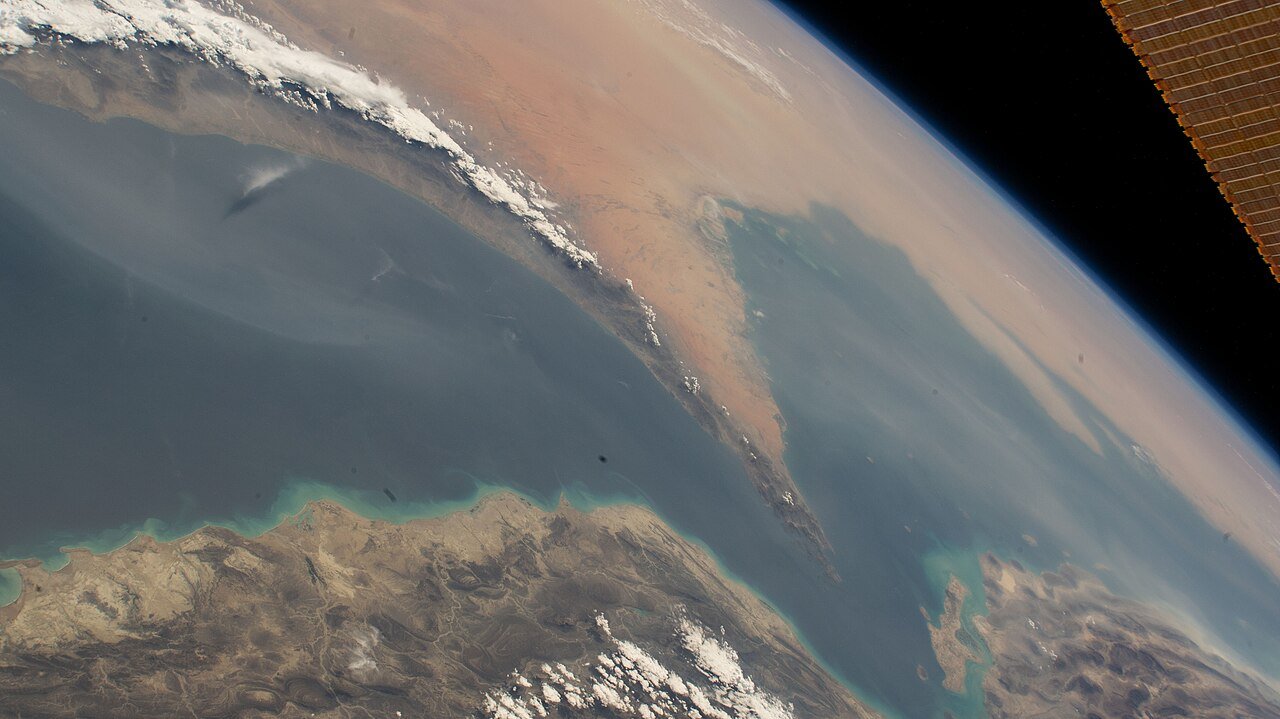
The strait joins the Persian Gulf to the Gulf of Oman and the Arabian Sea. Iran lies to the north; Oman’s Musandam exclave and the UAE to the south. At its narrowest it is about 21 miles (34 km) wide, and the inbound and outbound shipping lanes are each only a couple of miles across. Saudi Arabia, Iraq, Kuwait, the UAE, Qatar and Iran itself all ship oil or gas through it.
| Measure (first half of 2025) | Figure | Source |
|---|---|---|
| Total oil flows | 20.9 million b/d | EIA |
| Share of global petroleum liquids consumption | About 20% | EIA |
| Share of global maritime oil trade | About one-quarter | EIA |
| LNG flows | 11.4 Bcf/d, over 20% of global LNG trade | EIA |
| Crude and condensate going to Asia | 89% | EIA |
| China, India, Japan and South Korea combined | 74% of Hormuz crude flows | EIA |
| Saudi and UAE bypass pipeline capacity | About 4.7 million b/d | EIA |
Schematic, not to scale. Dashed lines are the two bypass pipelines; together they can carry about 4.7 million b/d, less than a quarter of normal Hormuz flows.
That last number is the whole problem. Saudi Arabia’s East-West Pipeline to Yanbu on the Red Sea and the UAE’s Habshan–Fujairah line can move some oil around the strait. Kuwait, Qatar, Bahrain and Iraq’s southern fields have no comparable route. Qatar’s LNG, a fifth of world trade, has none at all. Hormuz is not irreplaceable, but it cannot be replaced at full scale.
1984–1988: The Tanker War Sets the Pattern
Iran pressures shipping, the US Navy escorts it, and the world watches the oil price.
The modern US–Iran contest over Hormuz began inside another war. During the Iran–Iraq War (1980–1988), Iraq started attacking tankers serving Iranian ports in 1984. Iran answered by hitting ships trading with Iraq’s Gulf backers, above all Kuwait. More than 400 commercial vessels were attacked over the course of what became known as the Tanker War.
Kuwait asked for protection. In July 1987 the United States began Operation Earnest Will, re-registering Kuwaiti tankers under the American flag and escorting them through the Gulf. It was the largest naval convoy operation since the Second World War. On the first convoy, the reflagged supertanker Bridgeton struck an Iranian mine.
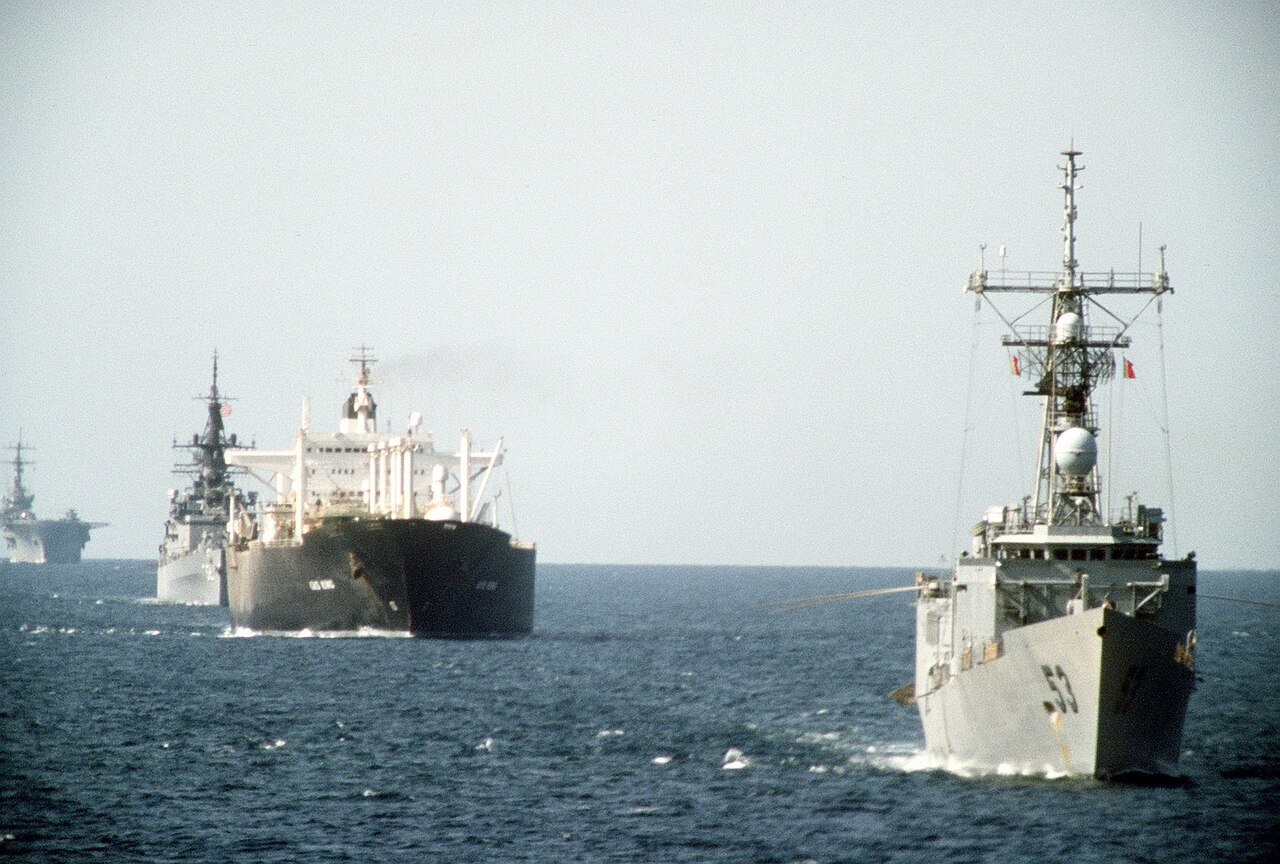
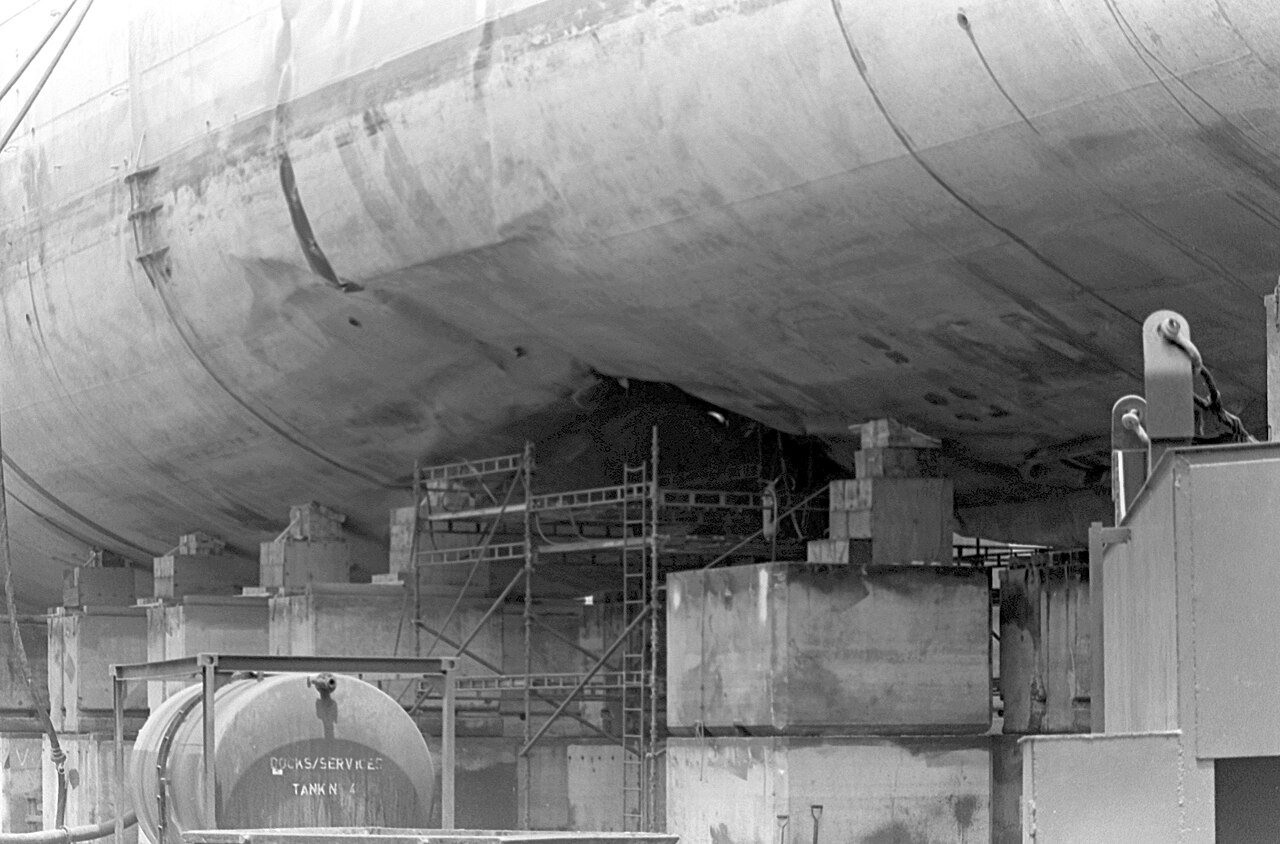
On 14 April 1988 the frigate USS Samuel B. Roberts hit an Iranian mine and nearly sank. Four days later, on 18 April, the US launched Operation Praying Mantis, destroying two Iranian oil platforms and sinking or disabling several Iranian warships, including the frigate Sahand. It was the largest US naval surface battle since 1945. On 3 July 1988, the cruiser USS Vincennes shot down Iran Air Flight 655 over the strait, killing all 290 people on board, an event that still shapes Iranian views of the US Navy in these waters.
1988 vs 2026: The Same Strait, a Different Scale
2008–2024: A Strait of Near-Misses
Small incidents, big consequences for insurance and oil prices.
For three decades after 1988 the strait stayed open, but every crisis between Washington and Tehran ran through it. In January 2008, Iranian Revolutionary Guard speedboats swarmed three US warships in the strait. In December 2011, as the US and EU prepared oil sanctions, Iranian officials threatened to close Hormuz altogether; they did not.
In 2019, after the US left the nuclear deal and pushed Iran’s oil exports towards zero, four ships were sabotaged off Fujairah in May and two tankers were attacked in the Gulf of Oman in June. The US blamed Iran, which denied it. Iran shot down a US Global Hawk drone on 20 June and seized the British-flagged Stena Impero in the strait on 19 July. In 2023 Iran seized the tankers Advantage Sweet and Niovi, and on 5 July tried to seize two more, TRF Moss and Richmond Voyager, before the US Navy intervened; Iran said it had a court order in the Richmond Voyager case. In April 2024 commandos took the container ship MSC Aries near the strait.
The lesson each time was the same. A ship does not have to sink for Hormuz to become a crisis. The perception of risk moves insurance premiums, shipping decisions and prices on its own.
February–June 2026: War, Closure and the First Deal
The threat of four decades becomes real.
On 28 February 2026 the United States and Israel launched strikes on Iranian military, nuclear and leadership targets. Iran retaliated against Israel and across the Gulf. On 2 March the Revolutionary Guards confirmed the strait was closed and threatened any ship that tried to cross. Brent crude passed $100 a barrel on 8 March and peaked near $126. On 26 March Araghchi announced that ships flagged to China, Russia, India, Iraq and Pakistan could transit, a carve-out that set the crisis’s shape: near-total disruption for most, selective passage for a few.
A two-week ceasefire was agreed on 7–8 April. Face-to-face talks in Islamabad on 11–12 April failed, and on 13 April the US Navy began blockading Iranian ports. On 17 April, during a Lebanon truce, Iran declared the strait “completely open”. The next day it closed it again, because the US would not lift the blockade. On 21 April Trump extended the ceasefire until talks were “concluded, one way or the other”, while keeping the blockade in place.
On 3 May Trump announced that the US would “guide” stranded ships out of the Gulf, calling it a “humanitarian gesture”. Project Freedom began on 4 May and was paused on 6 May, with Trump citing “great progress” towards a deal. On 14 June both sides announced an agreement, and on 17 June Trump, at the G7 summit, and Pezeshkian, in Tehran, signed a memorandum of understanding. CENTCOM lifted the blockade on 18 June and the strait reopened, with nuclear questions left to a 60-day follow-on negotiation.
July–August 2026: The Deal Unravels
From “open” to “closed” to a fee on every cargo.
The memorandum did not hold. Iran closed the strait again on 20 June, citing Israeli violations of the Lebanon ceasefire, and on 27 June a Western maritime information centre announced a widened route near Oman to challenge Iran’s control. In early July Iran warned tankers to use Iranian-approved routes. After Iran struck commercial ships, the US hit Iranian military targets on 7 July. On 8 July, at the NATO summit in Turkey, Trump declared the ceasefire “over”, while letting Witkoff and Kushner keep talking.
On 12 July Iran said the strait was closed until further notice after striking a vessel on an unapproved route. CENTCOM answered that “the Strait of Hormuz is open to all vessels seeking to lawfully transit” and that “Iran does not control the strait.” On 13 July Trump announced the blockade would return and that the US would charge fees “at the rate of 20% on all cargo shipped” through Hormuz. The UN’s International Maritime Organization opposed transit fees. The blockade was reinstated on 14 July; the 20% fee was later dropped in favour of trade and investment deals with Gulf states.
August was a month of pressure rather than talks. On 8 August Iran issued a six-point list of demands for reopening. On 25 August US officials confirmed mine-clearing in the shipping lanes. By early September, the Wall Street Journal reported, the blockade had halted new Iranian oil exports from the Gulf, and Brent climbed back above $100.
September 2026: Diplomacy Returns to New York
Mediated talks, an offer, a rejection and a new round.
Around 21 September, CENTCOMBy mid-September, CENTCOM’s commander said#8217;s commander, Adm. Brad Cooper, said Hormuz shipments had reached a six-month high after mines were cleared, though most routine traffic still stayed away. Meeting Araghchi in Beijing on 16 September, China urged both sides to “rebuild the negotiation mechanism”. The UN General Assembly gave them the venue: indirect talks on 22–23 September, Iran’s offer on 25 September, Trump’s rejection on 26 September and his prediction of more talks on 27 September. On 27 September the Revolutionary Guards also claimed to have captured a second US underwater drone; CENTCOM denied it, calling the claim “clearly desperate”.
The “Open Strait” Problem
Why Washington and Tehran can both be telling the truth, and neither be describing normal shipping.
In 2026 the word “open” has been used for at least five different situations. The US says Hormuz is open because international law gives ships the right of transit and the US Navy will defend it. Iran says it is closed because Iran will attack or turn back ships that do not coordinate with it. Shipowners decide on insurance and crew safety, not on either statement.
Normal
Ships transit routinely. The state before 28 February 2026.
Restricted
Ships can pass but face checks, routing rules or delays. Iran’s carve-out for five flags since 26 March, and its September “restricted zone”.
High risk
Navigable, but insurers and owners stay away. Much of 2026, even when mines were cleared and CENTCOM declared the strait open.
Effectively closed
Normal commercial traffic largely stops. March 2026, when flows fell to a small fraction of normal.
Blockaded
A navy controls access. The US blockade of Iranian ports, 13 April–18 June and again from 14 July 2026.
🌊 The Hormuz Pressure Test
Can you keep the oil flowing without triggering a wider war?
Set the four dials
Choose a setting for each factor and see how the rough risk picture shifts. This is a teaching model built from the patterns of 1987–88 and 2026, not a forecast of what will happen.
Closed shipping with medium spare supply, a heavy naval presence and stalled talks: close to the picture in late September 2026.
Why India and Asia Care Most
Most Hormuz oil sails east.
According to the EIA, 89% of the crude and condensate that crossed Hormuz in the first half of 2025 went to Asian markets, and China, India, Japan and South Korea took 74% between them. For India, which imports most of its crude and much of its LNG from Gulf producers, a disrupted strait feeds through to petrol and diesel prices, fertiliser and petrochemical costs, shipping rates and inflation.
India has been both exposed and partly protected. Indian seafarers were among those killed in attacks on ships in March 2026, and on 13 May the Indian-flagged cargo ship Haji Ali sank off Oman after being struck. But Indian-flagged vessels were among the five flags Iran allowed through from 26 March. That carve-out keeps some Indian cargoes moving, and it gives New Delhi a stake in any deal that decides who gets to pass. For the wider picture, see our timeline of how the Iran war hit India’s economy.
Claimed vs Confirmed: What We Actually Know
As of 28 September 2026.
| Statement | Status | Basis |
|---|---|---|
| Trump rejected Iran’s seven-day proposal | Confirmed | On camera, 26 Sep; Al Jazeera, CNN, NPR |
| Iran offered to reopen Hormuz within seven days | Confirmed | Araghchi at the UN, 25 Sep |
| Frozen assets in the offer total about $12 billion | Reported | Al Jazeera, France 24; full text unpublished |
| US and Iranian officials met for three hours | Trump’s account | Talks were mediated; whether any direct meeting took place is disputed |
| “Trump Strait” is the waterway’s new name | No | A label in a social-media image |
| More talks via Qatar from 28 September | Confirmed as planned | Axios, 27 Sep; outcome not yet known |
| Iran captured a second US underwater drone | IRGC claim | CENTCOM denies it |
| Trump expects bombing to resume after the midterms | Reported | Wall Street Journal, 26 Sep; not announced policy |
What Is Still Unknown
The questions the next round has to answer.
Open questions
- Whether Qatar’s mediators can find an order of concessions both sides accept, such as partial blockade relief matched to verifiable nuclear steps.
- Whether the US has sent a formal written response. Iran said on 26 September that it had not received one.
- How Pezeshkian’s offer to admit UN inspectors fits into any new proposal.
- Whether Lebanon and Yemen stay inside the ceasefire Iran is demanding.
- How much traffic actually moves through the strait day to day, which neither side publishes in full.
Key Players
Donald Trump
Rejected the seven-day plan on 26 September and said he expects more talks.
Abbas Araghchi
Foreign minister. Presented the roadmap at the UN and insists its conditions stand.
Masoud Pezeshkian
President. Signed the June memorandum; now says Tehran has no trust in Washington.
Steve Witkoff & Jared Kushner
Envoys who held the mediated UN talks with Araghchi.
Qatar
Received Iran’s formal proposal and runs the shuttle diplomacy. Pakistan hosted the April talks.
US Central Command
Runs the blockade and insists the strait is open to lawful transit.
Trump, Iran and Hormuz: Full Timeline
Newest first.
Qatar sets up a new round
Separate meetings planned with Araghchi and Witkoff. Iran says it is open to diplomacy but keeps its conditions.
Trump: “Not the deal that I want”
Trump expects more talks that week and says Iran “overplayed their hand”. Araghchi tells IRIB any reopening is contingent on Iran’s conditions.
“I reject their proposal”
Trump says Iran wants a deal only because it is “losing so badly” and posts a “Trump Strait” image. Araghchi says Iran “will not back down”.
Iran’s seven-day roadmap
Reopen Hormuz and restart talks within seven days if the US lifts the blockade, waives oil sanctions, frees assets and accepts a regional ceasefire. Submitted through Qatar.
Mediated talks in New York
First significant US–Iran contact in months, through mediators. Witkoff calls it “promising, constructive”.
Blockade halts new Iranian oil exports
The squeeze that shapes Iran’s later offer. Brent returns above $100 a barrel on 9 September.
Iran’s six-point demand list
Iran sets out its conditions for reopening, the forerunner of the September roadmap.
Blockade reinstated
Trump announces the return of the blockade and a 20% charge on Hormuz cargo, later dropped. CENTCOM reinstates the blockade on 14 July.
“Closed” vs “open”
Iran declares the strait closed until further notice; CENTCOM says it is open and “Iran does not control the strait”.
Trump declares the ceasefire “over”
After Iranian strikes on ships and US retaliation on 7 July. Envoys are allowed to keep talking.
Iran closes the strait again
Three days after the memorandum, citing Israeli violations of the Lebanon ceasefire.
Memorandum of understanding signed
Ends the first blockade (lifted 18 June) and reopens the strait, with a 60-day window for nuclear talks.
Project Freedom
Trump announces the US will “guide” stranded ships out. Launched 4 May, paused 6 May.
Ceasefire extended indefinitely
Until talks are “concluded, one way or the other”. The blockade stays.
Open for a day
Iran declares the strait “completely open”, then closes it again because the US blockade remains.
First US blockade of Iranian ports
Talks in Islamabad fail; the blockade starts on 13 April.
Two-week ceasefire
The first pause in the fighting, with Hormuz reopening part of the deal on paper.
The Revolutionary Guards close Hormuz
Ships are threatened; Brent peaks near $126. From 26 March, five flags including India’s may pass.
US and Israel attack Iran
The war that turns a forty-year threat into a real closure.
Tanker attacks and seizures
Fujairah and Gulf of Oman attacks and the Stena Impero (2019), the Richmond Voyager attempt (2023), MSC Aries (2024).
Operation Praying Mantis
After USS Samuel B. Roberts hits a mine, the US strikes Iranian platforms and warships. Iran Air 655 is shot down on 3 July.
Operation Earnest Will
The US reflags and escorts Kuwaiti tankers through the Gulf.
The Tanker War begins
Iraq and then Iran attack commercial shipping in the Gulf.
Explore More Timelines
People Also Ask
Frequently Asked Questions
Related AiTimeline Stories
⚠️ Editorial Note
This is a developing story, current to 28 September 2026. Figures come from the US EIA’s World Oil Transit Chokepoints analysis (first half of 2025). Events are checked against Al Jazeera, CNN, NPR, Axios, CBS News, NBC News, the Washington Post, CNBC, Bloomberg, RFE/RL, France 24 and Wikipedia’s crisis and blockade chronologies. Several points in circulating summaries were corrected: the 17 June 2026 document was a signed memorandum, not only a draft; the first blockade was lifted on 18 June, and the second was announced on 13 July but reinstated on 14 July; the 20% cargo charge was later dropped; Iran re-closed the strait on 20 June, which many timelines omit; and the three-hour meeting is Trump’s account of talks that were mediated. We describe the September development as Trump rejecting Iran’s proposal, not rejecting a reopening of the strait. Claims by either government are labelled as claims. This is editorial, AI-assisted content.
Sources & further reading
Every dated entry above was checked against these references. Last reviewed 28 September 2026.
- Al Jazeera: Trump rejects Iran seven-day roadmap to reopen Hormuz (26 Sep 2026)
- CNN: Iran awaiting definitive US response despite Trump rejecting proposal (26 Sep 2026)
- NPR: Trump rejects plan to reopen Strait of Hormuz (26 Sep 2026)
- Axios: After nixing Iran proposal, Trump expects talks this week (27 Sep 2026)
- RFE/RL: Trump sees more talks after rejecting Iran Hormuz proposal
- Al Jazeera: US, Iran hold mediated UNGA talks (23 Sep 2026)
- US EIA: World Oil Transit Chokepoints - Strait of Hormuz
- CNBC: Trump proposes 20% toll on Hormuz cargo, restarts Iran blockade (13 Jul 2026)
- NPR: Trump says ceasefire with Iran is over (8 Jul 2026)
- CBS News: Trump extends Iran ceasefire indefinitely (21 Apr 2026)
- Wikipedia: 2026 United States naval blockade of Iran
- Wikipedia: Operation Praying Mantis