Moon Base Race Timeline: NASA, China, ISRO & the Battle for the Lunar South Pole (2026–2032)
Track the new Moon race: Artemis and China lunar missions, ISRO Chandrayaan roadmap, commercial landers and the battle for the lunar South Pole.
Latest Story
No one has walked on the Moon since 1972, but by August 2026 three space powers are simultaneously working toward returning — and, this time, staying. The Moon Base Race Timeline tracks NASA’s restructured Artemis programme, China’s Chang’e and crewed lunar plans, and ISRO’s Chandrayaan roadmap, alongside the commercial landers, Gateway station and lunar-South-Pole science that sit between any of them and an actual base. Use “battle for the lunar South Pole” here as the editorial shorthand it is — not a claim that countries are in military conflict over the Moon. And keep one distinction in mind throughout: landing on the Moon is not the same as building a Moon base.
📑 Jump to a section21 sections
Government Target August 24, 2026: China’s Chang’e-7 is targeted to launch from Wenchang on a Long March 5 rocket toward the lunar South Pole, carrying an orbiter, lander, mini-hopping probe and rover to hunt for water ice — China’s most ambitious lunar mission to date.
Achieved August 23, 2026 (3-year anniversary): Three years to the day since Chandrayaan-3’s Vikram lander touched down in the lunar south-polar region, making India the first country to land intact near the South Pole and the fourth to achieve any soft lunar landing.
Achieved April 2026: NASA’s Artemis II carried four astronauts on a crewed flyby of the Moon and back — the first crewed flight of Orion and the first humans near the Moon since Apollo 17 in 1972. It did not land.
Correction February 2026: NASA restructured Artemis III from a lunar landing into a crewed Earth-orbit test flight, after both Human Landing System contractors fell behind schedule. Artemis IV, not Artemis III, is now the first planned crewed South Pole landing.
In Development May 2026: Blue Origin’s New Glenn rocket suffered a static-fire anomaly, indefinitely delaying the debut Blue Moon Mark 1 robotic lunar lander that had been targeted for autumn 2026.
📌 The Moon Race in 90 Words — AI Overview
No country has a functioning Moon base in 2026, and no human has landed on the Moon since 1972. NASA restructured Artemis III into a crewed Earth-orbit test after its landers fell behind, pushing the first planned South Pole landing to Artemis IV around 2028. China is targeting a crewed landing before 2030 and launching Chang’e-7 to the South Pole in August 2026. India landed near the pole with Chandrayaan-3 in 2023 and targets a crewed Moon landing by 2040. Every base-building milestone — power, habitats, repeat missions — still lies ahead of all three.
| Programme | Current Objective | Next Major Milestone | Long-Term Goal |
|---|---|---|---|
| NASA Artemis | Return humans near, then onto, the Moon | Artemis III (LEO test, 2027) → Artemis IV (landing, ~2028) | Sustainable lunar presence via Gateway + surface missions |
| China / CNSA | Robotic South Pole science, crewed hardware testing | Chang’e-7 launch (Aug 2026), crewed landing before 2030 | International Lunar Research Station (ILRS), basic phase by 2035 |
| India / ISRO | Sample return, human-spaceflight capability | Gaganyaan uncrewed test (Q4 2026), Chandrayaan-4 (2028) | Indian crewed Moon landing by 2040 |
| Commercial (US) | Cargo delivery, lander infrastructure | CLPS landers (IM-3, Blue Ghost 2, Griffin) through 2026 | Routine lunar logistics for NASA and private customers |
| Japan / JAXA | Precision landing, joint polar exploration | Chandrayaan-5/LUPEX with ISRO, ~2028 | Artemis and Gateway partnership |
The Moon Race: The Questions People Actually Ask
Key Takeaways
- Landing on the Moon and building a Moon base are different problems. A base needs power, communications, mobility, radiation shielding, water and a resupply chain that a single landing does not.
- Artemis III no longer lands on the Moon. NASA reprofiled it in February 2026 into a crewed Earth-orbit docking rehearsal for 2027; Artemis IV, around 2028, is the first planned crewed South Pole landing.
- NASA’s Artemis II already flew — a crewed lunar flyby in April 2026, the first humans near the Moon since 1972 and the first crewed flight of the Orion spacecraft. It did not land.
- China’s crewed lunar target is “before 2030.” Its Long March 10 rocket, Mengzhou spacecraft and Lanyue lander completed 2026 prototype tests; Chang’e-7 launches to the South Pole on August 24, 2026, to hunt for water ice.
- India is not on the same near-term crewed schedule as NASA or China. Its official crewed Moon landing target is 2040; the nearer-term work is Gaganyaan (crewed low-Earth-orbit flight from 2027) and Chandrayaan-4 (robotic sample return, 2028).
- The Lunar South Pole is contested for engineering reasons, not sovereignty. Permanently shadowed craters may hold water ice, and only a limited number of sites combine good sunlight, Earth visibility and safe terrain.
- No country can own the Moon. The Outer Space Treaty bars national territorial claims; the real competition is over a small number of high-value operating sites, not legal ownership.
- Gateway is a space station, not a surface base. It will orbit the Moon and support Artemis IV, but nobody will live on its surface footprint — because it has none.
- Lunar water mining is not yet operational anywhere. Water ice has been detected; extracting it at any meaningful scale remains an unproven, future capability for every programme.
- 70 countries have signed the Artemis Accords as of July 2026, including India (2023) — a framework for peaceful, transparent lunar operations, not a military or territorial alliance.
What Does “Moon Base” Actually Mean?
The phrase gets used for wildly different things — from a four-day crewed visit to a permanent research station.
News coverage uses “Moon base” loosely enough that it is worth separating out what different stages of lunar presence actually look like, since every programme in this article is at a different one of them.
Temporary Crewed Mission
Astronauts land, conduct science and leave within days — what Apollo did, and what Artemis IV is currently designed to do.
Repeated Lunar Operations
Multiple missions return to the same region over years, building local knowledge and reusable ground infrastructure.
Surface Infrastructure
Power systems, communications relays, mobility (rovers) and cargo landers exist on-site between crewed visits.
Semi-Permanent Habitat
Astronauts can stay for weeks rather than days, supported by shielding, life support and stored consumables.
Permanent Presence
Infrastructure supports continuous or near-continuous occupation — the end state every roadmap in this article describes but none has reached.
A Single Lander
A robotic or crewed lander that touches down once and does not return is a mission, not a base — however often the term gets attached to one.
Moon Base Race Timeline: 1959–2040
Chronological. Each entry is tagged by what kind of claim it is — see the legend above.
Luna 2 Reaches the Moon
The Soviet Union’s Luna 2 becomes the first human-made object to reach the lunar surface, a hard impact that opens the space age’s first Moon race.
Luna 9 Achieves the First Soft Landing
Luna 9 survives touchdown and transmits the first images from the lunar surface, proving a controlled landing is possible.
Apollo 11: The First Crewed Landing
Neil Armstrong and Buzz Aldrin land in the Sea of Tranquility — a temporary crewed mission (Stage 1 above), not an attempt at a base.
Apollo 17: The Last Human Footprints
Apollo 17 is the sixth and final crewed landing of the programme. No human returns to the lunar surface for the next 56 years, at minimum.
Chandrayaan-1 and LCROSS Find Evidence of Water
India’s Chandrayaan-1 orbiter and NASA’s LCROSS impactor independently return evidence of water molecules and ice near the lunar poles — the discovery that makes the South Pole strategically interesting decades later.
China Lands on the Far Side, Then Returns Samples
Chang’e-4 achieves the first landing on the Moon’s far side (2019); Chang’e-5 returns lunar samples to Earth (2020), China’s first since the Soviet Luna programme decades earlier.
Chandrayaan-3 Lands Near the South Pole
Vikram and Pragyan touch down in the lunar south-polar region on August 23, 2023, making India the first country to land intact that far south and the fourth to achieve any soft lunar landing.
Chang’e-6 Returns Samples From the Far Side
Chang’e-6 completes the first-ever sample return from the Moon’s far side, a genuinely new capability rather than a repeat of earlier missions.
Hardware Testing Accelerates Across All Three Programmes
Chandrayaan-5/LUPEX receives Indian Cabinet approval; China advances Long March 10, Mengzhou and Lanyue prototyping; NASA and its Human Landing System contractors continue development work that will, within months, force the Artemis III redesign.
Artemis II: Humans Return to Lunar Distance
Four astronauts fly Orion on a crewed flyby around the Moon, the first crewed Artemis mission and the first humans near the Moon since 1972. The mission does not land.
NASA Restructures Artemis III
With both SpaceX’s Starship HLS and Blue Origin’s Blue Moon behind schedule, NASA reprofiles Artemis III from a lunar landing into a crewed low-Earth-orbit test of rendezvous and docking with commercial landers, targeted for 2027.
New Glenn Anomaly Delays Blue Moon
A static-fire anomaly grounds Blue Origin’s New Glenn rocket, indefinitely delaying the debut Blue Moon Mark 1 robotic lander that had targeted a fall 2026 launch, even after the lander itself cleared thermal-vacuum testing.
Chang’e-7 Launches for the South Pole
China’s most ambitious lunar mission to date — an orbiter, lander, mini-hopping probe and rover — targets launch on August 24, 2026, to search for water ice at the South Pole.
2026
A Crowded Commercial Landing Season
Intuitive Machines targets IM-3 to the Reiner Gamma region; Firefly’s Blue Ghost Mission 2 targets the far side, carrying an ESA relay satellite; Astrobotic’s Griffin Mission One targets the South Pole in Q4 2026, carrying Astrolab’s FLIP rover after NASA’s VIPER rover was dropped from its manifest.
Artemis III’s Earth-Orbit Test Flight
NASA targets Artemis III, in its reprofiled form, to fly a crewed rendezvous and docking test with commercial Human Landing System hardware in Earth orbit — risk reduction ahead of an actual landing attempt. Gaganyaan’s first crewed flight and Gateway’s first modules (PPE and HALO) are also targeted for this window.
Artemis IV, Chandrayaan-4 and BAS-01
NASA targets Artemis IV as its first crewed lunar South Pole landing, supported by Gateway. India targets Chandrayaan-4’s robotic sample return from the south-polar region and the launch of BAS-01, the first module of the Bharatiya Antariksh Station.
2030
China’s Crewed Lunar Landing Target
China’s stated goal is a crewed lunar landing before 2030, using two Long March 10 launches, lunar-orbit rendezvous, and the Mengzhou spacecraft and Lanyue lander — hardware still in flight-testing as of 2026.
ILRS and Artemis Surface Infrastructure
China targets a basic International Lunar Research Station by 2035, expanding through 2045; NASA’s Artemis architecture aims toward repeated surface missions and Gateway-supported infrastructure across the decade. Chang’e-8, targeting 2028–29, tests in-situ resource use as a precursor.
Bharatiya Antariksh Station Complete
India targets completion of its five-module Bharatiya Antariksh Station in low Earth orbit — not a lunar base, but the human-spaceflight foundation India’s roadmap builds its 2040 Moon target on.
India’s Crewed Moon Landing Target
Under Space Vision 2047, India’s official target is an indigenous crewed lunar landing by 2040 — a target, not a guarantee, and roughly a decade behind NASA’s and China’s current near-term goals.
Why Everyone Wants the Lunar South Pole
Every major programme in this article is converging on the same small patch of terrain. Here’s the actual reason.
The direct answer: the lunar South Pole combines three things no other region on the Moon offers together — permanently shadowed craters that may hold water ice, near-continuous sunlight on some crater rims for solar power, and scientifically pristine terrain that has never been disturbed by a lander. None of that makes the South Pole a guaranteed jackpot. It makes it the most efficient place to go looking, and the technical reason every serious programme — Artemis, Chang’e, Chandrayaan, LUPEX — is aimed at the same general region rather than spread across the Moon.
The lighting geometry matters as much as the ice itself. Because the Moon’s axial tilt is small, sunlight at the poles arrives nearly edge-on, so crater floors below the rim line never receive direct light — these are the permanently shadowed regions (PSRs) where water ice can survive for billions of years without sublimating away. The same geometry puts some nearby crater rims in near-constant sunlight, which is why they’re attractive for solar power even though a base built there would still need to manage a lunar night measured in earth-days rather than hours, wherever it isn’t on one of those rare peaks.
Lunar Water Ice: Why It Could Change Moon Exploration
The theoretical value chain is straightforward: split water into hydrogen and oxygen, and you have breathing air and, in principle, rocket propellant that never had to be launched from Earth. That is the case for the South Pole in one sentence. It is also, deliberately, presented here as a chain of “coulds,” because detecting ice from orbit is a different problem from extracting it economically on the ground. Orbital instruments on Chandrayaan-1, LCROSS and later missions have found strong evidence of water molecules and ice deposits near both poles. What remains unresolved is how concentrated that ice is, how mixed it is with regolith, how deep it sits, and whether extracting and purifying it at any useful scale is achievable with equipment that survives the trip. Mining lunar ice at operational scale has not been demonstrated by any programme as of 2026 — Chang’e-7’s core mission this year is specifically to narrow those unknowns, not to begin extraction.
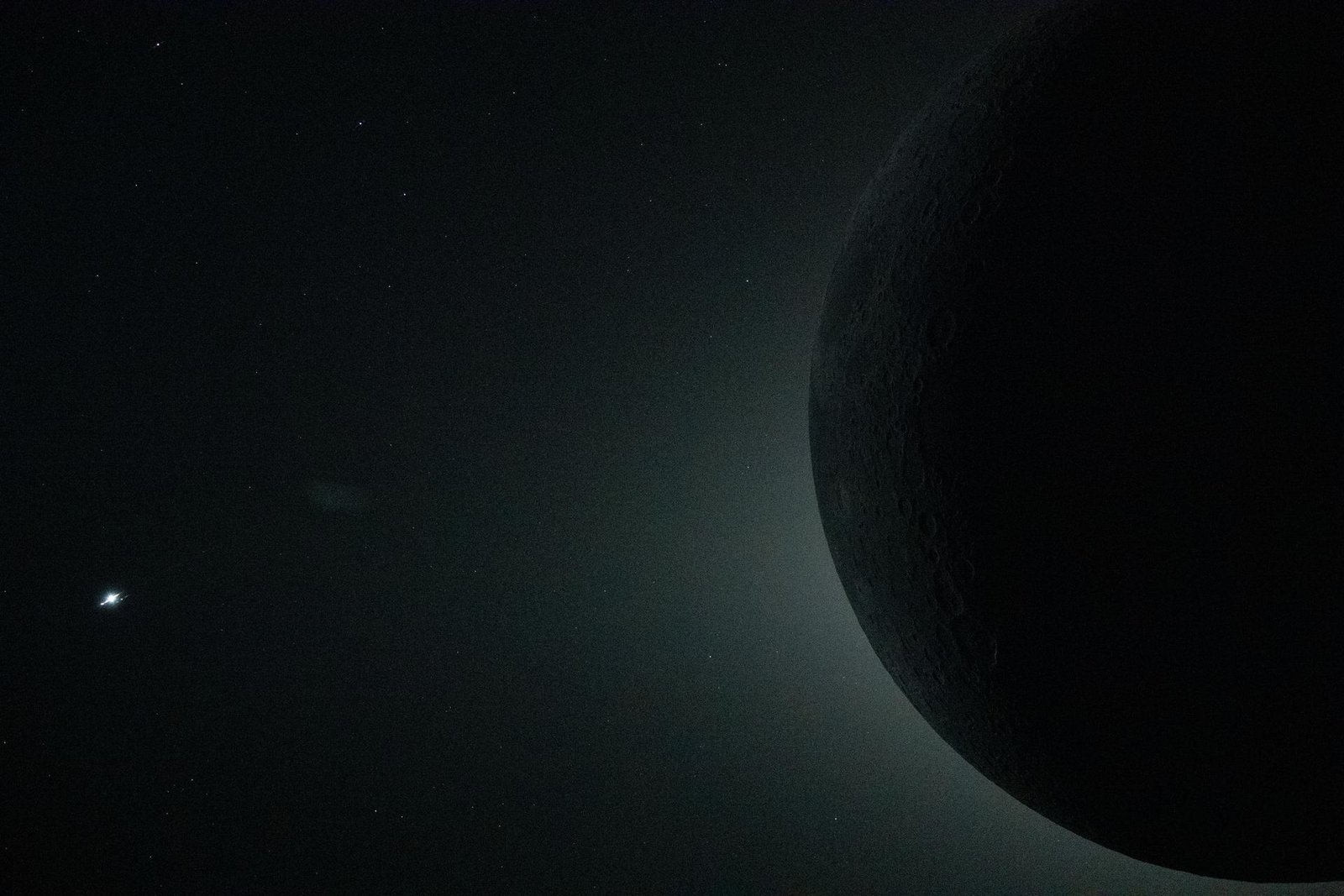
The Moon photographed during NASA’s Artemis II crewed lunar flyby, April 2026 — the first humans near the Moon since Apollo 17. Credit: NASA.
NASA Artemis: From Return to Permanent Presence
Five missions, one redesign, and a Gateway station in between.
| Mission | Status / Target | Crewed? | Landing? | Purpose |
|---|---|---|---|---|
| Artemis I | Flown, 2022 | No | No | Uncrewed Orion/SLS test flight around the Moon |
| Artemis II | Flown, April 2026 | Yes | No | Crewed lunar flyby, first crewed Orion flight |
| Artemis III | Target NET 2027 | Yes | No — reprofiled | Crewed Earth-orbit rendezvous/docking test with HLS hardware |
| Artemis IV | Target ~2028 | Yes | Yes, South Pole | First planned crewed lunar surface landing since 1972 |
| Artemis V+ | Government target, later 2020s | Yes | Yes | Repeated landings, Gateway integration, surface infrastructure |
Artemis III Changed: What NASA Now Plans for 2027
Both of NASA’s Human Landing System contractors, SpaceX (Starship HLS) and Blue Origin (Blue Moon), were running behind the schedule the original Artemis III landing depended on. In February 2026, NASA Administrator Jared Isaacman announced a reprofiled Artemis III: a crewed flight, still using Orion, that will conduct rendezvous and docking tests with commercial HLS hardware in Earth orbit rather than attempting a landing. NASA’s own framing is risk reduction — proving crew-to-lander operations somewhere recoverable before trying them 384,000 kilometres from home. NASA is targeting this mission for 2027; it is not a guaranteed date.
Artemis IV: NASA’s Current First South Pole Landing Target
Artemis IV, not Artemis III, is now the first Artemis mission planned to actually land astronauts on the Moon, targeting the South Pole region around 2028. It depends on a matured commercial HLS, a working Orion-to-lander handoff (the thing Artemis III exists to test), and Gateway’s initial elements being in place to support the mission. NASA is targeting 2028; it has not guaranteed it.
After the First Landing: Artemis V and Beyond
A single successful landing does not make a base. NASA’s later Artemis missions are intended to return to the South Pole repeatedly, integrate more fully with Gateway, and begin building the surface infrastructure — power, mobility, cargo delivery — that separates a landing from a presence. Specific dates for Artemis V and beyond remain government targets rather than locked schedules, and have moved before.
Lunar Gateway: Space Station or Moon Base?
Gateway is a small space station planned for orbit around the Moon, not a surface base — it has no landing footprint at all. Its first two elements, the Power and Propulsion Element and the Habitation and Logistics Outpost, are targeted for launch by NASA’s committed date of December 2027, roughly a year ahead of the Artemis IV landing it is meant to support. Gateway’s role is staging, logistics and science in lunar orbit, run with international partners; conflating it with a surface habitat is one of the most common mix-ups in Moon-race coverage.
SpaceX Starship HLS and Blue Origin Blue Moon
Starship HLS, based on SpaceX’s Block 3 Starship design, still needs an orbital propellant-transfer demonstration — tanker-to-depot cryogenic fuel transfer at scale — before it can fly a lunar mission; that demonstration and a maiden HLS test flight are both targeted for the 2026–2027 window. Blue Origin’s Blue Moon Mark 1 robotic lander cleared thermal-vacuum testing at NASA’s Johnson Space Center in 2026, but its planned autumn 2026 debut flight is indefinitely delayed after a May 2026 static-fire anomaly grounded the New Glenn rocket it launches on. Neither company has yet flown a lunar landing of its Artemis-relevant hardware.
2026: A Crowded Commercial Landing Season
Independent of Artemis, NASA’s Commercial Lunar Payload Services (CLPS) programme has three landers targeting the Moon in 2026: Intuitive Machines’ IM-3, aimed at the Reiner Gamma swirl region to study lunar magnetism; Firefly Aerospace’s Blue Ghost Mission 2, targeting the far side to deliver the LuSEE-Night radio telescope and an ESA lunar relay satellite; and Astrobotic’s Griffin Mission One, targeting the South Pole in the fourth quarter of 2026. Griffin’s primary payload is now Astrolab’s FLIP rover, after NASA moved to cancel its own VIPER water-hunting rover in 2024 over cost and schedule; VIPER’s ultimate fate remains unresolved as of August 2026 despite congressional pushback on the cancellation.
China’s Lunar Roadmap: From Chang’e to a Crewed Landing
The programme a Moon-base article cannot leave out.
China’s robotic programme has moved in a clear line: Chang’e-3 (2013) delivered China’s first lunar landing; Chang’e-4 (2019) achieved the first-ever far-side landing; Chang’e-5 (2020) returned China’s first lunar samples; Chang’e-6 (2024) returned the first-ever far-side samples. Each mission added a genuinely new capability rather than repeating the last one.
Chang’e-7 and the Search for South Pole Resources
Chang’e-7, targeting launch on August 24, 2026, is built specifically for South Pole science: an orbiter, a lander, a mini-hopping probe designed to peer directly into permanently shadowed craters, and a rover, all searching for water ice and characterising the polar environment. It is China’s most complex single lunar mission to date and the direct robotic precursor to any ILRS site-selection decision.
Chang’e-8: Testing Technology for a Future Research Station
Chang’e-8, targeted for 2028–29, is designed to test in-situ resource utilization and other surface technologies at the South Pole, continuing Chang’e-7’s science while shifting toward the engineering ILRS will eventually need. It is a technology-demonstration mission, not the construction of a station.
When Does China Plan to Put Astronauts on the Moon?
China’s stated goal is a crewed lunar landing before 2030. The mission architecture uses two Long March 10 rocket launches and a lunar-orbit rendezvous: an uncrewed Lanyue lander launches first, the crewed Mengzhou spacecraft follows, the two dock in lunar orbit, and two taikonauts descend to the surface in Lanyue. In 2026, China completed a series of flight tests on this hardware — a zero-altitude abort test for Mengzhou, an integrated landing-and-takeoff test for Lanyue, tethered-ignition and low-altitude tests for Long March 10, and a high-speed abort test for Mengzhou under maximum aerodynamic pressure — alongside continued development of the Wangyu lunar spacesuit and the Tansuo crewed rover. No specific crewed landing date has been formally locked beyond “before 2030.”
International Lunar Research Station: China’s Long-Term Plan
The ILRS is China’s planned, multi-phase lunar research station, developed with Russia and a growing list of international partners. Its roadmap has two phases: a basic version by 2035, built out through robotic missions including Chang’e-7 and Chang’e-8, and an expanded version by 2045. As of 2026, the ILRS remains a roadmap and a construction plan — not a station, and not yet under physical construction on the Moon.
Artemis vs ILRS: Two Different Lunar Architectures
| Artemis | ILRS | |
|---|---|---|
| Lead | NASA / United States | CNSA / China |
| Key partners | ESA, JAXA, CSA, and 70 Artemis Accords signatories | Russia (Roscosmos), a smaller and growing list of partners |
| Human landing target | ~2028 (Artemis IV) | Before 2030 (government target) |
| Orbital staging | Lunar Gateway station | Not yet publicly finalised |
| Commercial role | Central — SpaceX, Blue Origin, Intuitive Machines, Firefly, Astrobotic | Limited; state-programme led |
| Long-term goal | Sustainable, repeated surface exploration | Basic research station by 2035, expanded by 2045 |
These are two different architectures pursuing overlapping South Pole science on different timelines — not, by design, a single race with one finish line. Whether they end up interoperable, adjacent, or entirely separate is a decision neither programme has made publicly.
India’s Moon Roadmap: Chandrayaan to a Crewed Landing
A longer, more gradual path than NASA’s or China’s — deliberately.
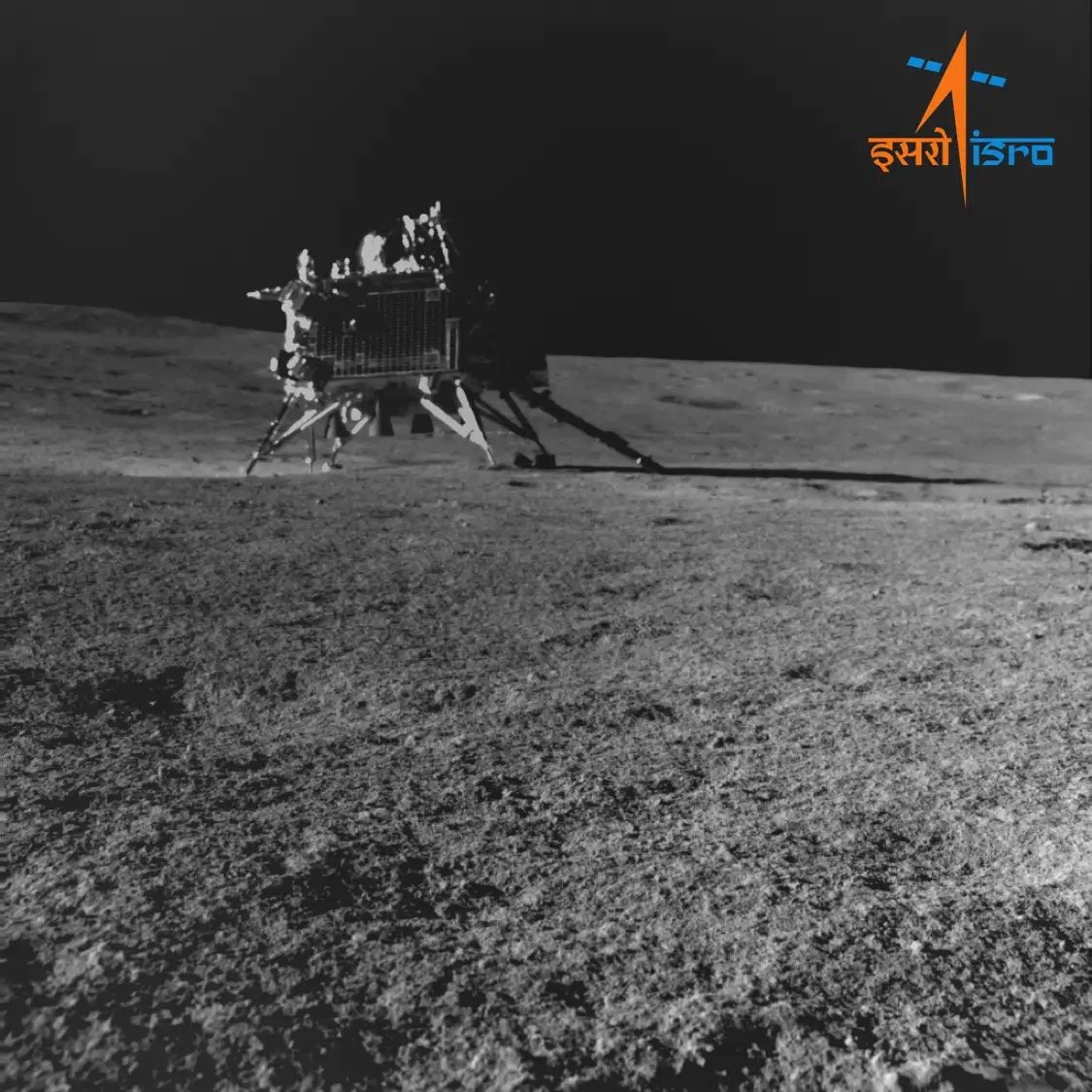
Vikram, Chandrayaan-3’s lander, photographed by the Pragyan rover on the lunar surface, August 30, 2023. Credit: ISRO.
Chandrayaan-3: India’s South Pole Breakthrough
On August 23, 2023, Chandrayaan-3’s Vikram lander and Pragyan rover touched down in the lunar south-polar region, making India the first country to land intact that far south and the fourth nation overall to achieve a soft lunar landing. Precision matters here: Vikram landed in the south-polar region, not at the geographic South Pole itself.
Chandrayaan-4: India’s Sample-Return Stepping Stone
Chandrayaan-4 is a lunar sample-return mission targeting a landing zone between roughly 85–90 degrees south latitude, near the ice-bearing terrain Chandrayaan-1 and later missions flagged. The mission uses two separate stacks launched on two rockets, executing landing, sample collection of around 3 kilograms of lunar material, ascent, docking in lunar orbit, and a safe return to Earth — a full rehearsal of the sequence a crewed sample-return or landing mission would eventually need. As of August 2026, ISRO’s chairman has stated a 2028 launch target, revised from an earlier 2027 estimate.
Chandrayaan-5 / LUPEX: India and Japan at the South Pole
Chandrayaan-5, also called LUPEX (Lunar Polar Exploration), is a joint ISRO-JAXA mission that received Indian Cabinet approval in March 2025: an Indian-built lander carries a much larger, roughly 350-kilogram Japanese-built rover to the South Pole, launching on JAXA’s H3 rocket. Current targeting places the mission around 2028.
Why Gaganyaan Matters to India’s Moon Plans
Gaganyaan is a low-Earth-orbit human-spaceflight programme — it is not a Moon mission. Its first uncrewed test flight, carrying the half-humanoid robot Vyommitra, is targeted for the fourth quarter of 2026, with further uncrewed flights ahead of a maiden crewed mission targeted for 2027. What Gaganyaan actually builds — human-rating a launch vehicle, crew life support, splashdown recovery, mission control for a crewed flight — is exactly the operational foundation any later Indian human lunar mission needs.
Bharatiya Antariksh Station: India’s Step Before the Moon
India’s planned space station, BAS, targets its first module (BAS-01) for launch in 2028 on the LVM3 rocket, with the remaining modules — five in total — targeted for completion by 2035 on India’s Next Generation Launch Vehicle. Sustained operations in orbit are the direct precursor to the life-support and crew-endurance systems a lunar mission would need.
India’s 2040 Moon Target
Under ISRO’s Space Vision 2047, India’s official target is an indigenous crewed lunar landing by 2040. This is a target, not a guarantee — and India’s roadmap is deliberately more gradual than NASA’s or China’s: robotic exploration, then sample return, then human low-Earth-orbit capability, then a space station, then a crewed Moon landing. India is not attempting to compete on the same near-term crewed-landing schedule as the US or China; its near-term value lies in robotic science, sample-return engineering, and building human-spaceflight capability from the ground up.
Japan, Europe and Russia
🔴 Japan — JAXA
JAXA’s SLIM mission achieved Japan’s first lunar soft landing in January 2024, demonstrating pinpoint landing accuracy despite tipping onto its side. Japan is now both a South Pole partner via LUPEX and an Artemis/Gateway partner, contributing life-support technology and developing a pressurized lunar rover with Toyota.
🇧🇩 Europe — ESA
ESA supplies the European Service Module that powers and propels every Orion spacecraft, plus contributions to Gateway’s modules and lunar communications and science payloads — making Europe a structural part of Artemis rather than a spectator to it.
🇷🇺 Russia — Roscosmos
Russia’s Luna-25 mission crashed attempting a landing in 2023, its first lunar attempt in nearly half a century. Roscosmos has said further Luna missions remain planned, but the programme’s schedule has slipped repeatedly, and Russia’s practical role in lunar exploration today leans more on its ILRS partnership with China than on independent missions.
🇺🇳 Other Signatories
South Korea’s Danuri orbiter and a growing bloc of Artemis Accords nations round out the field — most contributing science payloads, ground infrastructure or policy alignment rather than independent landers.
What You Need Before Humans Can Live on the Moon
A Moon base is a system, not a building — this is the article’s central point.
Every item in that chain is a separate, unsolved engineering problem for a permanent lunar presence, and every programme in this article is currently working on isolated links rather than the whole chain. Landing astronauts near the South Pole will make headlines. Keeping them alive is the harder problem: a sustained presence needs electrical power through difficult lighting conditions, communications across rough terrain, equipment that survives abrasive dust, shelter from radiation, water, spare parts, and a logistics chain stretching roughly 384,000 kilometres back to Earth. That gap between landing and living runs through every section below.
Power, Communications, Dust and Radiation
The unglamorous engineering that decides whether anyone can actually stay.
Getting Electricity to the Surface
Solar power works well on illuminated crater rims near the South Pole but fails inside the permanently shadowed regions scientists most want to study, and every site faces stretches without direct sunlight that batteries alone struggle to cover. That gap is why NASA and other programmes are studying small nuclear fission surface-power systems as a backup or primary option for polar sites — a genuinely different technology from nuclear fusion, and not yet deployed on the Moon by anyone.
A Communications Network of Its Own
The Moon has no native infrastructure for navigation or data relay, so any sustained presence needs its own relay satellites and ground links — efforts like NASA’s LunaNet concept and China’s lunar relay satellites are early steps toward that, not finished networks. Rough polar terrain makes direct line-of-sight communication with Earth unreliable from many of the best science sites, adding to the case for orbital relays.
Habitats, Radiation and Dust
Without a thick atmosphere or global magnetic field, the lunar surface receives far more radiation from solar particle events and galactic cosmic rays than Earth’s surface does, which is why every serious habitat concept relies on mass shielding — landed modules banked with regolith, or partially buried structures — rather than thin-walled spacecraft-style hulls. Lunar dust compounds the problem: it is sharp-edged, electrostatically clingy, and known from Apollo to degrade seals, joints and spacesuits, a maintenance and health issue every base concept has to design around rather than eliminate.
Temperature Extremes
There is no single “lunar South Pole temperature.” Sunlit crater rims can swing across a wide range through the lunar day, while permanently shadowed crater floors sit at some of the coldest measured temperatures anywhere in the solar system — a matter of a few hundred metres separating the two extremes.
Can Moon Resources Replace Shipping Everything From Earth?
In-situ resource utilization (ISRU) — using water, oxygen and regolith found on the Moon instead of launching everything from Earth — is the long-term economic case for a lunar base. As of 2026 it remains a research and prospecting activity, not an industry: no programme has demonstrated resource extraction at any operational scale. The realistic sequence is science, then prospecting, then resource mapping, then small technology demonstrations like those planned for Chang’e-8, then pilot extraction, and only much later anything resembling an industry. Claims of imminent lunar mining at commercial scale are not supported by where any programme currently stands.
What About Helium-3?
Helium-3 shows up constantly in Moon-mining discussions because it is a theoretically attractive fusion fuel, embedded in the lunar surface by billions of years of solar wind. The hype outruns the reality on two fronts: measured concentrations are extremely low, requiring enormous volumes of processed regolith per useful unit, and commercial nuclear fusion power — the only market that would want it — does not exist yet anywhere on Earth. There is no functioning helium-3 lunar economy, and none is close.
Space Law and the “Land Grab” Question
Can Any Country Own the Moon?
No. The Outer Space Treaty, which every major spacefaring nation including the US, China, Russia and India has ratified, bars national claims of sovereignty over the Moon or any celestial body. Winning a race to a site does not confer ownership under that framework.
Is There Really a Lunar Land Grab?
The competitive pressure is real, but it is operational, not territorial. The South Pole has a genuinely limited number of sites combining good sunlight, safe terrain, Earth visibility for communications, and proximity to permanently shadowed ice deposits. Multiple missions targeting the same handful of high-value sites creates real scheduling and site-preservation competition — without anyone gaining a legal claim by getting there first.
One Lander Can Affect Another Mission
A landing rocket’s exhaust plume kicks up regolith at velocities that can travel long distances in the Moon’s vacuum, potentially contaminating nearby scientific instruments or damaging other hardware on the surface — a real, physical reason international coordination on landing sites matters, independent of any legal ownership question.
The Artemis Accords
The Artemis Accords are a US-led framework of principles for peaceful lunar and deep-space exploration: transparency, interoperability, public release of scientific data, and safety zones to deconflict operations near active missions. As of July 2026, 70 nations have signed, including India in 2023 — 11 of them in 2026 alone. Signing does not enroll a country in every Artemis mission; it is a policy alignment, not a mission-participation contract.
The Companies Building the Lunar Economy
SpaceX
Starship HLS, still pending an orbital propellant-transfer demonstration before its first lunar flight, targeted for the 2026–2027 window.
Blue Origin
Blue Moon Mark 1 cleared NASA thermal-vacuum testing in 2026 but its debut flight is delayed indefinitely by a New Glenn rocket anomaly.
Intuitive Machines
IM-3, targeting the Reiner Gamma swirl region in the second half of 2026, its third lunar landing attempt.
Firefly Aerospace
Blue Ghost Mission 2, targeting the lunar far side in late 2026 with a radio telescope and an ESA relay satellite.
Astrobotic
Griffin Mission One, targeting the South Pole in Q4 2026, carrying Astrolab’s FLIP rover after VIPER’s removal from the manifest.
Astrolab
Developer of the FLIP rover flying on Griffin Mission One — part of a wider push toward commercial lunar mobility hardware.
Who Pays for a Moon Base?
The near-term funding model is a mix of government programme budgets (NASA, CNSA, ISRO) and commercial contracts (CLPS, HLS) rather than any single Moon-base line item. Comparing total Artemis-era spending against a single Chandrayaan mission’s budget is a common but misleading exercise — the two are not funding equivalent objectives, and no programme has published a total cost for an actual base, because none has committed to building one yet.
Moon Race Scorecard: Who Is Actually Ahead?
No single meaningful winner exists, because each programme leads on a different milestone.
| Programme | Robotic Landing | Sample Return | Human Lunar Capability | Surface-Base Roadmap |
|---|---|---|---|---|
| US / Artemis | Yes (historical + CLPS) | Yes (Apollo, historical) | Active — Artemis II flown | Yes — Gateway + repeat landings |
| China | Yes, incl. far side | Yes, incl. far side (2024) | In development, target before 2030 | Yes — ILRS, basic phase 2035 |
| India | Yes (2023, South Pole) | Chandrayaan-4 target, 2028 | Developing via Gaganyaan (2027) | Long-term — 2040 crewed target |
| Japan | Yes (SLIM, 2024) | — | Artemis/Gateway partner | Partner role via LUPEX, Artemis |
Broken down by milestone: China currently leads on sample-return capability, including the only far-side sample return ever achieved. NASA leads on human lunar return, with Artemis II already flown and Artemis IV targeting the next landing. India leads on recent South Pole landing precision, having reached the south-polar region first, in 2023. On long-term research-station roadmaps, Artemis and ILRS represent two different architectures rather than a single ranked competition. Whoever reaches the surface next will get the headline. The more consequential race is over who can return, and keep returning.
What to Watch: 2026 Through 2032, and Beyond
Year by Year
- 2026: Chang’e-7 launches to the South Pole; CLPS landers IM-3, Blue Ghost 2 and Griffin fly; Gaganyaan’s first uncrewed test targets Q4.
- 2027: Artemis III’s crewed Earth-orbit HLS docking test; Gateway’s PPE and HALO modules targeted for launch; Gaganyaan’s first crewed flight targeted.
- 2028: Artemis IV, NASA’s current first crewed South Pole landing target; Chandrayaan-4 sample-return target; Chandrayaan-5/LUPEX around this window; BAS-01, India’s first space-station module.
- 2028–29: Chang’e-8 tests in-situ resource technology at the South Pole.
- Before 2030: China’s official target for its first crewed lunar landing.
- 2030–2032: Only officially confirmed targets are included here deliberately — expect repeated Artemis landings and continued ILRS robotic buildout, with firmer dates likely to emerge as 2027–2028 milestones actually land.
Beyond 2032: India’s Longer Horizon
Framing this race as a 2026–2032 story risks compressing India’s roadmap into a timeline it was never built for. India’s Bharatiya Antariksh Station targets full completion in 2035, and its crewed Moon landing target — 2040 — sits nearly a decade past this article’s main window. That is not India lagging so much as India running a longer, more incremental sequence than NASA’s or China’s near-term crewed-landing pushes.
The Moon Race Is Really a Race to Stay
The next human landing will matter, but it will not decide the future of the Moon. The more consequential milestones come after it: repeated cargo deliveries, reliable power through difficult lighting, working communications, surface mobility, water extraction that actually functions, radiation-shielded habitats, and missions that can stay a little longer each time. NASA is currently targeting a crewed South Pole landing with Artemis IV around 2028. China is developing its own human-lunar and research-station roadmap toward a landing before 2030 and a basic ILRS by 2035. India is taking a longer, more gradual path through Chandrayaan, Gaganyaan, sample return and a 2040 crewed-landing target.
The real winner will not simply be the country that reaches the lunar South Pole next. It will be the programme that proves it can keep coming back — and eventually stay.
Explore More Timelines
People Also Ask
Frequently Asked Questions
⚠️ Editorial Note
This page separates independently confirmed events from government and company targets throughout, and treats every future date as a target rather than a guarantee — targets in lunar exploration have slipped before and will slip again. Compiled from NASA, ISRO, CNSA-linked and China Manned Space Agency reporting, JAXA, the Artemis Accords tracker, and independent space-policy and science journalism. Updated as milestones are confirmed; not a substitute for primary agency sources.
Sources & References
NASA — Artemis III Mission · NASA — Preliminary Artemis III Mission Plans · NASA — Update on Moon Landers & Missions · NASA — Artemis Accords · SpacePolicyOnline — Artemis Accords Reach 70 Signatories · ISRO — ISRO-JAXA Chandrayaan-5/LUPEX Technical Interface Meet · Bharatiya Antariksh Station Programme Overview · CGTN — China’s Crewed Moon Landing Target · Chang’e-7 Mission Overview · BBC — India’s 2040 Crewed Moon Landing Target
Sources & further reading
Every dated entry above was checked against these references. Last reviewed 15 September 2026.
- NASA — Artemis III Mission
- NASA — Preliminary Artemis III Mission Plans
- NASA — Update on Moon Landers & Missions
- NASA — Artemis Accords
- SpacePolicyOnline — Artemis Accords Reach 70 Signatories
- ISRO — ISRO-JAXA Chandrayaan-5/LUPEX Technical Interface Meet
- CGTN — China's Crewed Moon Landing Target
- Chang'e-7 Mission Overview
- BBC — India's 2040 Crewed Moon Landing Target