India’s Green Revolution: How It Fed a Nation, and What It Cost
India's Green Revolution, from the 1963 wheat trials and record 1968 harvest to 376 Mt of grain in 2025-26, and its cost: Punjab's groundwater at 156%.
Latest Story
In 1966 India was importing millions of tonnes of American wheat and living, as one commentator put it, ‘from ship to mouth’. Two harvests later its wheat crop was the largest in its history. The Green Revolution in India combined semi-dwarf wheat from Mexico, Indian plant breeding, irrigation, fertiliser and an assured government buyer, and in 2025-26 the country grew an estimated 376.56 million tonnes of grain. The same system left Punjab pumping 156% of the groundwater it can sustainably draw, soils short of organic carbon, and a smoke season every autumn. This timeline checks the milestones against Norman Borlaug’s Nobel lecture, ICAR, the Central Ground Water Board and official crop estimates, and corrects several claims that circulate about it.
💡 Short Answer
India’s Green Revolution began with trials of Mexican dwarf wheat in 1963, seed imports of 250 tonnes in 1965 and 18,000 tonnes in 1966, and a record 16.5-million-tonne wheat harvest in 1968. Backed by irrigation, fertiliser, support prices and procurement, it made India largely self-sufficient in grain. Its costs are concentrated in Punjab and Haryana: over-pumped groundwater, tired soils, emissions and stubble burning.
India’s Green Revolution: Key Questions
The Green Revolution in Ten Points
- Backdrop: the 1943 Bengal famine and the 1965-67 droughts, when India depended on US PL-480 wheat.
- The seed: semi-dwarf Mexican wheat with stiff stems that could take fertiliser without falling over.
- Timeline: trials in 1963, 250 t of seed in 1965, 18,000 t in 1966, a record harvest in 1968.
- Not just seeds: irrigation, fertiliser, credit, support prices and the Food Corporation of India (1965) made it pay.
- Wheat first: rice played only a minor role until the 1970s; pulses and millets lagged far longer.
- Uneven gains: Punjab, Haryana and western UP led; rain-fed and eastern India gained later and less.
- Output today: a record 376.56 Mt of foodgrains estimated for 2025-26, seven times 1950-51.
- Water bill: Punjab pumps 156% of its extractable groundwater; 111 of 153 blocks are over-exploited.
- Air and climate: counted farm fires fell 94% between 2020 and 2025; flooded rice still emits methane.
- Next phase: direct-seeded rice, conservation agriculture, biofortified and genome-edited varieties, and diversification.
The Green Revolution Timeline, 1943–2026
Newest first. Tags mark science, policy, output milestones and resource costs.
A new burning season, and a new count Resource cost
The rice harvest that began in late September 2026 brought the annual test of whether Punjab can clear its fields without fire. By 5 October the Commission for Air Quality Management had logged 84 fire incidents in the state, and inspectors had confirmed residue burning at 30 sites. The season usually peaks in late October and early November.
The trend: counted fires fell from about 83,000 in 2020 to 10,909 in 2024 and 5,114 in 2025. NASA scientists caution that satellite counts can miss fires lit after the satellites pass, which may be why the smoke over Delhi did not fall as fast as the numbers.
Punjab pumps 156% of what it can sustainably draw Resource cost
Answering a question in Parliament, Jal Shakti minister C. R. Paatil said Punjab extracted 26.27 billion cubic metres of groundwater in 2025 against an annual extractable resource of 16.80 bcm, a stage of extraction of 156.36%, the highest of any state. 111 of its 153 assessment blocks are over-exploited. The national figure is 60.63%.
The same kharif season, Punjab reported that direct seeding of rice, which skips the flooded nursery-and-transplant method, rose 36% to more than 4 lakh acres, paid for with a Rs 1,500-an-acre incentive. That is progress, but still a small slice of a paddy area of more than 30 lakh hectares (over 75 lakh acres).
A record 376.56 million tonnes Output
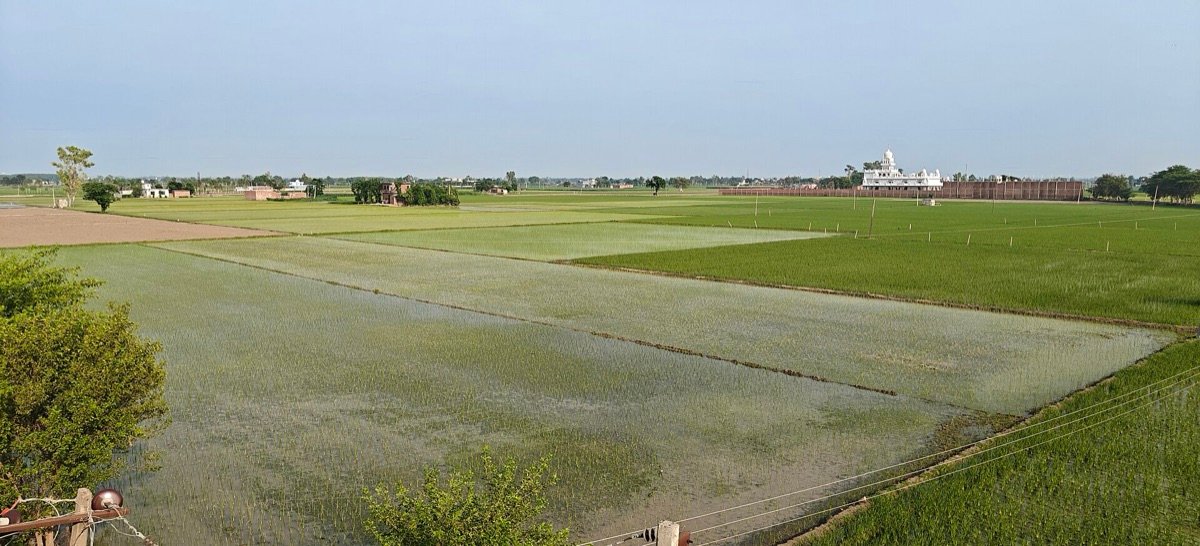
The agriculture ministry estimated 2025-26 foodgrain output at 376.56 million tonnes, 5.3% more than the 357.73 Mt of 2024-25 and more than seven times the 50.8 Mt of 1950-51. Rice (154.0 Mt), wheat (120.7 Mt) and maize (55.1 Mt) all set records.
A month earlier ICAR had reported that 55 biofortified wheat varieties, enriched with iron, zinc or protein, now cover nearly 45% of India’s wheat area, and that work on biological nitrification inhibition could cut nitrogen fertiliser use by up to 25%. The Green Revolution’s next chapter is as much about nutrition and inputs as about volume.
Genome-edited rice Science
ICAR released two rice varieties made with CRISPR-based genome editing, which alters a plant’s own genes without adding foreign DNA. DRR Dhan 100 (Kamala), built on Samba Mahsuri, matures about 20 days earlier; Pusa DST Rice 1, built on MTU 1010, is bred for drought and salt tolerance. The government claimed large water savings and 20% less methane if they spread widely, estimates that field adoption has yet to test.
2024
The architect’s legacy Science
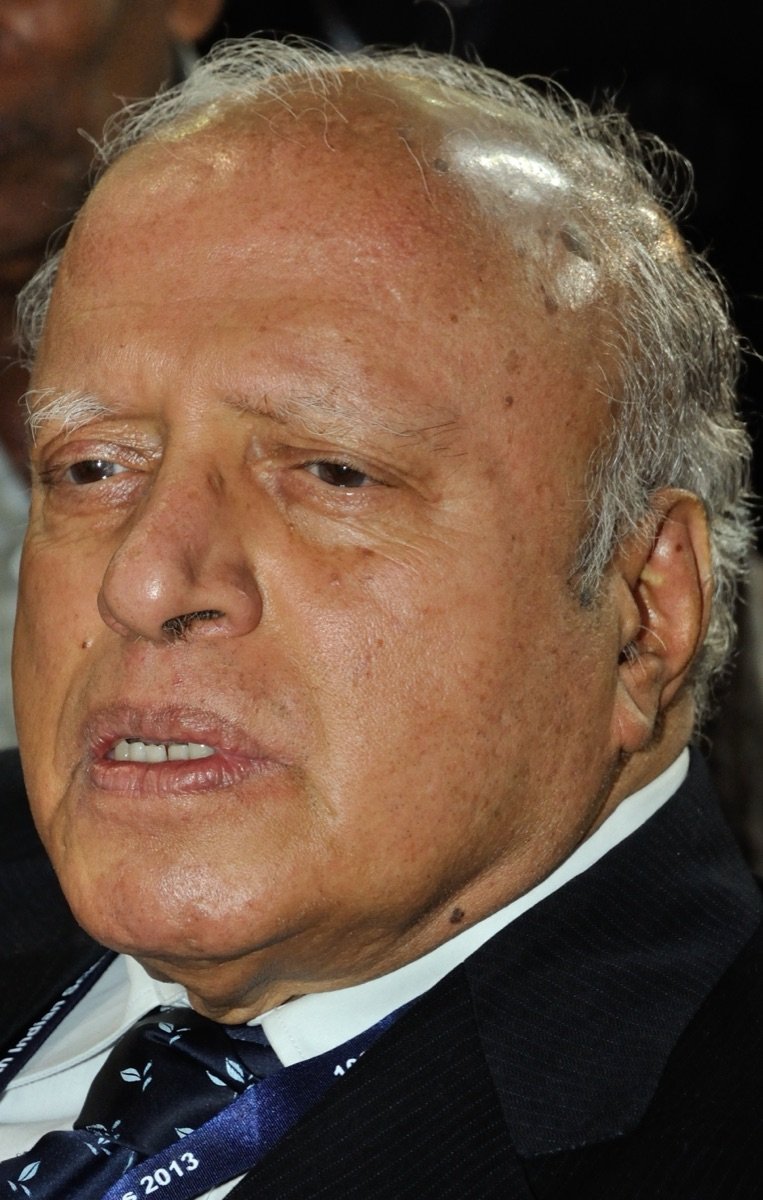
M. S. Swaminathan died in Chennai at 98. In February 2024 he was named for the Bharat Ratna, India’s highest civilian honour. The tributes stressed both halves of his career: the scientist who ran the 1960s wheat trials, and the critic who spent decades warning that the same intensive farming could exhaust soil and water if it was not reformed.
The right to food becomes law Policy
The National Food Security Act gave up to 75% of rural and 50% of urban residents a legal entitlement to subsidised grain through the public distribution system. It could only work because the Green Revolution’s procurement system was filling government warehouses with wheat and rice, a reminder that production and access are different problems.
Punjab legislates to save water by changing the calendar Policy
Punjab barred transplanting paddy before a notified date in June, so that the thirstiest weeks of rice growth coincide with the monsoon rather than the May heat. Studies credit the law with slowing the water-table fall, but it also squeezed the window between the rice harvest and wheat sowing, one reason stubble burning intensified.
The same year ICAR and the International Maize and Wheat Improvement Center (CIMMYT) started a long-term conservation-agriculture platform at Karnal. Norman Borlaug died in Texas that September, aged 95.
From Green to ‘Evergreen’ Science
Swaminathan began arguing that the gains of the 1960s would not last unless farming became ecologically sustainable: an evergreen revolution that raises productivity without degrading land, water and biodiversity. Researchers were documenting falling water tables, nutrient deficiencies and slowing yield growth in the rice-wheat belt.
The rice-wheat machine Resource cost
Rice, a minor crop in Punjab before the Green Revolution, became the state’s main kharif crop, tied to wheat in a two-crop rotation supported by procurement. Combine harvesters spread and, as NASA notes, left a layer of straw that burning cleared fastest. Groundwater pumping, often on subsidised electricity, made the system possible and started to drain it.
Rice catches up Output
IR8, the semi-dwarf rice released by the International Rice Research Institute in 1966, had been poorly suited to the monsoon areas of India, and Borlaug said in 1970 that rice had played only a minor role so far. Through the 1970s Indian breeders, irrigation and fertiliser spread the high-yield model to rice. Total foodgrain production passed 129 Mt by 1980-81.
Borlaug’s Nobel, and India’s tube-well boom Science
Norman Borlaug received the Nobel Peace Prize. His lecture is one of the best contemporary records of India’s breakthrough: wheat output of 20 million tonnes in 1970; 35% of India’s 14 million hectares of wheat sown to Mexican varieties or their derivatives; nitrogen fertiliser use up from 58,000 tonnes of nutrients in 1950-51 to 1.2 million tonnes in 1969-70; and about 70,000 private tube-wells sunk in a single season.
Why it matters: that last statistic is the root of today’s groundwater story. The wells that made the revolution possible are the same ones that, multiplied over 50 years, now overdraw Punjab’s aquifers.

The breakthrough harvest Output
The 1967-68 crop produced about 16.5 million tonnes of wheat, beating the previous record of 12.3 Mt set in 1964-65 and about five million tonnes more than the drought-hit 1966-67 crop. Total foodgrains rose to 95 Mt from 74 Mt. India issued a stamp celebrating the ‘Wheat Revolution’, and in March the US aid official William Gaud coined the term Green Revolution.
18,000 tonnes of seed, and a nation ‘from ship to mouth’ Policy
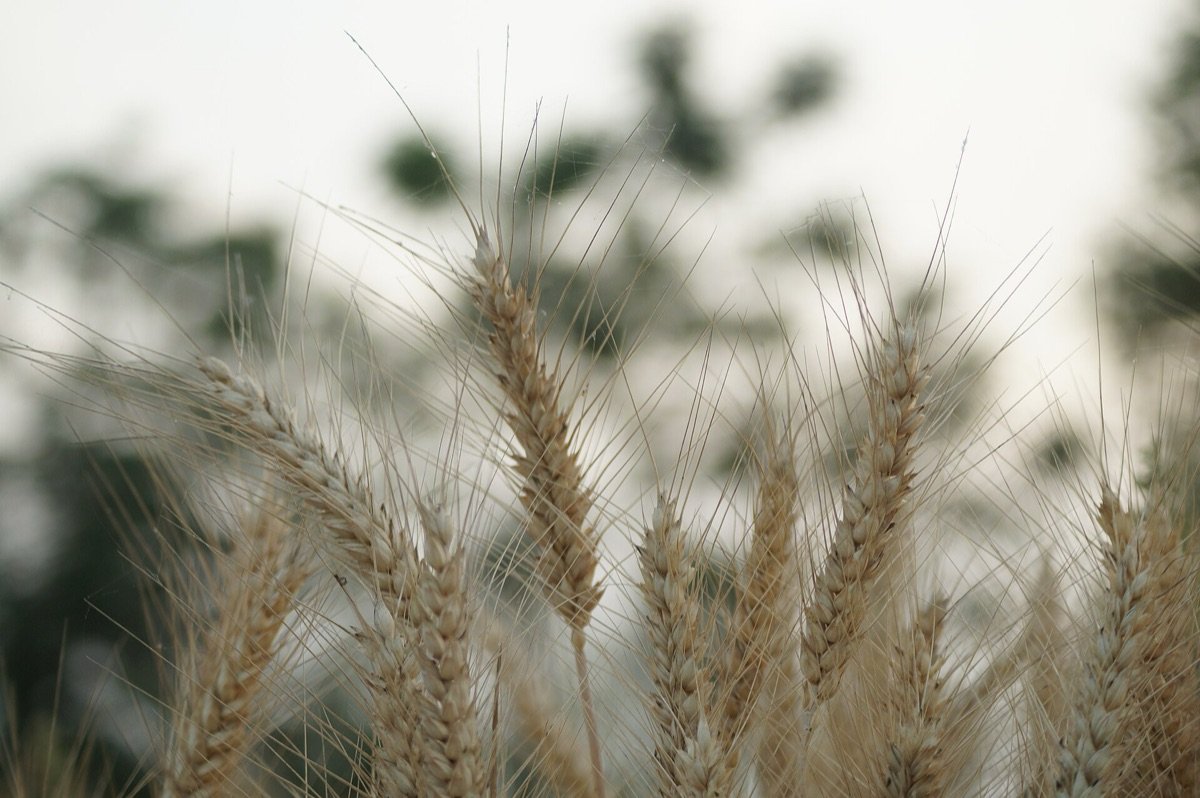
After the 1965 trials, India took the decisive step of importing 18,000 tonnes of Mexican wheat seed. It came amid back-to-back droughts: foodgrain production fell from 89.4 Mt in 1964-65 to 72.4 Mt in 1965-66, and India relied on shiploads of American wheat under PL-480. Agriculture minister C. Subramaniam pushed the new strategy through against scepticism.
Seeds, prices and an assured buyer Policy
India imported 250 tonnes of Mexican dwarf wheat seed for wide-scale testing on farmers’ fields. The same year it created the Food Corporation of India to buy and store grain and the Agricultural Prices Commission to recommend support prices. Together they gave farmers a reason to spend on seed, fertiliser and water: a guaranteed buyer at a known price.
The trials begin Science
At Swaminathan’s invitation, Borlaug toured north India, and experiments with Mexican dwarf varieties began in India and Pakistan in 1963 and continued in 1964. The plants’ short, stiff stems could carry heavy grain heads without falling over when fed fertiliser, and they were less sensitive to day length, so they could grow far from Mexico.
Building the scientific base Policy
Independent India invested in irrigation projects such as Bhakra-Nangal and in agricultural universities, and from 1956 the Rockefeller Foundation’s Cooperative Indian Agricultural Program worked on maize, sorghum, millets and postgraduate training. Production rose, but not fast enough for a growing population, and imports filled the gap.
The Bengal famine Resource cost
The Bengal famine killed an estimated 2.1 to 3 million people. Its causes were as much about wartime inflation, hoarding, colonial policy and distribution as about harvests. It left independent India determined never again to depend on others for food, the political backdrop to the Green Revolution.
The Numbers: From Shortage to Surplus
Official crop estimates, 1950-51 to 2025-26.
Why It Worked: Seeds Were Only One Part
Short, stiff, day-neutral wheat
Semi-dwarf plants carried heavy heads without lodging and were not tied to Mexico’s day length. Borlaug credited Indian scientists with adapting about a quarter of the Mexican methods to Indian conditions.
Canals and tube-wells
The new seeds paid only with reliable water. About 70,000 private tube-wells were sunk in 1969-70 alone, adding roughly 1.4 million irrigated hectares.
Fertiliser
Nitrogen use rose from 58,000 tonnes of nutrients in 1950-51 to 1.2 million tonnes in 1969-70, about 60% made in India.
Support prices and procurement
The Agricultural Prices Commission and the Food Corporation of India, both from 1965, gave farmers a floor price and a buyer.
A national wheat programme
The All-India Coordinated Wheat Improvement Program, which Borlaug called one of the most extensive in the world, bred the Indian varieties that replaced the imports.
Profit on the field
Borlaug estimated Indian and Pakistani farmers’ net income per hectare rose from $37 with local wheat to $162 with the dwarf varieties under recommended practices.
The Hidden Cost: Groundwater
FAO: groundwater serves about 60% of India’s irrigated area.
FAO calls groundwater the resource India’s Green Revolution ‘owes much to’. Wells let farmers water at exactly the right time, which is what high-yielding varieties need. But in Punjab’s central rice-wheat belt, about 3.16 million hectares according to ICAR, pumping has outrun recharge for decades. Cheap or free electricity removed the cost signal that might have slowed it, a policy FAO says some governments have since had to reverse.
The result is in the Central Ground Water Board’s 2025 numbers below. A stage of extraction above 100% means a block is drawing down stored water that rain and canals do not replace. Rice is not the villain on its own: the problem is flooded paddy grown in the hottest months, in a region whose aquifers cannot sustain it, under incentives that reward it.
| Measure (2025 assessment) | Punjab | India |
|---|---|---|
| Annual groundwater recharge | 18.60 bcm | 448.52 bcm |
| Annual extractable resource | 16.80 bcm | 407.75 bcm |
| Annual extraction | 26.27 bcm | 247.22 bcm |
| Stage of extraction | 156.36% (highest of any state) | 60.63% |
| Over-exploited assessment units | 111 of 153 blocks | – |
Can a farm grow the same grain with less water?
Pick a crop, then change irrigation and yield. The calculator turns them into water and greenhouse gas per tonne of grain. Emissions use the per-hectare averages from a 2022 Punjab study; everything else is your input. This is a scenario, not a prediction for any real farm.
1 mm of water over one hectare is 10 cubic metres. Rainfall is not counted here, and real irrigation needs vary with soil, weather, sowing date and method. Emissions per hectare: rice 6.34 and wheat 1.41 tonnes of CO2-equivalent (Ranguwal, Sidana and Kumar, Journal of Cereal Research, 2022), held constant whatever you choose.
Soil, Fertiliser and Emissions
ICAR says Punjab’s alluvial soils now show multiple nutrient deficiencies and low organic carbon, with ‘reduction in factor productivity and stagnation in crop productivity’. In the south-west, poor-quality groundwater, waterlogging and secondary salinity followed the switch from cotton to canal-irrigated rice. The fix is not to abandon fertiliser, which crops need, but to apply the right nutrients in the right amounts: soil testing, site-specific nutrient management, organic matter and legumes in the rotation.
The climate footprint differs sharply by crop. A 2022 Punjab Agricultural University study found rice’s carbon footprint per hectare about four and a half times wheat’s, mostly from methane. These are study averages for Punjab, not national emission factors.
| Punjab study, 2022 | Rice | Wheat |
|---|---|---|
| Carbon footprint per hectare | 6.34 t CO2e | 1.41 t CO2e |
| Carbon footprint per tonne of grain | 0.91 t CO2e | 0.28 t CO2e |
| Largest source | Methane from flooded fields, ~60% | Nitrous oxide, 41.3% |
| Second source | Free electricity for pumping, 17.9% | Diesel, 28.1% |
| Fertiliser manufacture | 3% | 11.8% |
Crop-Residue Burning: A Modern Consequence
Why smoke covers north India after the rice harvest, and what is replacing the match.
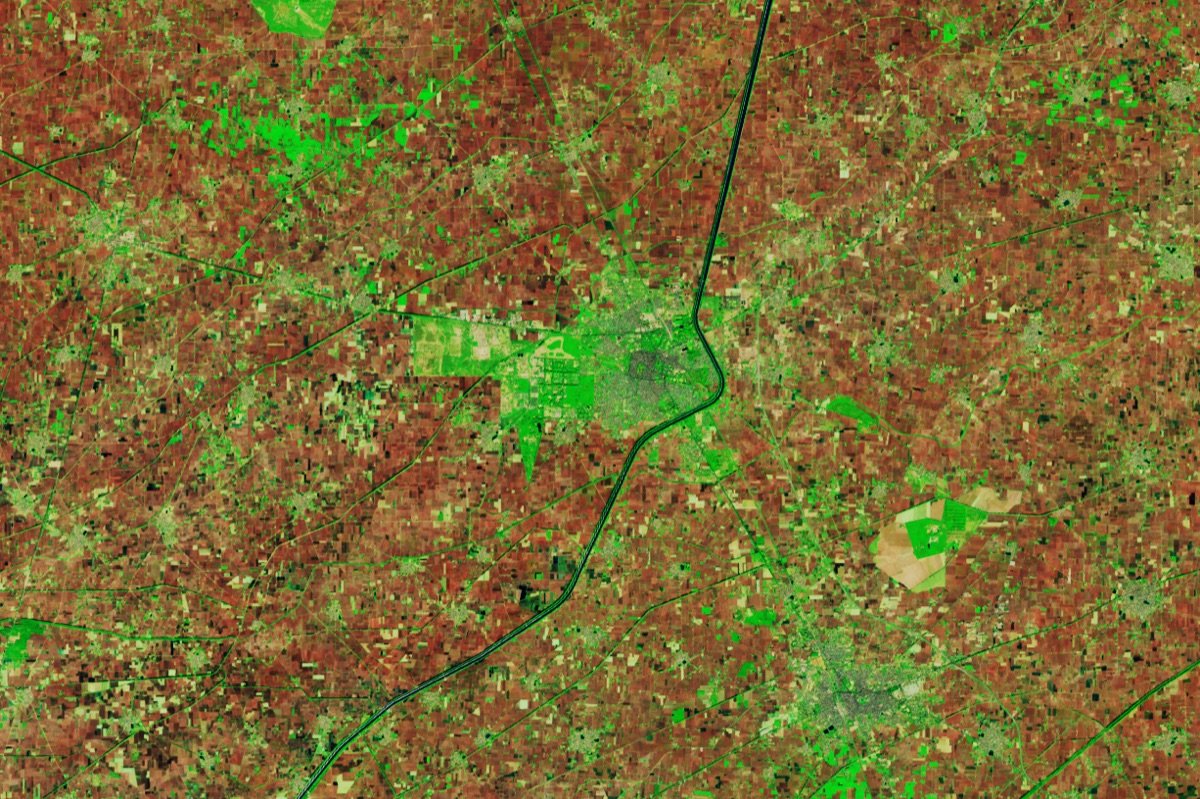
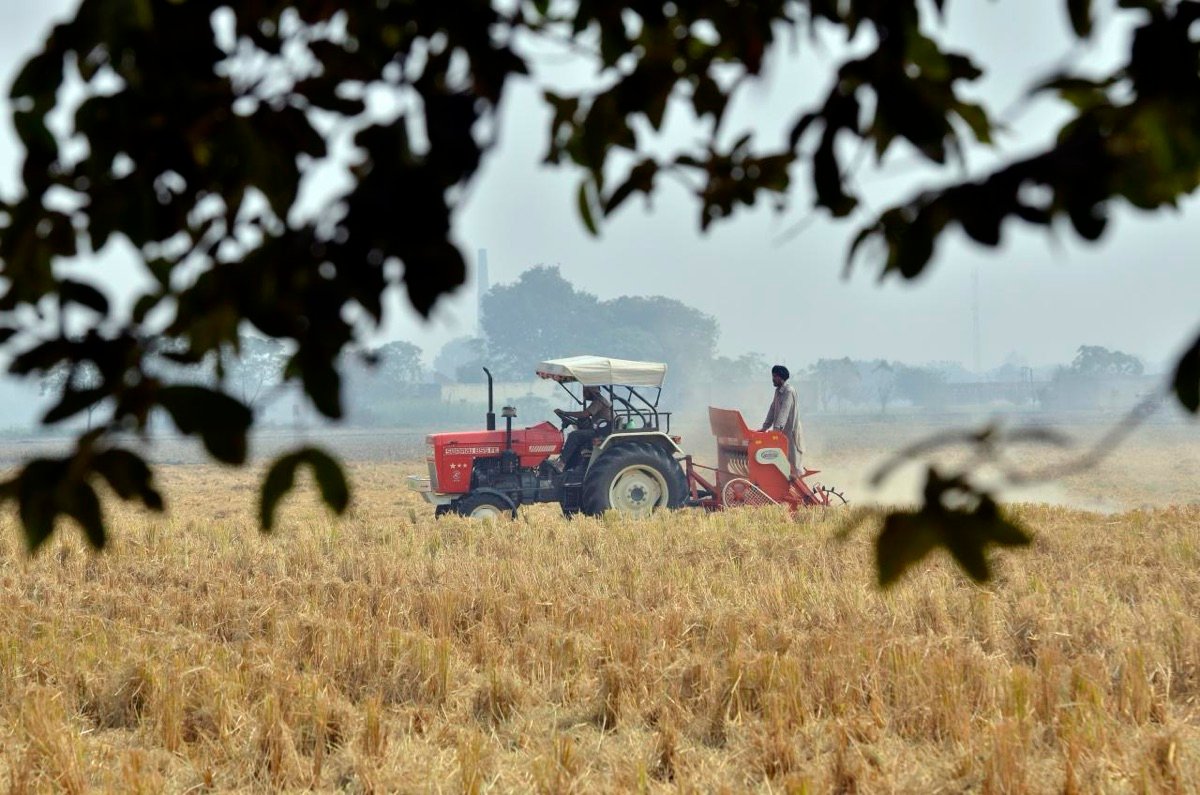
Combine harvesters leave loose rice straw, and the window before wheat sowing is two to three weeks, made tighter by the 2009 law that delays paddy transplanting to save water. Burning is the fastest, cheapest way out. The alternatives are known: the Happy Seeder and newer surface seeders sow wheat straight through the straw; balers collect it for boilers and biomass plants; mulching and incorporation return it to the soil. ICAR has proposed 1,000 Happy Seeders on custom hire in Punjab, which it says could add about 0.4 million tonnes of wheat a year and improve soil health.
Who Benefited Most?
The gains were real but uneven. Farmers with irrigation, credit, machinery and access to procurement centres, concentrated in Punjab, Haryana and western Uttar Pradesh, captured the most. Smaller farmers benefited from higher yields too, but input costs and credit constraints limited how much they kept. Rain-fed regions and crops outside the wheat-rice system, such as pulses, oilseeds and millets, gained far less, and procurement still favours wheat and rice. That is why diversification in Punjab is hard: a farmer switching from paddy to maize gives up a guaranteed buyer for a riskier market.
A Food-Security Scorecard for 2026
Production was the Green Revolution’s strength. The next stage has to score on all four.
| Dimension | What to measure | Where India stands in 2026 |
|---|---|---|
| Production | Yield, output, reliability | Record 376.56 Mt (2025-26 estimate) |
| Access | Prices, incomes, distribution | Legal grain entitlement since 2013; free grain under PMGKAY |
| Nutrition | Dietary diversity, micronutrients | 55 biofortified wheat varieties on ~45% of wheat area |
| Sustainability | Groundwater, soil, emissions, air | Punjab extraction 156%; counted fires down 94% since 2020 |
The Next Agricultural Revolution
Less flooding, smarter timing
Direct-seeded rice (4 lakh+ acres in Punjab in 2026), laser land levelling and later transplanting, measured against basin-level groundwater, not just field savings.
Diversify where it pays
Maize, pulses, oilseeds and millets in water-stressed blocks, but only with buyers, processing and price support that make them less risky than paddy.
Conservation agriculture
Zero tillage and residue retention. ICAR’s Karnal platform reports soil organic carbon doubling within 15 years in a maize-wheat system.
Climate-resilient and biofortified
Heat-tolerant wheat, genome-edited rice, and biofortified wheat already on about 45% of the wheat area.
Fewer, better-targeted nutrients
Soil testing, precision application and biological nitrification inhibition, which ICAR says can cut nitrogen use by up to 25%.
Pay farmers to change
Transition support, insurance and procurement reform. Instructions alone will not move farmers off a crop with an assured price.
What If It Had Never Happened?
This counterfactual needs care. India’s food path would also have depended on irrigation investment, trade, incomes, population growth and later technology, so it is wrong to claim that the Green Revolution alone prevented a specific famine. What the record shows is narrower and still large: the new wheat, with water, fertiliser and public institutions behind it, lifted output fast enough that India stopped depending on food aid within a few years. Without it, feeding a population that has nearly tripled since 1966 would have been far harder. The environmental costs do not erase that, but they explain why the next transition has to keep the yields while using less water, soil and air.
Corrections and Clarifications
Claims in the material this page was built from, and in common retellings, checked against primary sources.
“IARI was established in Delhi”
The Indian Agricultural Research Institute was founded in 1905 at Pusa in Bihar and moved to New Delhi in 1936 after the 1934 earthquake. It is still known as the Pusa Institute.
“The Bengal famine killed 3 million”
Estimates range from about 2.1 million to 3 million deaths. The upper figure is one end of the range, not a settled count.
“The Green Revolution averted famine”
The 1965-67 shortages were met largely with imported US wheat. The new seeds ended that dependence within a few years, but procurement, distribution and incomes mattered too.
“Seed imports expanded in 1965-66”
Borlaug’s lecture gives two steps: 250 tonnes in 1965 for on-farm testing, then 18,000 tonnes in 1966.
“About 17 million tonnes in 1968, five million above the previous harvest”
Official data give 16.54 Mt for 1967-68, about 5 Mt above the drought crop of 1966-67 but 4.3 Mt above the earlier 1964-65 record of 12.3 Mt.
Rice “followed” wheat
True, but slowly: in 1970 Borlaug said rice had so far played only a minor role in India. Rice’s big gains came in the 1970s and 1980s.
Conservation-agriculture savings
ICAR’s headline results (up to 85% less irrigation water, 28% less fertiliser, 51% less fuel) come from a maize-wheat research platform at Karnal running since 2009, not from average farms.
The 2025-26 picture
The original material ended in a generic ‘2020s’. We added the record 376.56 Mt estimate, the CGWB’s 156% figure for Punjab, the 2025 fire count, DSR’s 2026 expansion and genome-edited rice.
Explore More Timelines
People Also Ask
Frequently Asked Questions
The Bottom Line
India’s Green Revolution turned a country that imported wheat by the shipload into one that grew a record 376 million tonnes of grain in 2025-26. It did so through a system, not a single seed: dwarf wheat, then rice, plus water, fertiliser, research, prices and procurement. Its bill has arrived in the same places it succeeded most, in Punjab’s falling water table, tired soils and autumn smoke.
The goal now is not to reverse the Green Revolution but to make its gains last. India’s first Green Revolution helped it grow more food. The next has to help it grow food with less water, less fertiliser and cleaner air.
Related AiTimeline Stories
⚠️ Editorial Note
Last updated 7 October 2026. Historical figures on seed imports, wheat output, fertiliser and tube-wells are from Norman Borlaug’s 1970 Nobel lecture; production series from the Directorate of Economics and Statistics and RBI; 2025-26 figures are third advance estimates (May 2026) and may be revised. Groundwater figures are from the CGWB’s 2025 Dynamic Ground Water Resource Assessment. Fire counts are satellite-based and can understate burning. Emissions figures are from one peer-reviewed Punjab study and are not national averages. The water calculator is an illustrative scenario. AiTimeline is not affiliated with ICAR, the CGWB or any government body.
Sources & further reading
Every dated entry above was checked against these references. Last reviewed 7 October 2026.
- Norman Borlaug, Nobel Lecture: The Green Revolution, Peace and Humanity (1970)
- ICAR: Punjab, natural resource management challenges
- PIB: ICAR advances conservation agriculture and climate-resilient wheat research (8 April 2026)
- PIB: Dynamic Ground Water Resources Assessment 2025 (29 January 2026)
- The Tribune: Punjab extracting 56% more groundwater than limit, Centre tells Rajya Sabha (July 2026)
- FAO: Groundwater, making the invisible visible
- Ranguwal, Sidana and Kumar: Carbon footprints of rice-wheat cultivation across farm size categories in Punjab, Journal of Cereal Research (2022)
- Down To Earth: Punjab, Haryana record 90% drop in paddy fires in 2025 compared to 2022 (Parliament, 8 December 2025)