MGNREGA: Rural Job Guarantee Scheme’s Evolution Since 2005
MGNREGA history explained: how India's rural job guarantee grew from 200 districts in 2006, peaked during COVID-19, and was replaced by VB-G RAM G in 2026.
Latest Story
For twenty years, any rural household in India that wanted manual work could ask for it, and the law said the state had to provide it. MGNREGA’s history runs from a 2005 Act that made rural work a legal right, through a pandemic in which it became the country’s biggest safety net, to its repeal on 1 July 2026. It was replaced by the VB–G RAM G Act, which promises 125 days instead of 100 but changes how the work is funded and planned. This timeline traces what the scheme achieved, where it struggled, and what the switch means.
💡 Short Answer
MGNREGA was a 2005 law guaranteeing up to 100 days of unskilled manual work a year to every rural household that asked. It began in 200 districts on 2 February 2006, covered all of rural India from April 2008 and was renamed after Mahatma Gandhi in 2009. Spending peaked at ₹1,11,170 crore in the COVID-19 year 2020–21. It was repealed on 1 July 2026 and replaced by the VB–G RAM G Act, 2025, which guarantees 125 days, adds a 60-day farm-season pause and makes states share the cost.
MGNREGA: Key Questions
Twenty Years of the Right to Work in Ten Points
- A right, not a scheme: the 2005 Act let households demand work, with an unemployment allowance as backstop.
- Phased rollout: 200 districts in 2006, 330 in 2007, all rural India from April 2008.
- A name in 2009: NREGA became MGNREGA on 2 October 2009.
- Women came in: their share of work rose from 48% in 2013–14 to above 58%.
- The COVID peak: ₹1,11,170 crore released in 2020–21, the most ever.
- Digital push: app attendance from 2023 and Aadhaar-based pay from 2024 curbed fraud but raised exclusion worries.
- Never 100 days for most: only a small share of households ever completed the full entitlement.
- A new law: VB–G RAM G passed Parliament on 18 December 2025 and took over on 1 July 2026.
- More days, new rules: 125 days, a 60-day farm pause and a 60:40 Centre-state cost split.
- Too early to judge: July and August 2026 employment ran below the same months of 2025.
How MGNREGA Worked
The guarantee was per household and triggered by demand, which is why headline figures can mislead.
An adult in a rural household registered with the gram panchayat and received a job card. Any member could then apply for work. The law said work had to be given within 15 days, within 5 km of home where possible, and wages paid within a fortnight; if work was not offered, the state owed an unemployment allowance. The 100 days belonged to the household, so two adults working 50 days each used up the whole entitlement.
Gram panchayats were to carry out at least half the works by cost, and every work had to be approved by the Gram Sabha and later audited by it. Wages were set by the Centre for each state. Because the guarantee was meant to respond to demand, the budget at the start of the year was an estimate, not a cap, a principle that the replacement law changes.
The Timeline: From the 2005 Act to the 2026 Replacement
Newest first. Tags mark changes to the law, the rollout, administrative reforms, official data, periods of strain, and the VB–G RAM G transition.
2026
375 permissible works notified under the new law VB–G RAM G
Every work is supposed to come from a Viksit Gram Panchayat Plan approved by the Gram Sabha and be tracked on the Viksit Bharat National Rural Infrastructure Stack. The schedule also tags works for agriculture and allied activities (181), for Antyodaya and vulnerable households (107), and 36 each aimed at women and at youth. The list widens what can be built; whether it changes what is actually built depends on local plans and state budgets.
2026
August employment still trails last year Data
The gap narrowed sharply from July. A separate report at the end of August, based on an RTI filed by the National Campaign for People’s Right to Information, found about 57 lakh active workers still awaiting e-KYC, although the ministry had told states in January and February to finish it within a week. Under the transition rules, workers are not to be denied work only because e-KYC is pending.
A slow first month, and a disputed number Strain
July is usually a busy month because the kharif rush has not yet absorbed all labour. Explanations offered for the fall ranged from the transition itself, with new rules, cards and allocations, to a weak monsoon and slower sowing. The ministry contested the dashboard figure. A single transition month cannot show whether the 125-day guarantee works; full-year data for 2026–27 will.
2026
First money flows under VB–G RAM G VB–G RAM G
The Rajya Sabha reply listed state-wise allocations; Andhra Pradesh (₹7,707 crore), West Bengal (₹8,508 crore) and Bihar (₹6,716 crore) were among the largest. It also gave five years of MGNREGA data: persons who worked fell from 10.61 crore in 2021–22 to 7.20 crore in 2025–26, and person-days from 363 crore to 228 crore.
2026
MGNREGA is repealed; VB–G RAM G begins Law
Twenty years and five months after the first job cards were issued, the law that created India’s right to rural work ceased to exist. Ongoing MGNREGA works as on 30 June were carried over, and e-KYC verified job cards remained valid until new Gramin Rozgar Guarantee Cards are issued. Unemployment allowance, if work is not given within 15 days, is now a liability of the states.
2026
West Bengal returns after four years Rollout
The stoppage was the longest suspension of the scheme in any state. West Bengal had generated 364 lakh person-days in 2021–22; in 2024–25 and 2025–26 it generated none. It resumed one month before the old law ended, and the state received a normative allocation under the new one.
2026
Commencement date notified, with a record allocation VB–G RAM G
The government called it the highest budget-estimate allocation ever for a rural employment programme. Draft rules on normative allocation, transition, wage payment, unemployment allowance and grievance redressal were still being prepared with states at the time.
2025
Parliament passes the VB–G RAM G Bill Law
Opposition parties objected to dropping Mahatma Gandhi’s name, to shifting part of the cost to states, and to replacing an open-ended demand-driven guarantee with normative allocations. The government argued that MGNREGA’s design had reached its limits, citing work not found on the ground, mismatched spending and few households completing 100 days, and that the new law offered more days of work and better-planned assets.
26
The last full year of MGNREGA Data
Person-days had fallen steadily from the pandemic peak. In July 2025 the government told Parliament that 99.79% of eligible households seeking work had been offered it, a figure worker groups disputed because it measured registered demand rather than unmet need.
2025
The government’s decade-versus-decade case Data
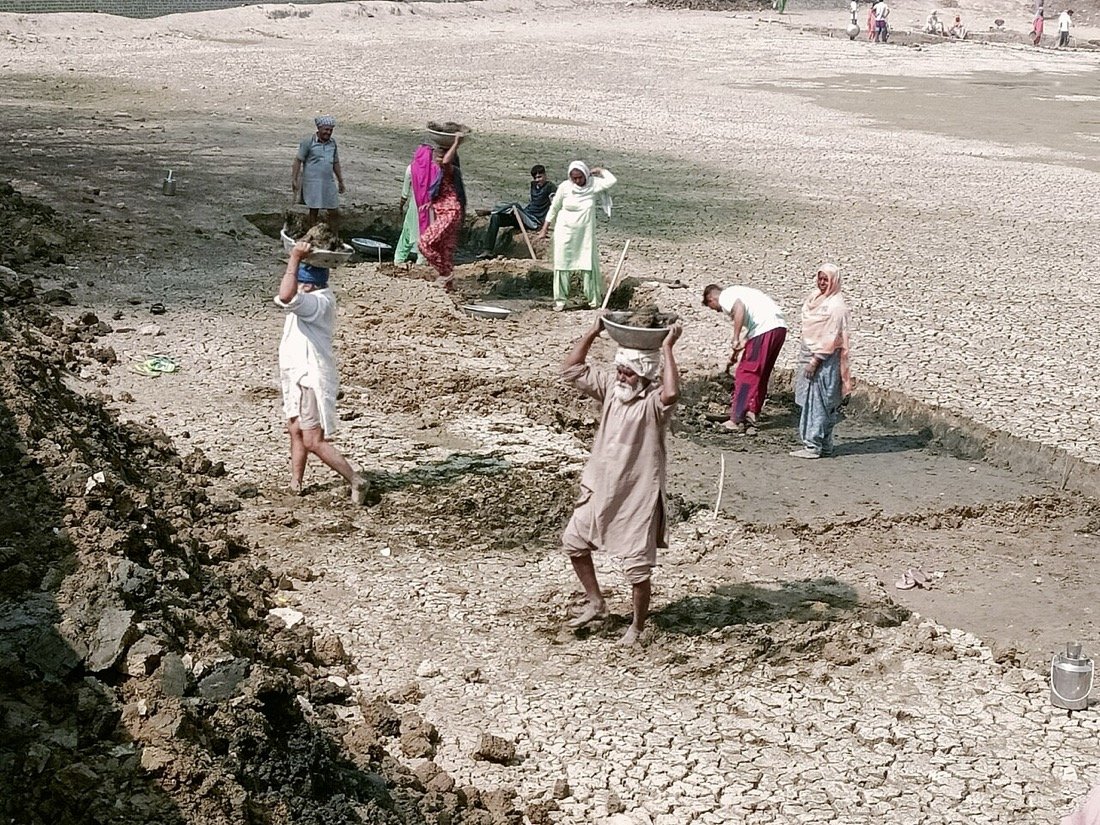
The ministry also reported women’s participation rising from 48% to over 58%, individual-household assets rising from 17.6% to 56.99% of works, and 68,000 Amrit Sarovars in phase one. The comparison covers 8 years against 11, so per-year figures rise less steeply than totals.
2024
Aadhaar-based payment becomes mandatory Reform
The government said ABPS cut payment failures caused by changed bank accounts. Researchers and worker unions argued that workers whose Aadhaar was not correctly linked to their account were dropped from rolls or not paid, and that deadlines were too short.
2023
App-based attendance for every worksite Reform
The aim was to end fake muster rolls. Reports from the field described missed attendance because of poor network, the cost of smartphones for worksite mates, and uploads that did not count. It became one of the clearest examples of the trade-off between leak-proofing and access.
Funds stopped to West Bengal; Amrit Sarovar begins Strain
Budgets for 2022–23 and 2023–24 were set well below the previous year’s spending (₹73,000 crore and ₹60,000 crore at BE) and raised at the revised stage. Pending wage liabilities at the start of each year became a recurring complaint from states.
21
COVID-19 turns MGNREGA into a lifeline Data
As migrant workers returned home after the national lockdown in March 2020, demand for MGNREGA work surged and the year recorded the scheme’s highest employment. It showed what a standing, legally backed programme could do in a shock, and also its limits: it could not replace urban wages, and in some places demand outran funds.
Ten years, and a Supreme Court rebuke Reform
The court ordered the Centre to release adequate funds in time and to ensure compensation for delayed wages, which the Act provided for but which was rarely paid in full. Over the next few years payments moved to the National Electronic Fund Management System, and by 2025 the government said 100% of wages were paid electronically through DBT.
Social audits get rules; wages indexed Reform
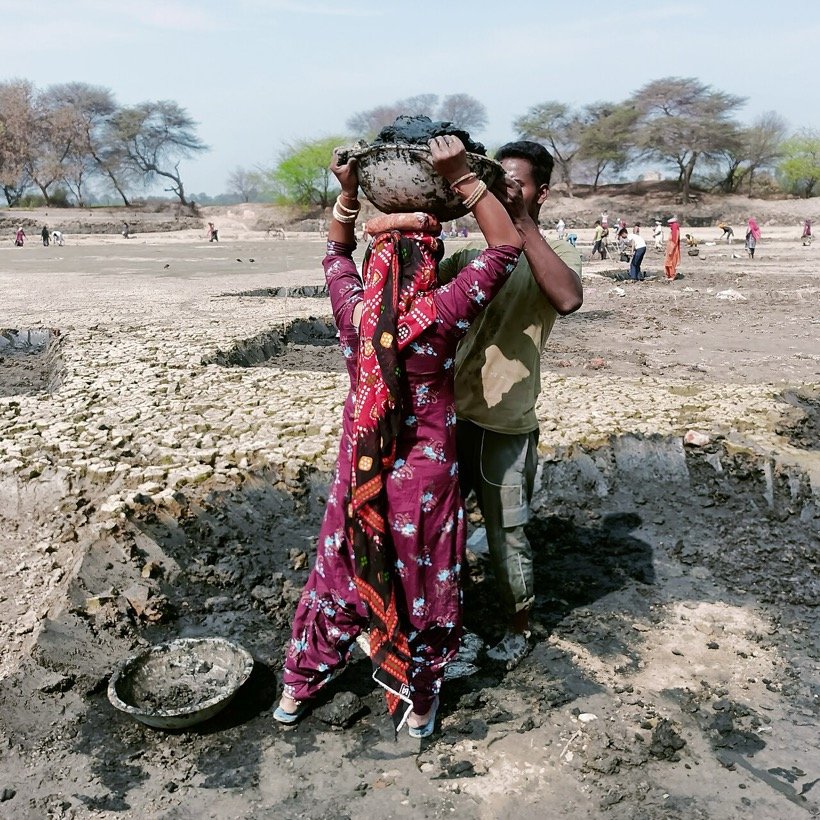
Social audits by the Gram Sabha had been written into the Act from the start, building on Andhra Pradesh’s early audit model. The 2011 rules required independent social audit units in states. Indexing wages to rural prices was meant to stop real wages eroding, though MGNREGA wages remained below state minimum wages in many states.
2009
NREGA becomes MGNREGA Law
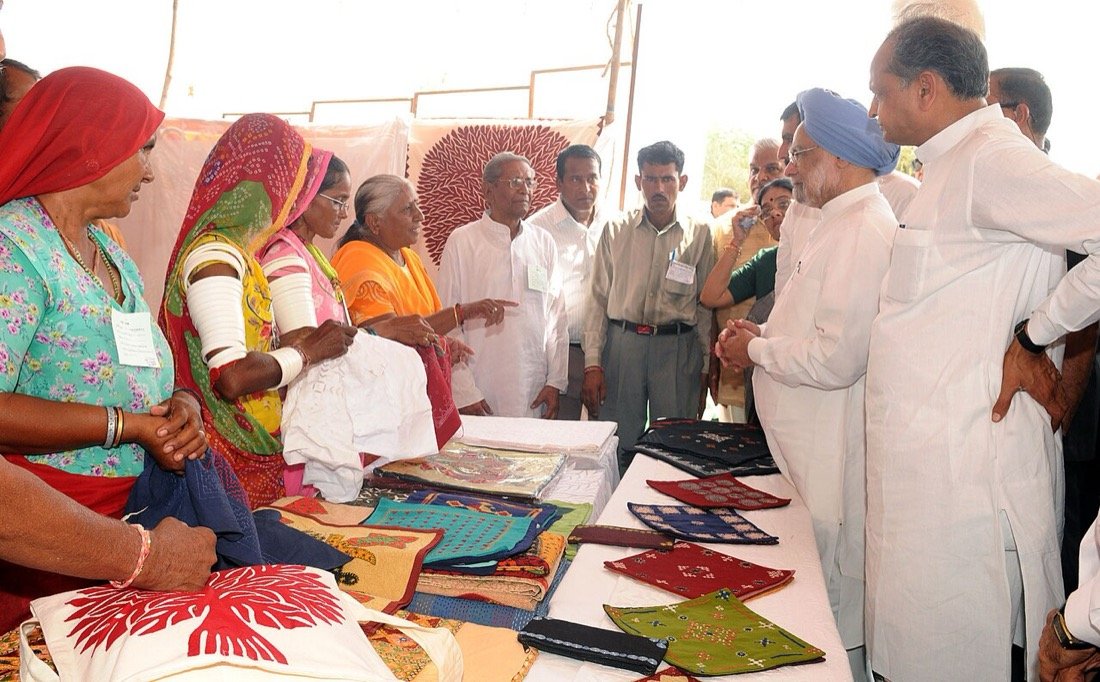
The renaming did not change the guarantee. It did, sixteen years later, become a central point of the political fight over the replacement law, whose title no longer carries Gandhi’s name.
2008
The guarantee covers all of rural India Rollout
Coverage of every rural district turned a targeted scheme into a national entitlement and multiplied the administrative load on gram panchayats, block offices and banks and post offices that paid wages.
2007
Second phase: 130 more districts Rollout
Early evaluations already showed the pattern that would last: strong uptake in some states, such as Rajasthan and Andhra Pradesh, and weak delivery in others.
2006
Work begins in 200 districts Rollout
Households registered at the gram panchayat, got job cards, and applied for work. Projects were concentrated on water conservation, drought-proofing and land development, chosen so that wages would leave behind something useful for the village.
Parliament enacts NREGA Law
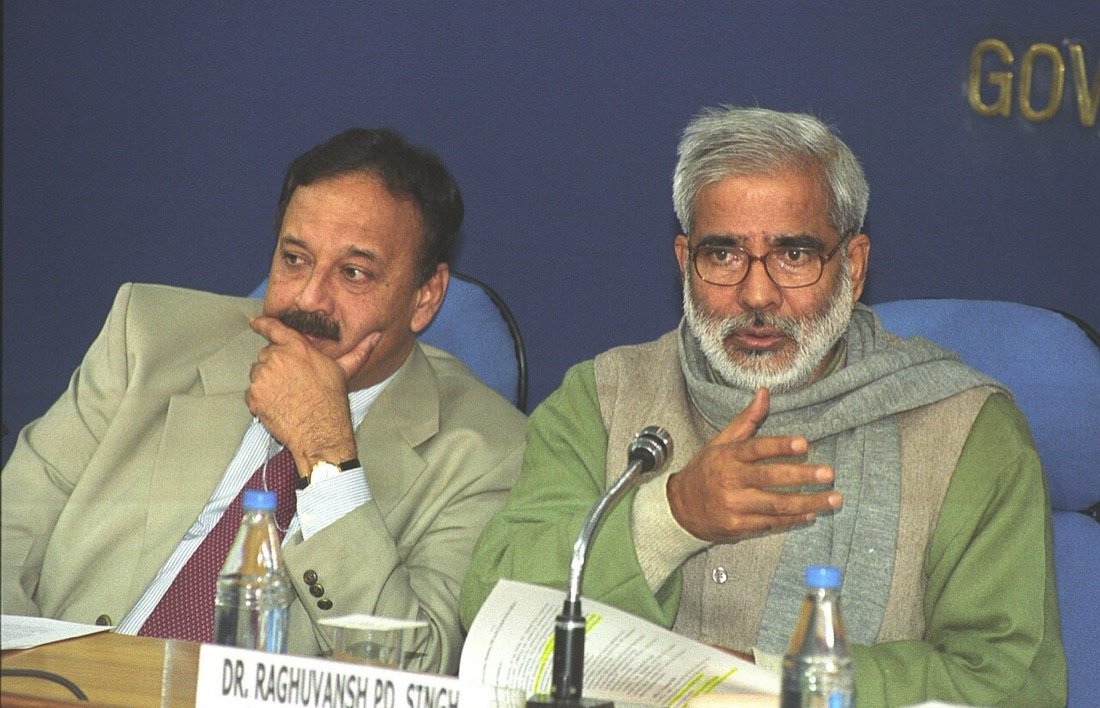
It was a promise of the UPA government’s 2004 Common Minimum Programme. The Act made work a legal entitlement with an unemployment allowance as a backstop, wages paid within a fortnight, worksite facilities, and at least one-third of beneficiaries women.
The Maharashtra precedent Law
Before NREGA, rural employment programmes such as the Food for Work Programme, Jawahar Rozgar Yojana and Sampoorna Grameen Rozgar Yojana gave work as the government chose. Maharashtra’s scheme was the first to make it a statutory right, the model the national law followed.
The Money and the Work
Budget estimates were routinely revised up because the law obliged the government to meet demand.
See how much was budgeted, how much was actually released, and how much work it bought.
–
Source: Ministry of Rural Development replies in the Rajya Sabha, 25 July 2025 and 24 July 2026; PIB, 11 May 2026. Central funds only.
State by State
The national figures hide very different stories: Maharashtra and Jammu and Kashmir grew while Tamil Nadu and Rajasthan nearly halved.
Pick a state or UT to see MGNREGA’s last five years and its first VB–G RAM G allocation.
Source: Rajya Sabha Unstarred Question 782, 24 July 2026 (NREGASoft data; allocations as on 16 July 2026). West Bengal’s zero years reflect the 2022–26 suspension of central funds.
What MGNREGA Achieved
Work when nothing else was available
In drought years and above all in 2020–21, when migrants came home, it was the one programme that could absorb people quickly in their own villages.
Paid work close to home
Local worksites and equal wages for men and women helped push women’s share of person-days above 58%, well above their share of the rural workforce.
Ponds, bunds and wells
The government counts 8.07 crore assets created in 2014–25, most of them water and land works. Their quality varied, but well-planned works lasted.
A legal claim to work
Workers could demand employment, wage compensation and social audits, giving them a lever that earlier programmes never did.
| Measure | Before | After | Source |
|---|---|---|---|
| Women’s share of person-days | 48% (2013–14) | 58.15% (2025–26) | MoRD, PIB |
| Wages paid electronically | 37% (2013) | 100% via DBT (2025) | MoRD, Mar 2025 |
| Aadhaar-seeded active workers | 76 lakh (2014) | 13.45 crore, 99.49% (2025) | MoRD, Mar 2025 |
| Individual assets, share of works | 17.6% (2013–14) | 56.99% (2024–25) | MoRD, Mar 2025 |
| Water-stressed rural blocks | 2,264 | 1,456 | MoRD, Mar 2025 |
| People who worked | 10.61 crore (2021–22) | 7.20 crore (2025–26) | Rajya Sabha, Jul 2026 |
Where MGNREGA Struggled
Late wages
The Act required payment within 15 days, with compensation for delay. Delays, often from central funds arriving late, were the most common complaint, and the Supreme Court criticised them in 2016.
The 100-day gap
Most households worked far fewer than 100 days. Unmet demand was hard to measure because work requests were not always recorded.
Uneven states
Delivery depended on state capacity. West Bengal’s funds were frozen for four years over non-compliance, the sharpest Centre-state clash in the scheme’s life.
Leak-proofing vs access
App attendance and Aadhaar-based payment cut fake entries, the government says, but workers lost days when networks or records failed.
MGNREGA vs VB–G RAM G: What Changed
A new Act, not a renaming. The changes to funding matter as much as the extra 25 days.
| Feature | MGNREGA (2005 Act) | VB–G RAM G (2025 Act) |
|---|---|---|
| In force | 2 Feb 2006 to 30 Jun 2026 | From 1 Jul 2026 |
| Guaranteed work | 100 days per rural household per year | 125 days per rural household per year |
| Farm-season pause | None in the law | Up to 60 days, notified by each state |
| Funding | Central sector scheme: Centre paid unskilled wages in full and most material cost | Centrally sponsored: 60:40 Centre-state; 90:10 north-east and Himalayan states; 100% Centre for UTs without legislature |
| How money is set | Demand-driven; budget revised up when demand rose | Normative state-wise allocations; states bear excess spending |
| Unemployment allowance | Paid by states if work not given in 15 days | Still payable after 15 days; liability on states |
| Wage payment | Within 15 days of work | Weekly, or within 15 days of muster-roll closure |
| Permissible works | 266 (2025) | 375 in four pillars (Oct 2026) |
| Admin cost ceiling | 6% | 9% |
| Planning | Gram Panchayat labour budgets and shelves of works | Viksit Gram Panchayat Plans linked to PM Gati Shakti |
| Social audit | Gram Sabha audits under 2011 rules | At least once every six months |
The extra days. A 125-day guarantee is a real increase on paper. But under MGNREGA the binding limit was rarely the legal ceiling; it was whether work and money were available. That is why the shift from demand-driven funding to normative allocations, with states paying 40% and any spending above their allocation, is the change most likely to decide how many days workers actually get.
The farm pause. The 60-day pause answers farmers’ complaints that public works drew labour away at sowing and harvest. Its effect on workers depends on when states notify it: in a drought year, a pause during what would have been the harvest can remove both farm work and scheme work at once.
What to Watch Next
The first full-year numbers for 2026–27 will show whether employment recovers from its slow start, and how many households get anywhere near 125 days. Watch also for the final rules on normative allocation and unemployment allowance, how many states notify the 60-day pause and when, whether states with weak finances can match their 40% share, and how the 375-work schedule changes what gets built. Wage-payment times, now with a weekly target, are the simplest test of all.
Explore More Timelines
People Also Ask
Frequently Asked Questions
Conclusion: A Right to Work, Rewritten
MGNREGA turned rural employment from a favour into a legal claim. It put money in the hands of the poorest households in bad years, drew millions of women into paid work and dug a great many ponds. It also never escaped late wages, rationed work and uneven states, and its legal promise of 100 days was reached by few.
The VB–G RAM G Act promises more days and better-planned assets, but it also changes who pays and how much money is available. Its record should be judged the way MGNREGA’s was: by the work rural households actually get when they ask, and how quickly they are paid.
Related AiTimeline Stories
⚠️ Editorial Note
MGNREGA was repealed as an operative law from 1 July 2026; this article describes it in the past tense and keeps its provisions separate from those of the VB–G RAM G Act, 2025. Budget figures are central funds in ₹ crore and are labelled by financial year and stage (budget estimate, revised estimate or release). Data come from Ministry of Rural Development statements and replies to Parliament published by PIB; July and August 2026 figures are from the ministry’s dashboard as reported in the press, and the ministry disputed the July figure. The 2020–21 person-day total is approximate. Events after 19 October 2026 are not covered.
Sources & further reading
Every dated entry above was checked against these references. Last reviewed 19 October 2026.
- Mahatma Gandhi National Rural Employment Guarantee Act, 2005 (Arthapedia)
- Effective implementation of MGNREGS in the current decade (19 Mar 2025)
- Budget allocation under MGNREGA (Rajya Sabha reply, 25 Jul 2025)
- Viksit Bharat-G RAM G Act 2025: Reforming MGNREGA for Viksit Bharat (22 Dec 2025)
- Implementation of Viksit Bharat-G RAM G Act across rural India from 1 July 2026 (11 May 2026)
- Allocation of fund under VB-G RAM G (Rajya Sabha reply, 24 Jul 2026)
- Govt notifies schedule for permissible works under VB-G RAM G with 41% expansion (6 Oct 2026)
- VB-G RAM G: rural job generation falls 50% in first month of new scheme
- Parliament clears VB-G RAM G bill to replace MGNREGA amid Opposition's protest
- MGNREGA official portal