International Day of Women and Girls in Science: India’s Journey
India's women in science, from Anandibai Joshi and Janaki Ammal to Chandrayaan-3, plus 2026 data: 44% of STEM students but 18.6% of R&D staff.
Latest Story
India now has one of the highest shares of women among science students anywhere: 44% of STEM enrolment in 2023–24. Yet women make up fewer than one in five people working as STEM professionals in research and development. This page traces women in science in India from Anandibai Joshi and Kadambini Ganguly in 1886, through the chemists, botanists, meteorologists and engineers who followed, to the engineers of Chandrayaan-3, and sets out the schemes and figures behind the gap. Marked every 11 February, the International Day of Women and Girls in Science is a useful moment to ask why so many girls who study science do not become researchers.
💡 Short Answer
India’s women in science moved from exclusion to a near-equal share of classrooms: women were 44% of STEM students in 2023–24, up from 38.4% in 2014–15. But they are only 18.6% of STEM professionals in research and development (DST, 2023). Schemes such as WISE-KIRAN, Vigyan Jyoti, CURIE, GATI and CSIR-ASPIRE target that gap between degree and research career.
Women in Science in India: Key Questions
India’s Women in Science in Ten Points
- 1886: Anandibai Joshi and Kadambini Ganguly qualified as doctors, in Philadelphia and Calcutta.
- 1930s–40s: Janaki Ammal, Kamala Sohonie and Asima Chatterjee broke into botany, biochemistry and chemistry.
- 1948–53: Anna Mani and Rajeshwari Chatterjee built careers in meteorology and microwave engineering.
- 1961: Asima Chatterjee became the first woman to win the Bhatnagar Prize.
- 2002–2014: policy shifted to re-entry after career breaks, through WOS and then KIRAN.
- 2016: the world first marked 11 February as the International Day.
- 2019–2023: women led Chandrayaan-2 and were a visible part of the Chandrayaan-3 team.
- 2023: CSIR-ASPIRE gave about 300 research grants led by women.
- 2026: women were 44% of STEM students but 18.6% of STEM R&D professionals.
- The challenge now: turning degrees into research careers and leadership.
The Gap in One Chart
The question is no longer whether girls study science. It is what happens next.
India’s challenge has shifted. For most of the twentieth century the barrier was the classroom door: whether a woman could be admitted to a medical college, a research institute or a doctoral programme. Today women are close to half of STEM students and of all college teachers. The steep drop comes later, between a degree and a research career. A government reply to Parliament on 29 January 2026 put women at 18.6% of STEM professionals in R&D, citing the Department of Science and Technology’s 2023 statistics.
Those two numbers should be read with care. Enrolment counts students in all STEM subjects, including many who never intended to do research. The R&D figure counts people in research jobs, measured at a different time. The gap is real, but it is not a dropout rate.
Women in Science in India: The Full Timeline, 1886–2026
Newest first. Tags mark firsts, policy changes, data releases and confirmed events.
2026
Women reach 44% of STEM students 2026 Data
Two delayed higher-education surveys, released together, show women at 44.0% of STEM enrolment in 2023–24: about 44.8 lakh of 1.02 crore students, up from 38.4% in 2014–15. Female gross enrolment rose to 31.2, the gender parity index stayed above 1 for a seventh year, and women made up 44.9% of college and university teachers.
Why it matters: the classroom door is now largely open. The open question is what happens after graduation.
2026
National Science Day is about women 2026
India’s own science day, which marks C.V. Raman’s 1928 discovery, takes women scientists as its theme. Minister Jitendra Singh calls them “catalysts” of national development and points to women leading space and science projects.
2026
An international day about AI and money, too 2026
The eleventh observance argues that equality in science now depends on four things together: technical STEM skills, AI tools and governance, social-science insight into who gets left out, and finance for women-led research and start-ups.
Why it matters: if women are absent from building AI and other new technology, their needs are more likely to be missed by it.
2026
Parliament hears the 43% versus 18.6% gap 2026 Data
The government tells Parliament that women were 43% of STEM enrolment in 2021–22 but only 18.6% of the STEM professionals engaged in research and development. Of women in R&D, about 46% work in government institutions, 28% in higher education and 27% in industry.
Why it matters: it is the clearest official statement that participation in education and representation in research are different problems.
Science schemes merged into Vigyan Dhara Policy
The Cabinet folds the Department of Science and Technology’s three umbrella schemes into one, Vigyan Dhara, and names gender parity in science, technology and innovation as an explicit goal. Women-specific programmes continue under it, and WISE-KIRAN is later redesigned with larger fellowships.
2023
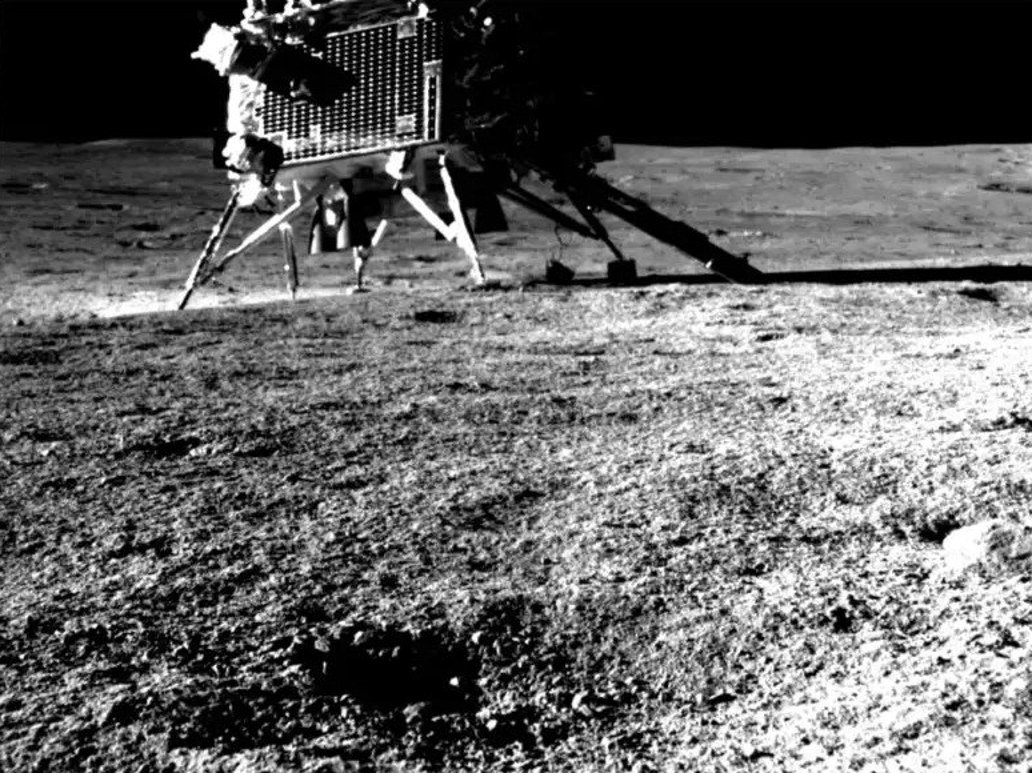
Chandrayaan-3 lands near the lunar south pole Confirmed
India becomes the first country to soft-land at such a high southern latitude. Reports quoting ISRO officials say about 54 women engineers and scientists worked directly on the mission, and more than 100 women overall, in roles from system design to navigation and testing.
Why it mattered: it made visible a workforce that rarely appears on stage at launch briefings. It was still a team result involving hundreds of people.
2023
CSIR-ASPIRE: grants just for women Policy
CSIR launches a special call for research grants with a woman as principal investigator, across life, chemical, physical, engineering and interdisciplinary sciences. About 300 three-year projects are selected.
Why it mattered: leading a funded project is the step that turns a researcher into an independent scientist.
2020
KIRAN counts 2,200 women helped Data
DST reports that more than 2,200 women scientists and technologists benefited from its Women Scientists Scheme over five years, with fellowships for research, for science with social applications, and for training in intellectual-property law.
2020
GATI asks institutions to change Policy
Instead of helping one woman at a time, the GATI pilot asks universities and labs to audit their own hiring, promotion, leave and safety policies, and to set targets for improvement.
2020
Vigyan Jyoti starts with schoolgirls Policy
DST’s programme targets girls in districts where few women take up science and engineering, aiming to raise the number who enter STEM degrees at good institutions. By 2026 it was reported to cover more than 250 districts.
2019
Two women lead Chandrayaan-2 First
Vanitha becomes the first woman to lead an ISRO interplanetary mission. Chandrayaan-2’s orbiter reaches lunar orbit and is still operating; the Vikram lander crashes during descent in September 2019, lessons from which shape Chandrayaan-3.
Gagandeep Kang elected to the Royal Society First
Kang becomes the first woman working in India to be elected a Fellow of the Royal Society in its more than 350-year history, recognised for work on rotavirus surveillance and vaccine trials that supported Indian-made vaccines.
The first International Day Confirmed
The world marks 11 February for the first time. The day gives schools, universities and governments a fixed moment each year to recognise women scientists and to publish new data on the gender gap. India marked its tenth edition in February 2025.
KIRAN brings women’s schemes together Policy
DST groups its women-focused programmes, including the Women Scientists Scheme started in 2002–03, under KIRAN. Its main idea is re-entry: helping trained women who left research for family reasons to come back. It later becomes WISE-KIRAN.
2012
Tessy Thomas and the Agni missiles First
As project director, Thomas becomes the first woman to lead a major Indian missile programme, and is nicknamed the ‘Missile Woman’. She later heads DRDO’s aeronautical systems cluster as Director General.
2010
CURIE builds labs at women’s universities Policy
DST starts funding research equipment and infrastructure in women-only universities, recognising that many women study at institutions with weaker labs than leading co-educational ones.
Kalpana Chawla flies in space First
Chawla, who studied aeronautical engineering at Punjab Engineering College before moving to the US, becomes the first India-born woman in space. She dies with six crewmates when Columbia breaks up on re-entry on 1 February 2003, and becomes a lasting role model for Indian girls.
Asima Chatterjee leads the Science Congress First
The organic chemist, already the first woman to win the Bhatnagar Prize, is elected to lead India’s largest scientific gathering, a symbolic step for women in senior science roles.
Rajeshwari Chatterjee joins IISc History
After a PhD at the University of Michigan, Chatterjee returns to the Indian Institute of Science and builds research in microwave engineering and antenna design, training generations of engineers in a field with almost no women.
Anna Mani joins the India Meteorological Department History
Mani leads work to standardise and manufacture weather instruments in India instead of importing them, later measures ozone and builds solar and wind-energy surveys. She retires in 1976 as a Deputy Director General.
Why it mattered: forecasting, aviation and agriculture all depend on reliable measurements that rarely get public credit.
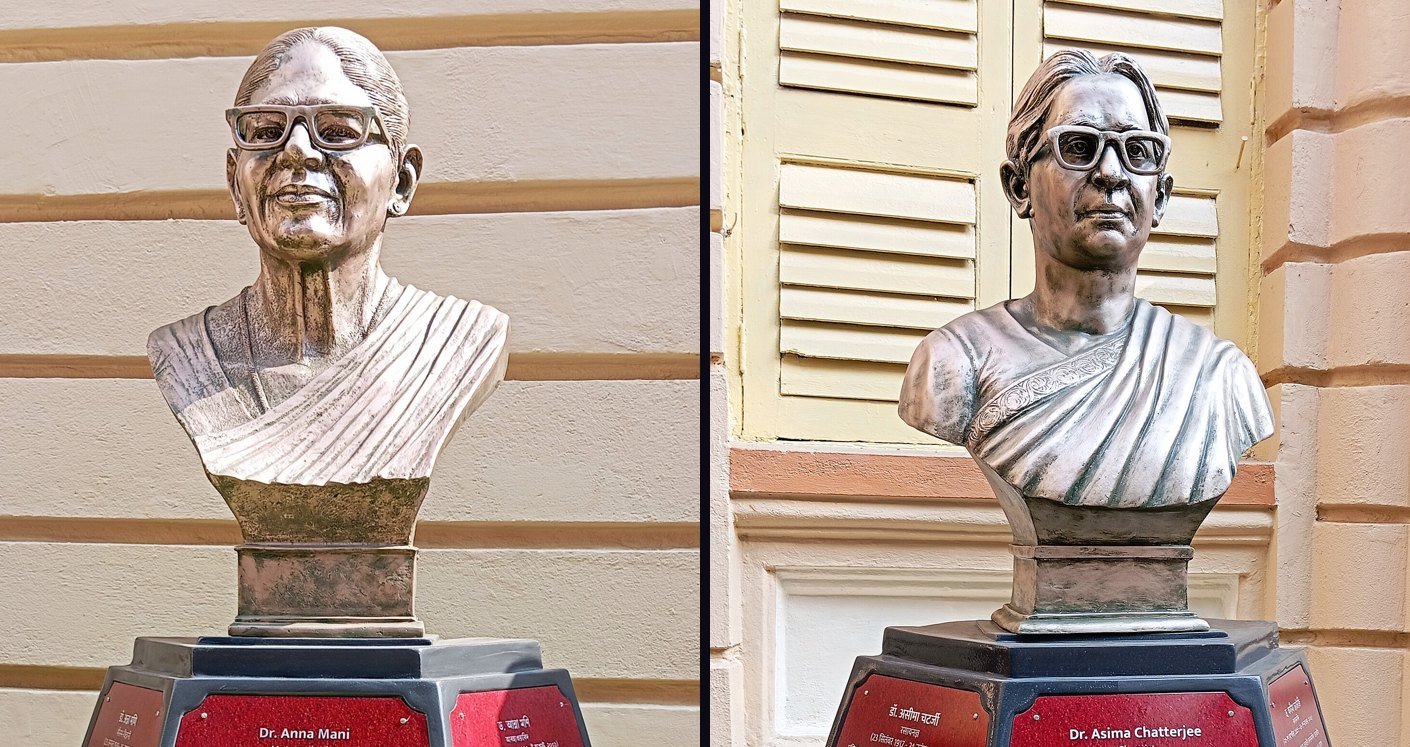
Asima Chatterjee earns a DSc First
Chatterjee becomes the first Indian woman to earn a Doctorate of Science from an Indian university. Her work on alkaloids from Indian plants leads to anti-epileptic and anti-malarial compounds, and in 1961 she becomes the first woman to win the Shanti Swarup Bhatnagar Prize.
Kamala Sohonie’s Cambridge PhD First
In 1933 Sohonie had to argue her way into the Indian Institute of Science, whose director C.V. Raman was reluctant to admit a woman and set conditions on her study. Her work there earned her a place at Cambridge, where she completed a PhD in 1939, often described as the first by an Indian woman in a science subject.
Why it mattered: ability alone did not remove the barrier; she needed someone to let her in.
1935
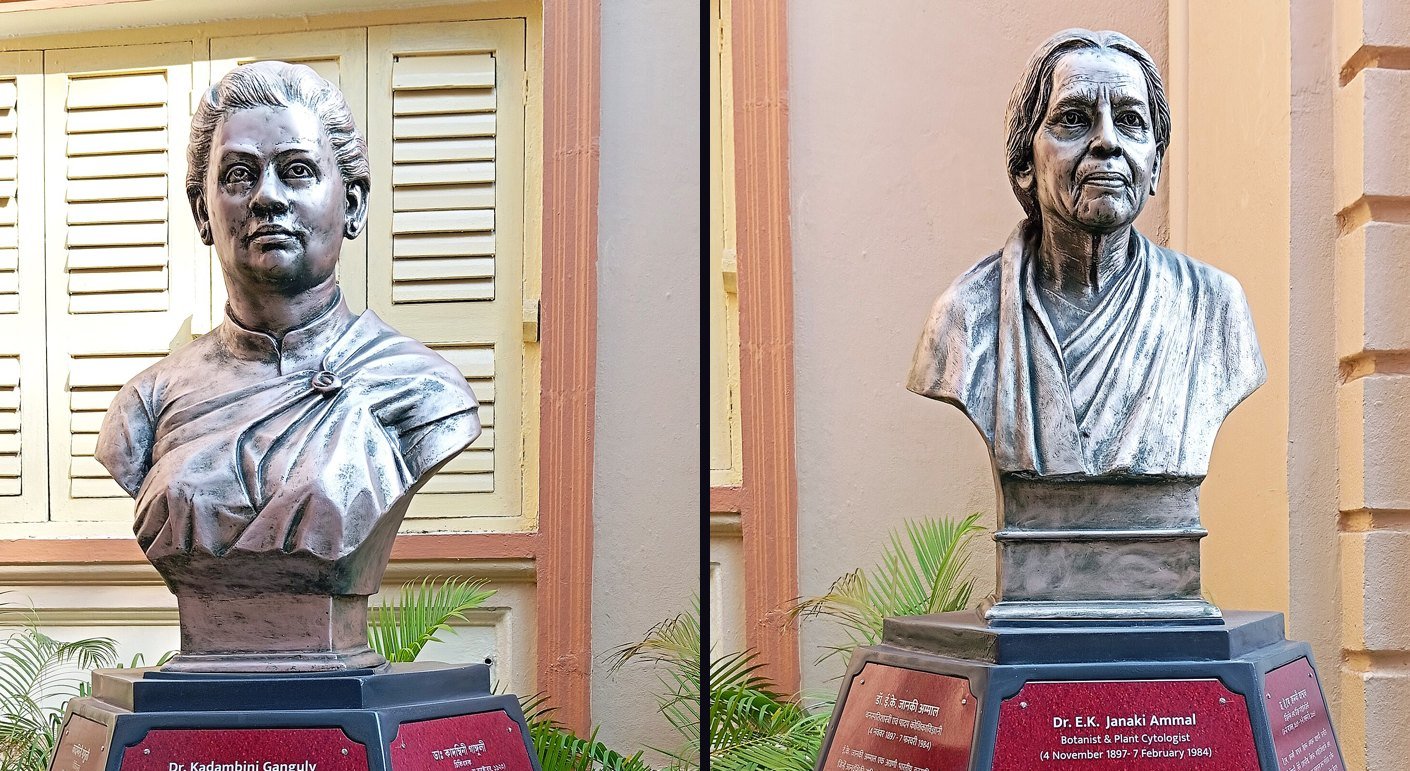
Janaki Ammal’s plant genetics History
Janaki Ammal works on chromosome studies and hybrid sugarcanes suited to Indian conditions, and is elected a Fellow of the Indian Academy of Sciences in 1935. She later co-writes the Chromosome Atlas of Cultivated Plants in Britain and is asked by Jawaharlal Nehru to help reorganise the Botanical Survey of India.
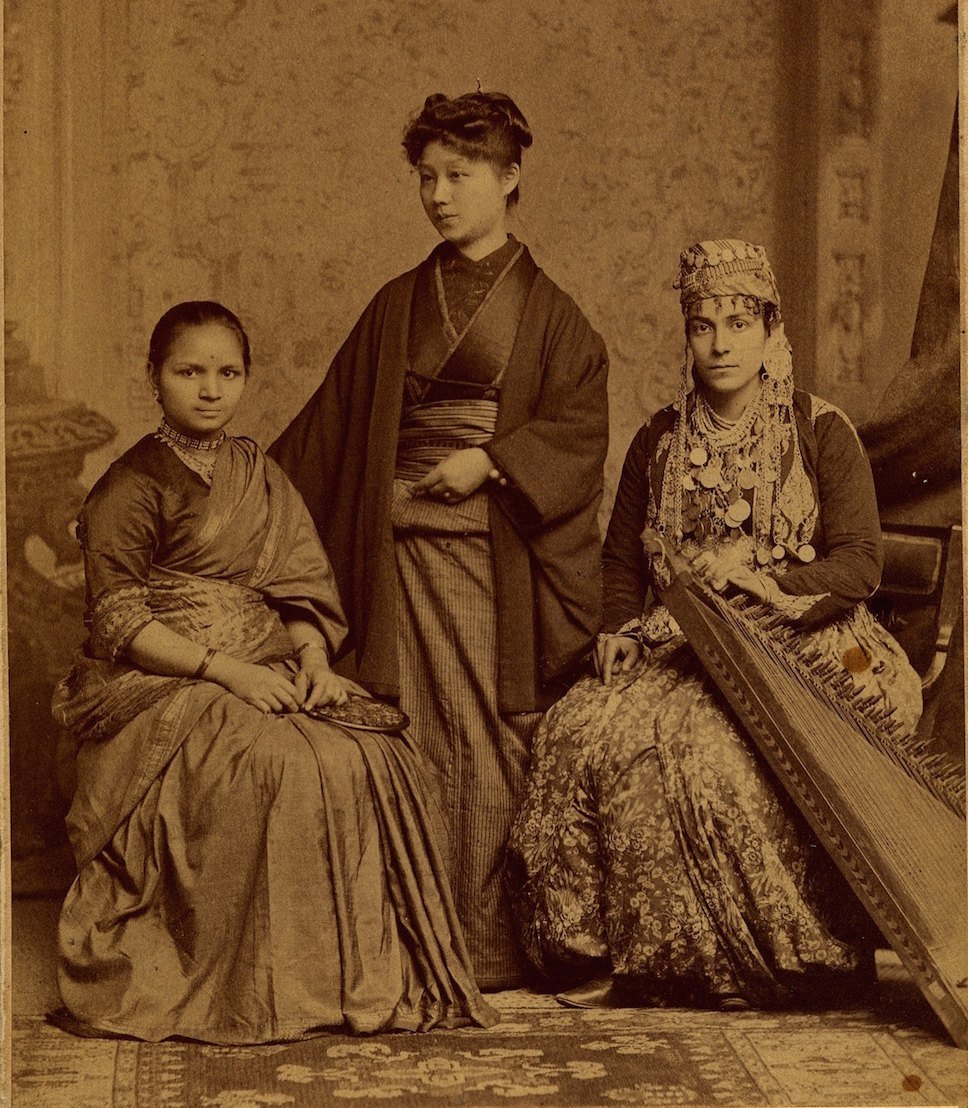
Two women qualify as doctors First
Anandibai Joshi, married at nine, travels to the United States and graduates from the Woman’s Medical College of Pennsylvania; she dies of tuberculosis in 1887, aged 21. Kadambini Ganguly, one of Calcutta University’s first two women graduates in 1883, completes medical training in Calcutta the same year and goes on to practise for decades.
Why it mattered: together they disproved the claim that Indian women could not be trained in modern science, and Ganguly showed that training could lead to a working career.
India’s Pioneering Women Scientists at a Glance
A selection, not a complete list. Many women in science never received public credit.
| Scientist | Field | Landmark | Year |
|---|---|---|---|
| Anandibai Joshi | Medicine | MD, Woman’s Medical College of Pennsylvania | 1886 |
| Kadambini Ganguly | Medicine | Qualified at Calcutta Medical College; long practice | 1886 |
| E.K. Janaki Ammal | Botany, cytogenetics | Fellow, Indian Academy of Sciences | 1935 |
| Kamala Sohonie | Biochemistry | PhD, University of Cambridge | 1939 |
| Asima Chatterjee | Organic chemistry | First DSc by a woman from an Indian university | 1944 |
| Anna Mani | Meteorology, physics | Joined IMD; built Indian weather instruments | 1948 |
| Rajeshwari Chatterjee | Microwave engineering | Joined IISc faculty | 1953 |
| Asima Chatterjee | Organic chemistry | First woman Bhatnagar Prize winner | 1961 |
| Kalpana Chawla | Aerospace engineering | First India-born woman in space (NASA) | 1997 |
| Tessy Thomas | Missile systems | Project director, Agni-IV and Agni-V | 2011–12 |
| Gagandeep Kang | Microbiology, vaccines | Fellow of the Royal Society | 2019 |
| M. Vanitha, Ritu Karidhal | Space engineering | Led Chandrayaan-2 | 2019 |
Why the Pioneers Still Matter
Getting in at all
Joshi had to travel to the US to study medicine; Sohonie had to argue her way into IISc. Admission was the first barrier.
Being allowed to work
Ganguly’s decades of practice showed that a qualification could become a career, which was not guaranteed.
Building the tools
Anna Mani’s instruments and Rajeshwari Chatterjee’s microwave labs show that much of science is unglamorous groundwork.
Being seen
Chatterjee’s 1961 prize and 1975 Science Congress presidency showed that women could reach the top of Indian science.
Find the women-in-science programme for where you are
Pick the description closest to you. This is a simplified guide to the main national programmes, not official eligibility advice; age limits, amounts and deadlines change, so confirm on the DST, CSIR or DBT websites. Nothing you click is recorded.
Choose an option above
Every Major Programme for Women in Indian Science
Start dates are approximate where schemes were renamed or merged. Eligibility and amounts change.
| Programme | Run by | Started | Main purpose |
|---|---|---|---|
| Women Scientists Scheme (WOS) | DST | 2002–03 | Fellowships and re-entry after a career break |
| CURIE | DST | 2009–10 | Research infrastructure in women’s universities and colleges |
| KIRAN, later WISE-KIRAN | DST | 2014 | Umbrella for women-specific fellowships and programmes |
| Vigyan Jyoti | DST | 2019–20 | Encourage schoolgirls into STEM in low-participation districts |
| GATI | DST | Feb 2020 | Institutional gender-equity charter (pilot) |
| BioCARe | DBT | 2010s | Career development and re-entry in biotechnology |
| CSIR-ASPIRE | CSIR | Mar 2023 | Research grants led by women scientists |
| WISE-PhD, WISE-PDF | DST | Under WISE-KIRAN | Doctoral and postdoctoral fellowships |
| WIDUSHI | DST | Under WISE-KIRAN | Support for senior women scientists |
| Vigyan Dhara | DST | Aug 2024 | Merged umbrella scheme with a gender-parity goal |
What Is Holding Women Back?
- Degree to job: research posts and fellowships are few, competitive and concentrated in a handful of cities and institutions.
- Career breaks: marriage, childcare, elder care and a spouse’s transfer still fall mostly on women, and a few years away can cost publications and grants.
- Age limits: many fellowships cap age, which hits women who took a break.
- Funding and mentors: leading a project needs a track record, and a track record needs someone to back the first project.
- Institutional culture: hiring panels, promotion rules, safety on campus and in the field, and hostel and childcare facilities all matter.
- Visibility: girls are more likely to picture a scientific future when they meet women physicists, engineers and computer scientists.
Corrections and Updates to Common Claims
Checked against government releases, Parliament replies and reporting up to 9 October 2026.
“Women are 43% of STEM students”
That was AISHE 2021–22. The 2023–24 survey, released on 8 July 2026, puts the share at 44.0%.
“Vigyan Jyoti, CURIE and GATI all date from 2017–20”
CURIE goes back to 2009–10. Vigyan Jyoti began in 2019–20 and the GATI pilot on 28 February 2020.
“ISRO says 100+ women ran Chandrayaan-3”
The 100+ figure was reported in 2023 alongside about 54 women working directly on the mission. Neither number means women led it alone.
“KIRAN began in the 2000s”
The Women Scientists Scheme started in 2002–03; the KIRAN umbrella came in 2014 and later became WISE-KIRAN.
“Most women drop out of science”
The 44% and 18.6% figures measure different groups and years and cannot be subtracted into a dropout rate.
2026 milestones
National Science Day 2026 was themed on women in science, and Vigyan Dhara (2024) set gender parity as a goal.
What Progress by 2030 Would Look Like
Proposed indicators for judging progress, not targets that have been set or met.
- Postgraduate and PhD shares close to the 44% undergraduate share in STEM.
- More women principal investigators on national research grants, not just co-investigators.
- Re-entry that works: published numbers on how many fellows stay in research five years later.
- Women in leadership of IITs, national labs, ISRO centres and selection committees.
- Regular public data on hiring, promotion and pay by gender across science institutions.
- Safe, equitable workplaces, including childcare and fair fieldwork rules.
Can You Name the Scientist? Quick Quiz
Tap a question to reveal the answer.
1. Which botanist co-wrote the Chromosome Atlas of Cultivated Plants and bred sugarcane at Coimbatore?
2. Who led the design of Indian-made weather instruments at the India Meteorological Department?
3. Which biochemist won a place at IISc in 1933 and finished a Cambridge PhD in 1939?
4. Who was the first woman to win the Shanti Swarup Bhatnagar Prize?
5. What share of India’s STEM students were women in 2023–24?
6. On what date is the International Day of Women and Girls in Science?
Explore More Timelines
People Also Ask
Frequently Asked Questions
From Inspiration to Opportunity
India’s women scientists widened the boundaries of medicine, botany, chemistry, meteorology, engineering and space exploration, often against open resistance. The country has since built programmes to bring girls into science, fund research by women and help them return after a break, and the classroom numbers show real change.
The next milestone is not more girls studying science. It is more women able to build, lead and sustain scientific careers. On 11 February, the most useful celebration is one that turns inspiration into opportunity.
Related AiTimeline Stories
⚠️ Editorial Note
Last updated 9 October 2026. Participation figures are tied to their own surveys and reporting periods (AISHE 2014–15 to 2023–24; DST R&D Statistics 2023) and are not directly comparable. Scheme names, eligibility and amounts change; check the Department of Science and Technology, CSIR or DBT before applying. Mission team figures for Chandrayaan-3 are as reported in 2023. The pioneers listed are a selection. Images: public domain, CC BY-SA 4.0 and GODL-India, credited in captions. Sources are listed below.
Sources & further reading
Every dated entry above was checked against these references. Last reviewed 9 October 2026.
- United Nations - International Day of Women and Girls in Science (11 February)
- Careers360 - AISHE 2023-24: female enrolment, women 44% of STEM students (Jul 2026)
- The Policy Edge - Parliament question: status of and support for women in STEM (Jan 2026)
- Department of Science and Technology - KIRAN scheme lights up S&T paths of thousands of women scientists (Mar 2020)
- Department of Science and Technology - Women in Science are Catalysts of Viksit Bharat: National Science Day 2026
- PIB - Women are leading prestigious science projects like Aditya L1, Chandrayaan-3: Dr Jitendra Singh
- Chemistry World - Indian scheme to provide 300 research grants for women (CSIR-ASPIRE)
- The Week - Gagandeep Kang elected Royal Society Fellow in first for Indian women (Apr 2019)