Rolls-Royce Collapse 1971: How the RB211 Engine Crisis Nearly Destroyed a British Industrial Giant
Rolls-Royce collapse 1971: how the RB211 engine and a fixed-price Lockheed contract forced receivership on 4 February 1971 and a government rescue.
Latest Story
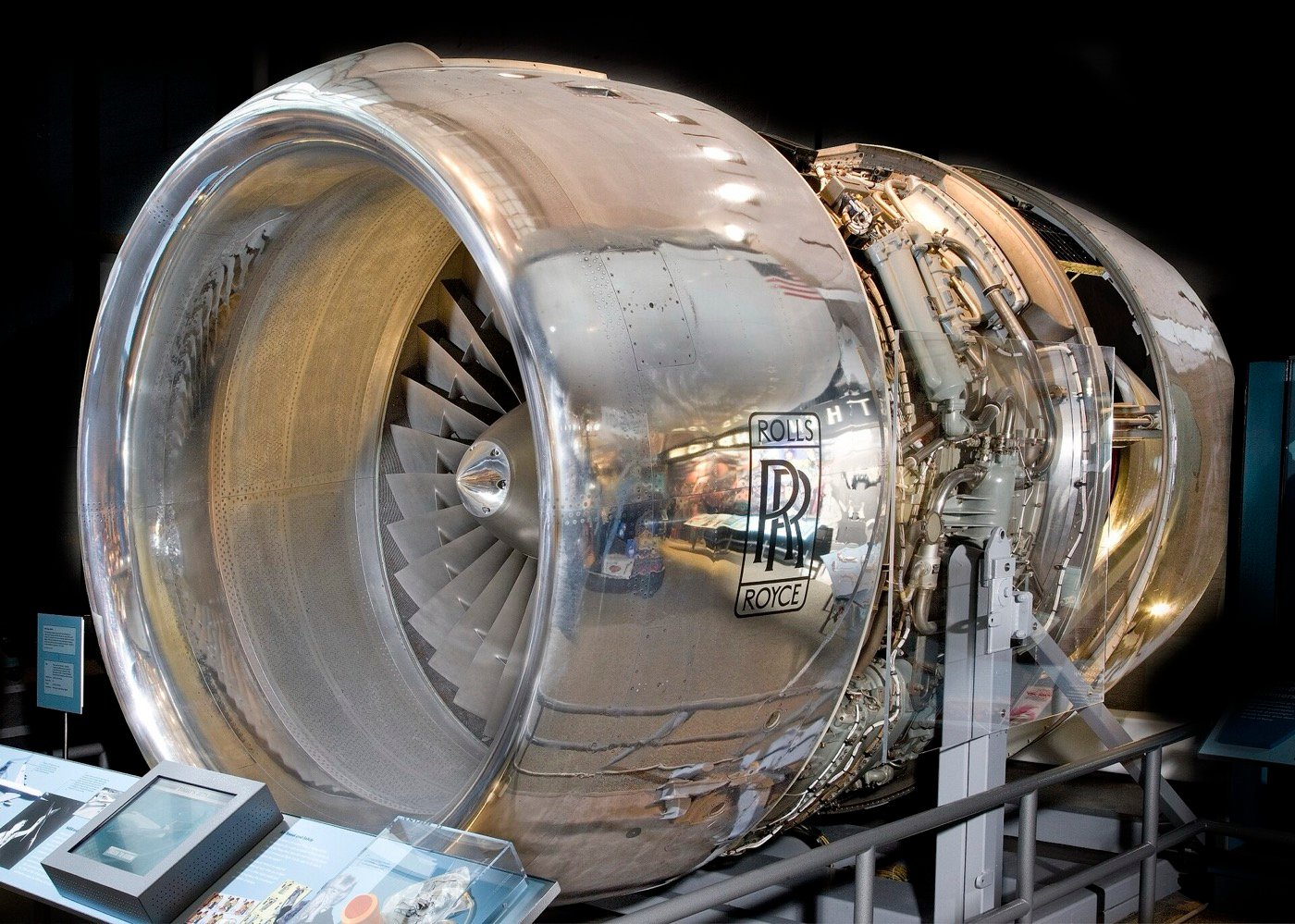
The Rolls-Royce collapse 1971 began on 4 February 1971, when the board of Rolls-Royce Limited told the government it could not continue building the RB211 jet engine for Lockheed’s L-1011 TriStar under a fixed-price contract, and asked for a receiver. The engine had run far over budget, and losses and termination costs threatened to exceed the company’s net tangible assets. The government stepped in to buy the essential aero-engine, marine and gas-turbine businesses into a new publicly owned company. The RB211 survived and became one of the company’s most important engine families. For another British engineering story of the same era, see the Concorde story.
💡 Short Answer
Rolls-Royce went into receivership on 4 February 1971 because its RB211 engine for the Lockheed TriStar cost about £460,000 to build against a fixed price of £350,000, and launch costs had grown from £65 million to at least £170 million. The government bought the essential businesses into Rolls-Royce (1971) Limited, the US guaranteed Lockheed’s credit, and the RB211 was certified on 14 April 1972.
Rolls-Royce Collapse 1971: Key Questions
The Rolls-Royce Collapse in Nine Points
- The trigger: the board asked for a receiver on 4 February 1971.
- The contract: 540 RB211 engines at a fixed £350,000 each, agreed in 1968.
- The squeeze: estimated cost about £460,000 per engine, a loss of at least £110,000 each.
- Launch costs: £65 million in 1968 to at least £170 million in 1971.
- Hyfil: the carbon-fibre fan stage shattered in a bird test in May 1970; one pressure, not the sole cause.
- The rescue: a wholly owned company bought the essential businesses; it was incorporated in May 1971.
- The US link: Congress allowed guarantees of up to $250 million for Lockheed in 1971.
- The payoff: RB211 certified 14 April 1972; TriStar in service 26 April 1972.
- The end of state ownership: privatised as Rolls-Royce plc in April 1987.
Why Did Rolls-Royce Collapse in 1971?
Six connected causes, as set out in Parliament and the company record.
1. An ambitious engine
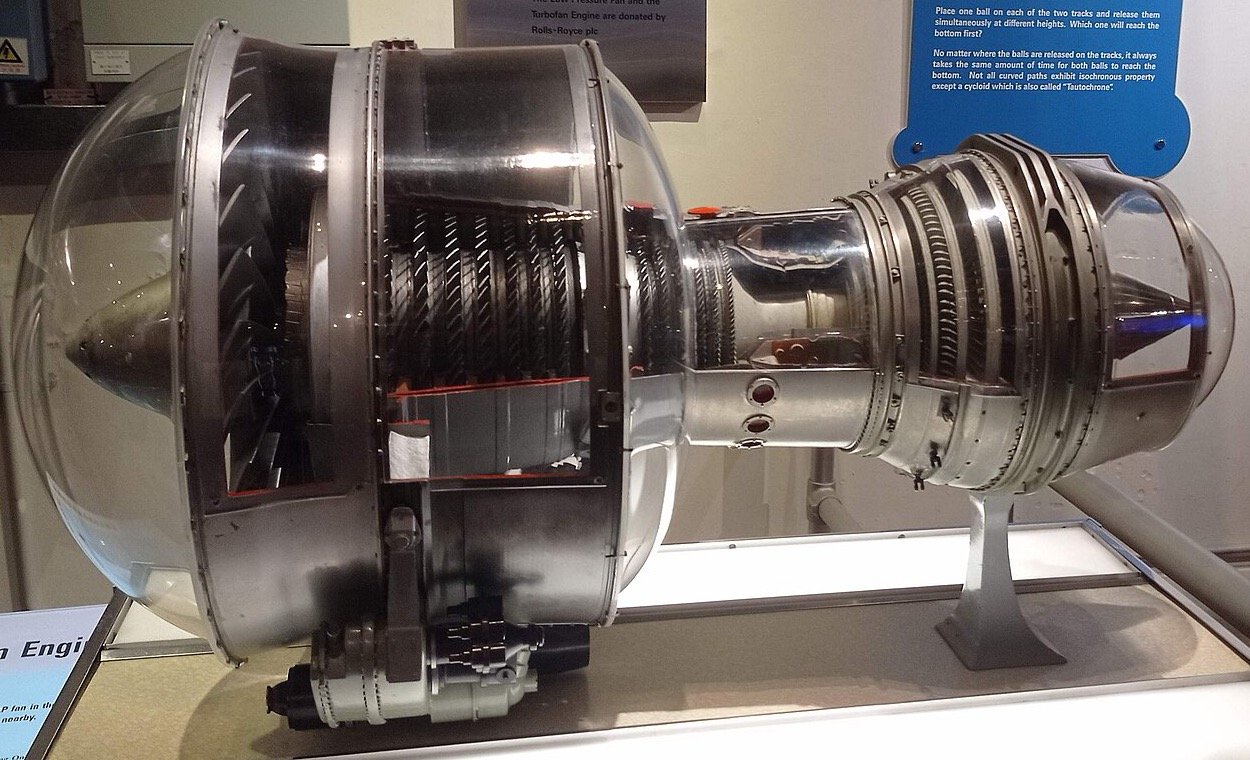
The RB211 was a three-shaft turbofan with a carbon-fibre fan stage, built to deliver more thrust and better efficiency than rivals. Pushing the design that far made development harder than planned.
2. A fixed-price contract
Rolls-Royce agreed to supply 540 engines at £350,000 each. When the cost per engine rose to about £460,000, it could not pass the difference on. The Chancellor said the company was “bound by those terms of the contract which provided for a fixed price”.
3. Under-estimated development time
The Chancellor said development time was under-estimated, so development and production overlapped, which drove up costs. Opposition members said financial control was inadequate and cost estimates were far too low, while Tony Benn argued that the contract itself was not the problem.
4. The Hyfil setback
The carbon-fibre fan stage shattered in a bird-ingestion test in May 1970. The titanium back-up added weight and cost. It is vivid, but it was one pressure among several.
5. Launch costs that kept rising
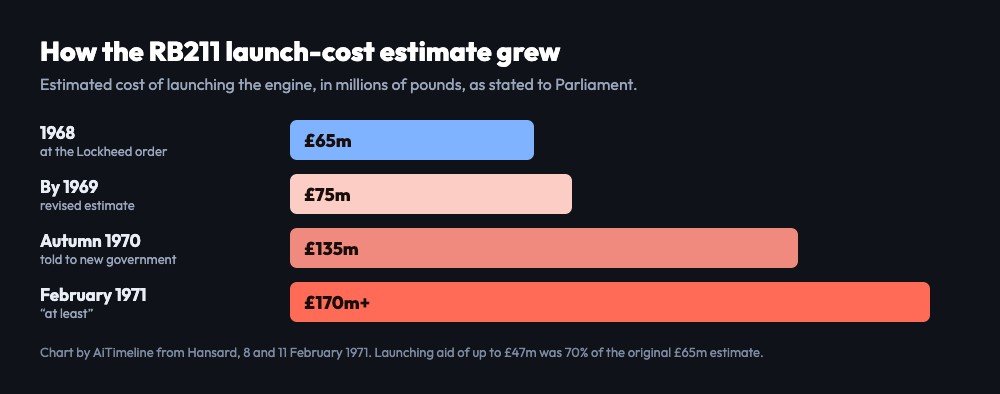
The launch-cost estimate rose from £65 million to at least £170 million, so the original £47 million of launching aid covered a shrinking share of the bill.
6. Exposure beyond the engine
Losses already committed and the cost of terminating the Lockheed contract were likely to exceed the company’s net tangible assets, so the engine threatened the whole group, including work on defence and other engines.
Rolls-Royce Collapse 1971: Timeline, Latest First
From the 1987 privatisation back to the 1967 offer to Lockheed. Each entry is colour-coded by phase.
Rolls-Royce is privatised as Rolls-Royce plc Rescue & aftermath
What happened: The government offered all the shares of Rolls-Royce plc for sale in April 1987. State ownership, which began with the 1971 rescue, ended after about 16 years.
Context: The nationalised company had been renamed Rolls-Royce Limited in 1977. By the time of the sale it was a civil and military engine maker, with the RB211 family at the core of its airliner business.
The car business is split off as Rolls-Royce Motors Rescue & aftermath
What happened: Rolls-Royce Motors Limited had been incorporated on 25 April 1971. In May 1973 the car and diesel business was sold to Rolls-Royce Motors Holdings Limited, in preparation for a public share sale. The offer drew a weak response, with more than 80 per cent left with the underwriters.
Later: Vickers bought Rolls-Royce Motors in 1980. The new nationalised company kept the aero-engine, marine and industrial gas-turbine operations.
Government backs a stretched RB211-24 Rescue & aftermath
What happened: The government told the Commons that Rolls-Royce (1971) proposed to raise the engine’s thrust from 42,000 to 45,000 lb. The RB211-24 would change about 25 per cent of the engine and support a longer-range TriStar.
Money: Development was put at £31 million. Rolls-Royce would pay 25 per cent from working capital; if costs rose, it would pay half of the increase up to a total project cost of £61 million. The minister said total government support for the engine had reached £195 million.
The first TriStar enters service Rescue & aftermath
What happened: The Lockheed L-1011 TriStar entered airline service with Eastern Air Lines on 26 April 1972. Every aircraft carried three Rolls-Royce RB211-22 engines.
Why it was late: Lockheed had announced its order in March 1968 expecting service far earlier. The RB211 problems, and then the receivership, pushed the schedule back.
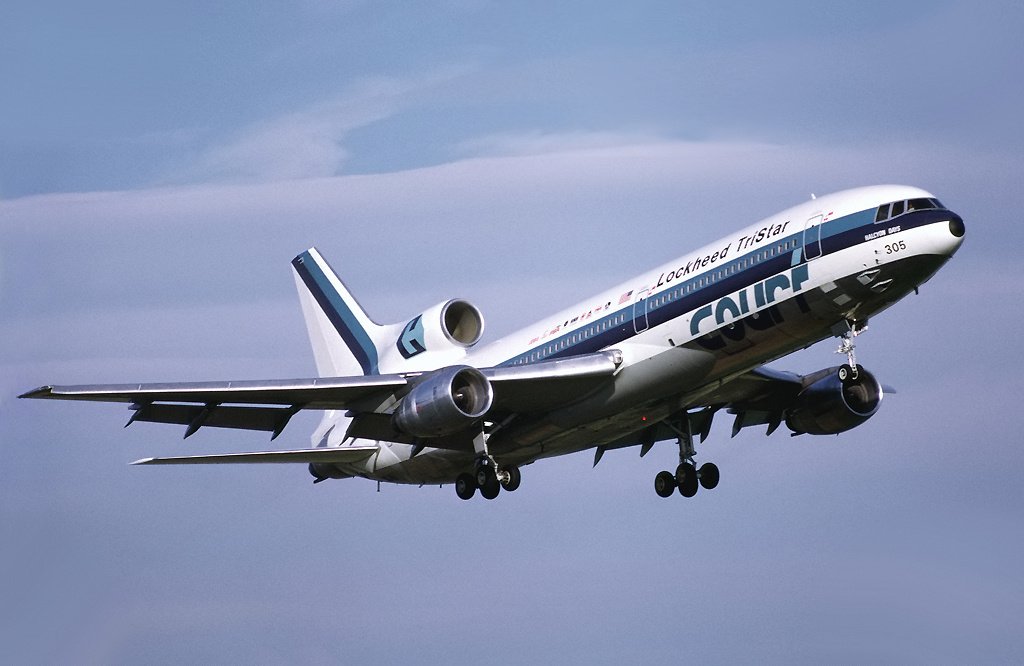
RB211-22 is certified Rescue & aftermath
What happened: The RB211-22 was certified on 14 April 1972, about a year later than planned.
Engineering: It was a three-shaft turbofan: low-, intermediate- and high-pressure compressors each ran on their own shaft, giving good efficiency at high thrust. That ambition had also made development harder.
US Congress clears loan guarantees for Lockheed Rescue & aftermath
What happened: The minister told the Commons that Congress had passed legislation allowing the US government to guarantee up to $250 million of further credit for Lockheed. The government was waiting for US notification and for Lockheed’s confirmation of orders from existing airline customers.
Politics: A Senate vote of 49 to 48 was cited in the debate. Without the guarantees there was no TriStar, and without the TriStar the RB211 had no customer. The minister said some 30,000 or more people at Rolls-Royce and its suppliers could continue work.
A new government-owned company takes over Rescue & aftermath
What happened: Rolls-Royce (1971) Limited was incorporated in May 1971 and bought substantially the whole of the old company’s undertakings from the receiver. The old Rolls-Royce Limited was put into liquidation on 4 October 1971.
Note: Some summaries say the new company was in place in February. The government announced that it would acquire the assets in February, but the company record dates the purchase to May.
Rolls-Royce (Purchase) Bill gets its Second Reading debate Rescue & aftermath
What happened: Aviation Supply Minister Frederick Corfield moved Second Reading on 11 February 1971. The Bill let the government acquire the assets essential for defence, collaborative projects, foreign air forces and civil airlines, and run them through a publicly owned company.
Terms: It had no compulsory-purchase powers. The price was to be negotiated, with arbitration if the parties disagreed. The receiver’s expenses were indemnified for up to four weeks from 5 February.
The Chancellor puts numbers on the loss Collapse
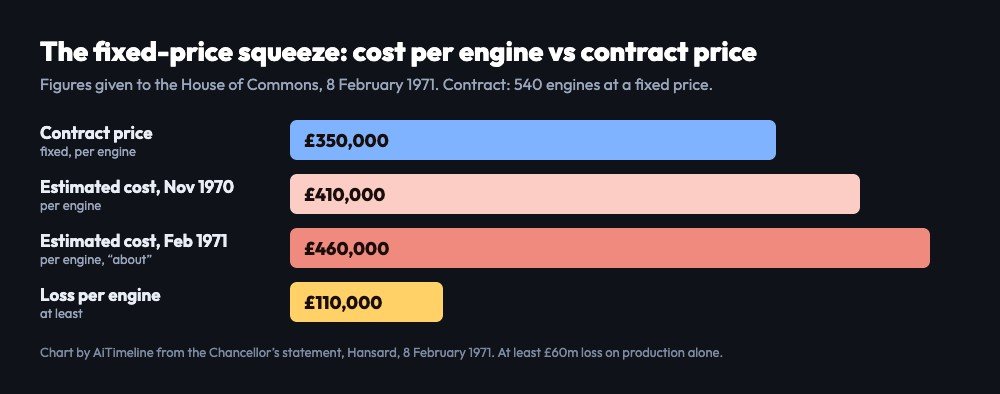
The numbers: The contract was for 540 engines at a fixed £350,000 each. The estimated cost per engine had been £410,000 in November 1970 and was now about £460,000, a loss of at least £110,000 per engine, or at least £60 million on production alone.
Launch costs: Launch costs were at least £170 million, at least £35 million above the November estimate. The Chancellor put penalty exposure at about £50 million if deliveries ran six months late.
Cause: He blamed under-estimated development time, with development and production overlapping, and a fixed price that did not let the company pass costs on.
Rolls-Royce asks for a receiver Collapse
What happened: Minister Frederick Corfield told the Commons that the board had unanimously decided it could not proceed with the RB211 under the Lockheed contract. Losses on commitments already made, plus termination losses, were likely to exceed the company’s net tangible assets. The board asked the debenture holders’ trustees to appoint a receiver and manager.
Government response: The state would acquire the aero-engine, marine and industrial gas-turbine assets essential for defence, collaborative programmes and airline support, in a company wholly owned by the government. It said it had no liability under the Rolls-Royce-Lockheed contract.
Figures given: Continuing the RB211 would need about £150 million of government funding, and each engine was running about £110,000 above the contract price. The £42 million offered in autumn 1970 had not been paid. Corfield called a claim that 80,000 jobs were at stake a “gross exaggeration”.
Board decides in principle to stop Collapse
What happened: The board decided in principle that Rolls-Royce should not continue the RB211 under the existing contract, subject to talks with Lockheed and the government.
Dilemma: Carrying on meant enormous losses. Walking away meant termination liabilities that could be as large.
Lord Cole warns the ministry Collapse
What happened: Chairman Lord Cole told the Ministry of Aviation Supply that the executive committee believed the RB211 programme could not be met under the existing arrangements.
Context: Cole had taken over as chairman in early November 1970, “in very difficult circumstances”, according to the Chancellor.
Launch cost jumps to £135 million Collapse
What happened: Rolls-Royce told the new government that launch costs had risen to £135 million. The government offered further aid of up to 70 per cent of the increase above £75 million, about £42 million, with banks adding £18 million.
Condition: The offer depended on an independent check by accountants Cooper Brothers, which was not finished when events overtook it in late January. The Chancellor said none of the £42 million was advanced.
Hyfil fan stage shatters in a bird test Build-up
What happened: In May 1970 the carbon-fibre (Hyfil) fan stage shattered in a bird-ingestion test. Rolls-Royce had been developing a titanium blade as a back-up, and that now became the design.
Cost: The titanium blade added weight and cost, and more redesign. Hyfil is the best-known technical setback, but the Commons accounts of 1971 put the main blame on development time and the fixed price rather than on one component.
Estimates rise and the state steps in Build-up
What happened: The Industrial Reorganisation Corporation agreed a £10 million loan; a further £10 million was planned but not made. Lord Beeching and Mr Morrow joined the board.
Costs: The launch-cost estimate had already risen from £65 million to £75 million.
Lockheed picks the RB211 and the government offers launching aid Build-up
What happened: On 29 March 1968 Lockheed announced 94 TriStar orders and an order for 150 sets of RB211-22 engines. The government arranged launching aid of up to £47 million, 70 per cent of an estimated £65 million launch cost. Tony Benn is reported to have endorsed the agreement on 1 April 1968.
Contract: As the Chancellor described it in 1971, the contract covered 540 engines at a fixed price of £350,000 each. The April 1968 order is the date the Commons accounts use; a later debate dates the £47 million confirmation to October 1969.
Rolls-Royce offers Lockheed the RB211-06 Build-up
What happened: On 23 June 1967 Rolls-Royce offered Lockheed the RB211-06 for the L-1011. The engine was an ambitious three-shaft design, aimed at high thrust with low fuel burn and noise.
Four things often told wrongly about the Rolls-Royce collapse
- “The government nationalised Rolls-Royce on 4 February.” The board asked for a receiver on 4 February. The government said it would acquire the essential businesses. The new company, Rolls-Royce (1971) Limited, was incorporated in May.
- “Hyfil blades caused the collapse.” The blades failed in May 1970, but the government’s account blamed time, overlap and the fixed price.
- “The car business was split off in 1971 or 1972.” Rolls-Royce Motors Limited was incorporated in April 1971, but the car and diesel business moved to Rolls-Royce Motors Holdings in May 1973.
- “The government put in a fixed £60 million in March 1971.” We could not find that figure in the Commons record we checked. The recorded sums are in the table below.
The Numbers Behind the RB211 Crisis
Every figure here was stated to Parliament; none is an estimate of ours.
| Item | Figure | Source and date |
|---|---|---|
| Contract price | £350,000 per engine, fixed, 540 engines | Chancellor, 8 Feb 1971 |
| Estimated cost per engine | £410,000 (Nov 1970); about £460,000 (Feb 1971) | Chancellor, 8 Feb 1971 |
| Loss per engine | At least £110,000; at least £60m on production alone | Chancellor, 8 Feb 1971 |
| Launch-cost estimate | £65m (1968), £75m, £135m (autumn 1970), £170m+ (Feb 1971) | Commons, 8 Feb 1971 |
| Launching aid | Up to £47m, 70% of the £65m estimate | Commons, 8 and 11 Feb 1971 |
| Extra aid offered, not paid | £42m government plus £18m banks | Commons, 4 and 8 Feb 1971 |
| IRC loan | £10m advanced; a further £10m planned, not made | Chancellor, 8 Feb 1971 |
| Funding to continue the RB211 | About £150m of government money | Minister, 4 Feb 1971 |
| Penalty exposure | About £50m if deliveries six months late | Chancellor, 8 Feb 1971 |
| Total government support | £195m committed to the engine | Minister, 7 Aug 1972 |
| US loan guarantees for Lockheed | Up to $250m of further credit | Commons, 4 Aug 1971 |
What Happened to Rolls-Royce After the Collapse?
The old Rolls-Royce Limited was liquidated on 4 October 1971. Rolls-Royce (1971) Limited carried on the aero-engine, marine and industrial gas-turbine businesses as a state-owned company, renamed Rolls-Royce Limited in 1977. The car business went to Rolls-Royce Motors, and was bought by Vickers in 1980.
The RB211 itself went on to be offered on other aircraft: the larger RB211-524 was first run on 1 October 1973, and later versions powered Boeing 747-200s with British Airways from 1977, the 757 and the 767. The company was privatised in April 1987.
For a later example of a British engineering name that survived collapse, see Triumph Motorcycles.
The Lessons of the Rolls-Royce Crisis
It is a case study in the risk of fixed-price contracts for technology that has not been built yet. A company can win an order on an ambitious design and then carry all of the cost when the engineering takes longer. Cost overruns on large technical projects are a recurring theme: see the James Webb Space Telescope delays and the Challenger O-ring warnings for how warnings and estimates can go wrong in other fields, and the Boeing 737 MAX story for the aircraft side of the industry.
It also shows how states decide what to save. In 1971 the government did not rescue the whole company: it chose the businesses essential for defence, collaborative programmes and airlines. For other rescues and failures of different kinds, compare the Dubai debt crisis, the Lehman Brothers collapse and the airline failures of Jet Airways and Kingfisher Airlines. For the history of aviation technology and safety, see the global aviation safety timeline. For how a famous company can lose its lead, see Nokia’s fall and the Air India turnaround.
A technically ambitious product can still destroy the company that builds it when engineering risk and commercial commitments are not aligned.
Explore More Timelines
People Also Ask
Rolls-Royce Collapse 1971: Frequently Asked Questions
Conclusion: A Collapse That Did Not End the Engine
The Rolls-Royce collapse of 1971 was one of the most dramatic industrial crises in modern British history. A project meant to secure the company’s future pushed it into receivership. The government and the United States then kept both the engine and the aircraft alive, and the RB211 became a lasting success.
Related AiTimeline Stories
⚠️ Editorial Note
Last updated 30 October 2026. Dates and figures come from House of Commons records of 4, 8 and 11 February, 4 August 1971 and 7 August 1972, and company histories. Where accounts differ we say so: the £47 million aid is dated to April 1968 in one debate and October 1969 in another; the new company is dated to May 1971; the car business to 1973. The date of Royal Assent to the Purchase Act was not confirmed, so it is not given. Background is for information and is not financial advice.
Sources & further reading
Every dated entry above was checked against these references. Last reviewed 30 October 2026.
- Hansard: Rolls-Royce Ltd, statement of 4 February 1971
- Hansard: Rolls-Royce Limited, Chancellor's statement of 8 February 1971
- Hansard: Rolls-Royce (Purchase) Bill, Second Reading, 11 February 1971
- Hansard: Rolls-Royce (RB211), 4 August 1971
- Hansard: RB211 Engine and TriStar Aircraft, 7 August 1972
- Wikipedia: Rolls-Royce RB211
- Wikipedia: Rolls-Royce Limited
- Wikipedia: Rolls-Royce Motors